Jumping Spider Starter Kit

About 4 x 4 x 8 inches for a juvenile or adult; a deli cup for a spiderling
One prey item about the size of the spider's body
Females live longer than males
A simple setup for your first jumper.
A jumping spider starter kit is short: a small enclosure taller than it is wide with a front or bottom opening and cross ventilation, a few sticks and fake leaves to climb and build a silk hammock on, a spray bottle, and feeders sized to the spider, fruit flies for a spiderling and small dubia or BSFL for a juvenile or adult. That is the whole list for a bold jumping spider (Phidippus audax) or a regal (Phidippus regius), the two species most people start with. This guide is the kit itself, item by item, with the feeder plan by age, the two setup mistakes that cause most first-spider losses, and the things sold to beginners that they do not need.
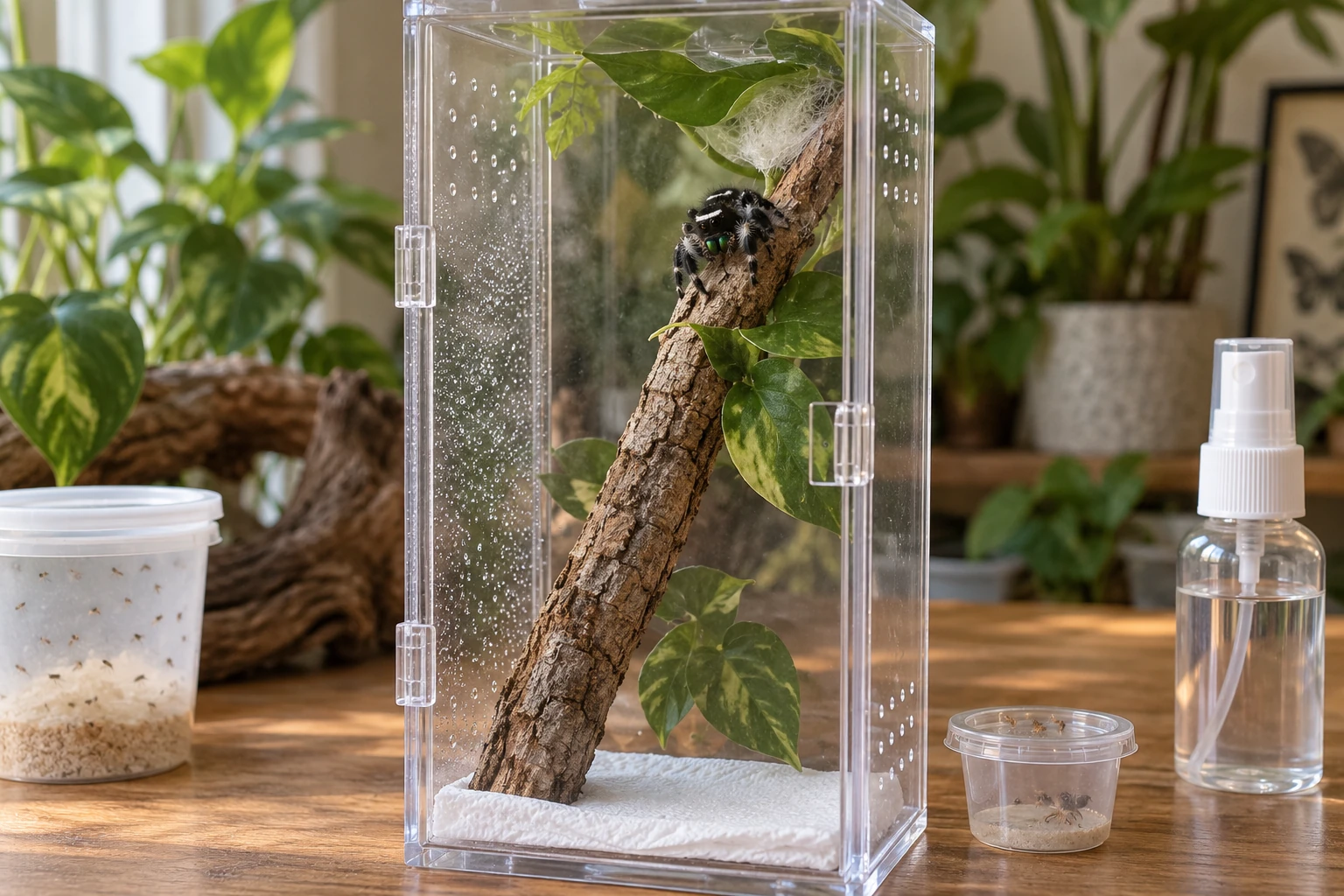
Climbing space. Small prey. A light mist.
Protect the hammock near the top, keep air moving through the enclosure, and choose feeders that fit your spider’s size.
The enclosure: tall, ventilated, and opening from the front
Jumping spiders live upward. They climb, they perch high, and they build a silk hammock near the top of whatever they live in, so the enclosure must be taller than it is wide. For a juvenile or adult bold or regal jumper, something around 4 by 4 by 8 inches is plenty; jumping spiders are ambush hunters and a huge enclosure makes it harder to find food. For a spiderling, a 16 or 32 oz deli cup with a ventilated lid is right until it is about the size of a pea.
Two features matter more than size. First, the opening should be at the front or the bottom, not the top, because the spider builds its hammock at the top and a top-opening lid tears it every time you feed. Second, cross ventilation: holes or mesh on two sides so air moves through, since a stuffy, damp enclosure is the most common cause of a first-spider death. The enclosure size guide covers sizing by age in detail.
Furnishings: sticks, leaves, and nothing that holds water
Inside the enclosure the spider needs things to climb and a spot to anchor a hammock: a couple of thin sticks or cork bark strips wedged corner to corner, and a few silk or plastic leaves near the top for it to web behind. A thin layer of coco fiber on the floor is optional and mostly for looks; many keepers use bare paper towel on the floor, which makes cleaning simple and shows you the droppings and uneaten prey. Skip a water dish entirely; jumping spiders drink droplets from a light misting and can drown in standing water.
That is all the decor a jumper needs. It does not need a heat lamp or a heat mat in a normal home; room temperature in the 70s F suits both species. It does not need special lighting beyond daylight in the room, though jumpers are visual hunters and a bright room keeps them active. Anything beyond sticks, leaves, and a spray bottle is for you, not the spider.
Feeders by age: the part most kits get wrong
Feed one prey item roughly the size of the spider's body, two or three times a week, and remove anything uneaten within a day. For a spiderling, that means flightless fruit flies, the smaller melanogaster first and hydei as it grows. For a juvenile, extra-small dubia nymphs, small BSFL, and mini mealworms. For an adult, small dubia, medium BSFL, and small mealworms, with the occasional small hornworm as a soft treat. Our guide to what jumping spiders eat by size has the full ladder.
Three feeder rules. Never leave a mealworm or a large roach loose in the enclosure overnight; a mealworm can chew on a resting spider, and a big prey item stresses it. Never feed wild-caught insects, which can carry pesticides and parasites. And expect a spider to refuse food for a week or so before it molts, which is normal and covered in why your jumping spider isn't eating. A single 32 oz fruit fly culture and a small cup of dubia or BSFL cover a spider for a month or more.
Misting, humidity, and the daily routine
Mist one side of the enclosure lightly every day or two so droplets form on the leaves and glass; the spider drinks from them. Do not soak it. The goal is a few droplets that dry within hours, not a wet enclosure, and cross ventilation is what keeps that balance. Regal jumpers come from humid Florida and tolerate a bit more moisture; bold jumpers are found across most of the country and are fine drier.
The daily routine is about a minute: a light mist, a glance for droppings or a discarded prey husk to remove, and a feeding two or three times a week. Handle the spider as little as it wants; some regals become quite calm on a hand, some bolds never do, and neither needs it. If you want a hand-tame spider, let it walk onto you rather than picking it up, low over a table. A jumper that is resting in its hammock with the door sealed is molting and should be left completely alone.
What is not in the kit, on purpose
Beginners are sold a lot they do not need. No heat lamp or mat; both overheat a small enclosure. No UVB; jumping spiders do not need it. No water dish; it drowns spiderlings. No substrate deeper than a dusting; it hides prey and droppings. No large decorative terrarium with a top-opening lid; it destroys hammocks and makes prey hard to find. No cleanup crew of isopods in a tiny jumper enclosure, which our cleanup crew for jumping spiders guide explains is unnecessary and can be a nuisance at this scale.
Put the money into the feeders instead. A fruit fly culture, a cup of extra-small dubia or small BSFL, and a spray bottle are the consumables that keep a jumper healthy, and they cost less than a single unnecessary heat lamp. Everything on this list is in the jumping spider section or the feeder shop, and the spider itself will come back into stock on its own schedule.
Bringing the spider home
Set up the enclosure before the spider arrives, mist it, and let it sit. When the spider comes, open its shipping cup inside the enclosure and let it walk out on its own; do not tip or shake it. Leave it alone for a day, then offer a single appropriate prey item. Most jumpers eat within a day or two of arriving and build a hammock within a week. A spider that hides, refuses food, and seals itself in for the first week is often just molting into its new home.
From there, the kit runs itself: mist, feed, remove husks, watch. Jumping spiders live about 1 to 2 years, females longer than males, and the whole life of a first spider costs less in feeders than a month of dog food. Start with the small enclosure, the right-sized prey, and the spray bottle, and skip everything else.
Keep reading: Feeder Insects for Pet Scorpions: What Emperors and Forest Scorpions Eat
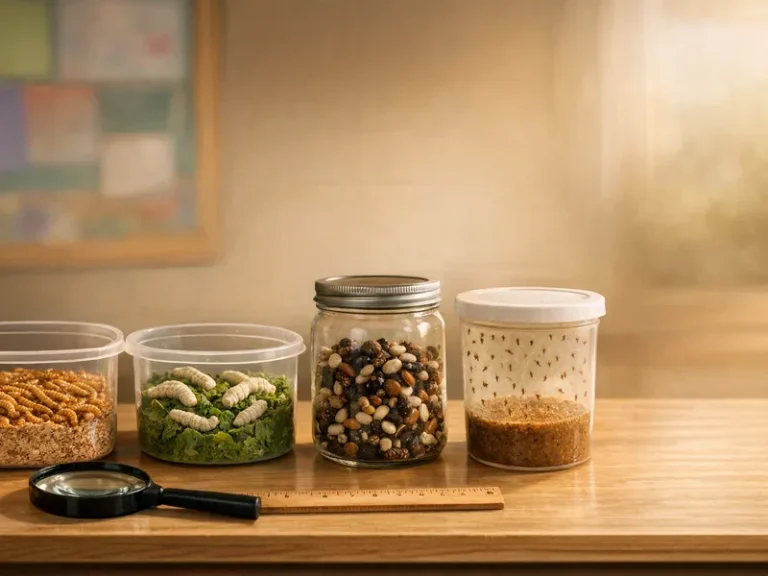
The Jumping Spider Feeder Kit
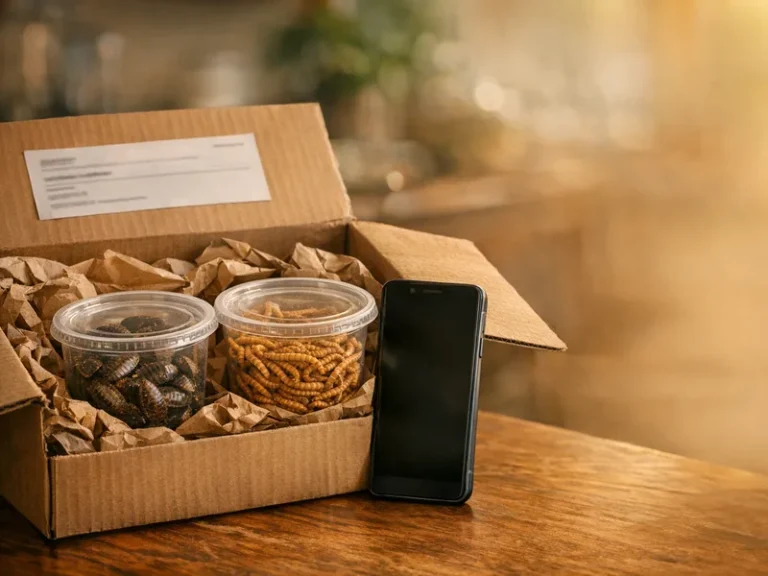
The consumables that keep a first jumper healthy: fruit flies for a spiderling, extra-small dubia and BSFL for a juvenile or adult, minis for variety.
Frequently asked questions
What size enclosure does a jumping spider need?
Taller than it is wide, with a front or bottom opening and cross ventilation. About 4 by 4 by 8 inches suits a juvenile or adult bold or regal jumper; a 16 or 32 oz deli cup suits a spiderling until it is about pea-sized. A top-opening lid tears the silk hammock the spider builds at the top, so avoid it.
What do I feed a jumping spider in a starter kit?
One prey item about the size of the spider's body, two or three times a week. Spiderlings take flightless fruit flies; juveniles take extra-small dubia, small BSFL, and mini mealworms; adults take small dubia, medium BSFL, and small mealworms. Remove uneaten prey within a day and never leave a mealworm loose overnight.
Do jumping spiders need a heat lamp or UVB?
No. Room temperature in the 70s F suits bold and regal jumpers, and a heat lamp or mat overheats a small enclosure. They do not need UVB. A bright room helps because they hunt by sight, but ordinary daylight is enough.
How often should I mist a jumping spider enclosure?
Lightly, every day or two, on one side, so droplets form for the spider to drink and dry within hours. Do not soak it and do not add a water dish, which can drown a spiderling. Cross ventilation keeps the enclosure from staying damp, which is the most common cause of first-spider losses.
How long do jumping spiders live?
About 1 to 2 years, with females living longer than males. A jumper bought as a juvenile gives you most of that time. A spider that seals itself into its hammock and refuses food for a week or so is molting, which is normal at every age.
What should I not buy for a first jumping spider?
A heat lamp or mat, UVB lighting, a water dish, deep substrate, a large top-opening terrarium, and a cleanup crew for a tiny enclosure. Spend on feeders instead: a fruit fly culture, a small cup of extra-small dubia or BSFL, and a spray bottle are the consumables that keep a jumper healthy.
Keep learning
Have a care question? Ask our community.
Join Reptile Keepers USA, our free Facebook group for reptile, amphibian and invert keepers. Share your setups, get care help and swap feeder tips.
Join the free group