What Happens After the Cocoon
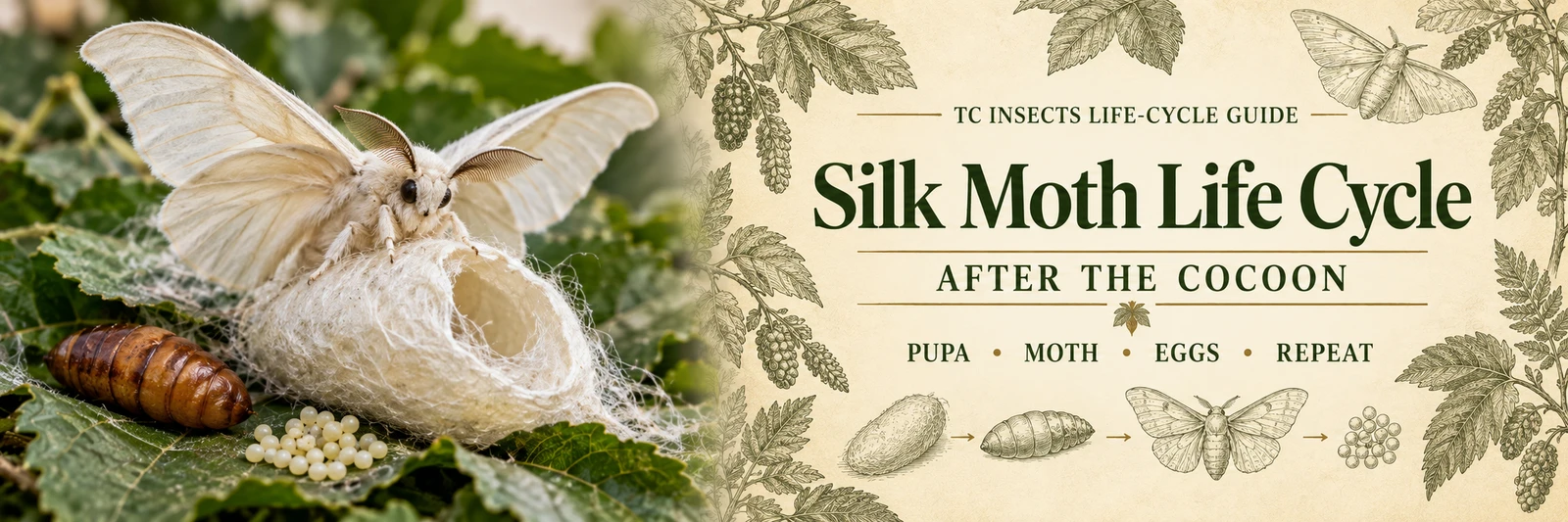
After a silkworm spins its cocoon, the silk moth (Bombyx mori) emerges in about 10 to 14 days, lives roughly 5 to 10 days without eating or flying, mates within hours of meeting a partner, and lays a few hundred eggs that either hatch in about 10 days or rest for months in the cold, depending on the strain. This is the half of the silkworm story most raisers never plan for, and it is where the eggs for next year come from. Here is exactly what to expect from the day the last worm spins to the day the eggs are safely stored.
Inside the cocoon: the pupa nobody sees
Once the cocoon is closed, the silkworm molts one last time into a pupa: a smooth, brown, torpedo-shaped case with faint wing outlines. Nothing visible happens for 10 to 14 days at room temperature, but inside, the caterpillar's body is being reorganized into a moth. You can tell a live pupa from a dead one by gently rolling the cocoon: a live one is heavy for its size and often wiggles when warmed in your hand. A cocoon that feels light and rattles usually holds a dried pupa that did not make it.
Leave cocoons where they were spun if you can, or move them gently to a dry box with a paper towel floor. Do not cut a cocoon open to check; the pupa is soft and any damage is fatal. If you want to see the silk, set one cocoon aside for reeling and let the rest emerge. Timing note: cocoons in a cool room can take 3 weeks or more, and a batch of moths will emerge over several days rather than all at once, which is normal. If you are still in the caterpillar weeks, our egg-to-moth guide covers everything up to spinning.
How the moth gets out
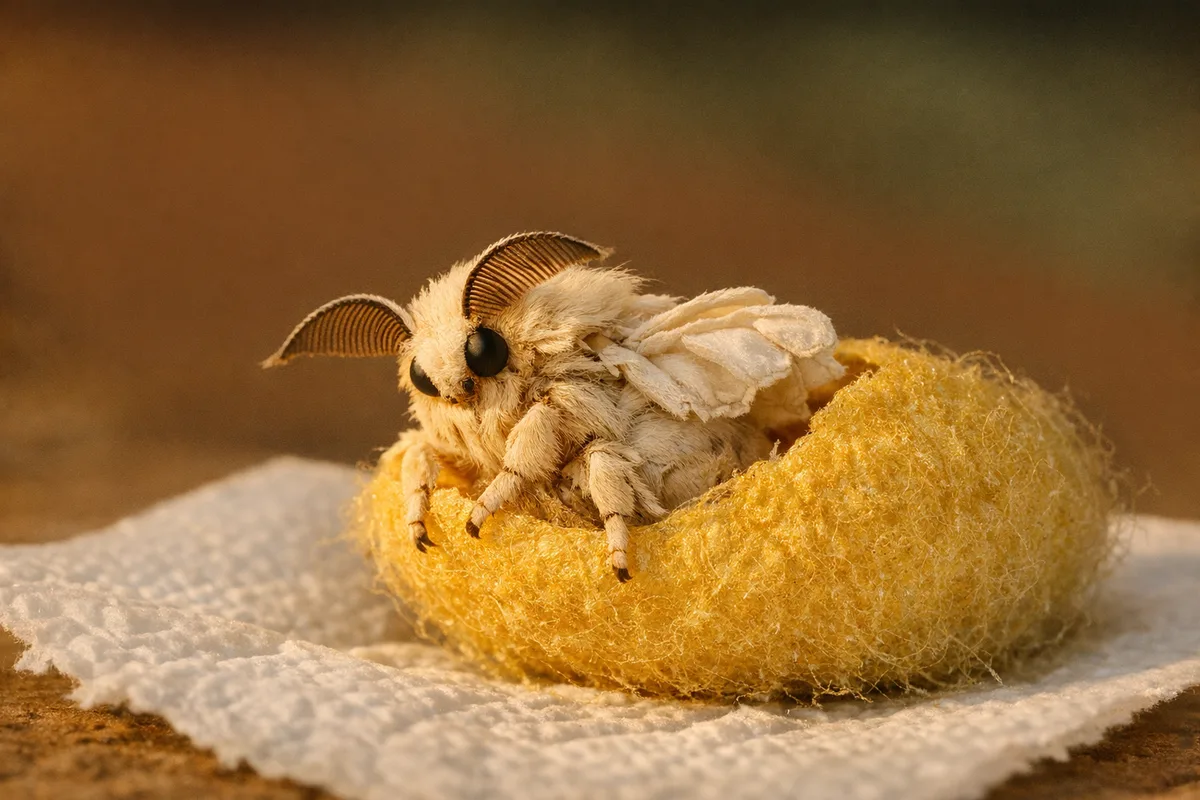
The moth does not chew its way out. It releases a fluid that softens the sericin gum at one end of the cocoon, then pushes the loosened threads apart and squeezes through, which is why a cocoon with an emerged moth has a blunt, frayed end and a broken thread. Commercial silk producers harvest cocoons before this happens to keep the thread continuous; a home raiser who wants moths simply lets them out. Emergence usually happens in the morning, and the moth spends its first hour or two pumping fluid into its crumpled wings and drying.
A freshly emerged silk moth is creamy white, furry, with feathery antennae and wings that look too small for its body. That is not a defect. Thousands of years of breeding for silk have left the domestic silk moth unable to fly; it can flutter and walk, nothing more. It also has no working mouthparts. Every calorie it will ever use was stored while it was a caterpillar, which is the reason feeding well in the last two growth stages matters even for the moth you have not met yet.
Telling males from females
Sexing silk moths is easy once you have seen both. Females are noticeably larger and rounder, with a fat abdomen full of eggs, and they mostly sit still. Males are slimmer, with bigger, more feathery antennae, and they fan their wings almost constantly and walk in circles when a female is nearby. Within hours of emerging, a female releases a scent that males detect with those antennae, and a pair placed in the same container usually joins end to end within minutes.
Mating pairs stay coupled for several hours, sometimes most of a day. Do not separate them. If you have several moths, keep pairs in their own containers so you know which female laid which eggs, useful for a classroom or a breeding project. Unmated females will still lay eggs, but those eggs are infertile and will not darken or hatch; that is the quickest way to tell after the fact whether a female was mated.
Egg-laying and what the eggs look like
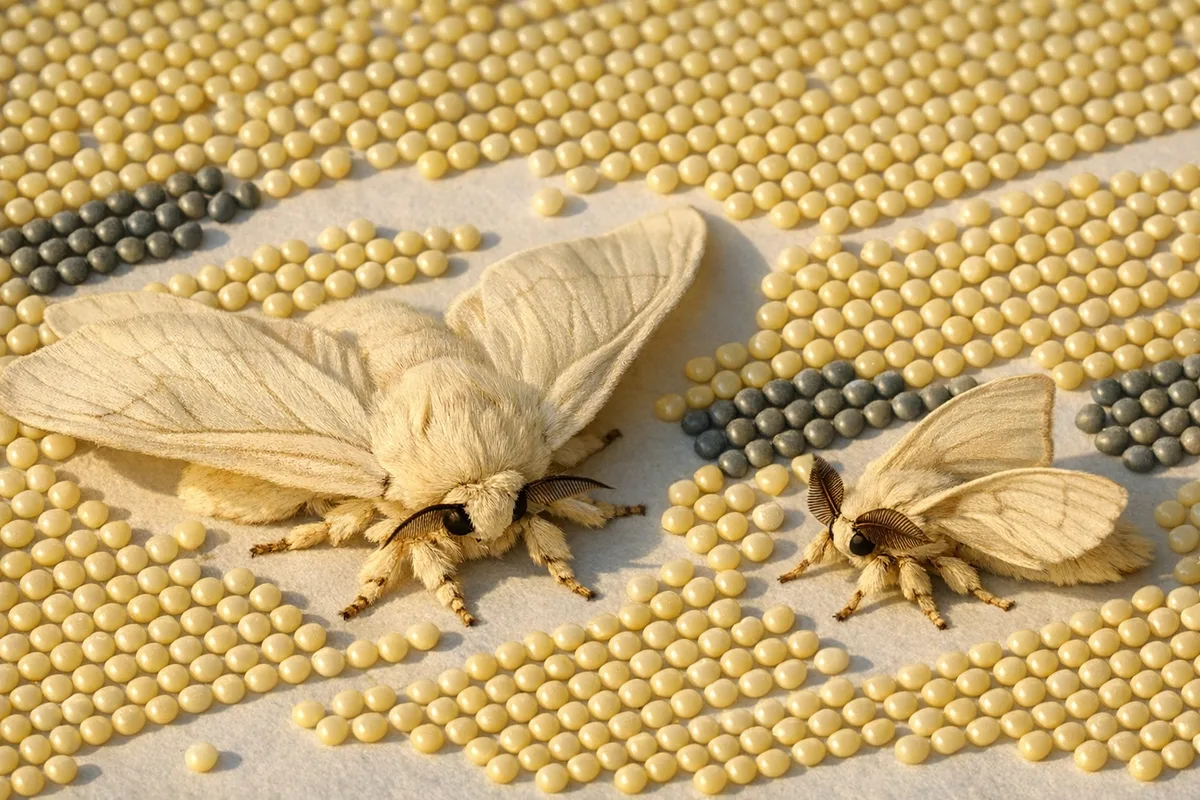
A mated female starts laying within a day, usually on whatever flat surface she is standing on. Give her a sheet of plain paper or a paper towel in a dry container and she will glue a few hundred pale yellow eggs down in tidy rows and patches over a day or two. Then she is done, and she will die within a few days, as will the male. This is the natural end of the adult stage, not a care failure, and it is worth saying that plainly to children who have raised the animal from a caterpillar.
What the eggs do next depends on the strain. Fertile eggs from a non-diapause strain turn from yellow to gray or slate blue over about a week and hatch around 10 days after laying at 80 F, and you are back at day one of the caterpillar story. Fertile eggs from a diapause strain, which is most of what is sold for feeders and classrooms, darken and then stop; they need a cold rest of several weeks to months before they will hatch. Infertile eggs stay pale yellow and eventually shrivel. If your eggs are dark after a week and nothing hatches after three, assume diapause and store them cold.
Storing eggs for the next batch
Diapause eggs are the reason silkworms are easy to keep year to year: they store like seeds. Let the egg paper dry for a day at room temperature, then fold it loosely, put it in a labeled zip bag with a piece of dry paper towel, and keep it in the refrigerator, not the freezer. Most raisers store eggs for at least 6 to 8 weeks and up to several months; the cold period is what breaks diapause, so eggs pulled too early may not hatch or may hatch unevenly. When you are ready, bring the bag to room temperature for a day, then move the paper to a warm spot near 80 F, and hatching follows in roughly 10 days.
Hatching day is the fussiest day in the whole cycle, because newborn silkworms are 2 to 3 mm long and need very finely grated chow or the thinnest slivers of young leaf. Read how to hatch silkworm eggs and the silkworm care sheet before you warm them, and have chow on hand. If that first week sounds like more than you want, keep a few egg papers as insurance and buy small worms for the next project; there is no rule that says you must hatch your own.
Why silk moths cannot live in the wild
People sometimes ask whether they can release the moths. The answer is no, for a simple biological reason: the domestic silk moth has been bred by humans for roughly 5,000 years and no longer exists as a wild animal. It cannot fly to find a mate, cannot feed, cannot escape a bird, and its caterpillars cannot find mulberry on their own. Released moths simply die within days, so the kind choice is to let them complete their short adult life indoors, lay their eggs, and be composted.
That history is also what makes the silk moth such a good teaching animal. It is a living example of selective breeding, a working model of complete metamorphosis, and the source of a fiber that shaped trade routes for centuries. Raise one generation from small worms, keep the egg paper cold over the summer, and the following spring you can start the whole cycle again from eggs your own moths laid, which is a story a classroom or a family gets to tell exactly once a year.
Keep reading: What to Do With Leftover Feeder Insects: Colony, Freezer, Birds, or Compost
The Next-Generation Silkworm Kit
Small silkworms to raise to moths and the chow to get them there, so you end with cocoons, eggs, and next year's batch.
Frequently Asked Questions
How long does a silk moth stay in its cocoon?
About 10 to 14 days at room temperature near 80 F. In a cooler room it can be 3 weeks or more, and moths from the same batch emerge over several days rather than together. A live cocoon feels heavy for its size and often wiggles when warmed in your hand; a light, rattling cocoon usually holds a pupa that did not survive.
Do silk moths eat or drink?
No. Domestic silk moths have no working mouthparts and live 5 to 10 days on energy stored during the caterpillar stage. They need only a dry container and a sheet of paper to lay eggs on. A moth that seems weak is not hungry; it is simply at the end of a short adult life.
Why can't silk moths fly?
Thousands of years of selective breeding for silk left the domestic silk moth with wings too small and a body too heavy for flight. It can flutter and walk. That is also why the moths cannot survive outdoors and should never be released; they cannot find mates, food, or safety in the wild.
How do I know if my silkworm eggs are fertile?
Fertile eggs change color within about a week, turning from pale yellow to gray or slate blue. Infertile eggs from an unmated female stay yellow and slowly shrivel. Dark eggs that do not hatch after three weeks at room temperature are almost certainly a diapause strain and need several weeks of refrigeration before they will hatch.
How long can silkworm eggs be stored in the refrigerator?
Diapause eggs keep for several months in a sealed bag in the refrigerator, and most raisers give them at least 6 to 8 weeks of cold before warming them, since that cold period is what ends diapause. Never freeze them. Bring the bag to room temperature for a day before moving the eggs to a warm spot to hatch.
How many eggs does one silk moth lay?
A mated female typically lays a few hundred eggs over a day or two, glued in neat rows to whatever surface she stands on. That is far more than most people can raise, so keep one or two egg papers and compost or share the rest. One healthy pair is enough to restart a whole classroom next year.
Written by the TC INSECTS breeding team · Porter, Texas · Live Arrival Guarantee on every order
Have a care question? Ask our community.
Join Reptile Keepers USA, our free Facebook group for reptile, amphibian and invert keepers. Share your setups, get care help and swap feeder tips.
Join the free group