Wild-Caught Tarantula? How to Quarantine It and Handle Mites
Often 4 to 12+ weeks depending on species, age and how recently it molted
Roams the substrate and old prey; a scavenger, not a parasite
Husbandry fixes the problem; chemical treatments near a tarantula do not
Observe first. Quarantine before introducing.
Most mites on a wild-caught tarantula are harmless scavengers that will not hurt the spider, but any new wild or unknown-origin tarantula should still spend at least one full molt cycle, often 4 to 12 or more weeks depending on species and age, alone in a bare quarantine setup before it meets the rest of a collection. The tell that matters most is movement: mites that wander freely over the substrate and leftover prey are almost always harmless detritivores, while mites clustered and motionless on the spider's own body, especially around the book lungs or leg joints, are the rare kind worth taking seriously. Here is the response ladder that actually works.
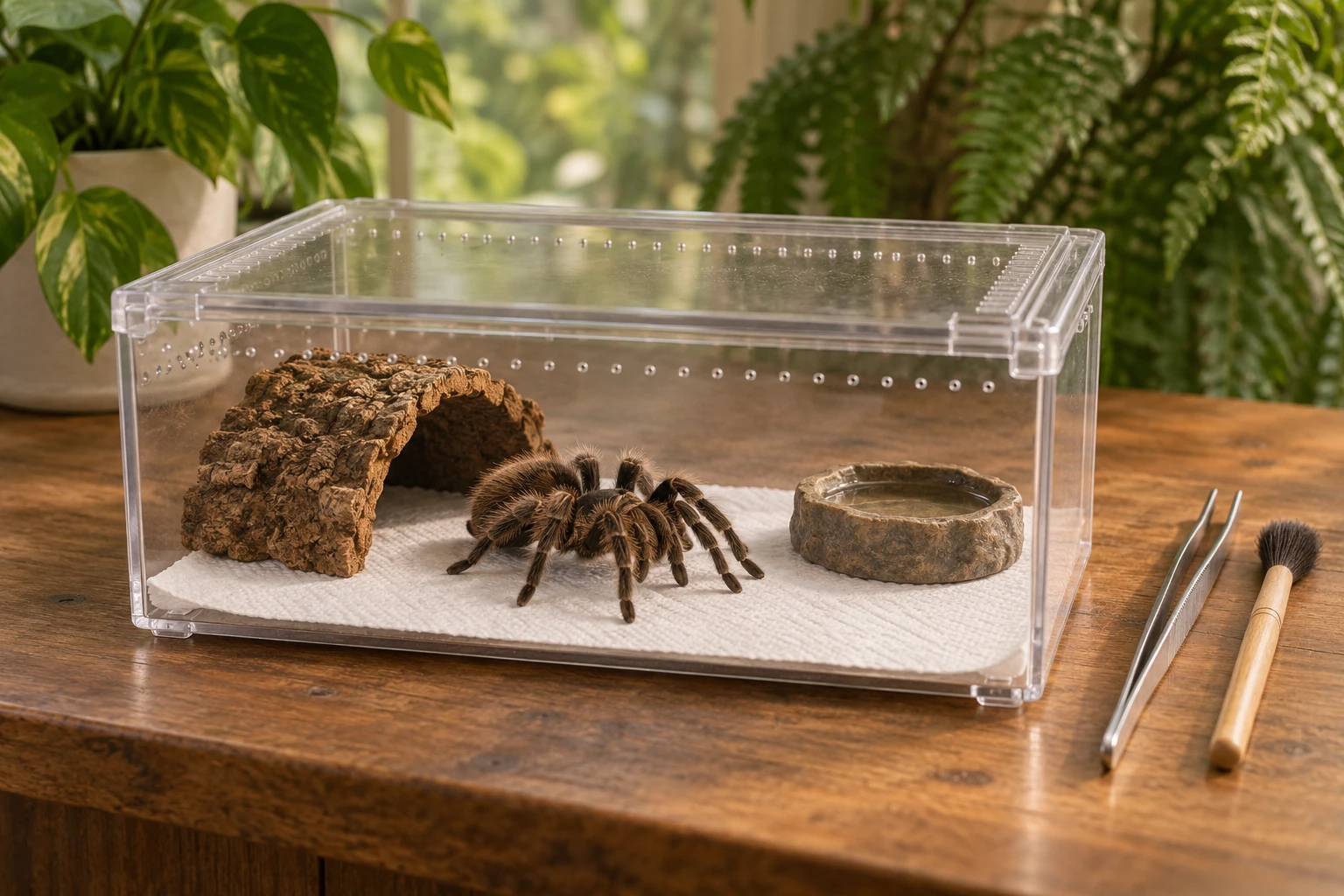
A clean, simple place to watch and wait.
Keep the new arrival separate, remove leftover prey, and observe from outside the enclosure. Preserve the full quarantine window and avoid chemical mite treatments.
Harmless Mites vs. the Rare Parasitic Kind
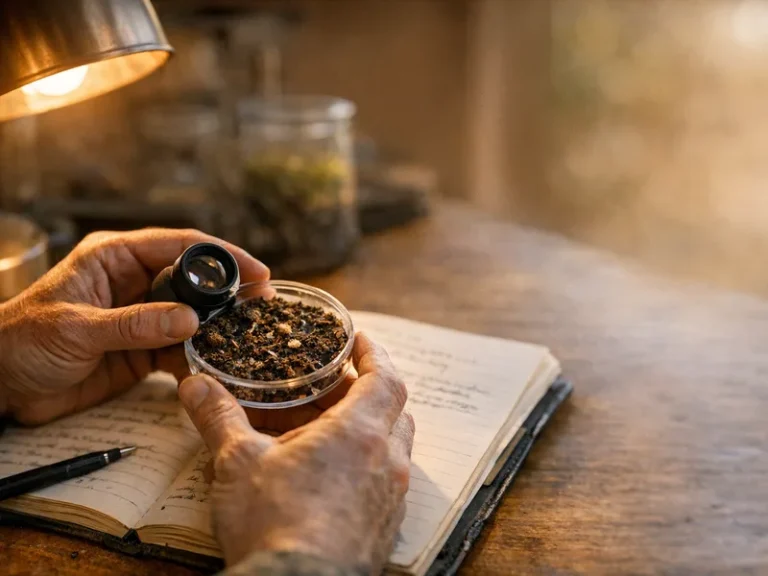
The overwhelming majority of mites you will ever find near a tarantula are harmless scavengers, often called saprophytic or detritivore mites. They live on leftover prey, droppings and decaying substrate rather than the spider itself, and a hobbyist rule of thumb is a useful first filter: if the mites are moving around freely across the substrate and old food, they are almost certainly harmless. A wild-caught or recently collected tarantula commonly arrives with some of these hitchhikers, and they are not a sign of poor husbandry on their own.
The mites worth taking seriously are a different, much rarer group, mostly from the family Laelapidae, and they are found almost exclusively on wild-caught animals rather than captive-bred slings. These parasitic mites attach to the edge of the carapace or cluster around the book lungs and leg joints, where they feed on small amounts of hemolymph. The tell is that they stay put instead of wandering: mites clustered and motionless directly on the spider's own body, especially near the book lungs, are the pattern that calls for a closer look and a faster response.
The Response Ladder That Actually Works
Almost every mite problem, including a heavy one, responds to husbandry changes rather than any product. Start by removing every scrap of uneaten prey and old droppings within a day of feeding, since decaying leftovers are what feeds a harmless mite population in the first place. Dry out the surface of the substrate if it has been running damp, and improve airflow, since stagnant, overly moist conditions let mite numbers climb. These three changes alone clear the great majority of mite complaints within one to two weeks without touching the spider at all.
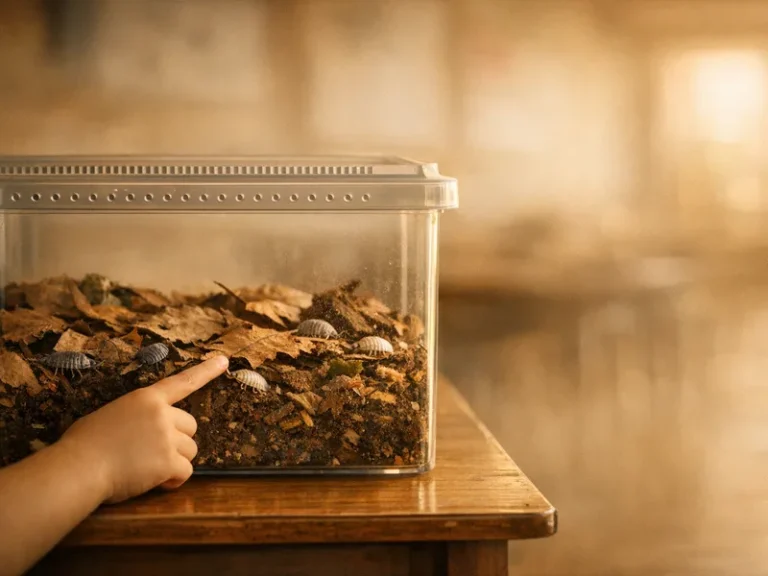
If mites appear to be on the spider itself rather than just the substrate, move it to a bare, dry holding container with only a shallow water dish and paper towel for substrate, and watch it daily rather than handling it to inspect. A properly set up permanent enclosure matters here too, since a spider is easier to keep clean when it is not oversized or overfilled with substrate. For the permanent enclosure once the spider is back in it, a springtail culture works as an ongoing cleanup crew, quietly processing leftover prey and waste before it can build into a mite problem again.
How Long to Quarantine a Wild or Unknown-Origin Tarantula
The hobbyist standard is to quarantine a wild-caught or unknown-origin tarantula for at least one full molt cycle before it goes anywhere near an existing collection, since a molt sheds the old exoskeleton and any hitchhiking mites along with it. In practice that is commonly 4 to 12 or more weeks, and it runs longer for adults, which molt far less often than fast-growing juveniles. Watch for the premolt signs covered in our molting guide, a darkening or dulling abdomen and a drop in appetite, so you know the clock is actually moving toward a molt rather than just ticking calendar days.
Treat 30 days as an absolute floor, not a target, especially for a slower-growing adult that may not molt again for months. If a molt has not happened by the time you expected one, extend the quarantine rather than shortening it, and keep watching for both mites and general health during the wait. A spider that eats, drinks and behaves normally through the full window is a far better sign than a fixed number of days on its own.
Setting Up a Bare Quarantine Enclosure
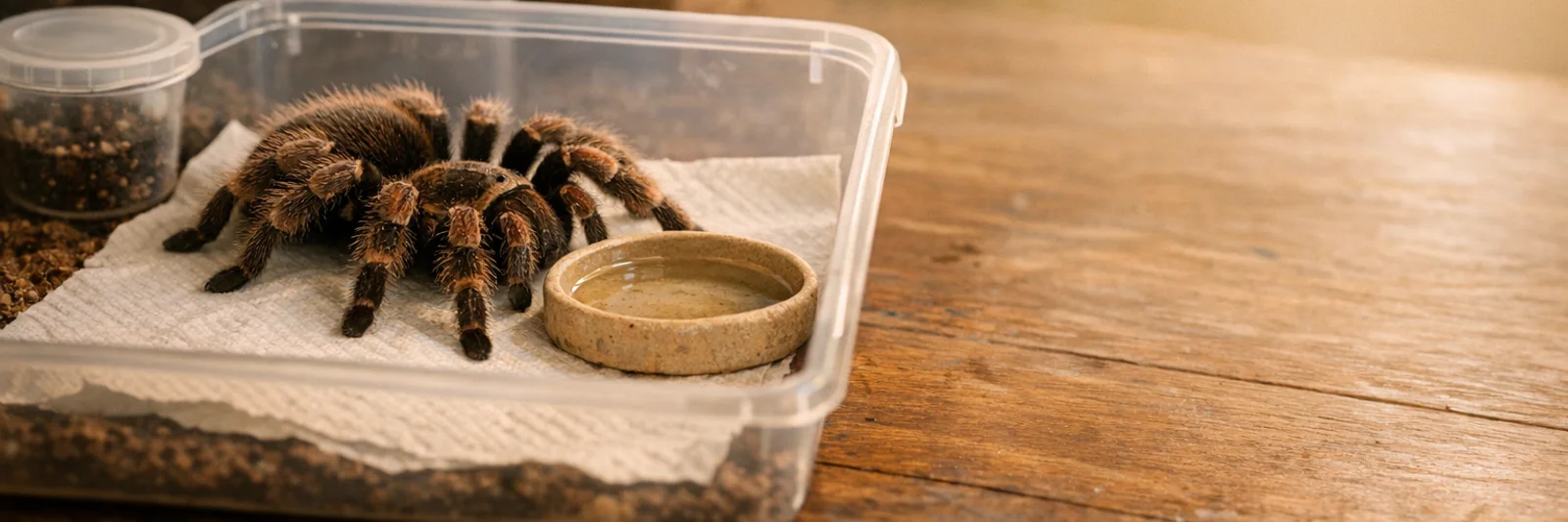
Keep the quarantine setup deliberately minimal: paper towel or a thin layer of substrate instead of a full bioactive layer, a shallow water dish, a simple hide, and a secure, well-ventilated lid. Bare is not a downgrade here, it is the point. A plain container makes it easy to spot mites, leftover prey or loose stool immediately, and it is fast to wipe out and refresh if anything looks off, neither of which is true of a planted, substrate-heavy display setup.
Size it the same way you would size a permanent home, using the same footprint rule as any terrestrial species: roughly three times the spider's diagonal leg span in length. A cramped quarantine tub adds stress on top of an already stressful move, and a stressed tarantula is a worse eater and a harder animal to read for the early signs of a problem.
What Not to Do When You Find Mites
Do not reach for a pesticide, an essential oil or an alcohol swab anywhere near a tarantula. A tarantula breathes through book lungs on the underside of its abdomen, and the chemicals sold to kill household mites are broadly toxic to invertebrates; several have killed the spider they were meant to treat. Every reliable fix here is a husbandry fix: less leftover food, drier substrate, better airflow and, where needed, a bare holding setup, never a chemical treatment.
Also resist the urge to pick the spider up for a closer look the moment you spot mites. A tarantula that is building up to a molt can look dull, sit still and refuse food for entirely normal reasons, and handling it to check for mites risks an injury during a vulnerable stretch. Observe from outside the enclosure, and only intervene by changing the environment.
Identifying a Wild-Caught Tarantula Before You Quarantine It
Most tarantulas found outdoors or collected during a migration season in the United States are New World species, such as the Texas brown or Oklahoma brown tarantula, rather than the Old World species sold widely in the pet trade. Our New World and Old World guide covers why that matters: New World species carry urticating hairs they can flick in self-defense, which is one more reason to observe a new, wild-origin spider rather than handling it during quarantine.
Mites on a Wild-Caught Tarantula: What You're Looking At
The Wild-Caught Quarantine Kit
A bare-setup cleanup crew and right-sized feeders for the quarantine tank, not the display enclosure.
Frequently asked questions
Are mites on my tarantula dangerous?
Usually not. Most mites near a tarantula are harmless scavengers that move freely around the substrate and leftover prey, feeding on waste rather than the spider. The rare, genuinely parasitic kind cluster and stay still directly on the spider's body, especially around the book lungs or leg joints. If you only see mites wandering the substrate, husbandry cleanup is all you need.
How long should I quarantine a wild-caught tarantula?
Plan on at least one full molt cycle, commonly 4 to 12 or more weeks depending on the species and its age, before it goes anywhere near an existing collection. Treat 30 days as a floor, not a target, and extend the wait if a molt has not happened yet. Adults molt less often than juveniles, so their quarantine tends to run longer.
Can I use a pesticide or oil to kill tarantula mites?
No. Tarantulas breathe through book lungs, and chemical mite treatments, including essential oils and alcohol, are broadly toxic to invertebrates and have killed the spiders they were meant to treat. Every reliable fix is a husbandry change: remove leftover prey, dry the substrate surface, and improve airflow instead of reaching for any product.
What is the fastest way to clear harmless mites from an enclosure?
Remove uneaten prey and droppings within a day of feeding, dry out a damp substrate surface, and improve ventilation. Those three changes remove the food source and conditions mites need to multiply, and most harmless infestations clear within one to two weeks. A springtail culture in the permanent enclosure helps keep leftovers from building up again.
Can mites from a wild-caught tarantula spread to my other spiders?
They can, which is exactly why quarantine matters. Keep a new wild or unknown-origin tarantula's tools, water dish and substrate completely separate from the rest of your collection, and wash your hands between animals. Skipping quarantine is how a single wild-caught spider turns into a collection-wide mite or parasite problem.
Is it normal for a healthy tarantula to have a few mites?
Yes. Harmless detritivore mites show up around leftover food and damp substrate on plenty of well-kept tarantulas and are not proof of poor husbandry by themselves. It is still worth reducing their numbers with basic cleanup, since a heavy population makes it harder to spot the rare kind that actually needs attention.
Keep reading: whether you can keep a tarantula you found.
Usually not. Most mites near a tarantula are harmless scavengers that move freely around the substrate and leftover prey, feeding on waste rather than the spider. The rare, genuinely parasitic kind cluster and stay still directly on the spider's body, especially around the book lungs or leg joints. If you only see mites wandering the substrate, husbandry cleanup is all you need.
Plan on at least one full molt cycle, commonly 4 to 12 or more weeks depending on the species and its age, before it goes anywhere near an existing collection. Treat 30 days as a floor, not a target, and extend the wait if a molt has not happened yet. Adults molt less often than juveniles, so their quarantine tends to run longer.
No. Tarantulas breathe through book lungs, and chemical mite treatments, including essential oils and alcohol, are broadly toxic to invertebrates and have killed the spiders they were meant to treat. Every reliable fix is a husbandry change: remove leftover prey, dry the substrate surface, and improve airflow instead of reaching for any product.
Remove uneaten prey and droppings within a day of feeding, dry out a damp substrate surface, and improve ventilation. Those three changes remove the food source and conditions mites need to multiply, and most harmless infestations clear within one to two weeks. A springtail culture in the permanent enclosure helps keep leftovers from building up again.
They can, which is exactly why quarantine matters. Keep a new wild or unknown-origin tarantula's tools, water dish and substrate completely separate from the rest of your collection, and wash your hands between animals. Skipping quarantine is how a single wild-caught spider turns into a collection-wide mite or parasite problem.
Yes. Harmless detritivore mites show up around leftover food and damp substrate on plenty of well-kept tarantulas and are not proof of poor husbandry by themselves. It is still worth reducing their numbers with basic cleanup, since a heavy population makes it harder to spot the rare kind that actually needs attention.
Keep learning
Have a care question? Ask our community.
Join Reptile Keepers USA, our free Facebook group for reptile, amphibian and invert keepers. Share your setups, get care help and swap feeder tips.
Join the free group