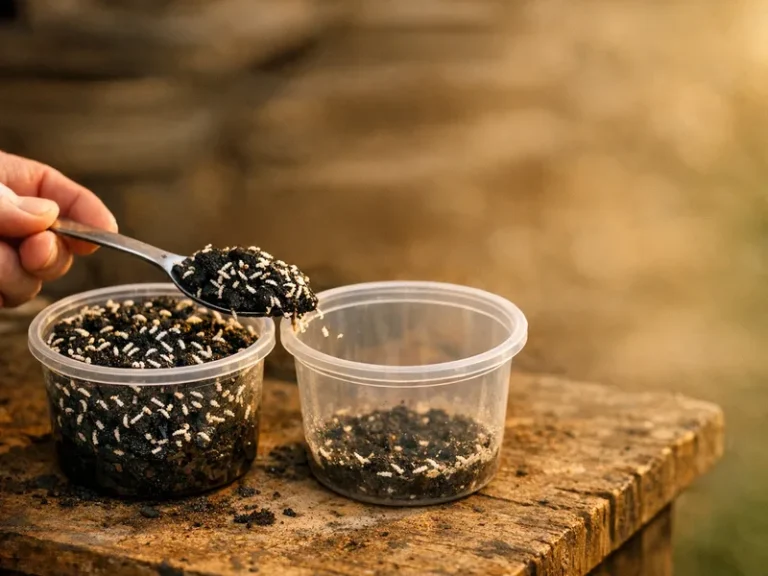
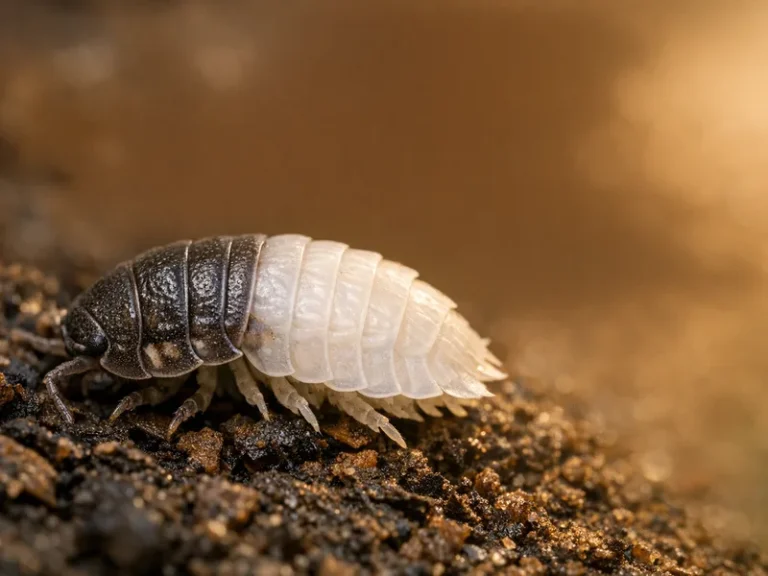
Waxworms vs Mealworms

Highest-fat common treat feeder, never a staple
Leaner than a waxworm, still not a complete diet
Chitin shell can be tough on small or weak eaters
Treat Feeder or Rotation Feeder?
Waxworms run about 25 percent fat and roughly 14 percent protein, making them the richest common treat feeder and a poor everyday food. Mealworms run leaner, at about 19 percent protein and 13 to 14 percent fat, but carry a hard chitin shell and a calcium to phosphorus ratio far below what a reptile needs. Neither one is a complete diet on its own. This guide lines up fat, protein, calcium balance, shell hardness, storage, and feeding response side by side, then covers the two jobs a waxworm actually does well, tempting a hunger strike and adding weight to a thin animal, each with a hard limit on how often to use it.
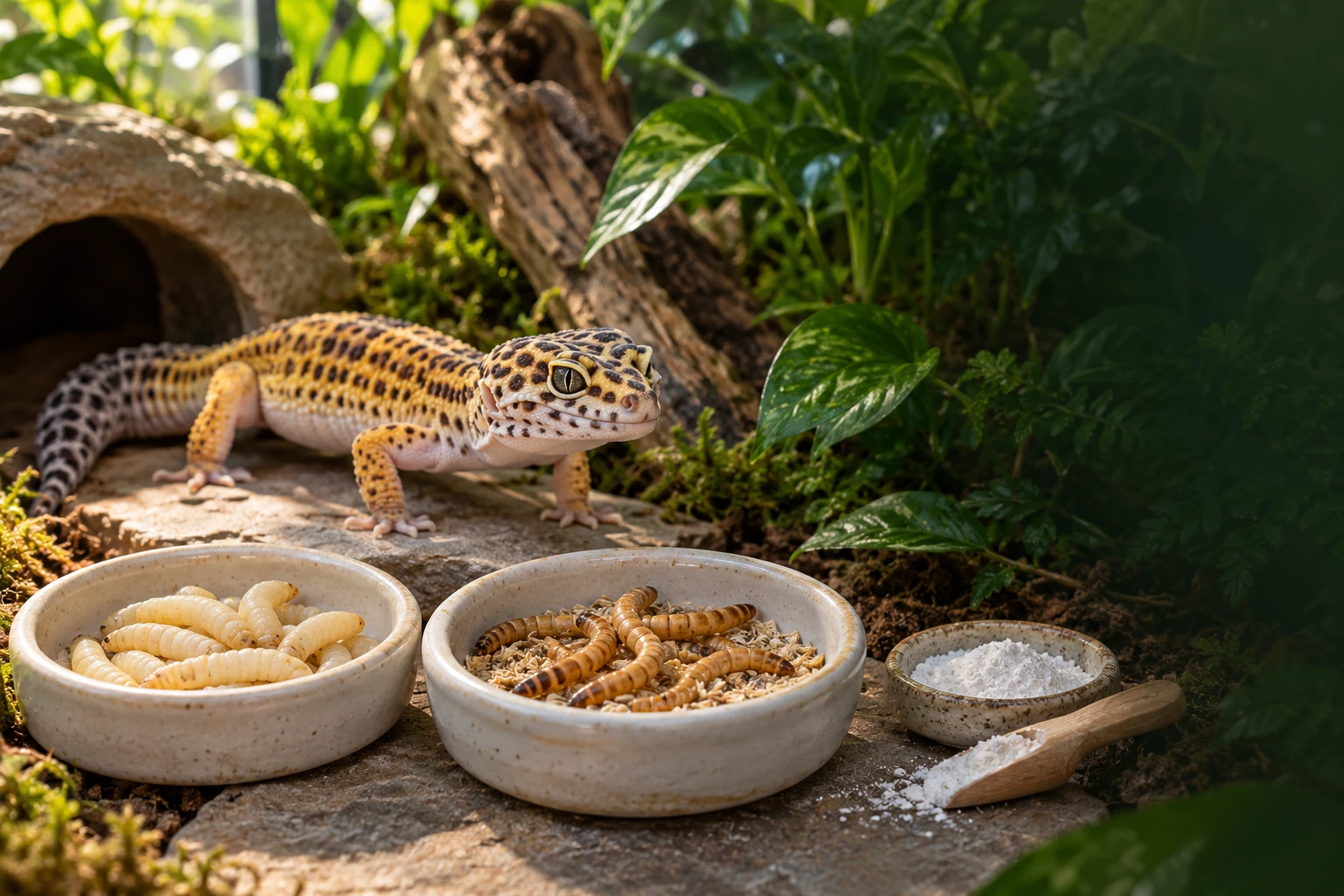
Use Each Worm for the Right Job
Waxworms are soft, rich treat feeders that can stimulate appetite. Mealworms are leaner and store well, but their harder shell still calls for sensible portions and rotation.
Nutrition Side by Side: Fat, Protein, and Calcium
Neither feeder comes close to a reptile's ideal calcium to phosphorus ratio of roughly 2 to 1, but they miss it in different ways worth knowing before you build a diet around either one.
Waxworms: Rich in Fat, Thin on Everything Else
Published composition figures put waxworms around 25 percent fat and 14 percent protein on an as-fed basis, with a calcium to phosphorus ratio near 1 to 8, badly skewed toward phosphorus. That combination is exactly why waxworms work as a treat and fail as a staple, a diet built on them runs heavy on fat and short on the protein and calcium a growing or laying animal actually needs.
Mealworms: Leaner, but Still Calcium-Poor
Mealworms run leaner, commonly cited around 19 to 20 percent protein and 13 to 14 percent fat, but published calcium to phosphorus figures vary widely from source to source, generally somewhere between 1 to 9 and 1 to 14. Every figure lands far below the 2 to 1 balance reptiles need, so mealworms still require regular calcium dusting even as a staple.
Shell Hardness: The Other Real Difference
Mealworms carry a noticeably harder exoskeleton than a waxworm's soft body, built from chitin that is largely indigestible on its own. That shell can be genuinely difficult for a very young, small, or weakened reptile to break down, which is why many keepers crush the head or choose a smaller size for delicate feeders rather than skipping mealworms outright.
Waxworms have no such barrier. Their soft body is easy to digest at any life stage, which is part of why they work so well for tempting an animal that is off its food, but it also means there is nothing slowing an enthusiastic eater down, so portion control has to come from you, not the insect.
Storage and Shelf Life
Both feeders store far longer than most fresh food, just at different temperatures, and getting the temperature wrong is the most common way keepers lose a batch early.
Waxworms Keep Cool, Not Cold
A steady 50 to 60 degree spot, such as a cool cupboard or the mildest shelf in a refrigerator, can hold waxworms for several weeks and sometimes up to about two months. Colder than roughly 40 degrees risks killing them outright, so a deep-cold fridge is the wrong tool even though a mild one can work.
Mealworms Tolerate a Real Fridge
Mealworms handle cold storage better. Kept at 45 to 50 degrees, they go dormant and commonly last 6 to 10 weeks, needing little food or water while dormant. Below about 40 degrees they can freeze and die, so the same rough floor applies to both feeders even though mealworms tolerate the colder end of that range far better.
Which One Triggers a Feeding Response Better
A waxworm's soft body, rich smell, and eager wriggle make it one of the most reliable feeders for pulling a reluctant, stressed, or sick animal back to eating, which is exactly why it earns a place in a feeding kit despite its poor everyday nutrition.
Mealworms trigger a solid, reliable feeding response too, just a less dramatic one. Most healthy animals eat them readily as part of a normal rotation, but a mealworm rarely turns a genuine hunger strike around the way a waxworm can.
The Two Real Jobs a Waxworm Does Well
Used correctly, a waxworm is a tool with two specific jobs, not a feeder you reach for by default.
Tempting a Hunger Strike
A reluctant or stressed eater will often take a waxworm when it refuses everything else, which makes a few waxworms a reasonable way to restart feeding before working back toward staple insects. This is a short-term bridge, not a long-term diet.
Adding Weight to a Thin Animal
The same richness that makes waxworms a poor staple makes them useful in small numbers for a genuinely underweight animal. Vet-reviewed guidance for one commonly kept species caps this around five to six waxworms a day for an adult, and limits routine treat feeding to less than once a week for a healthy animal, a reasonable ceiling to start from for other insectivorous reptiles as well.
Building the Staple Diet Instead
Neither of these two belongs at the center of a diet, so the actual staple work falls to leaner feeders. TC leans on mealworms, superworms, black soldier fly larvae, and dubia roaches for the everyday base, rotating between them for variety rather than settling on one.
Waxworms are also the one feeder here that TC does not keep in constant, steady stock the way it does the farmed staples above, so check current waxworm availability before planning a treat around them. If you already have waxworms on hand, our waxworm care sheet covers keeping them fresh until feeding time.
The Staple Feeder Rotation Kit
The lean everyday feeders this comparison actually recommends, not a treat worm.
Frequently Asked Questions
Are waxworms better than mealworms?
Neither is better outright, they do different jobs. Waxworms are richer and better at tempting a reluctant eater or adding weight to a thin animal, while mealworms are leaner and more suitable for regular feeding as part of a varied rotation. Neither one is a complete diet on its own.
What is the fat content of a waxworm compared to a mealworm?
Waxworms run around 25 percent fat on an as-fed basis, noticeably richer than a mealworm's 13 to 14 percent. That gap is the main reason waxworms stay an occasional treat while mealworms can work as part of a regular staple rotation with calcium dusting.
Can you feed only mealworms or only waxworms as a full diet?
No, for different reasons. Waxworms are too high in fat and too low in calcium to serve as a staple. Mealworms are leaner but still fall far short of a healthy calcium to phosphorus ratio and carry a hard shell, so both need to sit inside a varied, dusted rotation rather than stand alone.
How long do waxworms and mealworms last in storage?
Waxworms keep for several weeks, sometimes close to two months, in a steady 50 to 60 degree spot. Mealworms tolerate colder storage, commonly 6 to 10 weeks dormant at 45 to 50 degrees. Both feeders can die if stored colder than about 40 degrees.
How often can I feed waxworms as a treat?
Sparingly. Vet-reviewed guidance for one commonly kept reptile caps daily treat feeding around five to six waxworms for an adult and limits routine use to less than once a week for a healthy animal. Use that as a starting ceiling and adjust down for a smaller or less active pet.
Does TC Insects currently sell live waxworms?
Waxworms are the one feeder on this list TC does not keep in the same constant stock as its farmed staples, so availability shifts more than it does for mealworms or dubia. Check the current waxworms page before planning around them, and lean on mealworms, superworms, or black soldier fly larvae in the meantime.
Care for Each Feeder
Have a care question? Ask our community.
Join Reptile Keepers USA, our free Facebook group for reptile, amphibian and invert keepers. Share your setups, get care help and swap feeder tips.
Join the free group