
Purple Ivory Millipede
$14.99 - $86.99
Pronounced: Chee-ko-BOH-lus spin-IH-jer-us
Care Level: Beginner to intermediate
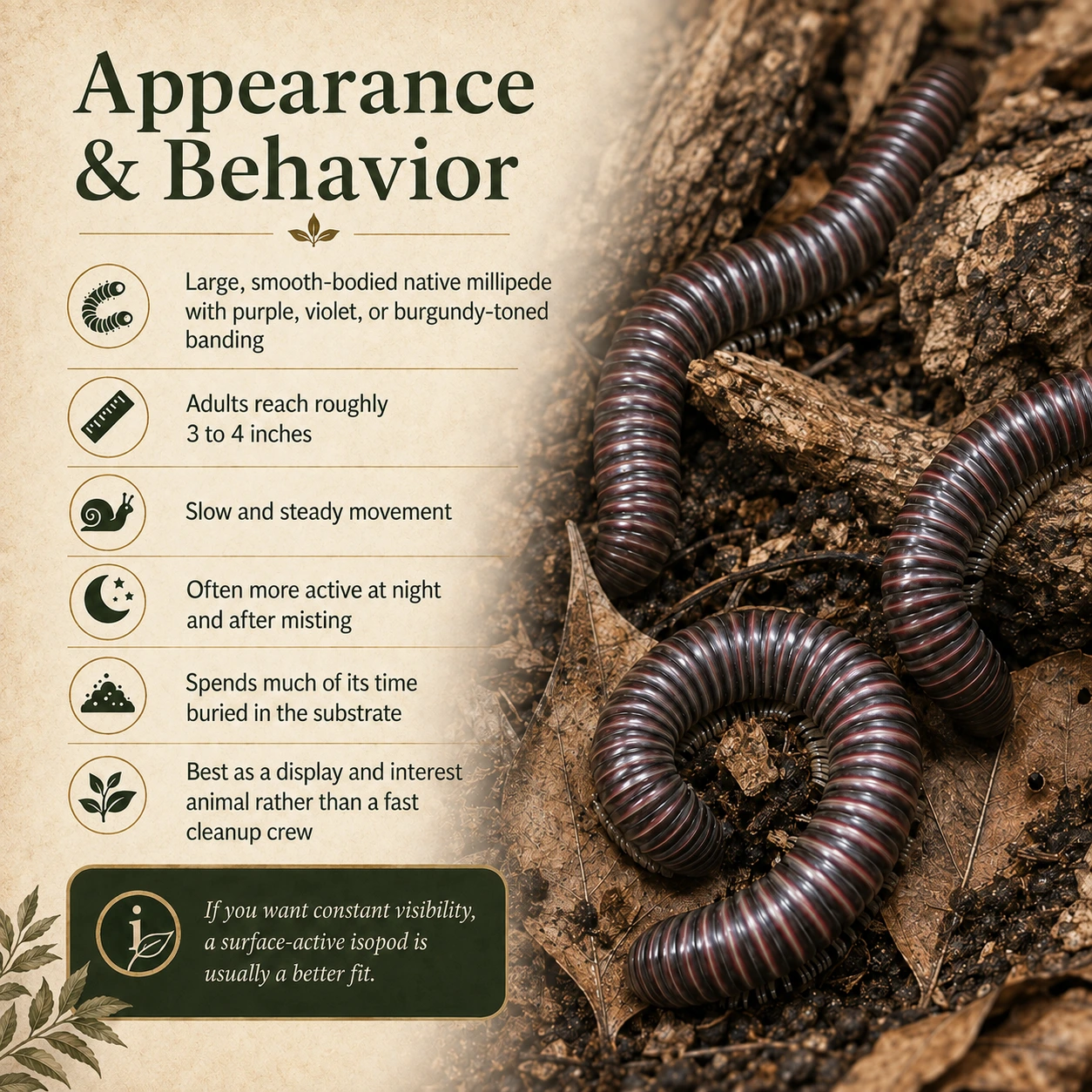
Adult Size: Roughly 3 to 4 inches
Lifespan: Commonly 5 to 10 years
Reproductive Rate: Slow. This is not a fast-producing culture species
Temperature: 72 to 78 °F
Humidity: High, with consistently damp (not wet) substrate at depth
Scientific Name: Chicobolus spinigerus, purple locality form
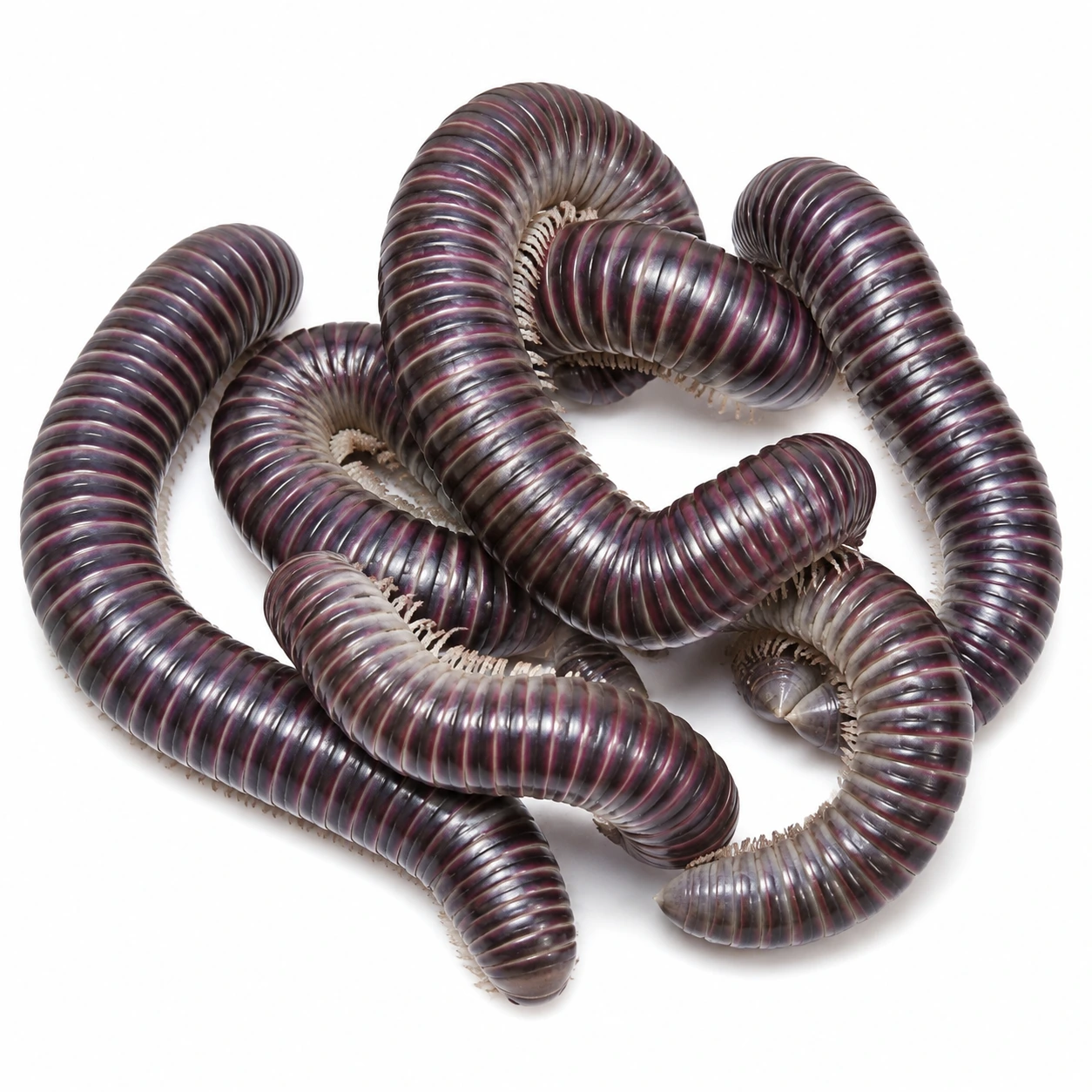
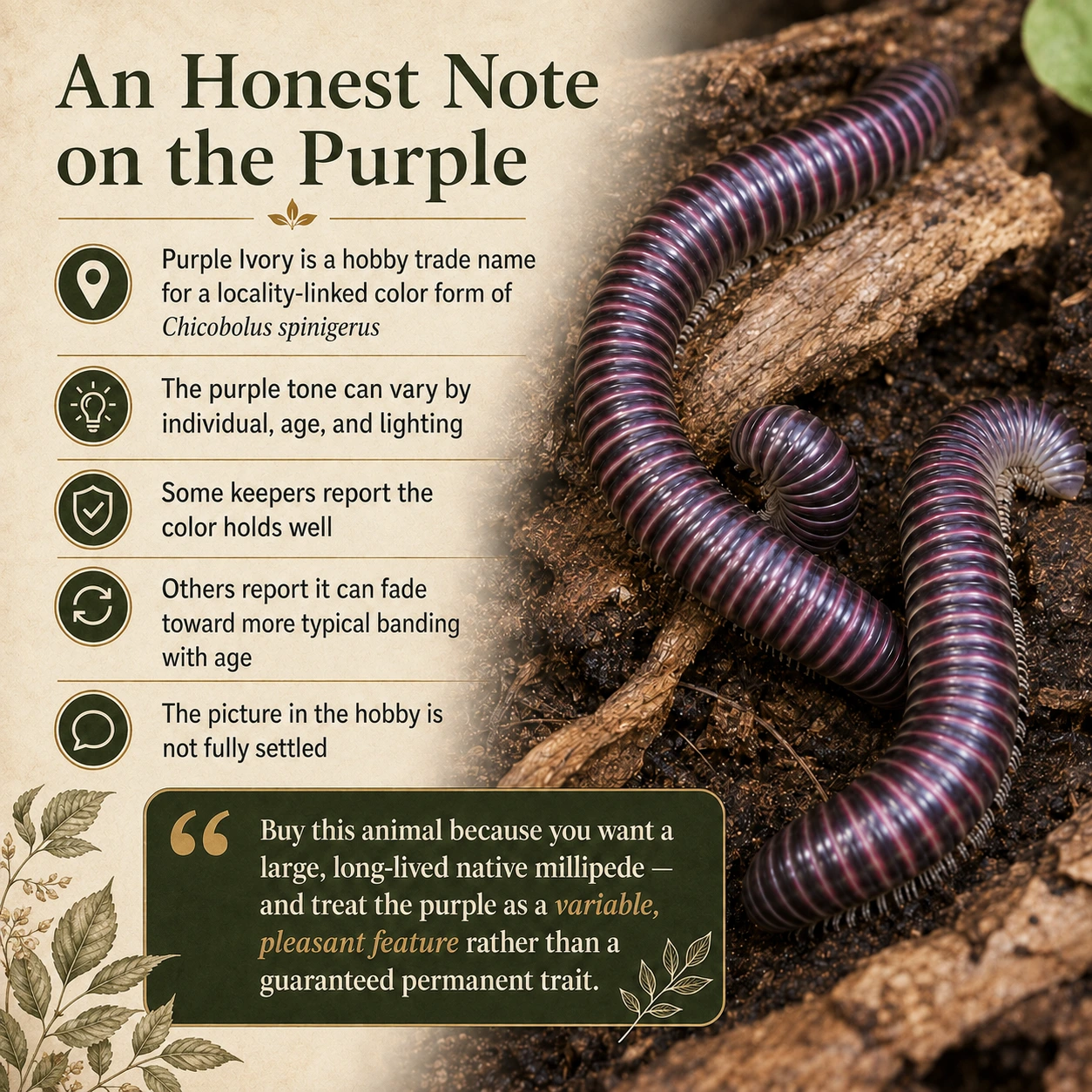
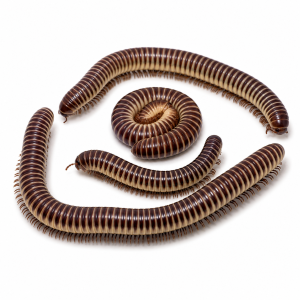
Appearance: Banded body with a purple to burgundy cast over the lighter segments; intensity varies by individual and by lighting
Best For: Display terrariums, deep-substrate millipede setups, and keepers who want a larger, longer-lived invertebrate
A purple locality form of the native Ivory millipede, slower and more deliberate than the isopods most keepers start with. Chicobolus spinigerus is a long-lived North American species that spends most of its life working through decaying hardwood on the habitat floor.
Shipping & Guarantees


Description
Purple Ivory Millipede For Sale | Chicobolus spinigerus
Overview
Scientific name: Chicobolus spinigerus, purple locality form
Pronunciation: Chee-ko-BOH-lus spin-IH-jer-us
Care level: Beginner to intermediate
Adult size: Roughly 3 to 4 inches
Lifespan: Commonly 5 to 10 years
Reproductive rate: Slow
The Purple Ivory is a color form of Chicobolus spinigerus, the Ivory millipede native to the southeastern United States. It is the same species as the familiar black and white Ivory, but comes from populations that carry a purple to burgundy cast across the lighter banding. The purple is a locality-linked color variation rather than a separate species, and how strongly it reads depends on the individual, its age, and the light it is viewed under.
This is a very different animal from the isopods most keepers buy for cleanup duty. Purple Ivories are large, slow moving, and long lived. They spend their time chewing through decaying hardwood and leaf litter well down in the substrate, and they are kept primarily as display and interest animals rather than as a fast-working cleanup crew.
Appearance and Behavior
Purple Ivories have the round-bodied, smooth-shelled build typical of the genus, with alternating dark and light banding down the length of the body. On this form, the lighter bands carry a purple, violet, or burgundy tone. Adults reach roughly 3 to 4 inches, which makes them one of the larger invertebrates in the bioactive and display hobby.
Movement is slow and steady. They are more surface-active than some millipede species, particularly at night and after the substrate has been misted, but they still spend a large share of their time buried. If you want an animal that is visible every time you look at the enclosure, a surface-active isopod is a better fit than a millipede.
An honest note on the purple
Keepers disagree about how the purple holds over time. Some report that this form retains its color longer than juveniles of the standard black and white Ivory, while others report the purple fading toward the typical banding as the animal matures. Both accounts appear in hobby discussion, and the picture is not settled. Buy this animal because you want a large, long-lived native millipede, and treat the purple as a variable and pleasant feature rather than a guaranteed permanent trait.
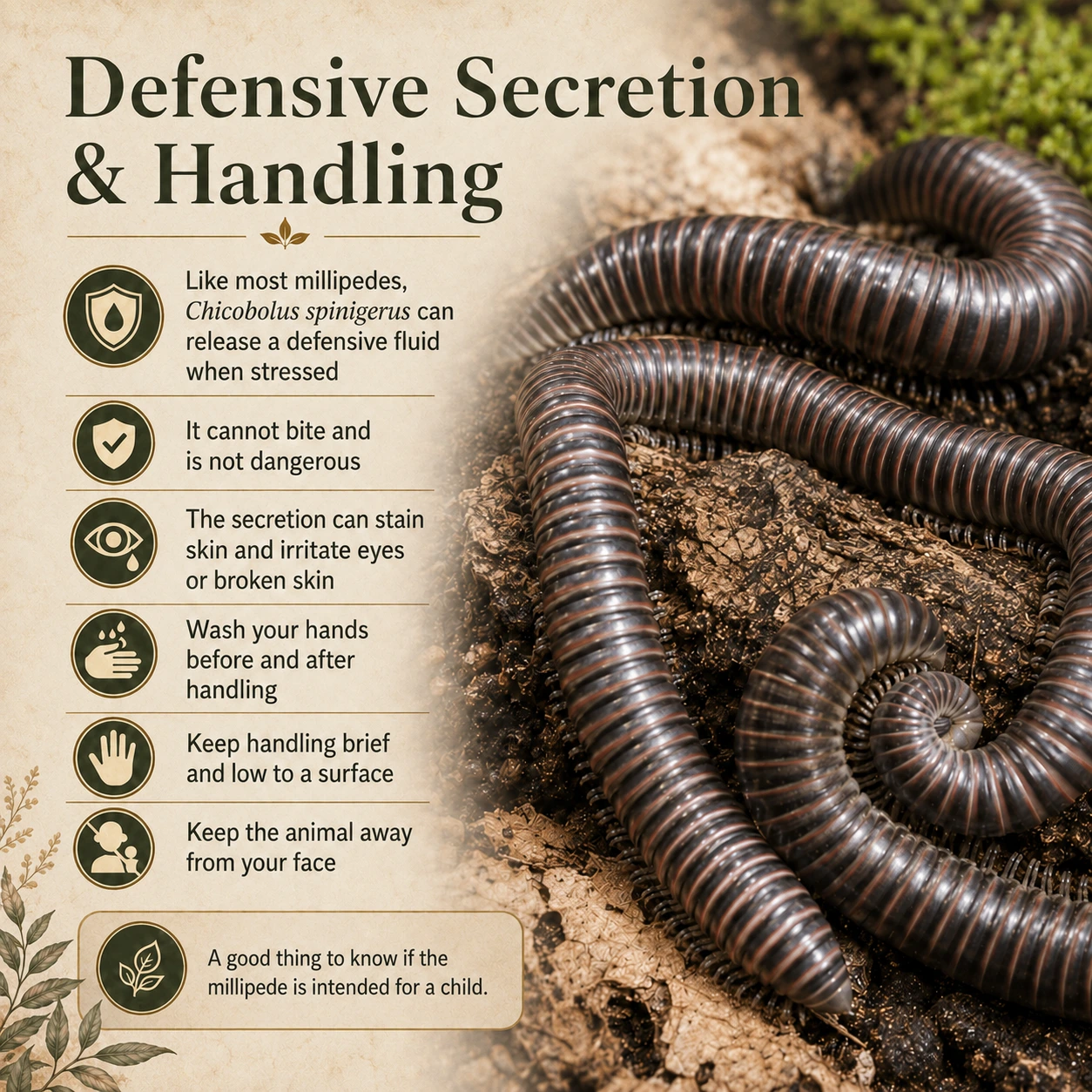
Defensive secretion
Like most millipedes, Chicobolus spinigerus can release a defensive fluid when handled or stressed. It cannot bite and is not dangerous, but the secretion can stain skin and irritate eyes or broken skin. Wash your hands before and after handling, keep handling brief and low to a surface, and keep the animal away from your face. This is worth knowing before buying if the millipede is intended for a child.
Purple Ivory Millipede Care
Temperature
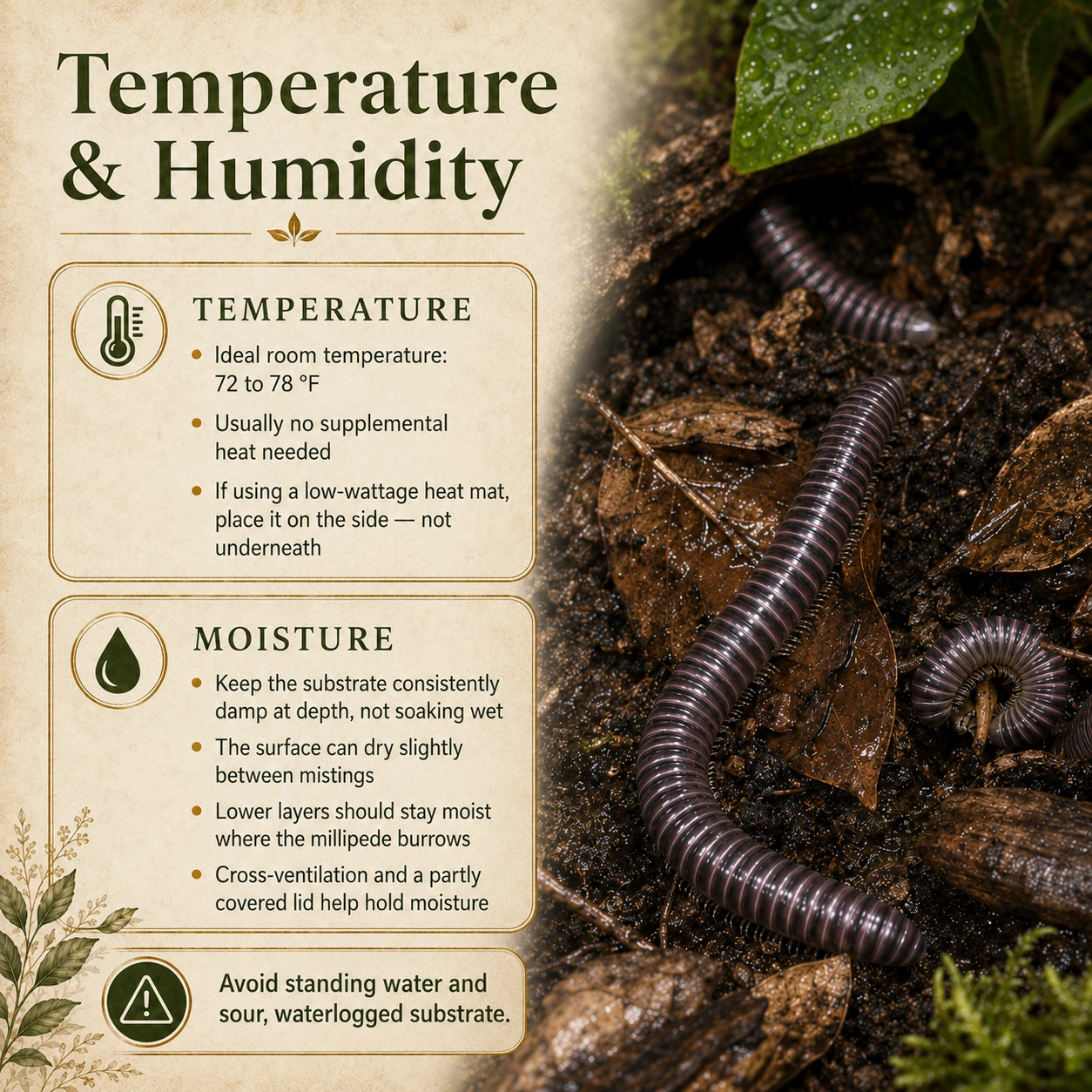
Room temperature suits them well, roughly 72 to 78 °F. They do not need supplemental heat in most homes. If you do use a low-wattage heat mat, place it on the side rather than underneath, and watch that it does not dry the substrate out from below.
Humidity and Moisture
Keep the substrate consistently damp at depth, not soaking. The surface can dry slightly between mistings, but the lower layers where the millipede spends most of its time should stay moist. A cross-ventilated enclosure with a partly covered lid holds moisture better than a fully open top. Standing water and sour, waterlogged substrate are the two most common problems in millipede setups.
Enclosure and Substrate Depth
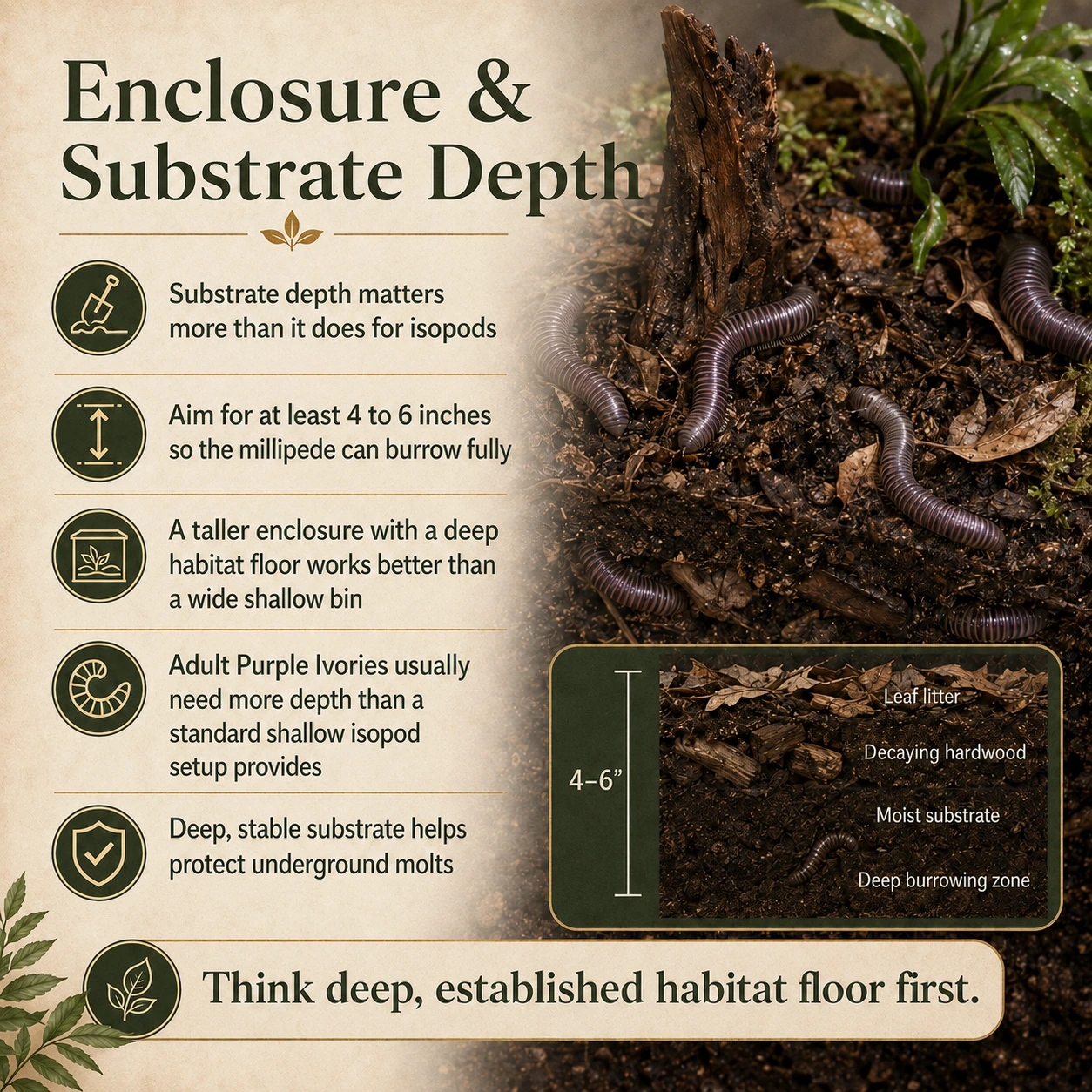
Substrate depth matters more here than it does for isopods. Aim for at least 4 to 6 inches so the animal can burrow fully and molt underground undisturbed. A taller enclosure with a deep habitat floor beats a wide shallow one. Because of this depth requirement, a standard shallow isopod bin is usually not the right container for an adult Purple Ivory.
Diet
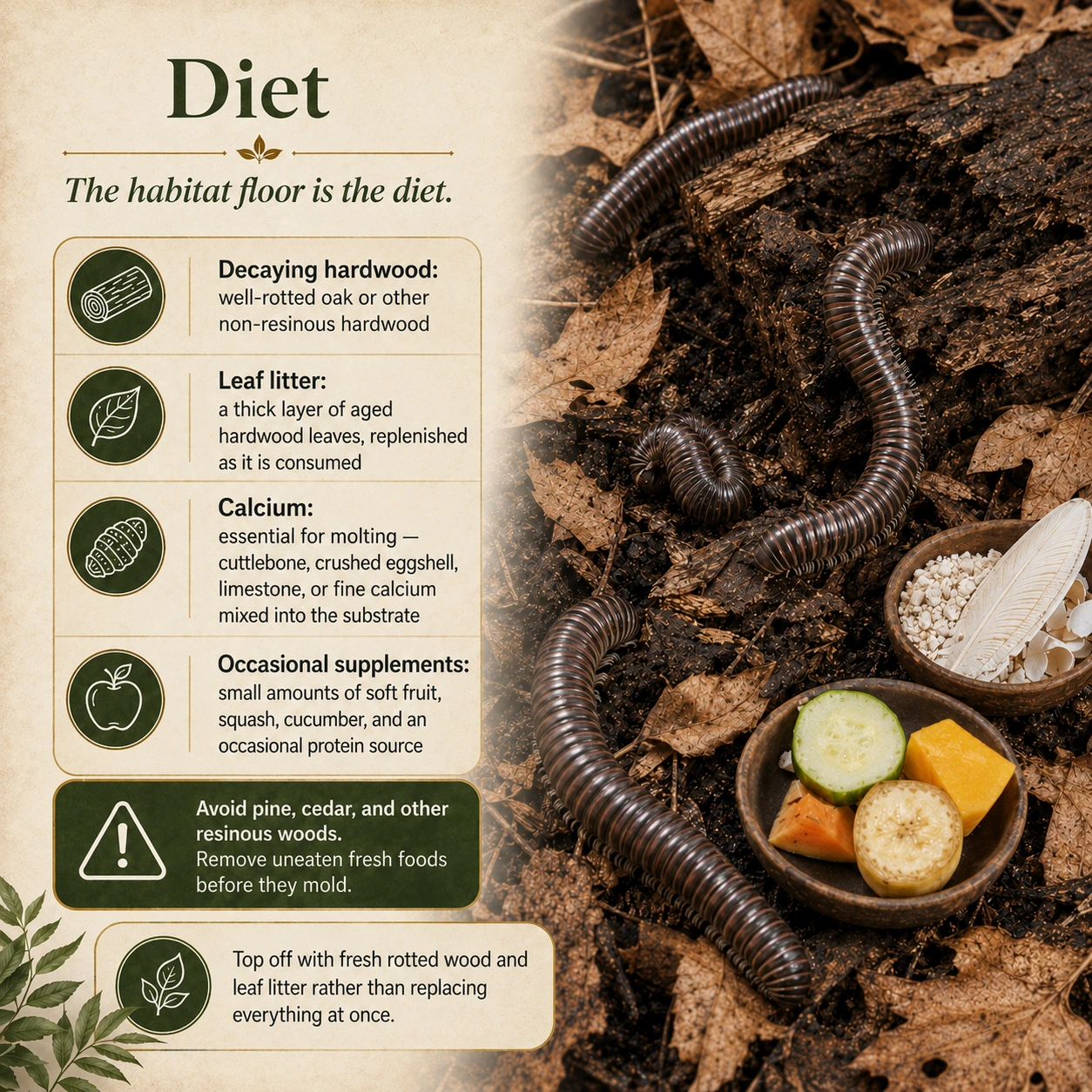
Millipedes get most of their nutrition from the substrate itself, so the habitat floor is the diet. Build it around:
- Decaying hardwood: well-rotted oak or other non-resinous hardwood. Avoid pine, cedar, and other resinous woods.
- Leaf litter: a thick layer of aged hardwood leaves, replenished as it is consumed.
- Calcium: essential for molting. Cuttlebone, crushed eggshell, limestone, or a fine calcium supplement worked into the substrate.
- Occasional supplements: small amounts of soft fruit, squash, or cucumber, plus an occasional protein source. Remove uneaten pieces before they mold.
Substrate is consumed over time and passes through as small castings. Top off with fresh leaf litter and rotted wood rather than replacing everything at once, since a fully established habitat floor supports the animal better than a fresh one.
Molting
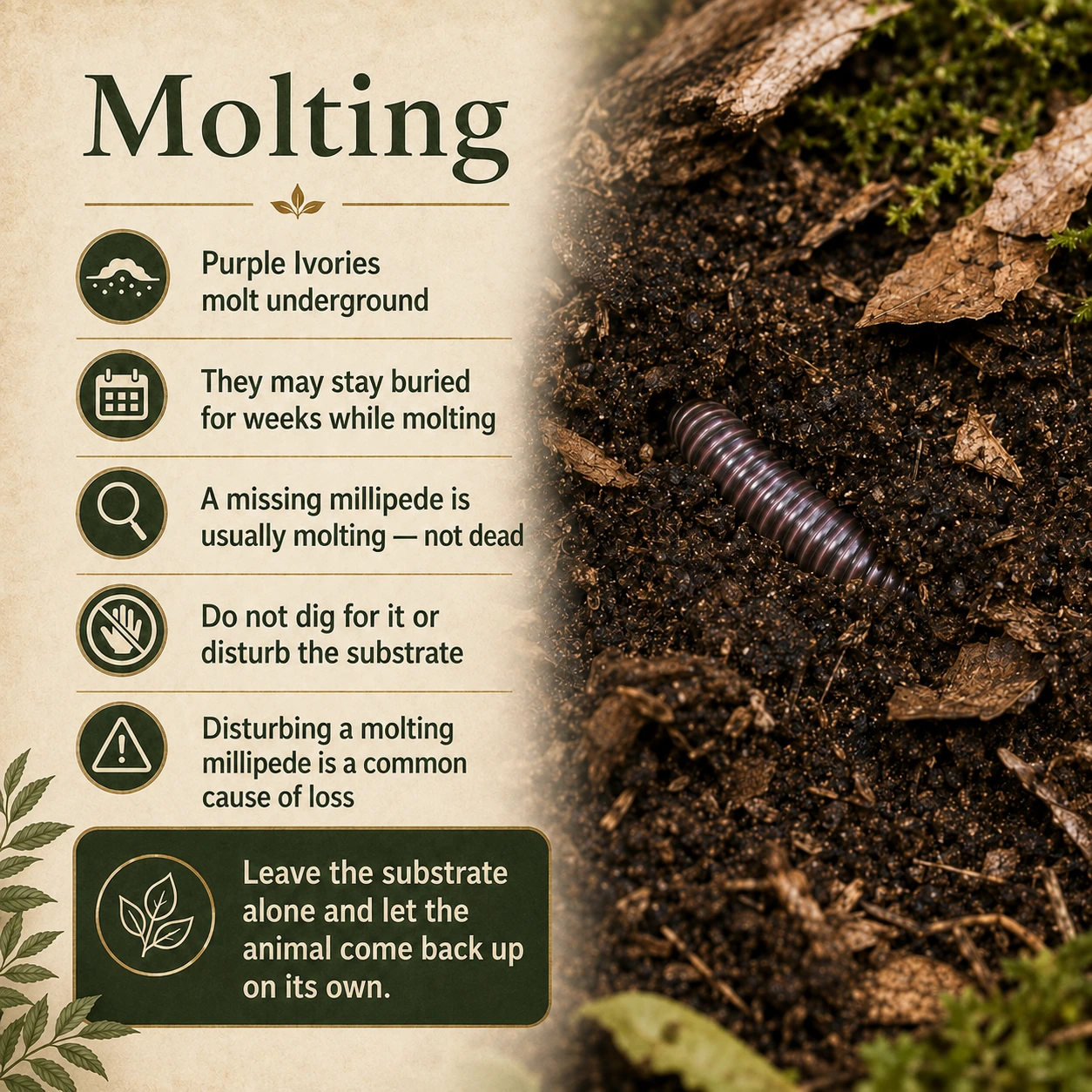
Purple Ivories molt underground and can stay buried for weeks while they do it. A millipede that has disappeared is usually molting, not dead. Do not dig for it. Disturbing a molting millipede is one of the more common causes of loss in this hobby, so leave the substrate alone and let the animal come back up on its own.
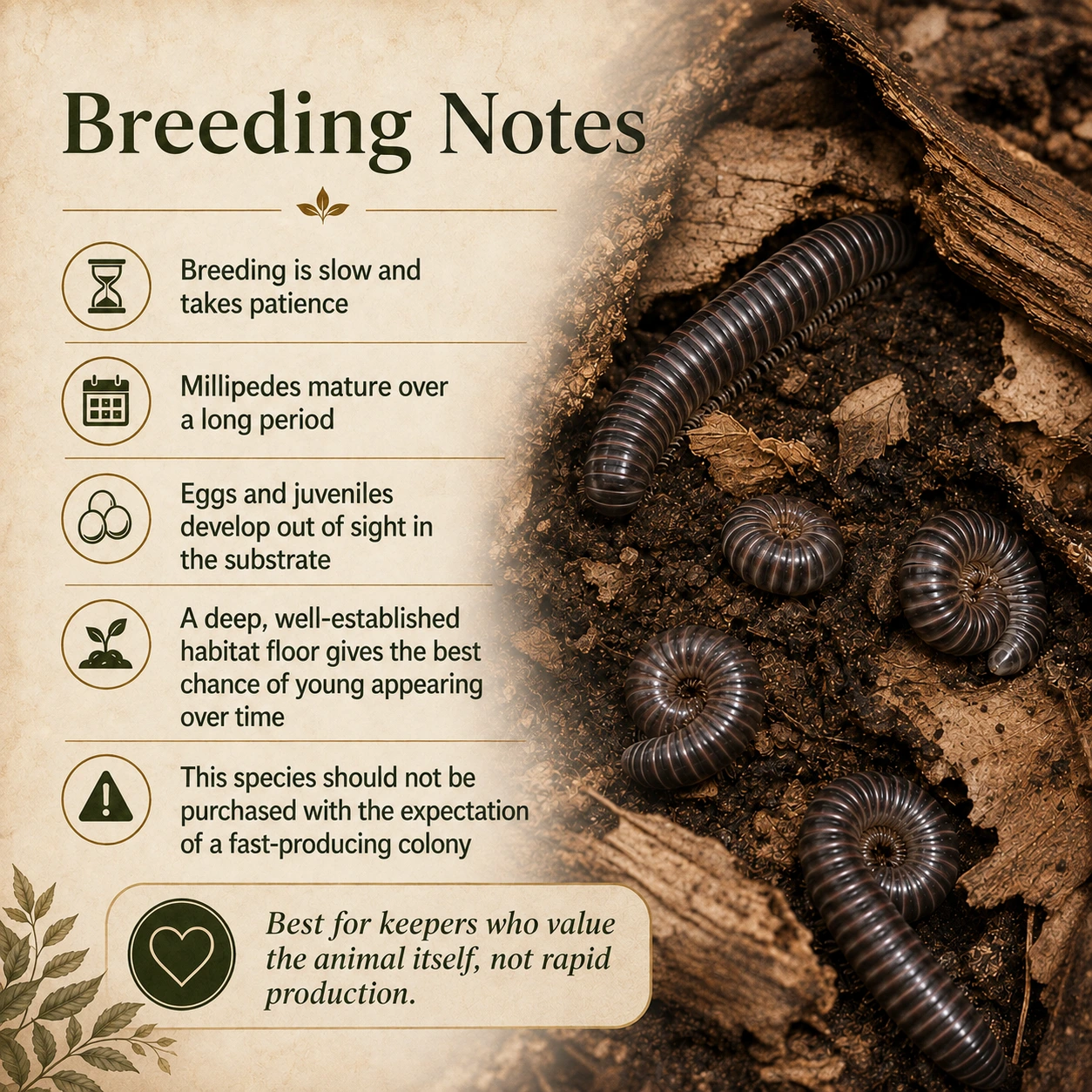
Breeding Notes
Breeding is slow and takes patience. Millipedes mature over a long period and eggs and juveniles develop out of sight in the substrate. A deep, well-established habitat floor with plenty of decaying wood gives the best chance of young appearing over time. This species should not be purchased with the expectation of a fast-producing colony.
Origin and Distribution
Chicobolus spinigerus is native to the southeastern United States, where it lives in hardwood forest leaf litter. The purple form comes from particular populations within that range, and the hobby generally treats it as a locality-linked color variation rather than a distinct subspecies. "Purple Ivory" is a hobby trade name. This page focuses on practical captive care rather than claiming a precise collection point for the animals shipped.
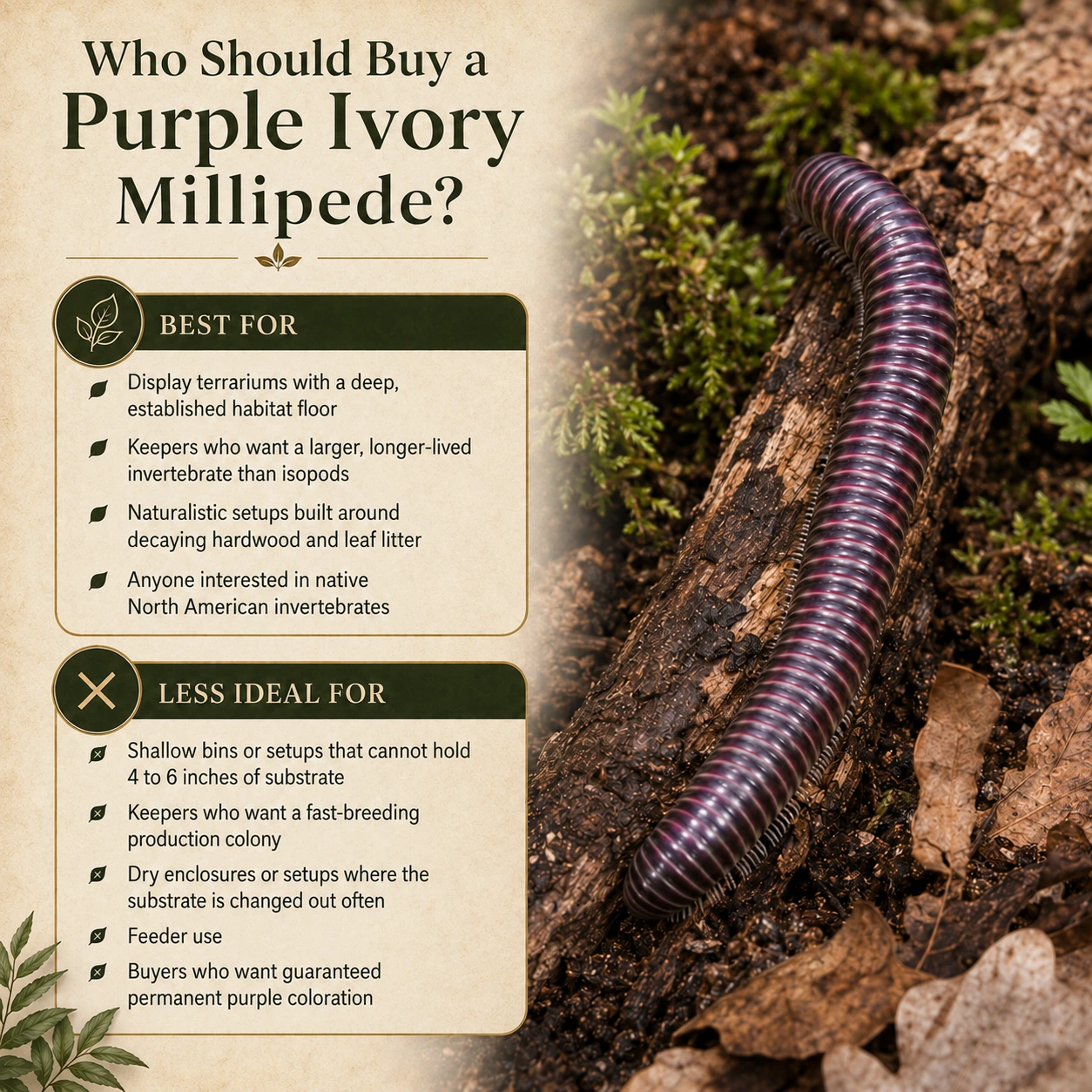
Who Should Buy a Purple Ivory Millipede
Best for:
- Display terrariums with a deep, established habitat floor
- Keepers who want a larger, longer-lived invertebrate than isopods
- Naturalistic setups built around decaying hardwood and leaf litter
- Anyone interested in native North American invertebrates
Less ideal for:
- Shallow bins or setups that cannot hold 4 to 6 inches of substrate
- Keepers who want a fast-breeding, self-sustaining production colony
- Enclosures kept dry, or setups where substrate is changed out frequently
- Feeder use. This is a display animal, not a feeder species
- Buyers who want guaranteed permanent purple coloration
Recommended Add-Ons
Millipedes eat their habitat floor, so substrate and leaf litter are the core purchase here, not optional extras:
- Assorted Hardwood Leaf Litter: the single most important add-on for a millipede. Leaves make up a large share of the diet and are consumed steadily, so plan on restocking.
- Ultra Isopod Substrate: a suitable starting layer for a millipede enclosure. Order enough for 4 to 6 inches of depth, which is considerably more than an isopod bin needs.
- TC Calcium Ultra Fine: calcium is critical for millipede molting given their size and the number of molts they go through. Work a small amount into the substrate and refresh periodically.
- ISO-COAL Isopod Charcoal Hides: surface cover and hiding structure. Useful for giving the millipede a retreat near the top of the enclosure without it needing to burrow all the way down.
- Ultra Isopod Habitat Kit: a convenient bundle of substrate, sphagnum, and leaf litter. Note that the 6 qt container is better suited to starting juveniles, since adults need a deeper enclosure than the kit container provides.
Many customers also add springtails to a millipede enclosure to help manage mold on the damp substrate surface.
Additional information
| Quantity | 1, 2, 3, 6 |
|---|
You must be logged in to post a review.
Related products
-
Sold Out
American Giant Millipede
$9.99 - $24.99Select options This product has multiple variants. The options may be chosen on the product page -
Sold Out
Smokey Oak Millipede
$12.99 - $65.99Select options This product has multiple variants. The options may be chosen on the product page -
Sold Out

Bumblebee Millipede
$6.99 - $57.99Select options This product has multiple variants. The options may be chosen on the product page -
Florida Ivory Millipede
$12.99 - $79.99Select options This product has multiple variants. The options may be chosen on the product page

Reviews
There are no reviews yet.