


Smokey Oak Millipede
$12.99 - $65.99
Pronounced: NAR-see-us gor-DAY-nus
Care Level: Beginner to intermediate
Adult Size: Commonly 4 to 5 inches, with reports up to around 6
Lifespan: Often 10 years or more
Reproductive Rate: Slow. Not a production species
Temperature: 70 to 78 °F
Humidity: Damp at depth with a drier surface layer permitted
Scientific Name: Narceus gordanus
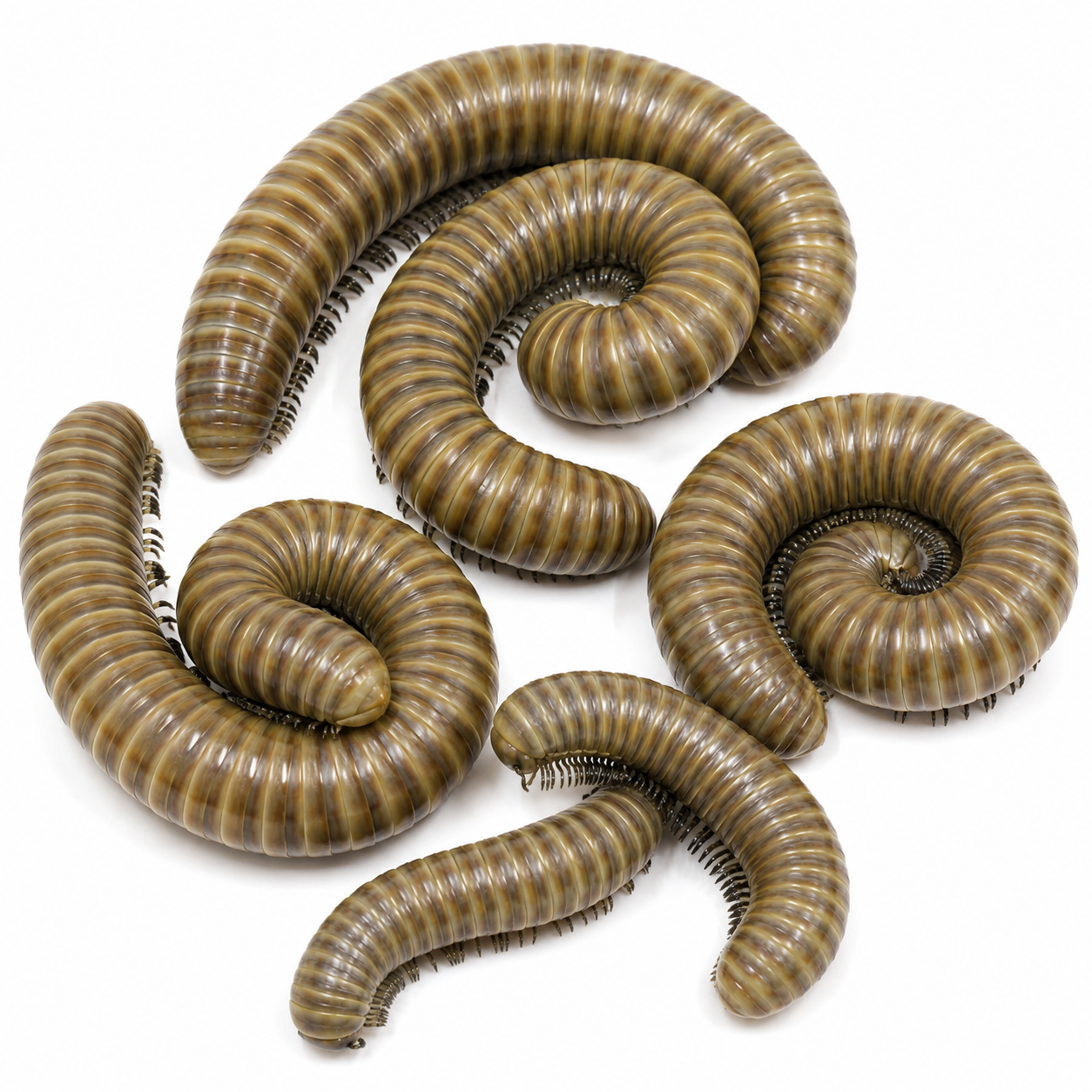
Appearance: Pale smoky tan to greenish-tan rings alternating with darker banding; lighter overall than most Narceus
Best For: Display terrariums with deep substrate, keepers wanting a large handleable invertebrate
One of the largest millipedes native to North America, and a genuinely heavy-bodied animal in hand. Narceus gordanus comes from Florida scrub country rather than wet forest, which makes it a slightly different care proposition than most millipedes in the hobby.
Shipping & Guarantees


Description
Smokey Oak Millipede For Sale | Narceus gordanus
Overview
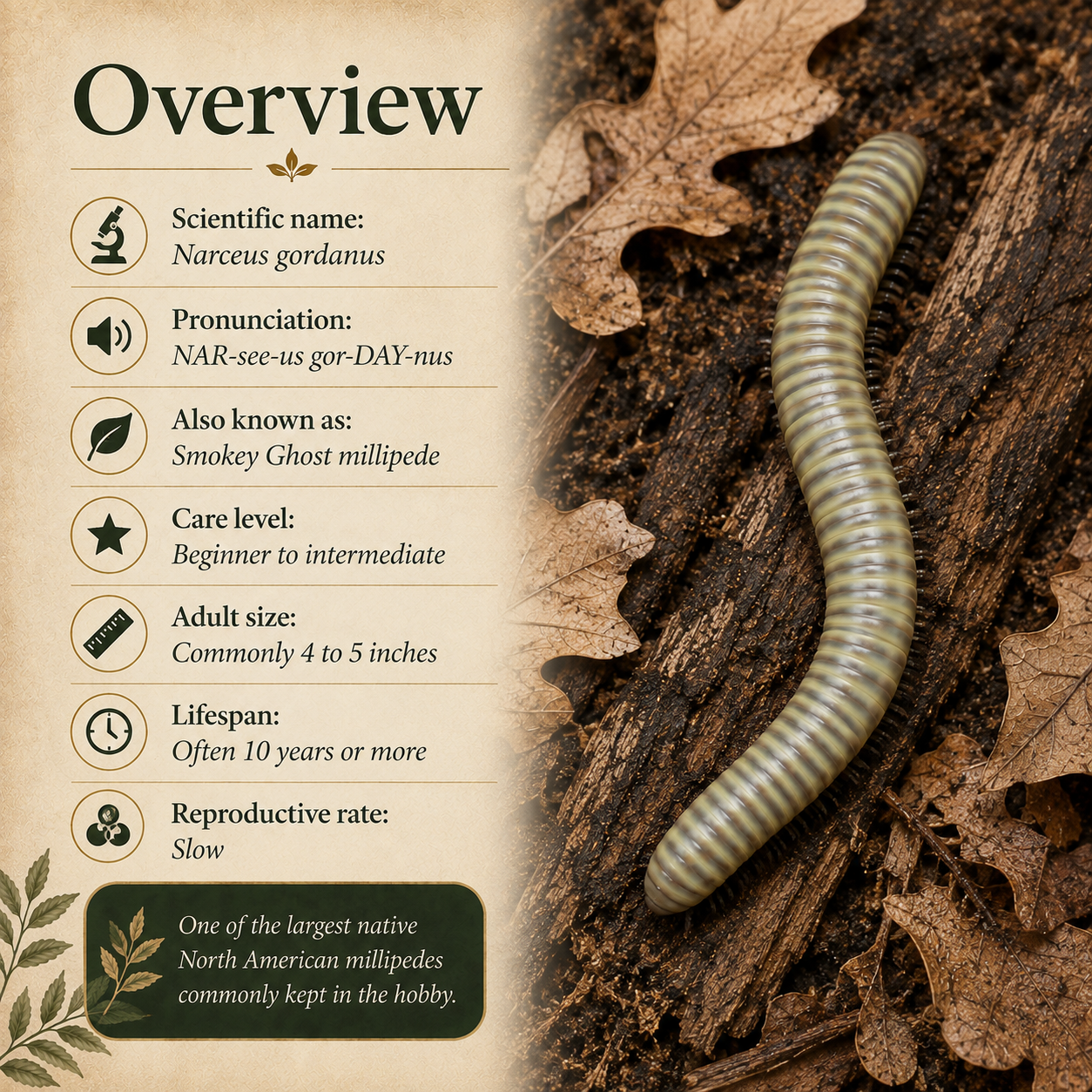
Scientific name: Narceus gordanus
Pronunciation: NAR-see-us gor-DAY-nus
Also known as: Smokey Ghost millipede
Care level: Beginner to intermediate
Adult size: Commonly 4 to 5 inches
Lifespan: Often 10 years or more
Reproductive rate: Slow
The Smokey Oak is one of the largest millipedes native to North America, and the size is the main reason people buy it. Narceus gordanus is a thick, heavy-bodied spirobolid that grows to roughly 4 to 5 inches with 45 to 65 body segments. It gets its name from its pale, smoky coloration, which is noticeably lighter than the other Narceus species in the hobby.
What separates this species from most millipedes sold for bioactive setups is where it comes from. Narceus gordanus is a Florida scrub animal, found in sandy peninsular Florida habitat and ranging north into South Carolina. It is not a rainforest species. That background means it handles a drier surface layer better than tropical millipedes do, though it still needs consistent moisture at depth. Getting that gradient right is the single most important part of keeping one well.
Appearance and Behavior
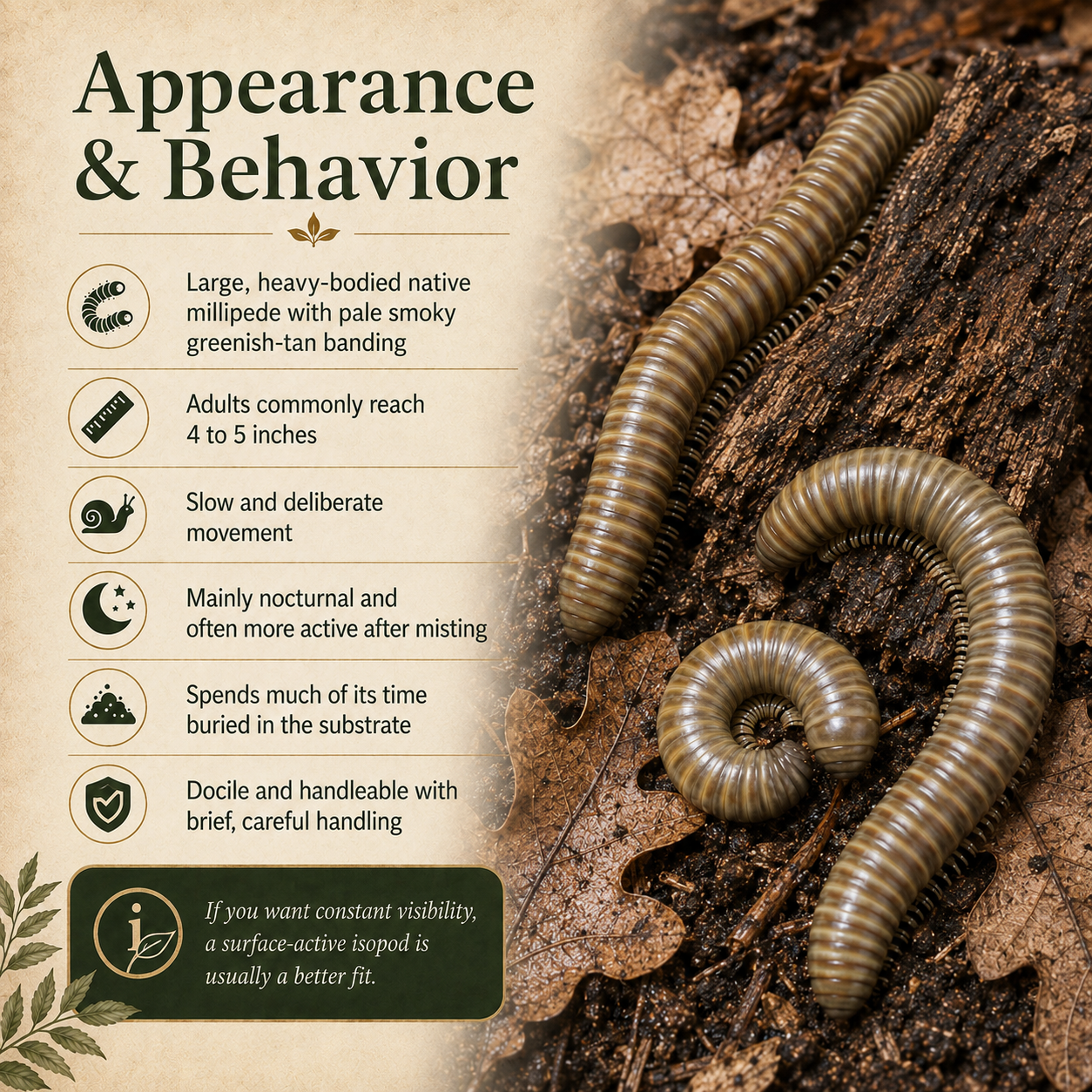
Body coloration runs to light greenish tan rings followed by bands of darker tan, giving the smoky, washed-out look the common name refers to. Compared to other Narceus species, this one has proportionally shorter legs and a deeper groove on the head where the antennae sit. Color intensity varies between individuals, and animals often look different under warm room lighting than they do in daylight.
Behavior is slow and deliberate. Smokey Oaks are primarily nocturnal and spend daylight hours buried, becoming more active in the evening and after the enclosure has been misted. They are docile, do not bite, and are among the more handleable invertebrates in the hobby, though handling should still be brief and kept low over a surface.
Defensive secretion
When threatened, Narceus gordanus coils into a tight spiral to protect its head and underside, and can release a defensive fluid with a strong smell. It is not dangerous and the animal cannot bite, but the secretion can stain skin and irritate eyes or broken skin. Wash your hands before and after handling and keep the animal away from your face. Worth knowing in advance if this is intended as a first pet for a child.
Smokey Oak Millipede Care
Temperature
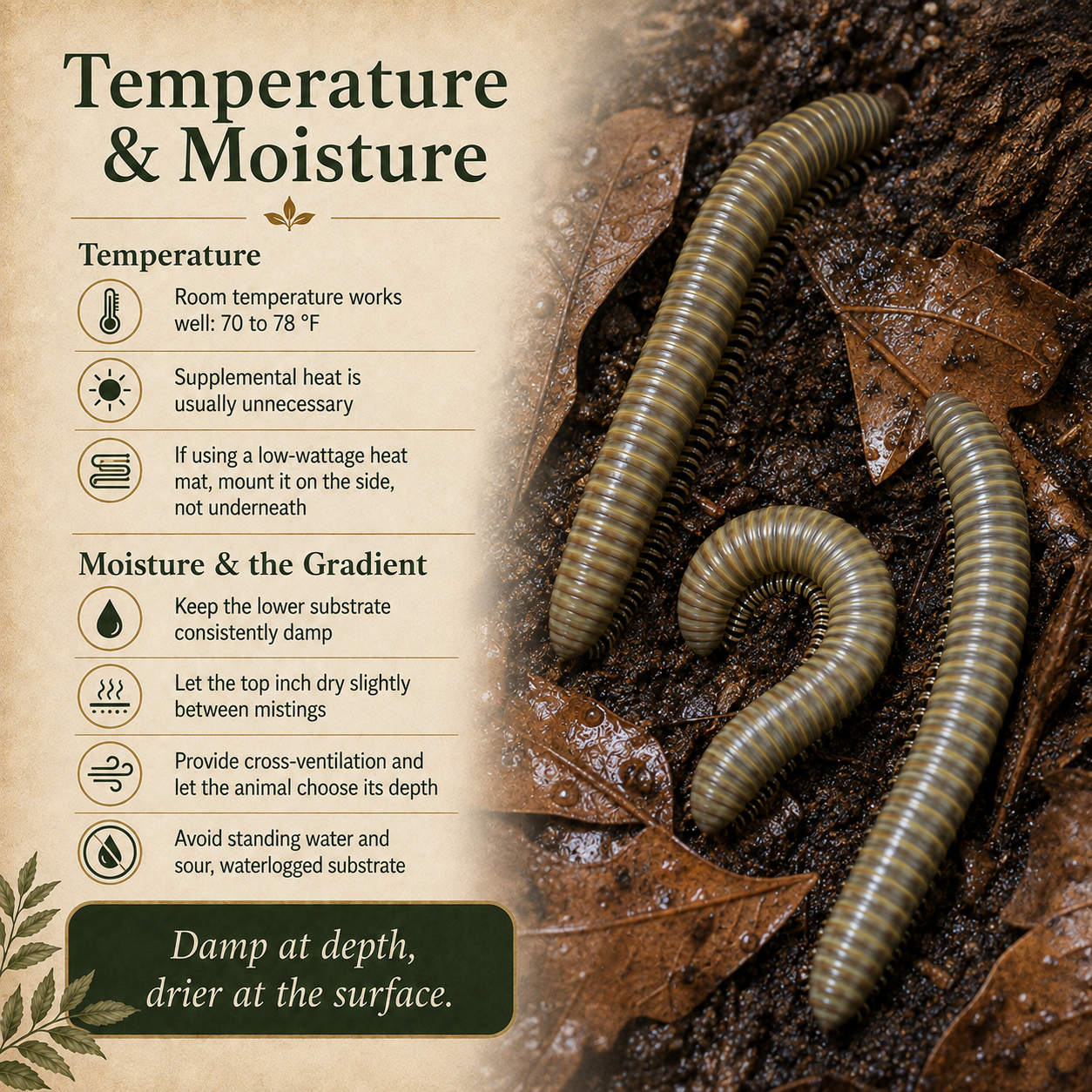
Room temperature works well, roughly 70 to 78 °F. Supplemental heat is usually unnecessary. If you do use a low-wattage mat, mount it on the side rather than underneath so it does not dry out the lower substrate layers where the animal spends its time.
Moisture and the Gradient
This is where Smokey Oaks differ from most millipedes. Keep the lower substrate consistently damp, but allow the top inch or so to dry between mistings. A permanently soaked enclosure is a bigger risk with this species than a slightly dry surface. Provide cross-ventilation and let the animal choose its depth. Avoid standing water and watch for sour or waterlogged substrate, which is the most common cause of losses.
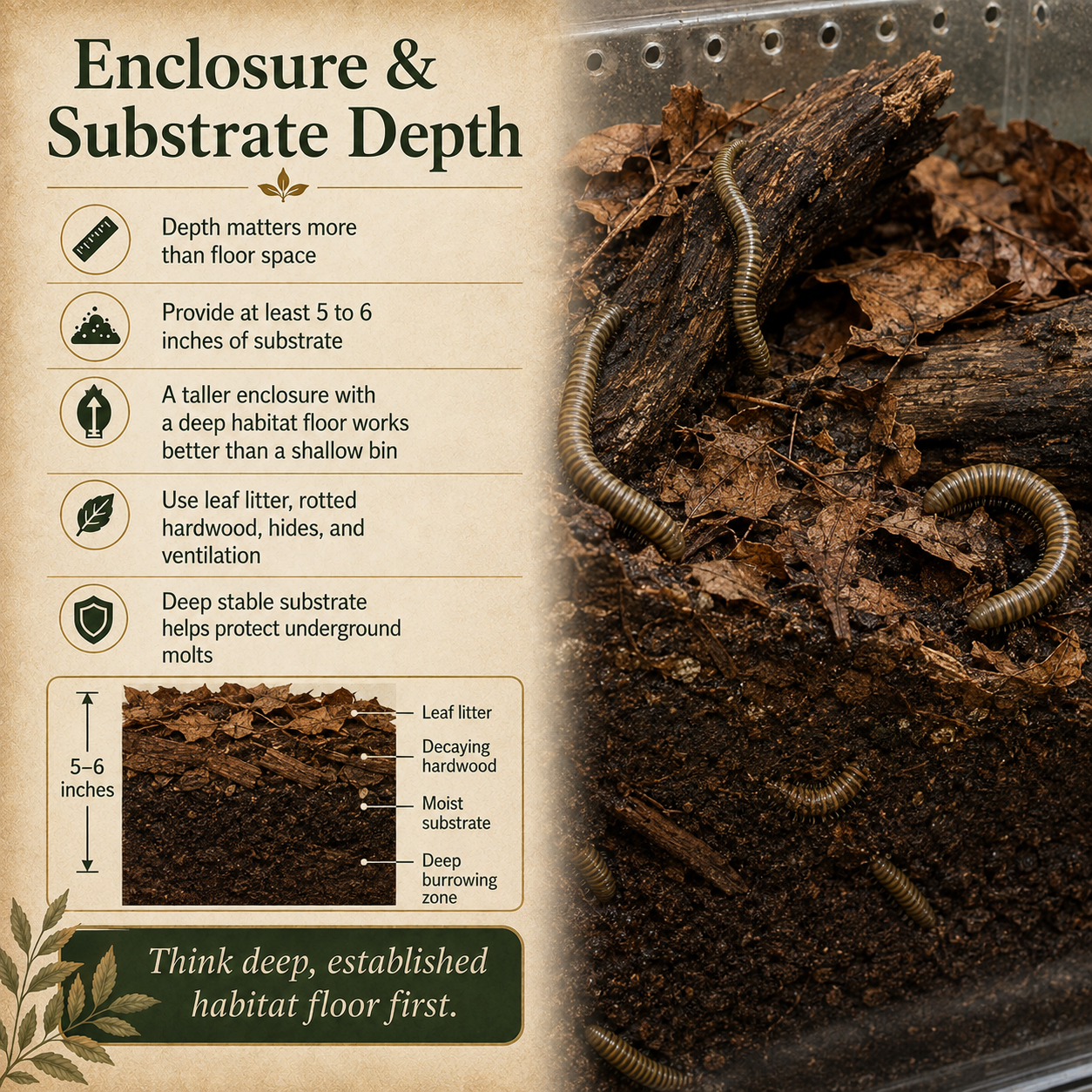
Enclosure and Substrate Depth
Depth matters more than floor space. Provide at least 5 to 6 inches of substrate so a full-grown animal can burrow completely and molt underground without being disturbed. Given adult size, a shallow bin is not appropriate here. A taller enclosure with a deep habitat floor is the correct setup.
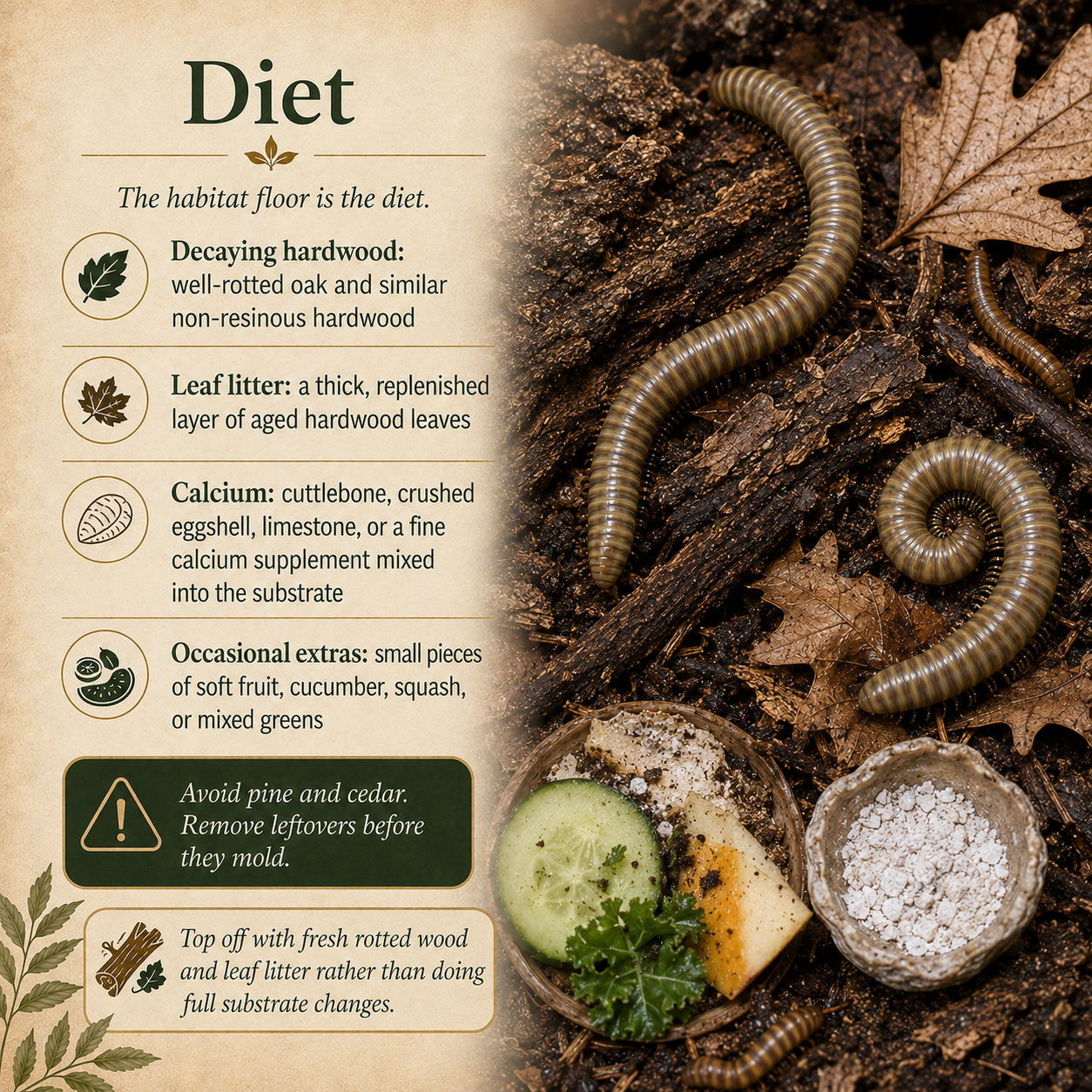
Diet
Millipedes derive most of their nutrition from the substrate itself, so the habitat floor is effectively the diet:
- Decaying hardwood: well-rotted oak and similar non-resinous hardwood. Avoid pine and cedar.
- Leaf litter: a thick, replenished layer of aged hardwood leaves.
- Calcium: important for an animal this size and its many molts. Cuttlebone, crushed eggshell, limestone, or a fine calcium supplement mixed into the substrate.
- Occasional extras: small pieces of soft fruit, cucumber, squash, or mixed greens. Remove leftovers before they mold.
Substrate is consumed and passed as castings over time. Top off with fresh leaf litter and rotted wood rather than doing full substrate changes, since an established habitat floor supports the animal better than a fresh one.
Molting
Smokey Oaks molt underground and can remain buried for weeks at a time. A millipede that has vanished is far more likely to be molting than dead. Do not dig for it. Disturbing a molting millipede is a common and avoidable cause of loss.
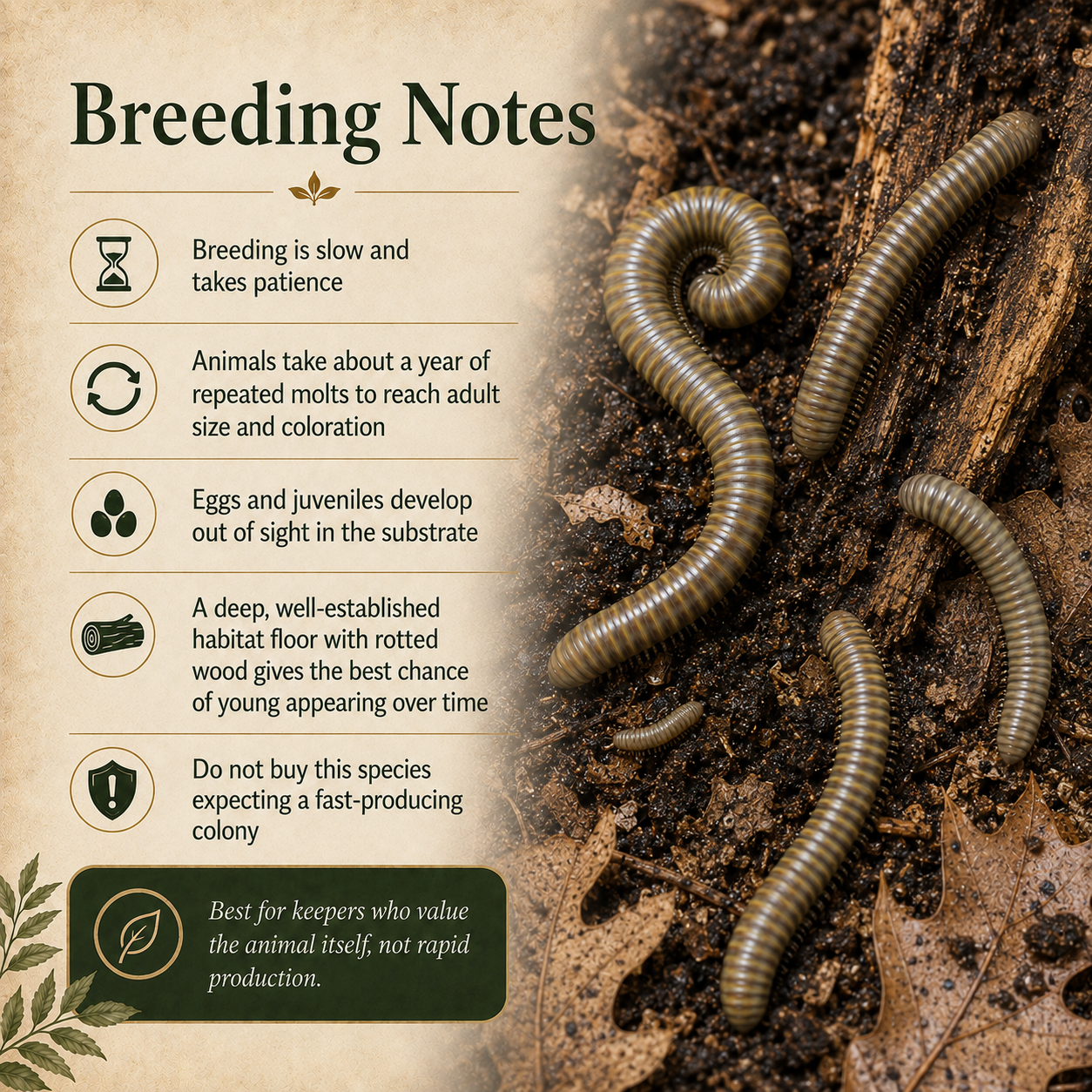
Breeding Notes
Breeding is slow. Animals take about a year of repeated molts to reach adult size and coloration, and eggs and juveniles develop out of sight within the substrate. A deep, well-established habitat floor with plenty of rotted wood gives the best odds of young appearing over time. Do not buy this species expecting a fast-producing colony.
Origin and Sourcing
Narceus gordanus is native to the southeastern United States, concentrated in Florida scrub habitat and ranging north into South Carolina. Most Smokey Oaks moving through the hobby are field collected rather than captive bred, which is normal for this species but worth knowing. Wild-collected millipedes can take a settling-in period before they feed and burrow normally, so give a new arrival a week or two of quiet in a properly set up enclosure before judging how it is doing.
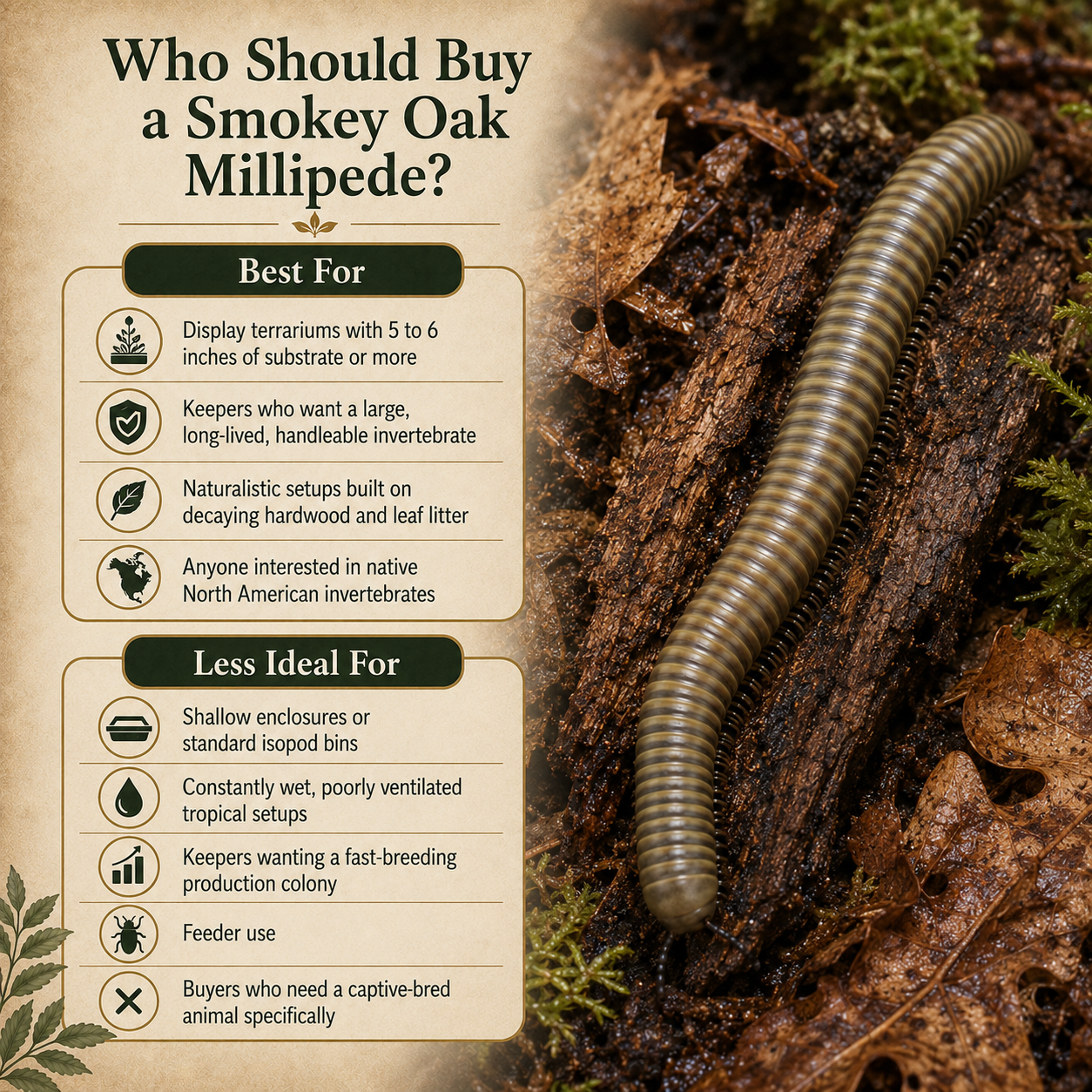
Who Should Buy a Smokey Oak Millipede
Best for:
- Display terrariums with 5 to 6 inches of substrate or more
- Keepers who want a large, long-lived, handleable invertebrate
- Naturalistic setups built on decaying hardwood and leaf litter
- Anyone interested in native North American invertebrates
Less ideal for:
- Shallow enclosures or standard isopod bins
- Constantly wet, poorly ventilated tropical setups
- Keepers wanting a fast-breeding production colony
- Feeder use. This is a display animal
- Buyers who need a captive-bred animal specifically
Recommended Add-Ons
For a millipede this size, substrate and leaf litter are part of the animal's food supply, not accessories:
- Ultra Isopod Substrate: a suitable foundation layer. Order generously, since a Smokey Oak needs 5 to 6 inches of depth, considerably more than an isopod bin.
- Assorted Hardwood Leaf Litter: a core part of the diet and consumed steadily. Plan on restocking rather than treating it as a one-time purchase.
- TC Calcium Ultra Fine: calcium supports molting, which matters for a large millipede that molts repeatedly on its way to adult size. Work a small amount into the substrate and refresh periodically.
- ISO-COAL Isopod Charcoal Hides: surface cover and structure, giving the animal a retreat near the top without burrowing all the way down.
- Ultra Isopod Habitat Kit: a convenient bundle of substrate, sphagnum, and leaf litter. Note that the 6 qt container is too shallow for an adult Smokey Oak, so use the contents in a taller enclosure.
Many customers also add springtails to help manage mold on the damp lower substrate.
Additional information
| Quantity | 1, 2, 3, 6 |
|---|
You must be logged in to post a review.
Related products
-
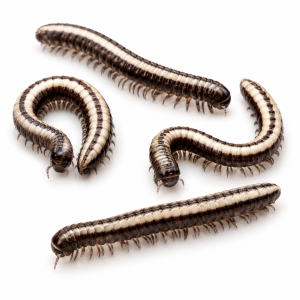
Maui Skunk Stripe Millipede
$24.99 - $79.99Select options This product has multiple variants. The options may be chosen on the product page -
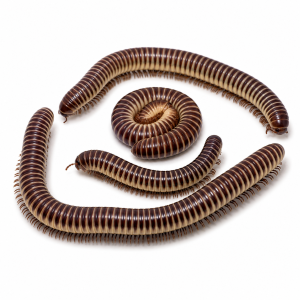
Florida Ivory Millipede
$12.99 - $79.99Select options This product has multiple variants. The options may be chosen on the product page -
Sold Out

Bumblebee Millipede
$6.99 - $57.99Select options This product has multiple variants. The options may be chosen on the product page -
Sold Out
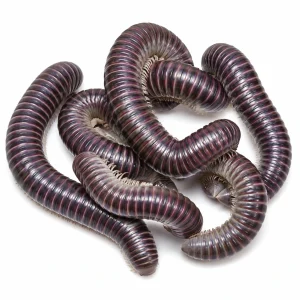
Purple Ivory Millipede
$14.99 - $86.99Select options This product has multiple variants. The options may be chosen on the product page

Reviews
There are no reviews yet.