

Porcellio magnificus for Sale
TC INSECTS ships live captive-bred Porcellio magnificus as a mixed-size starter group for display cultures, breeding projects, and experienced Spanish Porcellio collections. Dollfus originally described this species in 1892 from Spain, in the same paper that described Titan isopods (P. hoffmannseggii). Therefore, magnificus and Titans share a documented taxonomic history and are closely related species.
Overview
Dollfus described Porcellio magnificus in 1892, originally as a subspecies of Porcellio hoffmannseggii. Taxonomists now recognize it as its own species, with Spain as the confirmed type locality. Adults reach up to about 1.5 inches (3 to 4 cm) at full maturity. Notably, this places them among the larger terrestrial isopod species in the hobby alongside their close Titan relative.
Appearance and Development
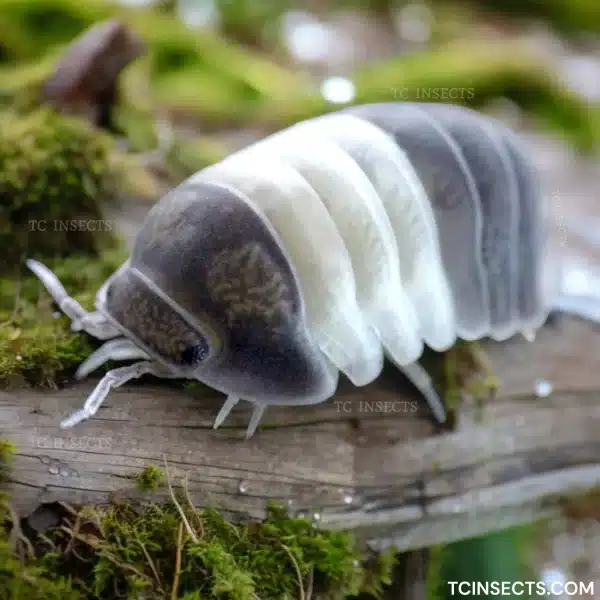
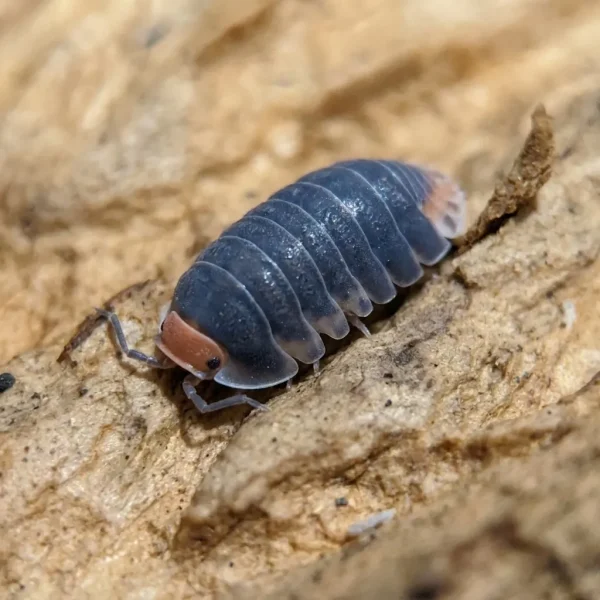
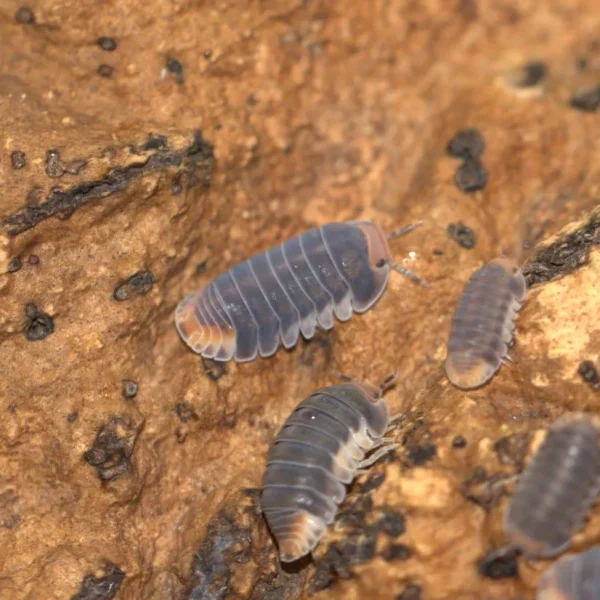
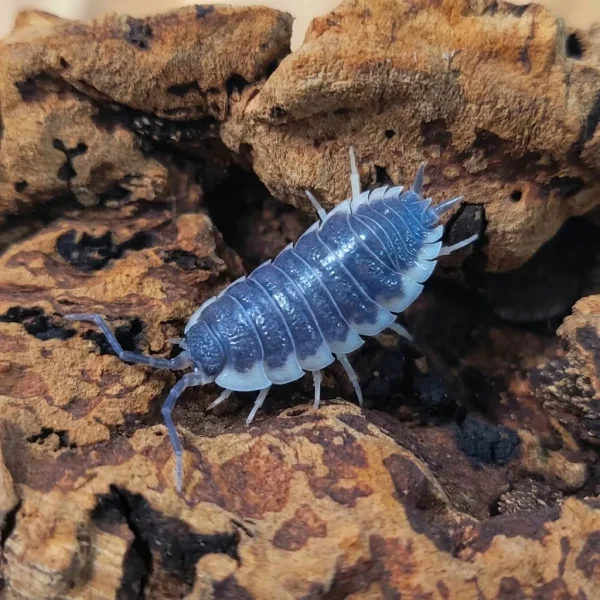
The most striking feature of this species is color. Adults are vivid orange to orange-red. Juveniles, however, emerge from the marsupium with white antennae and white skirting that transition progressively to orange as they mature. As a result, a mixed-age culture displays multiple color stages simultaneously, from pale juveniles to fully saturated orange adults.
Additionally, gravid females exhibit maternal guarding behavior. They create burrows for their young and defend their territory until mancae are ready to move independently. This parental behavior is unusual for a woodlouse and mirrors what researchers have documented in the related Titan isopod.
Why Keep Porcellio magnificus?
- Unique orange coloring in the catalog. No other TC INSECTS Porcellio product offers vivid full-body orange. The contrast against dark substrate and cork bark is genuinely unlike any other species in the collection.
- White-to-orange juvenile development. Additionally, watching a colony transition from pale mancae to vivid adults provides a display dynamic no adult-only display species can offer.
- Taxonomic connection to Titans. Furthermore, collectors who keep Titan isopods often add magnificus specifically because of their shared 1892 description history and behavioral parallels.
- Documented maternal behavior. Specifically, females guard their young in burrows rather than releasing mancae passively. This behavior is observable in a stable, undisturbed culture.
- Premium collector positioning. As a result, this species sits at the top of the TC INSECTS Spanish Porcellio range alongside Titans in terms of collector appeal and display value.
Honest Note on Juvenile Color Development
Mancae emerge from the female’s marsupium with white antennae and a white skirted appearance. The vivid orange coloring develops progressively as juveniles grow and receive stable nutrition. Therefore, buyers who expect bold adult orange immediately after receiving a mixed-size starter culture will find many individuals looking pale to orange-white at first.
This is normal and expected. Color deepens steadily as the colony matures. Within several months of stable care, the culture typically displays the vivid adult orange that distinguishes this species in the hobby.
Honest Note on Feeding
Multiple experienced keepers describe Porcellio magnificus as a light eater with a slower feeding response than many other large Porcellio. The colony does not consume food aggressively. Consequently, overfeeding is a real risk. Uneaten fresh food in a truly dry enclosure can still mold, and mold brings mites.
Feed in small amounts, observe how much the colony eats in 24 to 48 hours, and remove whatever remains. Leaf litter and decaying wood form the safest and most sustainable base of the diet. Supplemental foods should stay in proportion to actual colony consumption.
Care and Setup
Setup Framework
Porcellio magnificus uses the most arid care framework of any display species in the TC INSECTS Porcellio catalog. Experienced breeders classify this as one of the isopod species they keep “truly dry.” Strong ventilation and a dry overall environment are non-negotiable. Below, each section explains what that structure does for the colony.
Temperature
Hold the culture between 72 and 79°F. Slightly warmer conditions within this range support better breeding activity. Avoid direct sun, cold drafts, and heat lamps aimed at the container. Generally, stable warmth matters more than a precise number.
Humidity
Keep roughly three-quarters of the enclosure genuinely dry. Provide one small moist corner with sphagnum moss as the only humidity source. The dry zone must stay dry, not merely “less wet.”
Stagnant or overly humid air is the most common cause of steady colony decline in this species. Therefore, ventilation is as important as the moisture gradient itself. Multiple experienced breeders report colonies declining slowly when air circulation drops, even when substrate conditions appear fine.
Substrate
Use a substrate with organic matter built in. Coco fiber, decaying hardwood, and leaf litter mixed through work well. Three to four inches of depth suits most starter cultures. Furthermore, the dry zone substrate should hold enough structure to support the isopods without staying damp.
Food
Keep dried hardwood leaves and decaying wood available continuously. These form the foundation of the diet and break down slowly without fouling the dry zones. On top of that, offer small amounts of vegetables once or twice per week. Carrot, squash, and sweet potato all work well in thin pieces.
Additionally, rotate in a light protein source such as TC INSECTS Isopod Food, fish flakes, or dried shrimp twice per week. Remove uneaten food within 24 to 48 hours. Also keep TC Calcium Ultra Fine, cuttlebone, or crushed eggshell available at all times to support molting at larger adult size.
Ventilation
Use a fully ventilated lid plus cross-vents on the sides. Maximum airflow is the defining husbandry requirement for this species. In particular, a large bin with strong cross-ventilation outperforms a small sealed container more dramatically here than with any other catalog species. Consider leaving a small gap between the top of the substrate and the lid to encourage air movement across the surface.
Space and Hides
Provide multiple cork bark pieces, rotting wood slabs, and flat hides across both zones. Gravid females need undisturbed burrow space during brooding. Therefore, avoid moving hides repeatedly while a culture is establishing. A 15 to 25 liter bin provides enough floor space for the colony to spread and for females to claim separate guarding territories.
Bioactive Use
Magnificus suits arid and semi-arid bioactive setups with maximum ventilation. It is poorly matched for any enclosure with ambient humidity or limited airflow. For bioactive use, first add TC INSECTS Assorted Hardwood Leaf Litter before introducing the colony. Then pair with Springtails to manage any organic debris around the moist corner.
Breeding Notes
Females carry developing young in a marsupium, then create burrows and actively guard their territory until mancae are ready to move independently. This maternal behavior parallels what researchers have documented in the closely related Titan isopod. Do not disturb an actively guarding female. Move hides around her carefully rather than through her protected area.
Mancae emerge pale, with white antennae and white skirting, and transition to orange as they grow. The colony breeds at a slow to moderate pace. To support breeding, keep calcium available continuously, maintain the moist corner, and minimize substrate disturbance during the brooding window.
As the colony grows, provide more floor space or split into a second container. Similarly, a second culture provides a safety net if the main bin encounters a ventilation or moisture issue.
Best For
- Display cultures where vivid orange coloring and white-to-orange juvenile development are the display goals
- Collectors building a complete large Spanish Porcellio collection alongside Titans
- Truly dry and arid bioactive setups with maximum cross-ventilation
- Intermediate-to-advanced keepers comfortable with sensitive ventilation management
- Patient breeding projects where maternal behavior and slow colony development are part of the appeal
- Educational displays where the Titan connection and maternal guarding offer genuine natural history interest
Not Best For
- Beginners. The combination of truly dry care, stale-air sensitivity, and light feeding response makes this one of the more demanding catalog species.
- Enclosures with any ambient humidity. Even moderate moisture in the air causes slow colony decline.
- Small, sealed containers. Ventilation is more critical here than for any other catalog species.
- Buyers expecting bold adult orange immediately after receiving juveniles. Color develops with age.
- Heavy cleanup crew use. The colony eats lightly and breeds slowly. In contrast, Giant Canyons or Dwarf Whites fit that role much better.
- Feeder use. Color, slow breeding, and price point all make them unsuitable as reptile food.
Origin and Locality Notes
Dollfus described Porcellio magnificus in 1892 from Spain. WoRMS lists Spain as the confirmed type locality, with the original description in Dollfus’s 1892 catalogue of Spanish terrestrial isopods. Moreover, the species was initially grouped with P. hoffmannseggii as a subspecies before taxonomists elevated it to full species status.
Hobby sources commonly associate this species with warm, dry areas of southern Spain, including rocky and clifftop environments. TC INSECTS does not claim a specific wild collection point for this culture beyond the confirmed Spanish origin. The care framework reflects that origin: truly dry overall conditions, maximum airflow, a small reliable moist corner, and stable warmth.
Receiving and Acclimation
Open your package soon after delivery in a calm indoor area. Inspect the culture carefully. Some isopods may hide under moss or packing material. Move the packing material directly into the prepared enclosure rather than picking out individuals, since juveniles with white skirting can be easy to overlook.
Prepare the enclosure before opening the culture. The dry zone should feel genuinely dry to the touch. Place the moist corner, cross-ventilation, leaf litter, and bark hides before adding the isopods. Then set the isopods near the moist corner under cover and leave them mostly undisturbed for the first week.
Initial hiding is normal. However, do not add protein immediately after arrival. Let the colony settle for two to three days first, then begin the regular feeding rotation.
Recommended Add-Ons
- TC INSECTS Isopod Food for light but regular protein and balanced nutrition.
- TC INSECTS Assorted Hardwood Leaf Litter as the primary food and cover layer for the dry zones.
- TC INSECTS Ultra Isopod Habitat Kit for a richer, better-ventilated starter setup suited to a demanding display species.
- TC Calcium Ultra Fine for continuous calcium availability to support larger molts.
- Springtails to manage the moist corner and any organic debris alongside the magnificus colony.
Frequently Asked Questions
What is the connection between Porcellio magnificus and Titan isopods?
Dollfus originally described Porcellio magnificus in 1892 as a subspecies of Porcellio hoffmannseggii, meaning both appeared in the same published paper as species and subspecies. Taxonomists later elevated magnificus to its own species. As a result, Titans and magnificus are closely related and exhibit parallel behavioral traits including maternal guarding.
Therefore, collectors who keep Titans often add magnificus as the vivid-orange companion to their charcoal-and-white Titan culture.
Why do my magnificus juveniles look pale or white, not orange?
Juveniles emerge from the marsupium with white antennae and pale white skirting that transitions to orange as they grow. This is normal and expected. Color deepens steadily with age and nutrition. Additionally, a mixed-size starter culture will include animals at multiple color stages simultaneously. Give the culture several months of stable care before the full adult coloring becomes prominent throughout the colony.
How dry does the enclosure really need to be?
Truly dry, not just “mostly dry.” Multiple experienced breeders classify magnificus as one of the isopod species they keep in a genuinely dry state. Three-quarters of the enclosure should be dry, with only one small moist corner as the hydration retreat.
Furthermore, air movement matters as much as substrate moisture. A dry enclosure with stagnant air will still cause colony decline. Strong cross-ventilation is part of the dryness framework, not separate from it.
How does Porcellio magnificus compare to Titan isopods for a display culture?
Both are closely related large Spanish Porcellio with maternal behavior, slow breeding, and demanding care. In contrast, Titans are charcoal-colored with a white skirt and even more reclusive. Magnificus, however, provides vivid full-body orange coloring and the white-to-orange juvenile development arc. Together they form a natural display pairing with color contrast, shared natural history, and parallel care needs.
Why does my magnificus colony seem to eat very little?
This species has a lighter feeding response than most large Porcellio. Multiple experienced keepers note that the colony does not consume food aggressively. Therefore, overfeeding is a genuine risk even for a large species.
Offer food in small amounts, check consumption after 24 to 48 hours, and remove uneaten food before it molds. Finally, leaf litter and decaying wood suit this species better than heavy fresh food rotations because they break down slowly without fouling the dry zones.
Can I keep Porcellio magnificus in a reptile enclosure?
Only in genuinely arid enclosures with maximum ventilation and no ambient humidity. Uromastyx setups, some monitor enclosures, and arid gecko setups with powerful ventilation can work. However, most reptile bioactive setups are too humid and lack sufficient airflow. For standard reptile cleanup crew use, Giant Canyon isopods or Dwarf Whites are far more practical.
Learn More About Porcellio magnificus
-
WoRMS: Porcellio magnificus Dollfus, 1892. The World Marine, Freshwater and Terrestrial Isopod Crustaceans database entry confirming Spain as the type locality, listing the original 1892 Dollfus description, and documenting the synonym Porcellio hoffmannseggii magnificus Dollfus, 1892. Useful for collectors who want to verify the taxonomic history connecting this species to the Titan isopod.
-
iNaturalist: Porcellio magnificus. Community observation records and habitat photographs from Spain. The habitat images show the dry, rocky, well-ventilated Spanish environments that explain why maximum airflow and a truly dry enclosure suit this species better than standard moderate-humidity setups.
-
PMC / NCBI: Conglobation and water conservation in terrestrial isopods. Peer-reviewed research on how isopod pleopodal structures interact with humidity and water loss. This paper explains in biological terms why a genuinely dry enclosure with a small moist corner, combined with strong airflow, is the correct husbandry approach for an arid-adapted species like Porcellio magnificus
.




Reviews
There are no reviews yet.