

Cuban Spiky Isopods for Sale
Pseudarmadillo spinosus “Cuban Spiky” is the only spine-textured isopod in our catalog and one of the few with formally described taxonomy. The species was published by De Armas and Juarrero de Varona in 1999 and is
placed in family Delatorreiidae, with documented endemic distribution in north-central Cuba. As a result, this is a specialized collector species rather than a general-purpose isopod.
Each starter culture ships as a small group with naturally variable spine expression. The advanced-care framing reflects real species requirements: slow reproduction, sensitivity to setup mistakes, and patience-dependent
colony establishment.
Overview
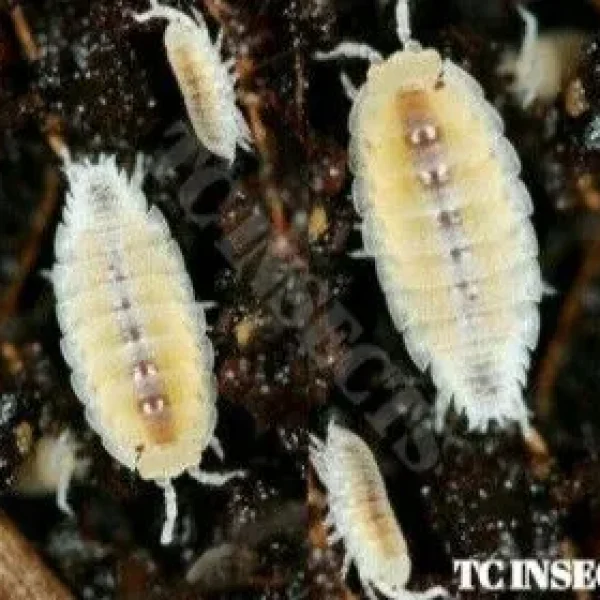
Cuban Spiky carries a compact armored body with raised spines and a rough sculpted texture across the dorsal plates. The coloration is earthy and muted (browns, grays, tans), but the visual hook is texture rather than
color. As a result, the species photographs especially well under macro lighting where the spines and surface sculpting become the focal point.
Adults reach around 10 mm, with some hobby individuals appearing slightly larger. This is a smaller size than catalog Cubaris collector species, but the spine texture and body sculpting more than compensate visually.
Why Keep Cuban Spiky Isopods?
- Spine-textured body: The only isopod in our catalog with raised spines and rough sculpted surface.
- Confirmed species: Sits on described Pseudarmadillo spinosus taxonomy (De Armas & Juarrero de Varona, 1999), not a hobby trade designation.
- Cuban endemic: Documented distribution in north-central Cuba, adding a Caribbean line to a regional collection.
- Macro display value: The sculpted texture shows beautifully under macro photography lighting.
- Specialty collector appeal: Family Delatorreiidae is uncommon in the hobby trade, making this a unique addition to a specialty isopod lineup.
Honest Note on the Advanced Care Designation
This is the most important detail before buying. Cuban Spiky is the only advanced-care species in our exotic isopod lineup, and the designation is real rather than marketing. The species is slow to reproduce, sensitive to
setup mistakes, and unforgiving of unstable humidity or sudden environmental changes. New keepers should not start here.
If you are new to isopods or have only kept beginner species, start with Cubaris murina “Glacier” or Anemone first. Build experience with stable humid setups over six to twelve months before stepping up to Cuban Spiky. The species is worth the wait.
Honest Note on Slow Reproduction
Cuban Spiky is a slow breeder. New cultures may take six months or longer before producing visible juveniles, and population growth from a starter group will be measured in months and years rather than weeks.
Therefore, buyers expecting fast colony build-up should adjust the expectation. This species rewards patient long-term project work, not rapid bioactive seeding.
For comparison, our catalog Cubaris collector species like Red Pak Chong or Miyako reach moderate breeding pace, while Cuban Spiky sits significantly slower.
Members of family Delatorreiidae can have restricted distributions, and published research notes that natural history details for many Caribbean endemic isopods remain poorly known. Our cultures are captive-bred lines
rather than wild-collected animals. Buyers interested in long-term preservation should consider running multiple backup cultures because line loss in restricted-distribution species is harder to replace than common hobby species.
Care and Setup
Cuban Spiky needs a stable, well-prepared enclosure with good airflow, constant leaf litter, calcium access, and a controlled moisture gradient. The subsections below cover the core requirements.
Temperature
Hold the enclosure between 72 and 78°F. Heat spikes and cold drafts both stress this species harder than they would stress more forgiving Cubaris. Avoid sunlit windows, reptile heat lamps in close proximity, and unheated room corners.
Humidity
Aim for moderate to high humidity with a clear moisture gradient and steady airflow. One side should stay moist with sphagnum or damp substrate, while the opposite side stays drier with leaf litter and bark cover.
Stagnant wet conditions are more dangerous than slightly dry conditions for this species.
Substrate
Use a deep organic substrate with decaying hardwood, leaf litter, and a calcium source mixed in. Limestone fragments work especially well because the family Delatorreiidae is documented from karst-adjacent Cuban
habitats. As a result, calcium-rich substrate components support natural feeding behavior.
Food
Offer leaf litter and decaying hardwood as the base diet. Add small portions of TC INSECTS Isopod Food, occasional vegetables, and very light protein. Cuban Spiky eats slowly, so portion sizes should be smaller than what you would offer Cubaris collector species. Remove uneaten food promptly because the humid setup will mold it faster than the colony eats it.
Ventilation
Use moderate ventilation. A few small air holes or a partial mesh lid keeps airflow steady without drying the humid substrate too fast. Stagnant air causes mold blooms that can crash a Cuban Spiky colony before keepers notice.
Calcium
Keep calcium available at all times. A small dish of TC Calcium Ultra Fine, crushed cuttlebone, or limestone fragments supports healthy molts. Calcium also helps maintain the spine-textured exoskeleton that is the entire visual reason to keep this species.
Bioactive Use
Cuban Spiky can support a humid bioactive enclosure once established, but most keepers maintain dedicated culture bins instead. The collector value, slow reproduction, and conservation caution above all argue for
protected dedicated setups rather than seeding into a larger vivarium where the colony could be lost.
Breeding Notes
Cuban Spiky breeds at a slow pace once established. Females carry developing young in a marsupium, and mancae stay tucked under bark and leaf litter for extended periods after release. Therefore, deep substrate
disturbance is the single fastest way to stall a colony, and the slow pace means recovery from a stall takes months not weeks.
For steady output, hold humidity stable, keep TC INSECTS Assorted Hardwood Leaf Litter available year-round, and refresh decaying wood as it breaks down. Backup cultures are strongly recommended once the main bin
starts producing juveniles, because line loss in this species is genuinely costly to replace.
Best For
- Advanced isopod keepers with experience running stable humid setups
- Macro-photography display setups where spine texture is the visual focus
- Caribbean regional specialty lineups
- Patient keepers ready for slow but rewarding long-term project work
- Collectors building a confirmed-species rather than hobby-trade lineup
Not Best For
- New keepers buying their first isopod culture
- Bioactive cleanup crew duty in any size enclosure
- Use as a feeder insect
- High-disturbance reptile or amphibian enclosures
- Buyers expecting visible juveniles within the first three to four months
Origin and Locality Notes
Pseudarmadillo spinosus is a Cuban endemic species documented in formal taxonomic literature (De Armas & Juarrero de Varona, 1999) and placed in family Delatorreiidae. Published research locates the species in north-central Cuba, and conservation-focused references note that members of the family can have restricted distributions with poorly known natural history details.
In captivity, this means keepers should focus on stable tropical microhabitat conditions rather than overclaiming exact wild requirements. The setup style works for the documented hobby line regardless of which specific Cuban locality each animal traces back to.
Receiving and Acclimation
Open the package promptly when it arrives. Some isopods will tuck into moss, paper, or substrate during shipping. Because Cuban Spiky cultures are small starter groups, every animal matters more than in larger Cubaris or Filippinodillo cultures. Inspect packing material thoroughly before discarding.
Prepare the enclosure ahead of delivery with moist substrate, sphagnum moss, cork bark, leaf litter, and calcium already in place. Place the shipping cup or packing material directly into the prepared bin near the moist side and let the isopods walk out on their own. Feed lightly for the first two weeks and avoid digging through the culture during the entire first month of establishment.
Recommended Add-Ons
- TC INSECTS Ultra Isopod Habitat Kit for the richest setup that matches Cuban Spiky’s advanced-care requirements and slow-establishment pace.
- TC INSECTS Assorted Hardwood Leaf Litter for cover, food, and humidity buffering critical to slow-breeding species.
- TC INSECTS Isopod Food for varied nutrition beyond leaf litter alone.
- TC Calcium Ultra Fine for cleaner molts and stronger spine-textured exoskeleton development.
- Springtails for mold control, which is critical in Cuban Spiky’s humid advanced-care setup.
Frequently Asked Questions
Are Cuban Spiky isopods beginner-friendly?
No. This is the only advanced-care species in our exotic isopod lineup, and the designation reflects real species requirements. Slow reproduction, sensitivity to setup mistakes, and unforgiving response to unstable humidity
all make this a poor first isopod choice. New keepers should start with Cubaris murina “Glacier” or Anemone and build at least six to twelve months of stable husbandry experience before stepping up.
How is Cuban Spiky different from Cubaris collector species?
The visual hook is texture rather than color or pattern. Cuban Spiky has raised spines and rough sculpted body surface, while every catalog Cubaris has a smooth body. The taxonomic placement is also different:
Pseudarmadillo spinosus sits in family Delatorreiidae with formally described species-level taxonomy, while most catalog Cubaris are sold as Cubaris sp. with unconfirmed species. Cuban Spiky breeds significantly slower
than catalog Cubaris.
How is Cuban Spiky different from Filippinodillo Cordova?
Both are non-Cubaris specialty isopods, but the differences are significant. Cuban Spiky is Cuban endemic with spine-textured body at about 10 mm adult size, advanced care, and slow reproduction. Filippinodillo Cordova is Philippine-associated with smooth mottled body at up to 22 mm, intermediate care, and moderate reproduction. Cuban Spiky is the more advanced and slower-breeding of the two specialty options.
How fast do Cuban Spiky isopods breed?
Slowly. New cultures may take six months or longer before producing visible juveniles, and population growth from a starter group will be measured in months and years rather than weeks. Buyers expecting fast colony build-up should look at Dwarf White Isopods or another faster-breeding species instead.
Why is Cuban Spiky often out of stock?
The slow reproduction pace limits how often we can release starter cultures. Cuban Spiky availability is genuinely intermittent rather than a restocking lag. Patient collectors are the right buyer profile, and sign-up for restock notifications when available is the best way to time a purchase.
What is family Delatorreiidae?
Delatorreiidae is the isopod family that contains Pseudarmadillo spinosus and several related Caribbean species. The family is uncommon in the hobby trade compared with Armadillidiidae (which contains common European pillbugs) or Porcellionidae (which contains many fast-breeding Porcellio species). This is part of why Cuban Spiky is positioned as a specialty collector species.
Learn More About Cuban Endemic Isopods and Pseudarmadillo Taxonomy
The following non-commercial references give helpful background on Pseudarmadillo spinosus taxonomy and Caribbean terrestrial isopod biology for keepers buying their first spine-textured advanced collector species.
-
GBIF: Pseudarmadillo spinosus Species Record. Global Biodiversity Information Facility record confirming the species-level taxonomy and the De Armas & Juarrero de Varona 1999 description, useful for keepers who want to verify the formal naming behind the Cuban Spiky trade product.
-
Carnegie Museum of Natural History: Section of Invertebrate Zoology. Major US natural history museum invertebrate research department covering terrestrial isopods and related crustaceans, useful background for keepers building a Caribbean endemic specialty culture.
-
Florida International University: Department of Biological Sciences. Florida-Caribbean university biology department with research on tropical invertebrate biology, useful regional reference for keepers managing a Caribbean endemic species like Pseudarmadillo spinosus.


Reviews
There are no reviews yet.