
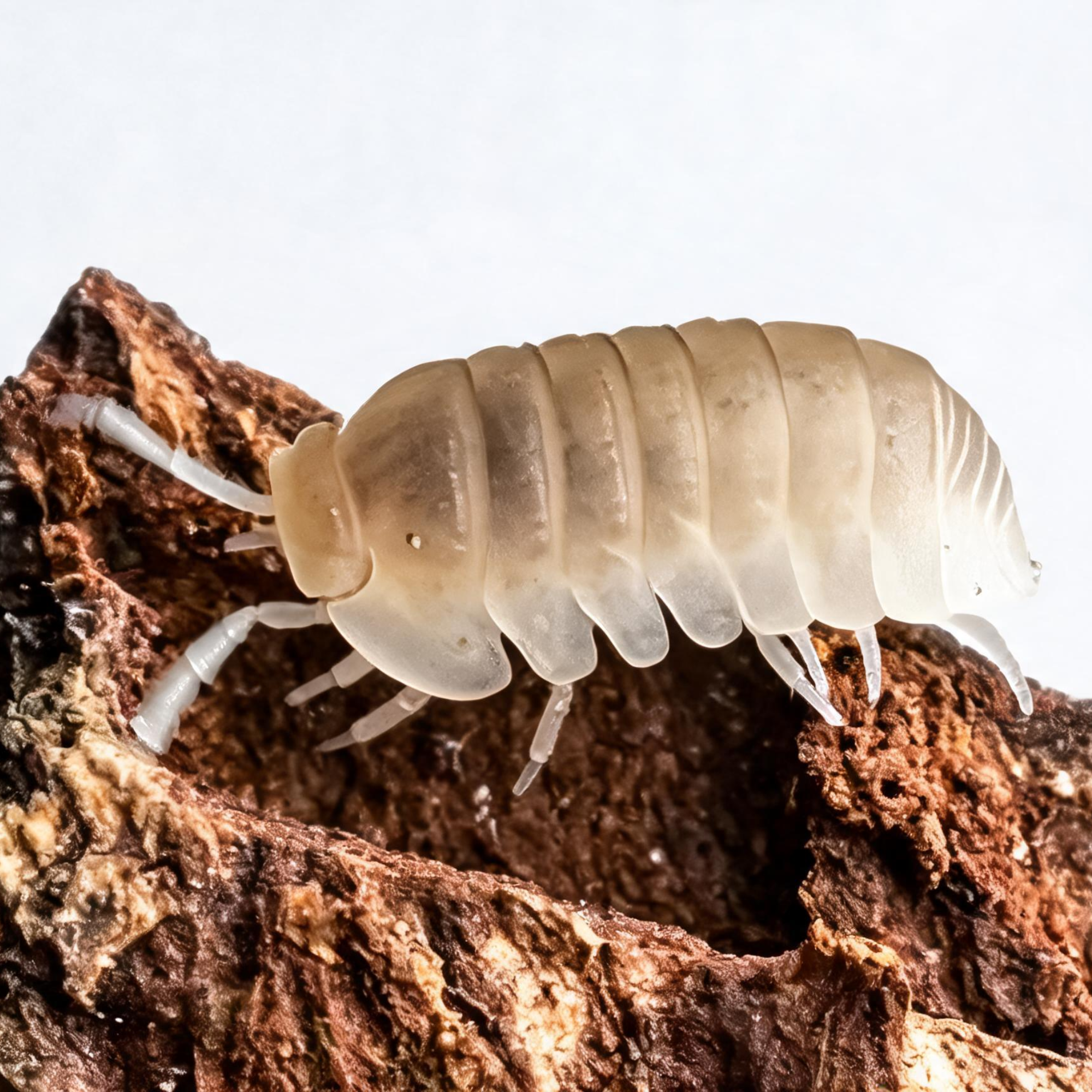
Cubaris Murina Glacier Isopods for Sale
TC INSECTS ships live captive-bred Cubaris murina “Glacier” for collectors, display terrarium keepers, and anyone building a complete C. murina morph range. This is the “white out” form — the most total pigment removal of all four known C. murina color morphs. For full species background, see the Little Sea product page. For the Papaya morph and its albino biology, see the Papaya page.
Overview — The White Out Morph
Cubaris murina “Glacier” is a white-out morph of Cubaris murina Brandt, 1833. It shows white coloring on every part of the body — the shell, legs, antennae, and eyes. Nothing remains dark. The Great Invertebrate describes it as “a completely white individual, including white eyes.” Isopod Factory calls it “a true albino lacking any pigmentation. Even their eyes are white.”
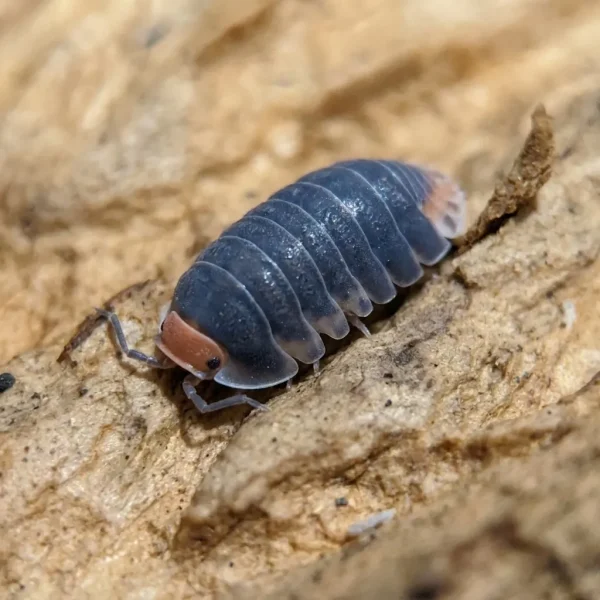
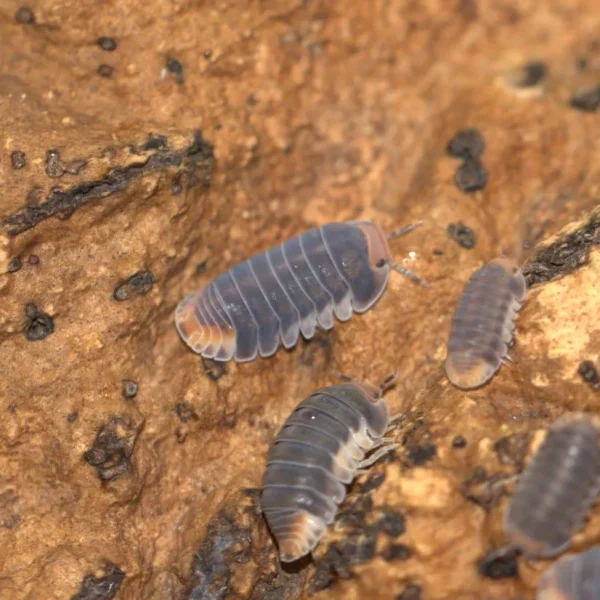
The Glacier is the most complete pigment removal in the C. murina morph range. The standard Little Sea is dark gray with orange tail marks. The Papaya is pink with pink eyes. Glacier is white throughout — including the eyes — with no dark, pink, or warm tones remaining anywhere on the animal.
White Eyes vs. Pink Eyes — The Key Distinction from Papaya
Glacier and Papaya are both described as albino-type morphs of C. murina. But they look immediately different in one specific place: the eyes.
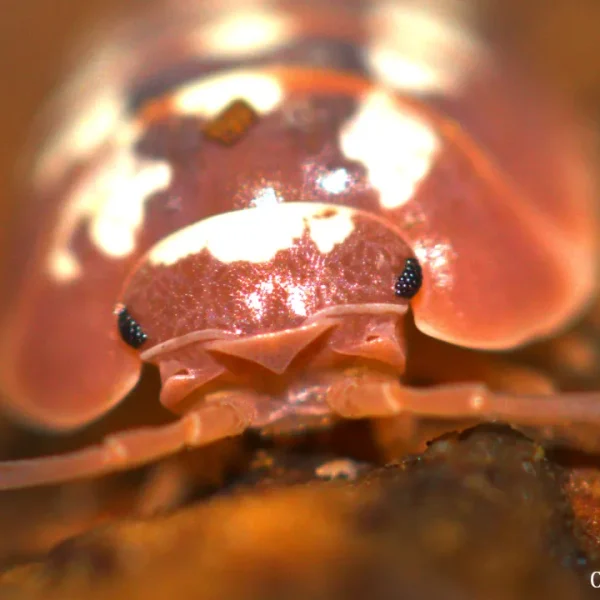
Papaya has pink eyes. Pink eyes appear when the iris has no dark pigment and blood vessels behind it show through as red-pink. Glacier has white eyes. White eyes appear when even the eye tissue itself has no color of any kind — not even the blood-vessel red that makes Papaya’s eyes pink. Glacier’s white eyes mean total pigment absence from every tissue in the animal. That makes the Glacier the more “complete” white-out form of the two.
The Visible Digestive Tract
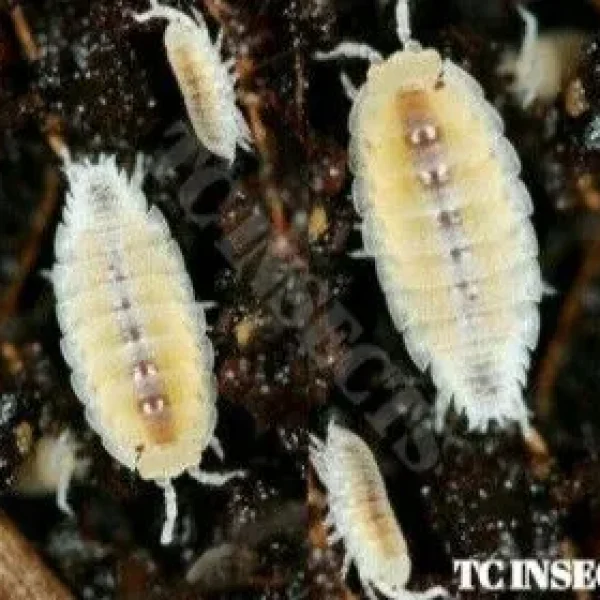
One of the most unusual features of the Glacier morph is visible from the outside. Because the body is semi-transparent, the digestive tract runs as a visible dark line down the center of the animal. The color of this line changes based on what the colony has eaten recently.
Isopod Factory describes it clearly: “Since they are semi-translucent, the color of foods fed may be visible from the inside. For example, feeding them carrots will show a very unmistakable white-ish orange color until they have fully digested.” A fully white isopod that visibly shows what it ate is a display feature no other species in this catalog offers.
Origin — Florida, USA
The Glacier morph originated from specimens collected in Florida, USA — different from the Papaya’s North Dakota origin. Exuvium and My Home Nature both document the Florida collection. The standard gray C. murina occurs naturally in Florida’s coastal and subtropical environments. The Glacier white-out expression was isolated from this Florida wild population and bred selectively to establish the line in captivity.
The C. murina Morph Color Range
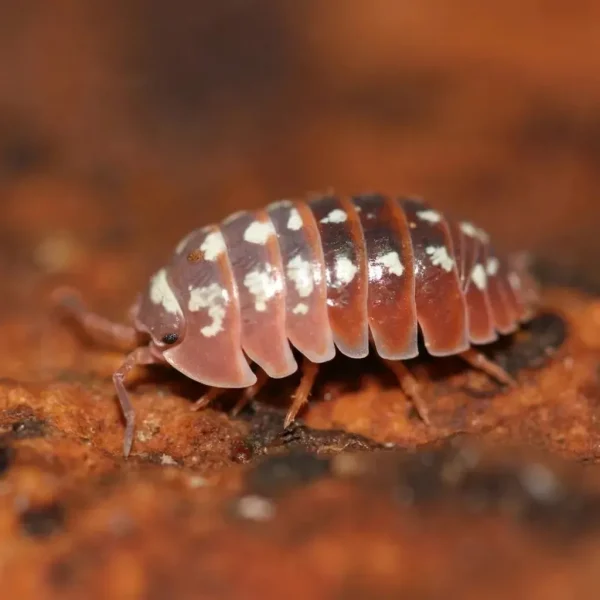
The four known Cubaris murina morphs each sit at a different point on the color-removal spectrum. Standard Little Sea is wild-type: dark gray body, orange tail marks, dark eyes — full normal pigmentation. Papaya sits in the middle: pink-to-peach body, pink eyes — pigment reduced but not fully absent. Glacier is the extreme: white body, white legs, white antennae, white eyes — total pigment removal. Anemone sits off this axis entirely: orange and gray speckled, dark eyes — a different kind of color polymorphism altogether.
Honest Note: Slow Growth Rate
Glacier breeds well once established. Breeding rate is moderate to fast, and the colony grows steadily. However, individual growth from juvenile to adult is slow. Exuvium describes this as the morph’s main limitation. Mancae take longer to reach full adult size than many other isopods at this price tier. Plan for patience in the early colony stages, not because the colony fails to reproduce but because each animal grows slowly. An established Glacier colony with large numbers shows far more activity than a small new culture.
Care — The Most Adaptable C. murina Morph
Care for Glacier is identical to the standard Little Sea in most respects. Temperature 70 to 80°F, humid setup with a moisture gradient, leaf litter as the diet base, and calcium access. The significant difference is humidity tolerance: Glacier handles a wider range — 55 to 80% — than the standard Little Sea or Papaya recommendations. My Home Nature describes them thriving in “tropical, temperate, and semi-arid” setups. This makes Glacier the most forgiving of the three C. murina morphs in the catalog for keepers whose humidity varies.
Setup Framework
Use a ventilated enclosure with 2 to 4 inches of organic substrate. Keep one side moist with sphagnum moss and the other side slightly drier with cork bark hides and leaf litter. Maintain 70 to 80°F and 55 to 80% humidity. Glacier does not need a strict or narrow humidity range like the panda-line or ducky-line species — wider variation is tolerable.
Food
Keep TC INSECTS Assorted Hardwood Leaf Litter and decaying hardwood available at all times. Offer protein through TC INSECTS Isopod Food, dried shrimp, or fish flakes two to three times per week. The morph’s semi-transparent body makes food-coloring visible in the digestive tract — try carotenoid-rich vegetables like carrot or sweet potato for a visual effect during feeding.
Calcium and Springtails
Keep TC Calcium Ultra Fine, cuttlebone, or limestone available at all times for healthy molts. Pair with Springtails for mold control in the moist zone.
Breeding Notes
Females carry developing young in a marsupium. The colony breeds at a moderate to fast rate. Glacier breeds true for the white-out expression — offspring from two Glacier parents show white coloring. Individual growth to adult size is slow, so be patient with juvenile development. The colony becomes noticeably more active and visible as population numbers grow.
Best For
- Collectors completing the C. murina morph trio — Glacier fills the white-eyes position that Papaya does not occupy
- Display vivariums where a fully white isopod with a visible digestive tract creates a unique visual centerpiece
- Keepers who want a beginner-accessible Cubaris with the widest humidity tolerance in the C. murina range
- Setups where humidity fluctuates and a more adaptable culture is preferable
- Frog vivariums and tropical builds where the white animals against dark substrate and green moss make the colony easy to spot
Not Best For
- Keepers expecting fast individual growth. Mancae take longer to reach adult size than most isopods at this price point.
- Very small starter groups in large enclosures. The colony shows best behavior and most activity when numbers build up.
- Densely planted vivariums with delicate ferns — the plant-eating tendency in C. murina applies to Glacier.
Receiving and Acclimation
Open the package in a calm indoor area soon after delivery. Place all packing material into the prepared enclosure. Because Glacier animals are fully white, small mancae are very easy to miss against light-colored packing material — check carefully before discarding anything. Position adults and juveniles near the moist zone under leaf litter or bark.
First Week Priorities
Keep the enclosure at 70 to 80°F and 55 to 80% humidity before the animals arrive. Feed lightly the first week — leaf litter, a small protein offering, and calcium. Expect hiding for several days after arrival. Leave the culture mostly undisturbed. Do not excavate looking for mancae in the first two weeks.
Recommended Add-Ons
- TC Calcium Ultra Fine alongside cuttlebone for steady calcium access.
- TC INSECTS Assorted Hardwood Leaf Litter as the diet base and primary surface cover.
- TC INSECTS Isopod Food for the protein rotation — two to three times weekly.
- TC INSECTS Isopod Habitat Kit for a complete beginner-ready starter setup.
- Springtails for mold control in the humid zone.
Frequently Asked Questions
How is Glacier different from Papaya?
Both are white color morphs of C. murina. The difference is in the eyes. Papaya has pink eyes — blood vessels behind the unpigmented iris show through as red-pink. Glacier has white eyes — even the eye tissue itself has no color. Glacier also has white legs and antennae throughout. Papaya tends toward a warmer pink-to-peach tone overall; Glacier is a cooler, flatter, more complete white.
The origins also differ. Papaya was isolated in North Dakota from a captive colony. Glacier was first collected from wild animals in Florida. Both breed true for their respective colorings.
Can I really see what the isopods eat through the body?
Yes. Because the shell is semi-transparent in the Glacier morph, the digestive tract is visible as a dark line running down the center of the body. When the colony has been eating a colorful food — carrot, sweet potato, pumpkin — the digestive tract takes on that food’s color until digestion completes. Feeding carotenoid-rich vegetables produces a notably orange tint visible from outside the animal. This is an observable feature in healthy, well-established adults and juveniles — not just a background note.
Why are my Glacier isopods growing so slowly?
Slow individual growth is a known trait of the Glacier morph. Breeding happens at a good rate. Females produce mancae regularly once established. However, each manca takes longer than average to reach full adult size. This is not a sign of poor care — it is a feature of the morph. Stable conditions, consistent calcium, and good nutrition support the fastest growth the morph can produce. The colony will grow in number well before individuals look fully adult-sized.
How is Glacier different from the standard Little Sea?
The standard Little Sea is the wild-type form: dark gray body with two small orange marks at the tail and dark eyes. Glacier removes all of this coloring — no gray, no orange marks, no dark eyes. Additionally, Glacier’s wider humidity tolerance and the visible digestive tract make it a different keeper experience from the standard form, even though care requirements are the same. The standard Little Sea is also slightly more daytime-active than Glacier, which tends toward more nocturnal behavior.
Will Glacier offspring always be white?
Yes, when both parents are Glacier. The white-out expression breeds true — white parents produce white offspring. There are no dark gray throwbacks when the breeding group is all Glacier. Keep the culture separate from the standard Little Sea or Papaya if maintaining the pure white line matters to you.
Learn More About Cubaris murina Glacier
-
Wikipedia: Cubaris murina. The species article lists Glacier as “an almost completely white variety with white eyes, legs, and antennae” — the most specific description of the morph’s distinguishing feature in a formal reference. The article also lists Papaya for direct comparison: “a dull pink variety believed to be the expression of some form of albinism.” Reading both entries in the same article makes the white-eyes-vs-pink-eyes distinction between the two morphs immediately clear.
-
iNaturalist: Cubaris murina. Observation records for the species, with records showing Florida coastal occurrences. The Glacier morph originated from Florida-collected wild animals — the same coastal subtropical population documented in these records. Comparing the dark gray wild-type animals in the photo observations with the all-white Glacier color makes the scale of the pigment removal visible as a natural contrast.
-
Wikipedia: Leucism. Leucism is a condition in which cells that produce pigment fail throughout the body — including in the eyes — resulting in white or very pale animals with white or light-blue eyes rather than the pink eyes seen in classical albinism. Whether Glacier’s white-eye expression results specifically from leucism or a different albino variant is not formally documented for this morph. However, the contrast between Glacier’s white eyes and Papaya’s pink eyes closely parallels the leucism-vs-albinism distinction: classical albino animals typically show pink eyes from blood-vessel visibility, while leucistic animals show white or pale eyes because even the residual eye tissue loses color. The leucism article gives the clearest biological context for what the Glacier’s white eyes mean relative to Papaya’s pink ones.


Reviews
There are no reviews yet.