

Armadillidium werneri Isopods for Sale
Overview
Armadillidium werneri is a flagship-size Greek rolling pill woodlouse, described by Hans Strouhal in 1927 in his paper “Zur Kenntnis der Untergattung Armadillidium” (Zoologischer Anzeiger 74: 5-34). The species is native to Greece, with documented locality references including Corfu and several Aegean island populations. As a result, this is the first Greek Armadillidium in our catalog.
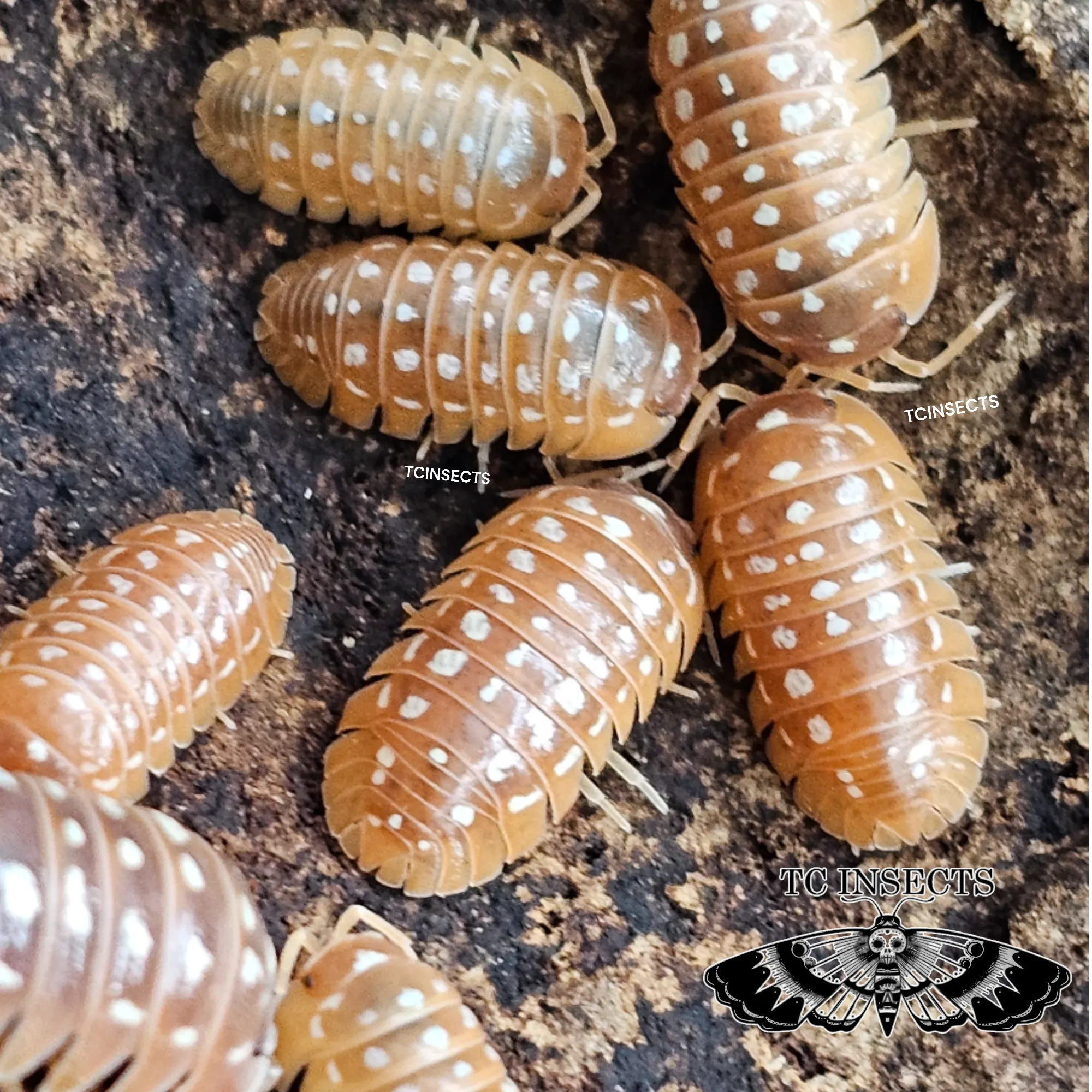
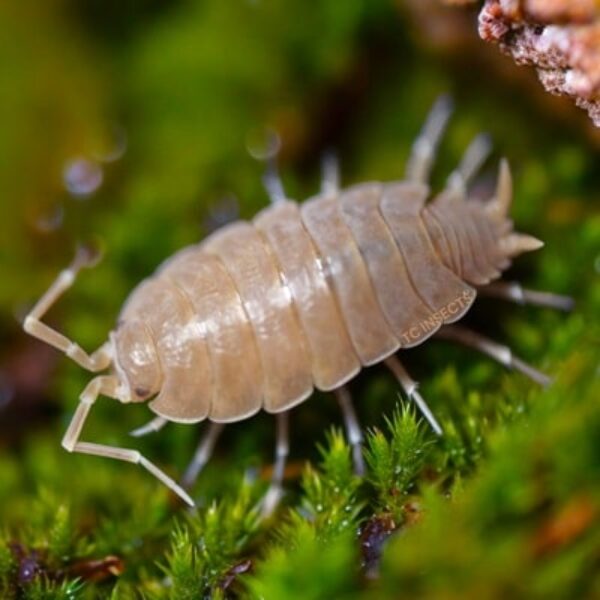
Hobbyists often call this species the “Greater Clown Isopod” because it looks similar to the better-known A. klugii Clown Isopod but reaches a notably larger size. The “Orange” line sold here is a selectively bred color mutation that replaces the wild-type gray-and-black base with a bright orange base, while retaining the signature white spotting that defines the species. Adults reach 18 to 22 mm and show a bulkier overall build than most other Armadillidium.
Why Keep Armadillidium werneri “Orange”?
- Flagship-size Armadillidium: First, adults at 18 to 22 mm with a bulky body make this one of the largest Armadillidium species in the hobby, and the largest in our catalog set.
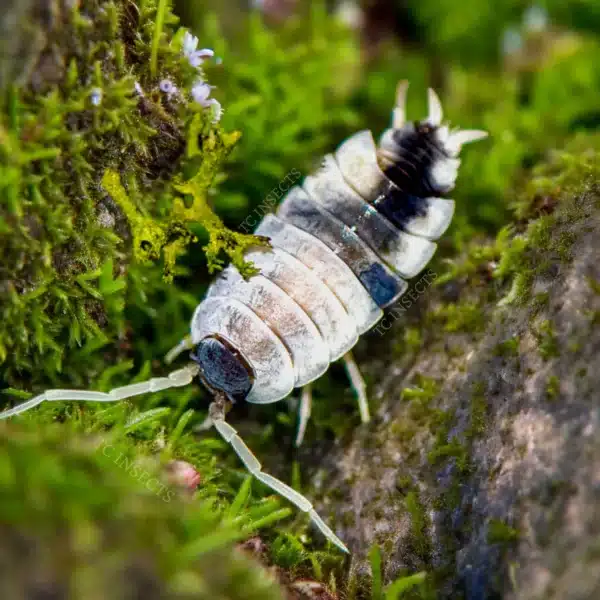
- Five rows of white spots: Additionally, the species’ signature visual identifier is five rows of distinct white spots running front-to-back, compared with three rows on the closely related A. klugii Clown Isopod.
- Documented color gene mutation: Furthermore, the “Orange” line is a recognized hobby color mutation isolated from the wild-type gray-and-black base. The same orange gene expression appears in other isopod species as documented hobby color lines.
- Greek locality provenance: The species is native to Greece, including Corfu, which extends the Mediterranean catalog into Greek territory alongside Sicilian, southern French, and Balkan species.
- Full conglobation: Finally, as a family Armadillidiidae member, A. werneri rolls completely into a sealed ball, which gives the larger body especially dramatic conglobation display.
Honest Note: This Species Is Slow to Mature
This is the most important fact for new buyers. A. werneri takes up to three years to reach full adult size from juvenile. Specifically, this is by far the longest generation time of any Armadillidium in our catalog. As a result, this is not a species for keepers who want fast colony booms or rapid display setup.
However, established cultures are stable and rewarding once the colony reaches breeding age. Sub-adults will begin breeding before reaching full size, so reproductive output does occur during the slow growth phase. Patience is the dominant care factor, more than humidity, food, or temperature.
Honest Note: “Orange” Is a Selectively Bred Color Line
The orange base color is not the wild-type appearance of A. werneri. Wild populations show gray-and-black base coloration similar to A. klugii. The “Orange” line is a documented color gene mutation isolated relatively recently in the hobby, then maintained through selective breeding. Specifically, this is the same orange gene expression pattern that produces orange lines in A. nasatum, Porcellio scaber, and several other isopod species in the trade.
Color expression varies between individuals. Some animals show a brighter, more uniform orange; others lean toward a darker middle section with brighter edges. As a result, expect some color range across the colony rather than a uniform morph look. To maintain strong orange expression over generations, select breeders that show the cleanest base color.
Honest Note: How to Tell A. werneri from A. klugii
Newer keepers often confuse these two species because they look superficially similar. The key visual identifier is the number of spot rows running front-to-back. A. werneri has five rows of white spots; A. klugii has three rows. Additionally, A. werneri reaches a noticeably larger and bulkier adult size, while A. klugii stays more compact.
Keep these two species in separate cultures. Specifically, mixing them risks confusing line identity over time, and the larger A. werneri can outcompete A. klugii for resources. As a result, plan a dedicated enclosure for this species if you also keep A. klugii morphs.
Care and Setup
A. werneri “Orange” does well at room temperature with a clear dry-to-moist gradient and strong ventilation. The Greek Mediterranean origin shapes the husbandry framework: drier overall than tropical species, with a defined moist retreat available at all times.
Temperature
Target 68 to 78°F across most of the year. Specifically, normal indoor temperatures work fine in most home setups. However, avoid sustained heat above 80°F and cold rooms consistently below 60°F. Extreme temperatures can stress this species more than hardier Armadillidium.
Humidity
Aim for moderate humidity overall with one consistently moist retreat zone. Keep that side hydrated with sphagnum moss and damp substrate, then let the rest of the enclosure run drier. Hobby sources disagree on the exact target, with some recommending 30 to 40 percent and others suggesting 60 to 80 percent. As a result, the safest approach is to provide both options through a strong gradient.
Substrate
Use a moisture-holding mix of soil, rotted hardwood, and organic matter at a depth of 2 to 3 inches. Add a generous layer of TC INSECTS Assorted Hardwood Leaf Litter on top. Mediterranean-style decor like cork bark and weathered wood pairs naturally with the orange-and-white coloration.
Food
Lead with leaf litter and decaying hardwood as the base diet. Then supplement with TC INSECTS Isopod Food for added protein and minerals, plus a calcium source like TC Calcium Ultra Fine. Consistent calcium access is especially relevant for this species given the larger adult size and slow growth.
Ventilation
Use strong cross-ventilation or controlled lid ventilation. Specifically, A. werneri needs better airflow than many tropical isopod species, matching its native Greek climate. As a result, undersized ventilation causes problems faster with this species than with humidity-tolerant lines.
Bioactive Use
A. werneri works in moderate-humidity bioactive enclosures once the culture is established. However, run a backup culture in a dedicated bin first. Given the three-year growth time, rebuilding from a crashed display takes far longer than with workhorse cleanup species, so a protected source colony is essential.
Breeding Notes
A. werneri breeds slowly to moderately once settled. Females carry developing mancae in a brood pouch, and stable conditions with consistent moisture and calcium support successful broods. Generally, sub-adults will begin breeding before reaching full size, so reproductive output does occur during the long growth phase.
For best results, leave the colony undisturbed for the first several months. Then add fresh leaf litter before the existing layer is fully consumed, and avoid frequent digging through the substrate. Specifically, this species tends to be shy and stays hidden during daylight hours, so a quiet colony is usually a settled colony, not a missing one.
Best For
- Collector display cultures focused on the largest Armadillidium in the hobby
- Keepers upgrading from A. klugii Montenegro or Dubrovnik to a larger Greek cousin
- Planted vivariums with strong ventilation and Mediterranean-style decor
- Patient hobbyists who do not mind a multi-year culture build
- Bioactive setups paired with springtails for cleanup support
Not Best For
- First-time isopod keepers (start with A. vulgare Wild Type instead)
- Hot tropical setups running consistently above 80°F
- Sealed, fully wet enclosures suited to high-humidity Cubaris species
- Keepers who want fast colony booms (slow 3-year maturation makes this a long-term project)
- Feeder use, since per-animal value is too high and the rolled defensive posture limits feeder availability
- Mixed cultures with A. klugii, since the species are easily confused and would compete
- Setups with weak ventilation
Origin and Locality Notes
Armadillidium werneri was described by Hans Strouhal in 1927. The species is native to Greece, with documented localities including Corfu and select Aegean islands. As a result, this is the catalog’s first Greek Armadillidium, extending the Mediterranean set into Greek territory alongside Sicilian A. badium, southern French A. maculatum, and Balkan A. klugii.
The “Orange” line specifically is a selectively bred color mutation maintained in captive breeding, not a documented wild locality. Wild populations of A. werneri show gray-and-black base coloration similar to A. klugii. As a result, we treat the “Orange” designation as a hobby color line rather than a geographic reference.
Receiving and Acclimation
Open your package promptly when it arrives and inspect the cup calmly before moving anything. Rolling isopods often arrive curled up or hidden in moss and shipping paper, so check slowly rather than dumping the culture. Additionally, this species is naturally shy, so individuals may stay hidden longer than other Armadillidium after shipping.
Prepare the enclosure before opening the cup. The habitat should already have a moisture gradient with one moist retreat zone, deep leaf litter, bark, and a calcium source. Then place the shipping material into the enclosure and let the isopods move out on their own. Finally, keep the setup quiet for the first two weeks while the colony settles.
Hobby sources describe this species as intermediate to establish. Specifically, expect a slower start than with workhorse species, but once the colony stabilizes the long-term culture is rewarding. Do not assume the worst if the colony stays hidden during the first weeks.
Recommended Add-Ons
- TC INSECTS Ultra Isopod Habitat Kit — a premium starter setup recommended for this larger, longer-lived collector species, with richer substrate and more complete cover from day one.
- TC INSECTS Assorted Hardwood Leaf Litter — the core food and cover layer that should never run out in a Werneri culture, especially important given the species’ slow growth.
- TC INSECTS Isopod Food — supplemental protein and minerals beyond leaf litter, fed in small portions to support the long juvenile growth phase.
- TC Calcium Ultra Fine — especially relevant for this species given the larger adult body size and slow growth, since consistent calcium supports healthy molts across the long maturation cycle.
- Springtails — pair with Werneri in moderate-humidity bioactive setups to help manage mold around the moist retreat zone.
Frequently Asked Questions
How is this different from A. klugii?
The key visual identifier is spot row count. A. werneri has five rows of white spots running front-to-back; A. klugii has three rows. Additionally, A. werneri reaches a noticeably larger and bulkier adult size, which is why the hobby calls it the “Greater Clown Isopod.” Generally, if you want the larger version of the Clown Isopod look, this is the species.
Why does this species take so long to mature?
A. werneri can take up to three years to reach full adult size from juvenile. This is by far the longest generation time among the Armadillidium in our catalog. As a result, this species rewards patient long-term keepers rather than buyers who want fast colony booms. However, sub-adults will begin breeding before reaching full size, so reproduction occurs during the long growth phase.
Is “Orange” a wild-type color or a selectively bred line?
Selectively bred. Specifically, the wild-type appearance of A. werneri is gray and black, similar to A. klugii. The “Orange” line is a documented color gene mutation isolated relatively recently in the hobby and maintained through selective breeding. As a result, expect some natural color variation between individuals.
Are these beginner-friendly?
Generally no. They are listed as intermediate by most hobby sources because the slow growth and shy behavior require patience that first-time keepers may not expect. For your first isopod culture, look at Armadillidium vulgare Wild Type instead. Then come back to Werneri once you are confident with general Armadillidium husbandry.
Do they need very low humidity, or moderate humidity?
Hobby sources disagree on the exact target, with some recommending 30 to 40 percent and others suggesting 60 to 80 percent. As a result, the safest approach is to provide both options through a strong dry-to-moist gradient. Specifically, keep one moist retreat zone with sphagnum moss and damp substrate, then let the rest of the enclosure run drier. The colony will self-select.
Why are they hiding so much?
This species is naturally shy and stays hidden during daylight hours, especially in smaller cultures. Larger established colonies show more daytime activity. Specifically, do not interpret hiding as a sign of stress, since shy behavior is normal for this species and not unique to recently shipped animals.
Learn More About Armadillidium werneri
Because A. werneri is a documented but relatively less-commonly-studied Greek species, the following non-competitor references give keepers solid background on the species and its taxonomy.
-
World Register of Marine Species: Armadillidium werneri Strouhal, 1927. The authoritative taxonomic record with Strouhal’s original 1927 description from Zoologischer Anzeiger, and a list of recognized aberrations. Useful for buyers who want to verify the species background and confirm the Strouhal authority.
-
PubMed Central: Terrestrial isopods, soil, and litter interactions. An open-access review of how land isopods interact with leaf litter, moisture, and substrate. Useful for keepers who want the science behind why deep hardwood leaf cover and stable calcium availability matter for a slow-growing rolling species like this one.

Reviews
There are no reviews yet.