
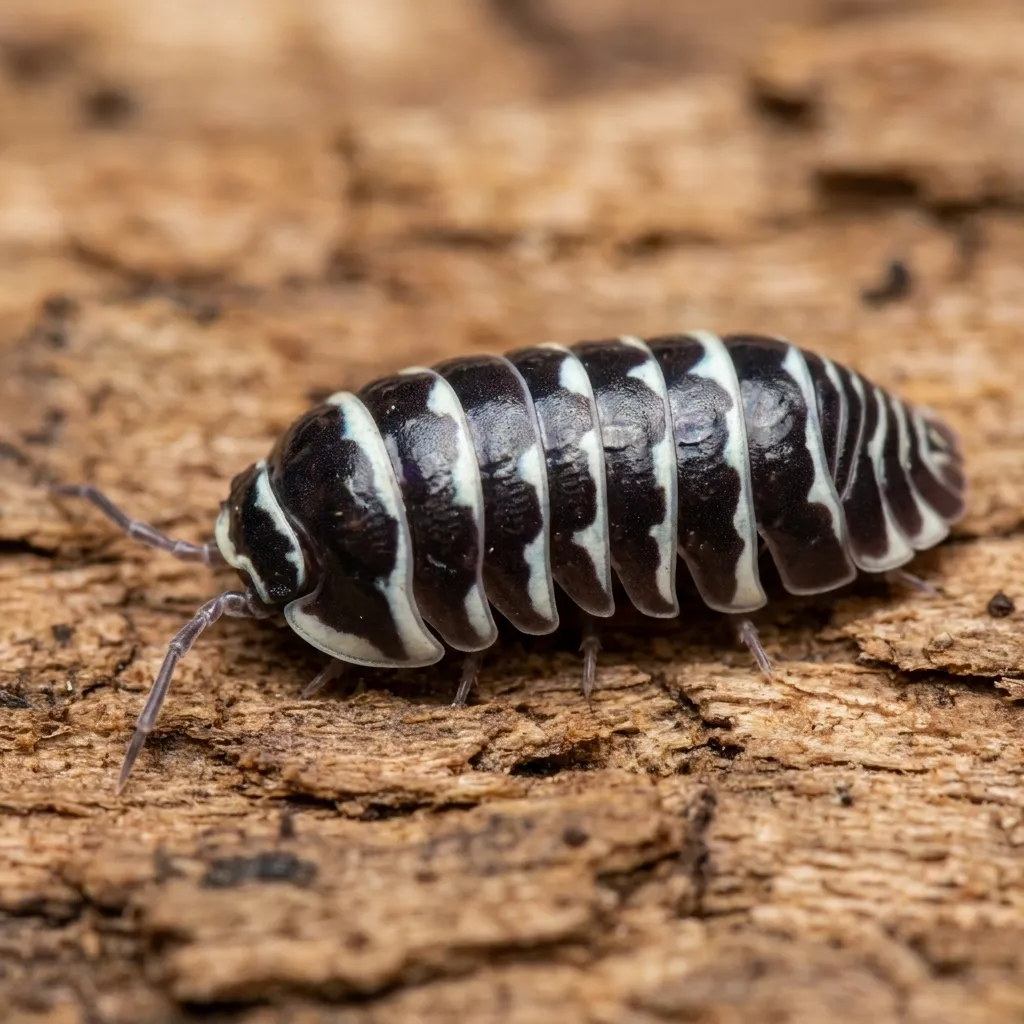
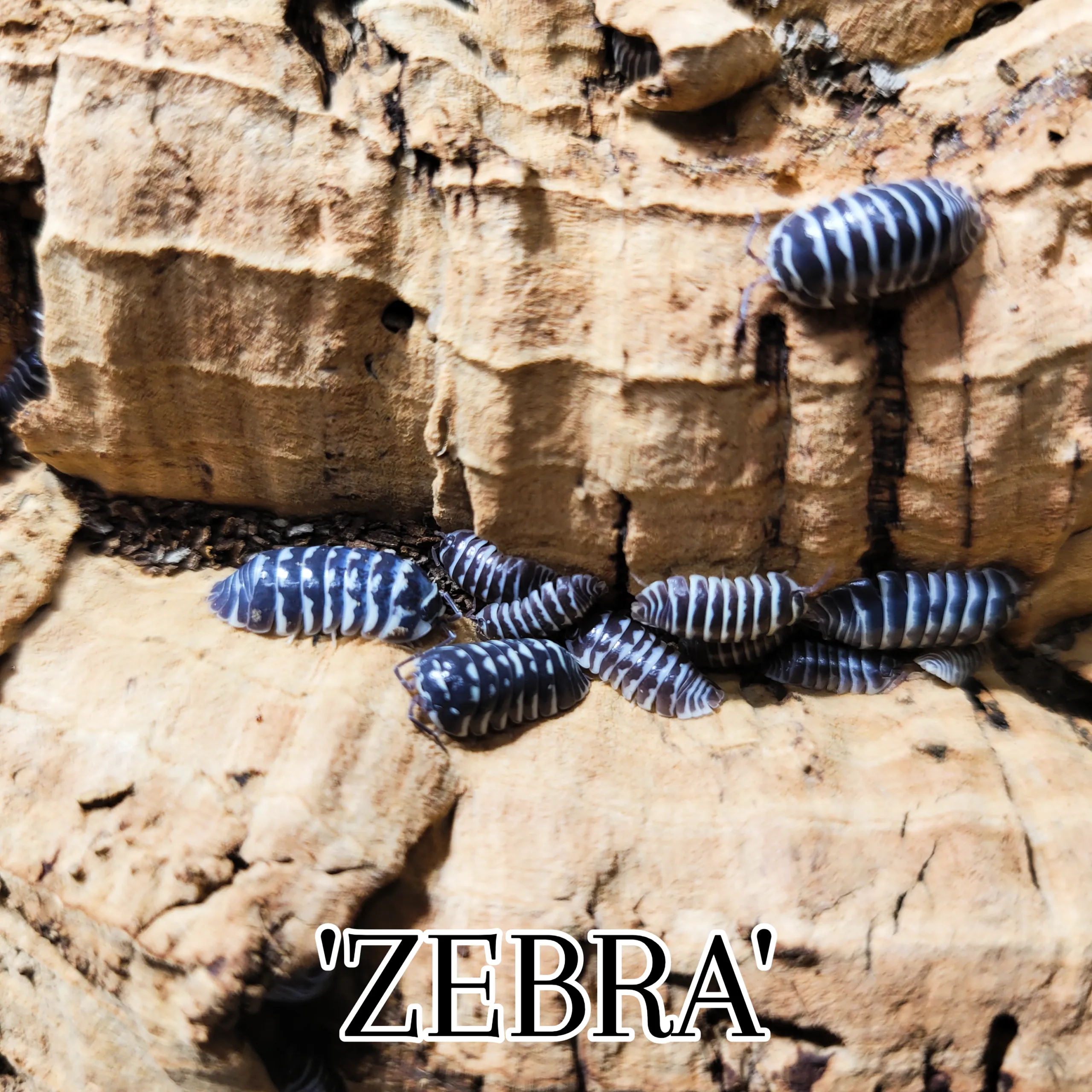

Armadillidium maculatum Zebra Isopods for Sale
First, TC INSECTS ships Armadillidium maculatum “Zebra” as a live captive-bred starter culture. Specifically, this is the wild-type Zebra Isopod, described by Antoine Risso in 1816. Additionally, the species is endemic to a
small range in southeastern France. As a result, this is the species anchor page for our A. maculatum catalog set.
Furthermore, this page sits alongside specialty morph lines like our Champagne Zebra. In contrast, the wild-type Zebra shows the original black-and-white striped pattern that defines the species in nature. Therefore, this is
the foundational reference point for the A. maculatum catalog set.
Overview
First, Armadillidium maculatum is a Mediterranean Armadillidium species. Specifically, the species was described by Antoine Risso in 1816. Additionally, the species is endemic to a small range in southeastern France.
Furthermore, A. maculatum has not been introduced as a wild population elsewhere in the world. As a result, captive cultures are the primary access route for keepers outside the native range.
In contrast, the closely related A. vulgare is naturalized worldwide. Specifically, A. vulgare has spread across temperate and tropical regions through human introduction. However, A. maculatum has remained confined to
its small native French range. Therefore, the species has spread mainly through the hobby trade rather than wild colonization.
Why Keep Armadillidium maculatum “Zebra”?
- Bold high-contrast pattern: First, the species shows a black body with crisp white stripes. As a result, the colony reads strongly against natural substrate and cork bark.
- Documented Batesian mimicry biology: Additionally, the striped pattern mimics the pill millipede Glomeris marginata, which is chemically defended. Therefore, the visual pattern is a real survival adaptation.
- Catalog anchor species: Furthermore, this is the foundational A. maculatum reference for our catalog. As a result, the wild-type page connects to specialty morph pages like Champagne Zebra.
- Restricted French endemic: In contrast to worldwide-naturalized A. vulgare, this species has a narrow native range. Specifically, the species traces to southeastern France only.
- Drier-tolerant than most Armadillidium: Generally, A. maculatum tolerates somewhat drier conditions than other genus members. Therefore, this species is more forgiving of ventilation choices.
Honest Note: The “Maculatum Mystery” Latin Etymology
First, the Latin species name “maculatum” means “spotted,” not “striped.” Specifically, Antoine Risso’s 1816 type specimens were apparently spotted-pattern animals. However, wild populations show both spotted and
continuous-stripe variants. As a result, both phenotypes occur naturally in southeastern France.
Additionally, the continuous-stripe “Zebra” pattern eclipsed the spotted form in the hobby. Specifically, the Zebra pattern became so dominant that the species is universally called the Zebra Isopod. In contrast, the Latin
name suggests the spotted phenotype should be primary. Therefore, this is a real “maculatum mystery” published across multiple hobby reference sources.
In summary, the wild-type Zebra we ship represents the continuous-stripe phenotype. However, both patterns are equally natural in the species. As a result, some individual animals may show transitional patterns between
spots and stripes.
Honest Note: Batesian Mimicry of Glomeris marginata
First, A. maculatum shows documented Batesian mimicry of the pill millipede Glomeris marginata. Specifically, Glomeris is a sympatric pill millipede that shares the species’ native French range. Additionally, Glomeris secretes noxious, foul-tasting chemicals to deter predators. As a result, predators learn to avoid the striped pattern.
Furthermore, A. maculatum itself is not chemically defended. Specifically, the isopod is harmless and edible to predators that ignore the warning pattern. Therefore, the mimicry is the species’ main survival strategy. In effect, the isopod gains protective benefit by looking like the unpalatable millipede.
In practical terms, the Batesian mimicry explanation matters because it grounds the bold pattern in real biology. Specifically, the stripes are not just hobby-favored aesthetics. As a result, wild populations have preserved this pattern for adaptive reasons across many generations.
Honest Note: Restricted French Endemic Range
First, A. maculatum is endemic to a small range in southeastern France. Specifically, the species has not been introduced as a wild population elsewhere in the world. In contrast, the closely related A. vulgare is naturalized
across temperate and tropical regions worldwide. As a result, A. maculatum‘s presence outside southeastern France is almost entirely captive.
However, the species has spread widely through the hobby trade. Specifically, captive cultures have been established across Europe, North America, and Asia. Therefore, the global hobby presence reflects breeder activity
rather than wild colonization. Furthermore, this is part of what makes the species’ biology interesting: the wild range has remained narrow despite the species’ easy captive care.
Honest Note: Biphasic Molting
First, A. maculatum molts in two phases like most isopods. Specifically, the back half of the body molts first, followed by the front half several days later. Additionally, the two-phase molting cycle is normal isopod biology
rather than a species-specific behavior. However, the high-contrast striped pattern makes the biphasic transition especially visible in this species.
As a result, you may see animals with two different shell colors during the molting cycle. Specifically, the newer half appears paler and softer than the older half. Furthermore, the newer half hardens to match the older half
within several days. Therefore, do not assume a two-tone animal is sick. In particular, this is normal molting biology made visible by the strong pattern contrast.
Honest Note: Plant-Eating Tendency Applies to All Armadillidium
First, A. maculatum shares the broader Armadillidium tendency to eat live plants. Specifically, this is not unique to the Zebra morph. Additionally, our Punta Cana page covers the same warning for the species generally.
Therefore, do not treat Zebra Isopods as planted-vivarium-safe cleanup crew without testing the colony’s appetite first.
Furthermore, soft moss and tender new growth are at the greatest risk. Specifically, this species is reportedly more selective than some other Armadillidium. However, the safe approach is dedicated culture bins or planted
setups with hardy, established plants only. As a result, treat plant compatibility as a per-keeper experiment rather than an assumed safe pairing.
Care and Setup
Generally, A. maculatum Zebra follows the standard Armadillidium husbandry framework. Specifically, the species’ Mediterranean French origin makes it tolerant of drier conditions than tropical species. Therefore,
ventilation matters more than maximum humidity. As a result, the setup notes below reflect this Mediterranean-style approach.
Temperature
First, target 68 to 78°F for steady activity. Specifically, normal indoor temperatures work fine for this species. However, avoid sustained heat above 80°F. Additionally, avoid cold rooms consistently below 60°F.
Humidity
First, target moderate humidity overall with a clear dry-to-moist gradient. Specifically, keep one consistently moist retreat zone hydrated with sphagnum moss and damp substrate. Then let the rest of the enclosure run drier. As a result, the colony self-selects between zones. Furthermore, this species tolerates somewhat drier conditions than many other Armadillidium.
Substrate
First, use 2 to 3 inches of moisture-holding substrate. Specifically, a mix of organic topsoil, rotted hardwood, and flake soil works well. Then add a generous layer of TC INSECTS Assorted Hardwood Leaf Litter on top. Furthermore, lighter-colored substrate and decor backgrounds help the black-and-white pattern read more clearly in display setups.
Food
First, lead with leaf litter and decaying hardwood as the base diet. Then supplement with TC INSECTS Isopod Food for added protein and minerals. Additionally, add a calcium source like TC Calcium Ultra Fine. Furthermore, occasional dried shrimp or fish flakes support the breeding cycle.
Ventilation
First, use cross-ventilation or a well-ventilated lid. Specifically, this species prefers active airflow rather than sealed wet conditions. As a result, undersized ventilation causes problems faster than undersized humidity. Therefore, prioritize ventilation over maximum humidity settings.
Bioactive Use
Generally, A. maculatum Zebra works well in moderate-humidity bioactive enclosures. Specifically, the drier-tolerant Mediterranean profile fits planted vivariums with strong ventilation. However, run a backup culture in a dedicated bin first. Furthermore, predation in display tanks can keep population numbers low.
Breeding Notes
First, Zebra Isopods breed at a moderate pace once established. Specifically, females carry developing mancae in a brood pouch. Additionally, stable conditions with consistent calcium support successful broods. As a result,
expect visible juveniles within several months of stable conditions.
Furthermore, juveniles emerge pale and gradually darken as they grow. Specifically, the stripe pattern develops with maturity. Therefore, very small juveniles may look uniformly pale before the contrast pattern emerges. As
a result, do not assume juveniles are a different morph; they will develop the wild-type Zebra appearance with each subsequent molt.
Best For
- Display vivariums focused on bold high-contrast isopod patterns
- Bridge species between beginner A. vulgare Wild Type and specialty collector morphs
- Planted enclosures with moderate humidity and strong ventilation
- Keepers building a multi-morph A. maculatum catalog set across Wild Type and specialty lines
- Beginner-to-intermediate isopod keepers ready for a visually distinctive species
- Mediterranean-style display setups with cork bark and weathered wood
Not Best For
- Mixed cultures with Champagne Zebra, since the two would cross-breed and dilute the morph distinction
- Sealed wet tropical setups suited to high-humidity Cubaris species
- Hot tropical setups running consistently above 80°F
- Feeder use, since the rolled defensive posture and species value make feeding inefficient
- Delicate planted terrariums with soft moss or tender new growth
- Keepers who only want fast workhorse cleanup species
Origin and Locality Notes
First, Armadillidium maculatum was described by Antoine Risso in 1816. Specifically, Risso’s description is the foundational taxonomic record. Additionally, the species is documented as endemic to a small range in
southeastern France. Furthermore, A. maculatum has not naturalized as wild populations elsewhere in the world.
In contrast, the closely related A. vulgare has spread worldwide through human introduction. Therefore, A. maculatum‘s restricted endemic status is a meaningful biological distinction. Specifically, this is the species’
second key contrast with A. vulgare, alongside the documented Batesian mimicry biology.
Hobby breeders have established several documented color morphs from the wild-type stock. Specifically, “Yellow Zebra” has yellow stripes, “Spotted” returns to Risso’s original phenotype, “High White” has expanded
white stripes, “Chocolate Zebra” reduces dark pigment, and “Champagne Zebra” lifts both dark and light pigments. As a result, the catalog can carry the wild type and multiple specialty morphs as related products.
Receiving and Acclimation
First, open your package promptly when it arrives. Then inspect the cup calmly before moving anything. Specifically, rolling isopods often arrive curled up or hidden in moss and shipping paper. As a result, check slowly
rather than dumping the culture.
Additionally, prepare the enclosure before opening the cup. Specifically, the habitat should already have a moisture gradient with one moist retreat zone, deep leaf litter, bark, and a calcium source. Furthermore, place the
shipping material into the enclosure and let the isopods move out on their own. Finally, keep the setup quiet for the first week while the colony settles.
Generally, it is normal for new arrivals to stay curled or hidden for several days. Specifically, the bold pattern can make hiding animals seem more obvious against pale moss. However, this species is reasonably active once
established. As a result, expect surface visibility within the first week.
Recommended Add-Ons
- TC INSECTS Isopod Habitat Kit — a complete starter setup that gives this culture proper substrate, leaf litter, moss, and feed from day one.
- TC INSECTS Assorted Hardwood Leaf Litter — the core food and cover layer that should never run out in a Zebra Isopod culture.
- TC INSECTS Isopod Food — supplemental protein and minerals beyond leaf litter, fed in small portions to support steady breeding.
- TC Calcium Ultra Fine — supports healthy molts and exoskeleton development across the striped pattern.
- Springtails — pair with Zebra Isopods in moderate-humidity bioactive setups to manage mold around the moist retreat zone.
Frequently Asked Questions
Why is the Latin name “maculatum” if the pattern is striped?
First, “maculatum” means “spotted” in Latin. Specifically, Antoine Risso’s 1816 type specimens were spotted-pattern animals. However, wild populations show both spotted and striped variants. Additionally, the continuous-stripe phenotype became dominant in the hobby. As a result, the species is universally called the Zebra Isopod despite the Latin name suggesting otherwise.
Is this related to Champagne Zebra?
Yes. Specifically, our Champagne Zebra is a cultivated color morph of the same species. Additionally, both pages cover Armadillidium maculatum. However, the Wild Type Zebra is the original black-and-white striped form. In contrast, Champagne Zebra is a morph with lifted base color expression.
What is Batesian mimicry?
First, Batesian mimicry is when a harmless species resembles a chemically defended species. Specifically, predators learn to avoid the dangerous species’ visual pattern. Additionally, harmless mimics gain protection by sharing that pattern. In this case, A. maculatum‘s stripes resemble the pill millipede Glomeris marginata. As a result, predators that have learned to avoid Glomeris also avoid the isopod.
Are they good cleanup crew?
Generally yes, with caveats. Specifically, this species processes leaf litter and organic debris at a moderate rate. However, the plant-eating tendency limits use in delicate planted setups. Additionally, the moderate breeding rate makes them less efficient than workhorse cleanup species like Powder Orange or Dwarf Whites. As a result, this species works best as a display-and-cleanup hybrid rather than a pure workhorse.
Can they live in drier conditions?
Generally yes. Specifically, A. maculatum tolerates drier conditions than many other Armadillidium. Additionally, the Mediterranean French native range shapes this drier-tolerance trait. However, this species still needs a consistent moist retreat zone. As a result, the gradient approach (one moist side, one drier side) works better than uniform dry conditions.
Why do juveniles look pale?
First, juveniles emerge pale and gradually darken as they grow. Specifically, the stripe pattern develops with each subsequent molt. Additionally, very small mancae may look uniformly pale before the contrast pattern emerges. Therefore, do not assume pale juveniles are sick or a different morph. As a result, expect the wild-type Zebra appearance to develop as the animals mature.
Learn More About Armadillidium maculatum
Generally, A. maculatum is a documented Mediterranean endemic with peer-reviewed biology. Additionally, the species has been studied for its Batesian mimicry behavior. Therefore, the following non-competitor references give keepers solid background on the species.
-
Wikipedia: Armadillidium maculatum. Specifically, the main species reference covering Risso’s 1816 description, restricted southeastern French native range, established hobby morphs, and the documented Batesian mimicry. As a result, this is the foundational reference for the species and its catalog set.
-
Wikipedia: Glomeris marginata (Pill Millipede). Additionally, the reference for the chemically defended pill millipede that A. maculatum mimics. Therefore, this provides the model species side of the Batesian mimicry relationship. Useful for understanding why the bold striped pattern persists in wild populations.
-
Wikipedia: Batesian Mimicry. Furthermore, the broader biology reference covering the mimicry concept across species. As a result, this is useful for understanding how a harmless isopod gains protection by resembling a chemically defended millipede.



stevenvaldez260 (verified owner) –
I just got my Zebra Isopods today and they look healthy. They arrived on time and they even gave me a few extra zebras.