Armadillidium granulatum Isopods for Sale
Overview
Armadillidium granulatum is a documented littoral coastal pill woodlouse described by Johann Friedrich Brandt in 1833. Brandt published the species in his
Conspectus monographiæ crustaceorum oniscodorum Latreillii. Interestingly, this is the same 1833 paper that introduced A. klugii, the Balkan Clown Isopod.
As a result, A. granulatum is a documented sister species to the Clown Isopod parent of our Twisted Clown hybrid line.
The species ranges along Mediterranean coasts and extends out to the Atlantic coasts of Morocco, Portugal, and France. It also inhabits the Atlantic island
groups of Madeira and the Azores. As a result, this is the most
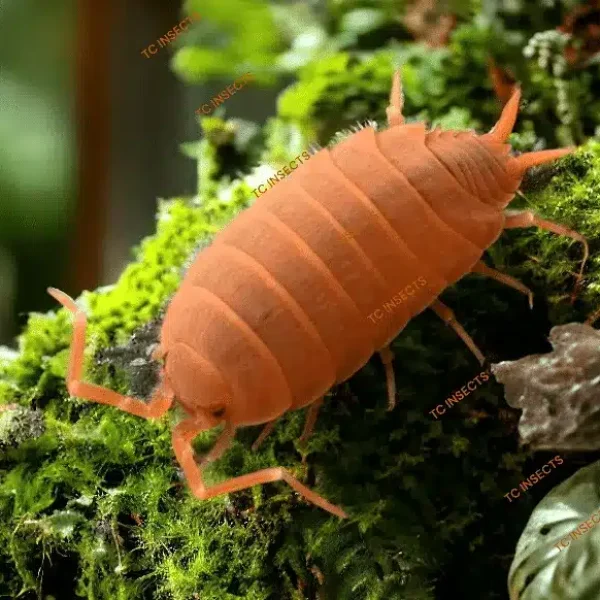
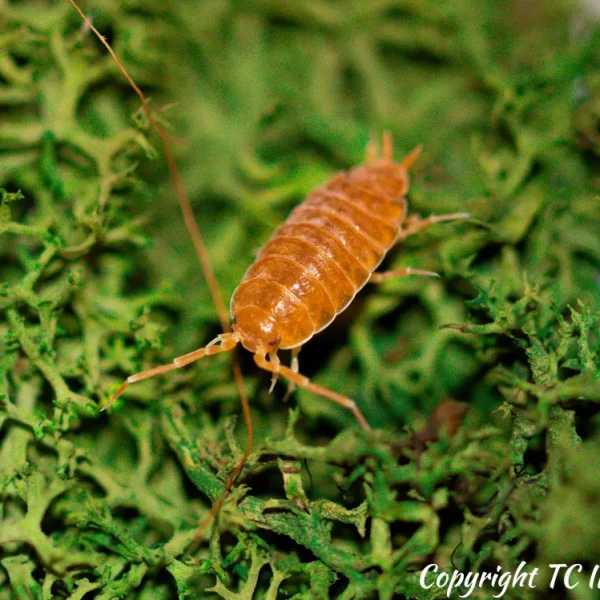
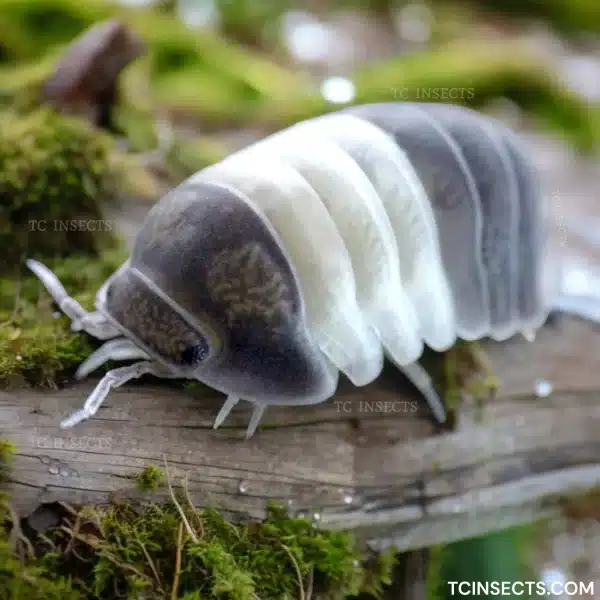
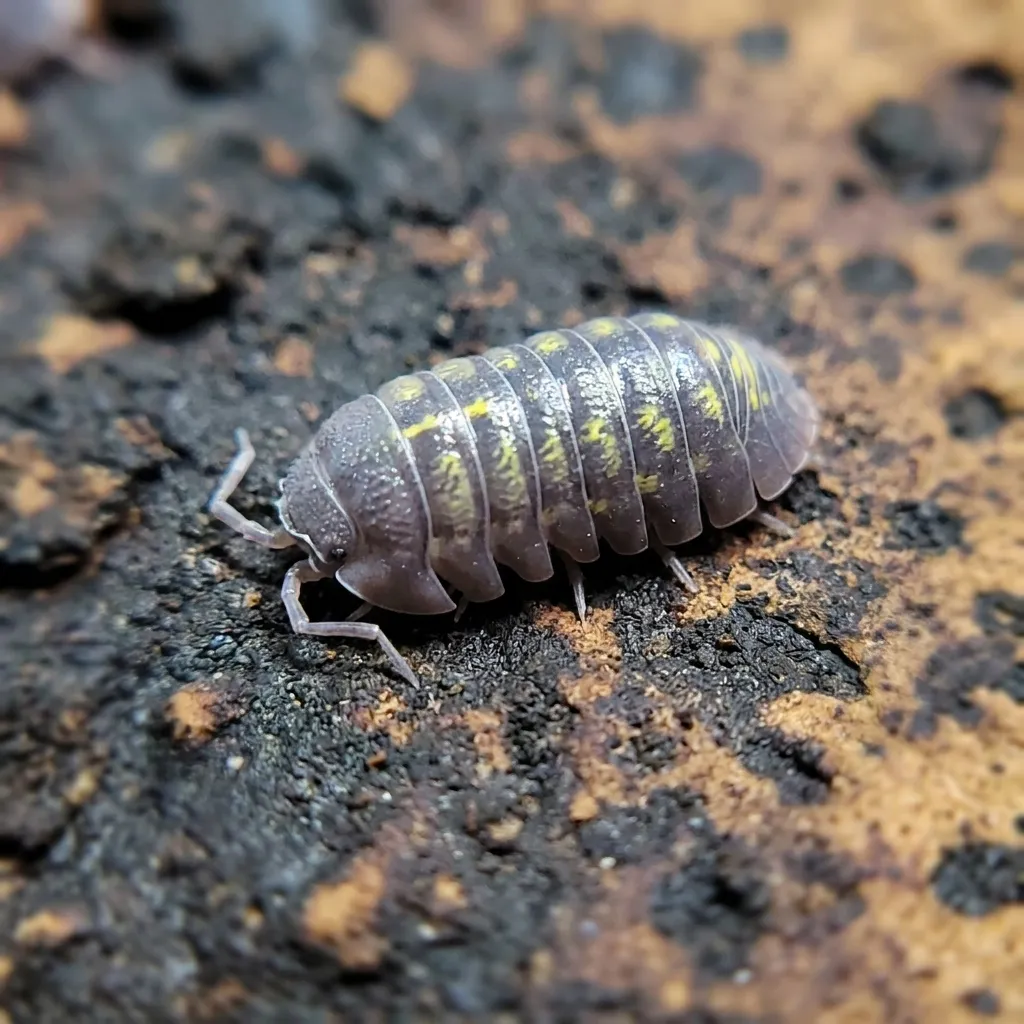
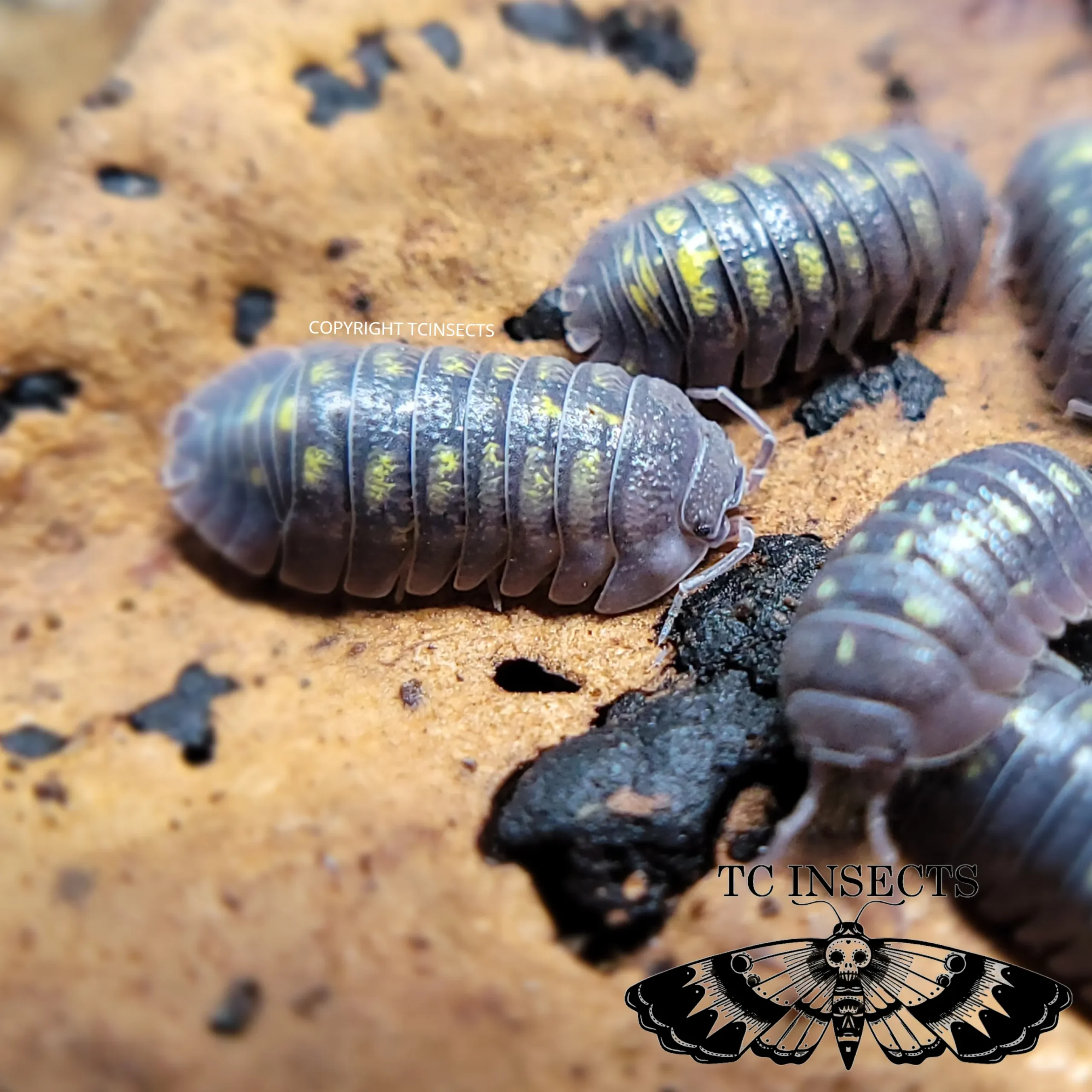
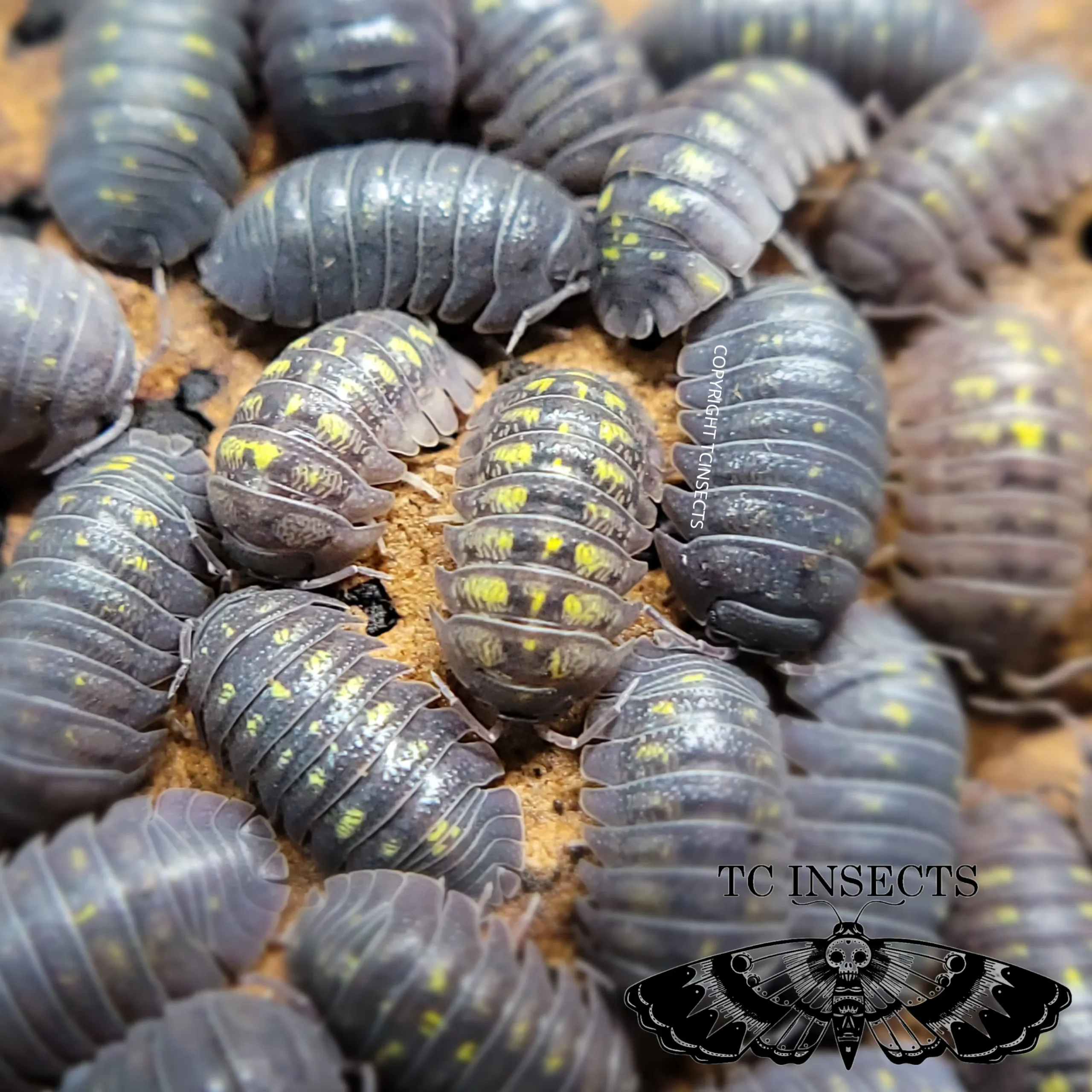
widely distributed Armadillidium in our catalog. Adults reach 15 to 25 mm with a finely granulated dorsal surface that gives the species its name. Many hobby
lines show distinct yellow spotting on a brownish-gray base.
Why Keep Armadillidium granulatum?
- Bridge species between beginner and collector morphs: First, this species fits keepers who have learned basic Armadillidium care on A. vulgare Wild Type and want a visually distinctive next step without committing to a slow-growing or restricted-endemic species.
- Documented littoral coastal range: Additionally, the species’ native distribution along sea coasts (Mediterranean, Atlantic Morocco, Iberian Atlantic, Madeira, Azores) is uniquely broad among catalog Armadillidium species.
- Granulated texture and yellow spotting: Furthermore, the finely textured dorsal surface and yellow freckling on many hobby lines give the colony real visual character without designer morph pricing.
- Sub-adults begin breeding: The species starts breeding at around 10 mm body length before reaching maximum size, which accelerates early colony growth compared with species that wait until full adulthood.
- Full conglobation: Finally, as a family Armadillidiidae member, A. granulatum rolls completely into a sealed ball when disturbed, which preserves the classic Armadillidium defensive display.
Honest Note on the Latin Etymology
The Latin name “granulatum” means “granular” or “covered in fine grains,” referring directly to the textured dorsal surface that gives this species its visual signature. Brandt chose the name in 1833 because the tergites show fine, evenly distributed granulations. This contrasts with larger, pronounced tubercles seen on species like A. scaberrimum “Sandstone”.
As a result, if you keep both species, you can compare two different textural expressions of the same broad granular pattern. Sandstone shows coarse, pronounced tuberculation (the Latin “scaberrimum” means “most rough”). In contrast, Granulatum shows finer, more evenly distributed granulation. Both are documented Latin texture descriptors, just at different scales.
Honest Note on Common Names and Locality
This species is sold under multiple common names: “Granulated Isopod” describes the texture, “Yellow Spanish Isopod” emphasizes the yellow freckling and Iberian coastal range, and shortened nicknames like “Grans” and “Grannies” appear in hobby discussion. All refer to the same species, A. granulatum.
However, specific TC INSECTS hobby lines may not trace back to a verified Costa Blanca, Portuguese, or other named coastal locality. As a result, treat the “Yellow Spanish” designation as a descriptive hobby name rather than a guaranteed wild collection record. The species itself is fully documented; the specific line provenance often is not.
Care and Setup
A. granulatum does well at room temperature with a clear dry-to-moist gradient and good ventilation. The coastal Mediterranean and Atlantic native range shapes the husbandry framework. Thus, it is tolerant of varied humidity, but happiest with a defined moist retreat and strong airflow.
Temperature
Target 68 to 78°F across most of the year. Specifically, normal indoor temperatures work well for this species in most home setups. However, avoid sustained heat above 80°F. Also, avoid cold rooms consistently below 60°F.
Humidity
Aim for moderate humidity overall with one consistently moist retreat zone. Keep that side hydrated with sphagnum moss and damp substrate, then let the rest of the enclosure run drier. Specifically, this species tolerates a wider humidity range than many other Armadillidium, which makes it forgiving for newer keepers.
Substrate
Use a moisture-holding mix of soil, rotted hardwood, and organic matter at a depth of 2 to 3 inches. Add a generous layer of TC INSECTS Assorted Hardwood Leaf Litter on top. Cork bark and weathered wood pair well with the granulated body texture.
Food
Lead with leaf litter and decaying hardwood as the base diet. Then supplement with TC INSECTS Isopod Food for added protein and minerals, plus a calcium source like TC Calcium Ultra Fine. Calcium access matters especially for the textured exoskeleton, since the granulated surface turns over consistent mineral content at each molt.
Ventilation
Use cross-ventilation or controlled lid ventilation. Specifically, this species tolerates good airflow well, which matches its native coastal climate. As a result, undersized ventilation is rarely a problem for Granulatum. However, the moist retreat zone still needs protection from drying out completely.
Bioactive Use
A. granulatum works well in moderate-humidity bioactive enclosures. The adaptability to varied humidity makes this species one of the more reliable choices for newer bioactive builders. However, run a backup culture in a dedicated bin first, since predation by larger vivarium inhabitants can keep colony numbers low in active display setups.
Breeding Notes
Granulatum breeds at a moderate pace once settled. Females carry developing mancae in a brood pouch, and the species begins breeding at around 10 mm body length, which is smaller than most other Armadillidium. As a result, early colony growth can be visible faster than with slow-maturing species like A. werneri “Orange”.
For best results, leave the colony undisturbed during the first six to eight weeks. Then add fresh leaf litter before the existing layer is fully consumed. Also, avoid frequent digging through the substrate. Juveniles often hide in moss and leaf litter and may not display the full granulated texture until they reach mid-juvenile sizes.
Best For
- Keepers stepping up from A. vulgare Wild Type to a more visually distinctive species
- Display cultures focused on textured Armadillidium species
- Planted vivariums and bioactive terrariums with moderate humidity
- Bioactive setups with good ventilation and a clear moisture gradient
- Reptile and amphibian cleanup crews when conditions match the isopods’ needs
- Keepers building a multi-species Armadillidium set
Not Best For
- Sealed, fully wet tropical setups suited to high-humidity Cubaris species
- Hot tropical setups running consistently above 80°F
- Feeder use, since per-animal value is too high and the rolled defensive posture limits feeder availability
- Mixed-species cultures with other Armadillidium, since species identity drifts when lines blur
- Keepers expecting bold designer morph colors (Granulatum is naturalistic rather than flashy)
- Pure-species enthusiasts who want strict locality data, since hobby line provenance often is not documented
Origin and Locality Notes
Armadillidium granulatum was described by Johann Friedrich Brandt in 1833 in his Conspectus monographiæ crustaceorum oniscodorum Latreillii. The species is documented as a littoral coastal species. Its distribution spans Mediterranean coasts plus the Atlantic coasts of Morocco, Portugal, and France. Additionally, it is found on the Atlantic island groups of Madeira and the Azores.
The species has multiple junior synonyms reflecting its broad historical taxonomy, including A. lusitanum Verhoeff 1907, A. tunetanum Verhoeff 1907 (Tunisian), A. morbilliosum Koch 1840, and A. pellegrinense Verhoeff
1908. Additionally, A. peloponnesiacum Verhoeff 1901 was previously considered a subspecies of granulatum but is now recognized as a separate Greek species. Therefore, “Yellow Spanish Isopod” hobby lines likely trace
to Iberian or Mediterranean coastal stock, although specific line provenance is rarely documented.
Receiving and Acclimation
Open your package promptly when it arrives and inspect the cup calmly before moving anything. Rolling isopods often arrive curled up or hidden in moss and shipping paper, so check slowly rather than dumping the culture.
Prepare the enclosure before opening the cup. The habitat should already have moderate-humidity substrate with one moist retreat zone, deep leaf litter, bark, and a calcium source. Then place the shipping material into the enclosure and let the isopods move out on their own. Finally, keep the setup quiet for the first week while the colony settles.
It is normal for new arrivals to stay curled or hidden for the first several days. Specifically, the granulated body texture blends well with cork bark and natural substrates, so a quiet colony is usually a settled colony, not a missing one.
Recommended Add-Ons
- TC INSECTS Isopod Habitat Kit — a complete starter setup that gives this culture proper substrate, leaf litter, moss, and feed from day one.
- TC INSECTS Assorted Hardwood Leaf Litter — the core food and cover layer that should never run out in a Granulatum culture.
- TC INSECTS Isopod Food — supplemental protein and minerals beyond leaf litter, fed in small portions to support active reproduction.
- TC Calcium Ultra Fine — especially relevant for the textured granulated exoskeleton, which turns over consistent mineral content at each molt.
- Springtails — pair with Granulatum in bioactive setups to help manage mold around the moist retreat zone.
Frequently Asked Questions
Why is this species called the “Yellow Spanish Isopod”?
The hobby common name refers to the yellow freckling seen on many A. granulatum lines, plus the species’ documented presence along Iberian Atlantic and Mediterranean coasts. Specifically, Spain falls within the species’ coastal range. However, specific TC INSECTS hobby lines may not trace to a verified Spanish collection. Therefore, we treat the name as descriptive rather than locality-specific.
How does Granulatum compare to Sandstone (A. scaberrimum)?
Both species have textured dorsal surfaces, but at different scales. Sandstone (A. scaberrimum) shows coarse, pronounced tuberculation (the Latin name means “most rough”). Granulatum shows finer, more evenly distributed granulation (the Latin name means “granular”). As a result, the two species pair well in a textured-Armadillidium collector set. This is because they represent two different scales of the same broad textural pattern.
What does the connection to A. klugii mean?
Both A. granulatum and A. klugii were described by Johann Friedrich Brandt in the same 1833 paper. They are not the same species, and they look quite different. However, the shared describing author and year mean these are documented sister species at the genus level. They have parallel taxonomic histories spanning nearly two centuries.
How fast do they breed?
Moderate. Granulatum has an interesting trait: sub-adults begin breeding at around 10 mm body length before reaching full adult size of 15 to 25 mm. As a result, early colony growth can be visible faster than with species that wait until full adulthood, such as A. werneri “Orange”.
Are they beginner-friendly?
Yes. Multiple established hobby sources rate this species among the most forgiving Armadillidium, with adaptability to varied humidity and a tolerance for new
keeper mistakes. As a result, this is one of the better bridge species between beginner A. vulgare and more specialized collector morphs.
Why do mine look different from each other?
Natural color variation is built into the species. Some individuals show stronger yellow freckling, while others appear more uniformly brownish-gray.
Specifically, the species has multiple historical varieties documented across its broad coastal range. This supports the natural variation seen in modern hobby
cultures.
Learn More About Armadillidium granulatum
Because A. granulatum is a documented widely distributed coastal species, the following non-competitor references give keepers solid background on the species and its biology.
-
World Register of Marine Species: Armadillidium granulatum Brandt, 1833. The authoritative taxonomic record with Brandt’s 1833 original description, the full junior synonym list, and the documented littoral coastal distribution across the Mediterranean and Atlantic. Useful for buyers who want to verify the species and confirm the broad coastal range.
-
Wikipedia: Armadillidium genus overview. A general overview of the 189 species in the genus, including conglobation behavior and the Mediterranean autochthonous distribution that defines the group. Useful for understanding why this coastal species fits a moderate-humidity care framework.
-
PubMed Central: Terrestrial isopods, soil, and litter interactions. An open-access review of how land isopods interact with leaf litter, moisture, and substrate. Useful for keepers who want the science behind why deep hardwood leaf cover and consistent calcium availability matter for a textured rolling species like this one.