Praying Mantis Stuck in Molt: What to Do (and Not Do)

No skin split yet; leave it alone and do not touch the enclosure
Gently raise humidity and check temperature, still hands-off
Most trapped legs work free alone; intervene only after that
A normal hang or a genuinely stuck molt?
A praying mantis hanging upside down and refusing food is likely just getting ready to molt, and that can normally last 24 hours or more before anything happens, so leave it alone. A mantis that has already split its old skin and is visibly caught, by a leg, an antenna, or part of the abdomen, is more urgent, though even here the right first move is raising humidity and waiting, not touching it. Molting kills more captive mantises than anything else, and nearly every bad outcome starts with a keeper trying to help too soon. Here is how to tell a normal hang from a genuine stuck molt, and the one step that sometimes saves a trapped leg.

Room to hang. A secure place to grip.
The original guide below explains the timing, warning signs, and prevention steps. Keep the enclosure calm and distinguish normal pre-molt behavior from a visible trapped point.
What does a normal praying mantis molt look like?
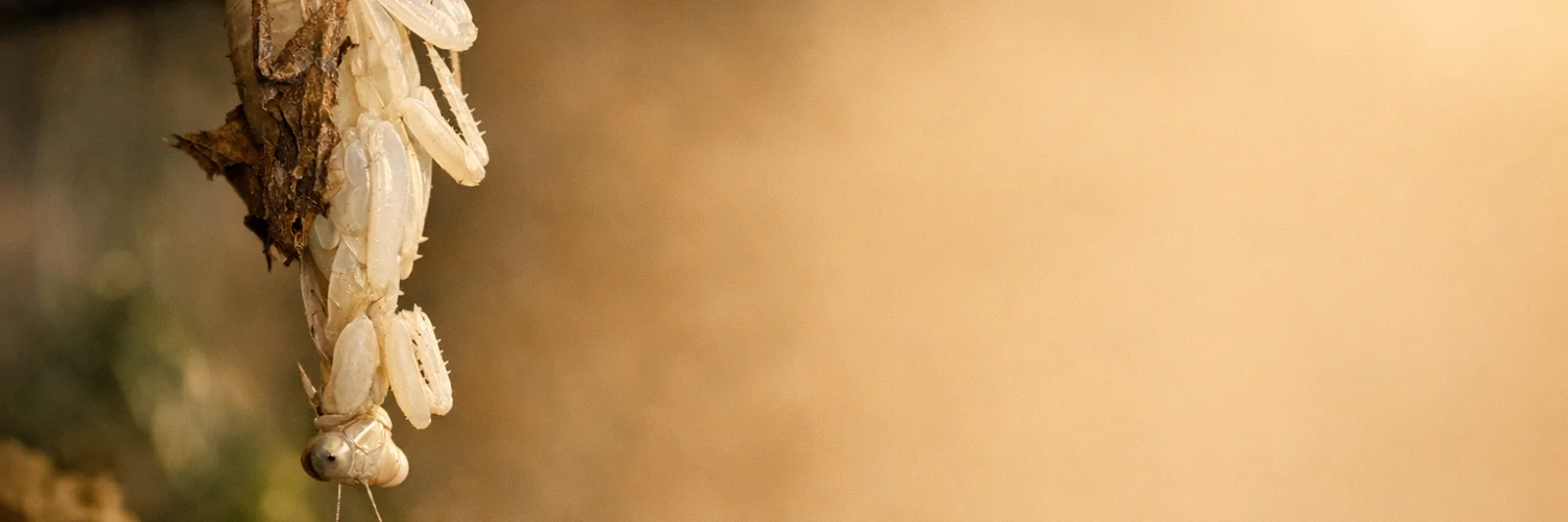
Every molt follows the same basic script. A mantis stops eating a day or two ahead of time, its abdomen may swell or darken, and it climbs to the highest point it can reach before hanging upside down by its back legs. The old cuticle splits behind the head, and the mantis slowly works its way free, legs first, wings later in older instars, before hanging from the empty shed skin while the new exoskeleton hardens and takes on color. A young nymph usually molts every one to two weeks, spacing out toward roughly a month between molts near adulthood, and most species go through five to ten molts total before reaching their final, winged form. If you are just setting up, our care sheet library covers housing for every species we carry.
Hanging before a molt versus actually stuck in one
These are two different situations with two different clocks, and mixing them up is where a lot of unnecessary panic comes from. A mantis that is simply hanging, has stopped eating, and has not yet split its old skin can stay like that for 24 hours or more without anything being wrong. Only past roughly 48 hours with zero visible progress toward shedding is it worth quietly checking humidity and temperature, since a room that is too cool or too dry can stall a molt that would otherwise start on its own.
A mantis that has already split its skin and is visibly caught, by a leg, an antenna, or part of the abdomen, is the situation that actually deserves the word urgent. Even then, the right first move is the same: raise humidity gently and wait, since a large share of these resolve without any hands-on help within one to two hours. Reaching for tweezers in the first few minutes is how far more mantises get hurt than helped.
The one careful step for a leg stuck in the old skin
If a single leg or antenna is still trapped after a couple of hours of patient waiting, and the surrounding cuticle looks like it is starting to harden, there is exactly one technique experienced keepers use, and it is a last resort with genuinely poor odds, not a routine fix. Moisten only the stuck spot with a damp cotton swab using plain water, never saliva, and never dip or submerge the mantis itself. Hold it there for a minute or two to soften the old cuticle, then stop and give the mantis a chance to work itself free on its own.
What you must not do is pull, rub, or pry at the trapped leg or the skin around it. A leg torn free this way is a leg lost for good in an adult, since a mantis that has already had its final, winged molt cannot regenerate anything. A younger nymph that loses a leg to a rough molt sometimes improves the limb at its next molt, but an adult gets no second chance.
What you should never do during a molt
Once a mantis is hanging in molting position, treat the enclosure like it is not there. Do not open it, move it, rearrange decor, or mist directly onto the animal itself, since a startled mantis mid-molt can fall, and a fall during a molt is one of the most common ways captive mantises die or end up deformed. Do not try to peel or pull a stuck skin off by hand outside of the single careful step above, and do not leave any live prey in the enclosure, since a hungry feeder left loose can chew on a mantis that cannot yet defend itself.
Preventing a stuck molt in the first place
Most stuck molts trace back to one of three fixable setup issues: not enough height, nothing to grip, or humidity that is too low. Give the enclosure at least three times the mantis's body length in height, ideally four, since a mantis needs room to hang and fully extend without touching the floor. Line the lid or upper walls with mesh or another rough, grippable surface rather than smooth plastic or glass, and mist the enclosure walls, not the mantis, to keep humidity in the range your species needs. Our full praying mantis care sheet has exact height and humidity numbers by species.
Feeding matters too. Stop offering food the moment you see pre-molt signs, refusing meals, climbing to the highest point, or a swollen or darkened abdomen, since a struggling feeder left in with a mantis that cannot defend itself is a real hazard. In the days before that, stick to a feeder sized to the mantis rather than the biggest one available; our feeding guide by size covers exactly what to offer at each stage, and keeping a fruit fly culture running means a recovering mantis never has to wait for its next meal.
Normal Hang or Genuine Stuck Molt?
The Post-Molt Recovery Kit
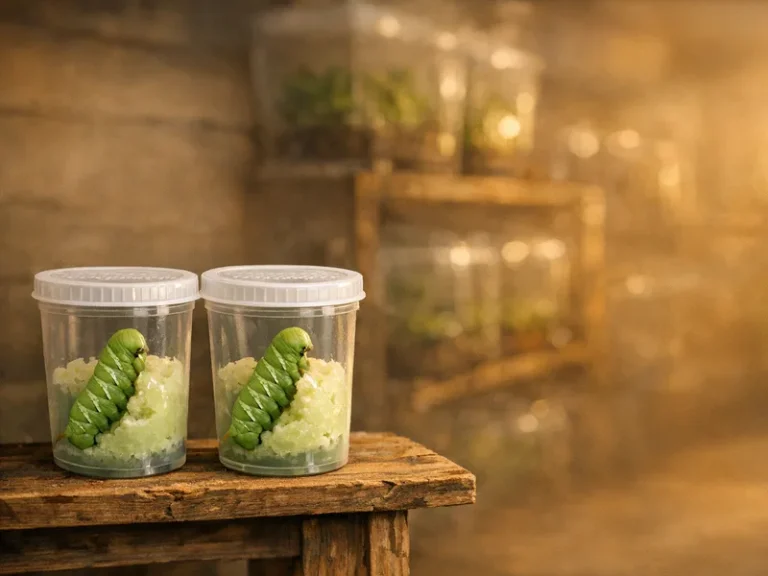
Right-sized soft feeders for a mantis rebuilding strength after a molt, from tiny nymphs to adults.
Frequently asked questions
How long can a praying mantis hang before molting?
Often 24 hours or more, and that alone is not a problem. A mantis in pre-molt stops eating, may swell or darken at the abdomen, and hangs upside down for a full day or longer before the old skin ever splits. Only past roughly 48 hours with no visible progress is it worth gently checking humidity and temperature.
My mantis has been stuck in the same spot for hours, what do I do?
First confirm it has actually split its old skin and is caught, rather than simply hanging in pre-molt. If it is genuinely stuck by a leg or antenna, raise humidity slightly and wait one to two hours undisturbed, since most trapped mantises work themselves free without any help at all.
Can I help a praying mantis that is stuck in its molt?
Rarely, and only as a last resort. If one leg stays trapped after two or more hours and the cuticle is starting to harden, some keepers moisten just that spot with a plain water damp cotton swab to soften it, never pulling or dipping the mantis in water. Every other form of hands-on help causes more harm than good.
What happens if a mantis's leg is stuck in the old skin?
If it frees itself, the leg is often fine. If it tears free or you pull it, the leg is gone for that mantis's remaining molts if it is already an adult, since adults do not molt again. A younger nymph that loses a leg sometimes regrows or improves it at its next molt instead.
Why do praying mantises die during molting?
Mostly from falling. A mantis mid-molt hangs by its back legs with its entire body soft and defenseless, so not enough height, a smooth perch with nothing to grip, or a disturbed enclosure can send it to the floor mid-shed. That fall, not the molt itself, is what usually proves fatal or causes deformities.
How can I prevent a stuck molt?
Give the enclosure at least three to four times the mantis's body length in height, line the lid with mesh or another rough surface to grip, and keep humidity in the range your species needs by misting the walls, not the mantis. Stop feeding as soon as pre-molt signs appear, and never disturb the enclosure once it starts hanging.
Keep reading: the right micro feeder for small instars.
Often 24 hours or more, and that alone is not a problem. A mantis in pre-molt stops eating, may swell or darken at the abdomen, and hangs upside down for a full day or longer before the old skin ever splits. Only past roughly 48 hours with no visible progress is it worth gently checking humidity and temperature.
First confirm it has actually split its old skin and is caught, rather than simply hanging in pre-molt. If it is genuinely stuck by a leg or antenna, raise humidity slightly and wait one to two hours undisturbed, since most trapped mantises work themselves free without any help at all.
Rarely, and only as a last resort. If one leg stays trapped after two or more hours and the cuticle is starting to harden, some keepers moisten just that spot with a plain water damp cotton swab to soften it, never pulling or dipping the mantis in water. Every other form of hands-on help causes more harm than good.
If it frees itself, the leg is often fine. If it tears free or you pull it, the leg is gone for that mantis's remaining molts if it is already an adult, since adults do not molt again. A younger nymph that loses a leg sometimes regrows or improves it at its next molt instead.
Mostly from falling. A mantis mid-molt hangs by its back legs with its entire body soft and defenseless, so not enough height, a smooth perch with nothing to grip, or a disturbed enclosure can send it to the floor mid-shed. That fall, not the molt itself, is what usually proves fatal or causes deformities.
Give the enclosure at least three to four times the mantis's body length in height, line the lid with mesh or another rough surface to grip, and keep humidity in the range your species needs by misting the walls, not the mantis. Stop feeding as soon as pre-molt signs appear, and never disturb the enclosure once it starts hanging.
Keep learning
Have a care question? Ask our community.
Join Reptile Keepers USA, our free Facebook group for reptile, amphibian and invert keepers. Share your setups, get care help and swap feeder tips.
Join the free group