Powder Orange Isopod Care Sheet
Why it matters
Powder Oranges are often chosen for cleanup work because they are active, visible, and quick to use fallen leaves and food scraps. Their speed should not be mistaken for an ability to live dry everywhere. They still need a damp refuge where they can replace water lost through the body surface.
Setup
Use a ventilated enclosure with edible soil, deep leaf litter, bark cover, and a damp refuge at one end. Let the other end remain less wet.
Build the bin from the bottom up: organic substrate, decomposing leaves, cork bark, then a deep leaf layer. Wet one end thoroughly and leave the other end less moist. Put food on a removable surface so it is easy to take out before molding. Seed a separate backup culture before using the colony in a pet enclosure.
Everyday routine
Keep the damp refuge from drying completely, replace leaf litter as it is eaten, and offer modest supplemental food with a calcium source.
What to check and common mistakes
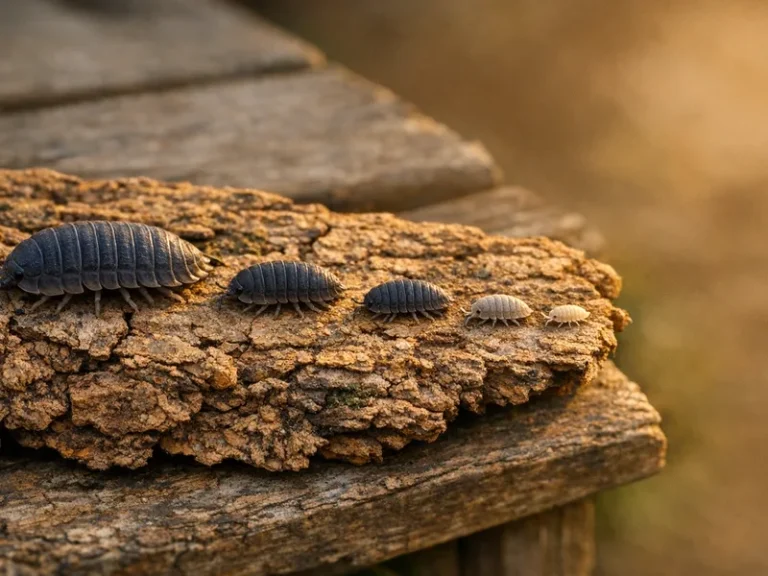
Powder Oranges reproduce readily in a stable bin. If they cluster only at the damp end, check whether the rest of the substrate has become too dry.
If animals gather under one bark piece, note whether it is the only place with moisture or cover. Add more shelter and correct the gradient rather than spraying the whole surface every day. A growing colony needs more leaves and space, not just more vegetable scraps.
Reading a Powder Orange colony
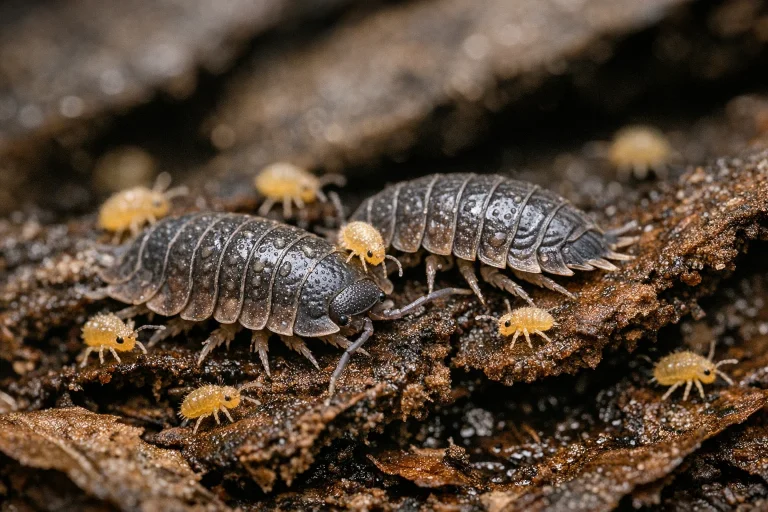
Powder Orange isopods are active and easy to spot, which makes them useful for learning to read a colony. Build a damp retreat under moss or leaf litter at one end and a drier, ventilated feeding zone at the other. The orange color should not be used as the only health test; observe movement, feeding, and the presence of young. Keep broad leaf-litter cover available so the colony can move without constant exposure.
Offer modest supplemental food in a removable spot and clear it before it spoils. Provide a calcium source and let decaying leaves remain the main background food. If the colony crowds only the damp end, review whether the dry side has become too dry; if it flees the damp end, look for saturation or stagnant air. Do not flood the whole bin to correct one dry patch. A gradient gives the animals a choice and makes care adjustments easier.
Keep learning
Use the related guide for full species or product details. Check current store availability before ordering.
Have a care question? Ask our community.
Join Reptile Keepers USA, our free Facebook group for reptile, amphibian and invert keepers. Share your setups, get care help and swap feeder tips.
Join the free group