Common Pillbug Care Sheet
Why it matters
The common pillbug is the animal many people first call a roly-poly. Its ability to roll into a ball helps distinguish it from some flatter woodlice, but that behavior does not tell a keeper whether a captive bin is set up well. The important signs are feeding, a stable damp refuge, and successful young.
Setup
Provide pesticide-free leaf litter, decayed wood, soil, bark cover, calcium, and a damp refuge with ventilation. A secure lid keeps the habitat stable.
Begin with a secure tub and pesticide-free soil materials. Add mixed decayed leaves and pieces of bark, then keep one portion damp while allowing airflow across the lid or side vents. Offer a calcium source. A classroom or home culture should be labeled so no one accidentally releases it outdoors.
Everyday routine
Replace leaf litter as it breaks down and check the moist end before watering. Offer vegetable scraps only in amounts the colony can finish quickly.
What to check and common mistakes
Do not release captive animals outdoors. If collecting locally, check the law and avoid places treated with pesticides.
Outdoor collected material may carry pesticides, predators, or mites. If the goal is a clean pet culture, captive-bred stock and prepared substrate are easier to control. If the bin smells sour, reduce wet scraps and inspect for standing water.
The familiar roly-poly in a culture bin
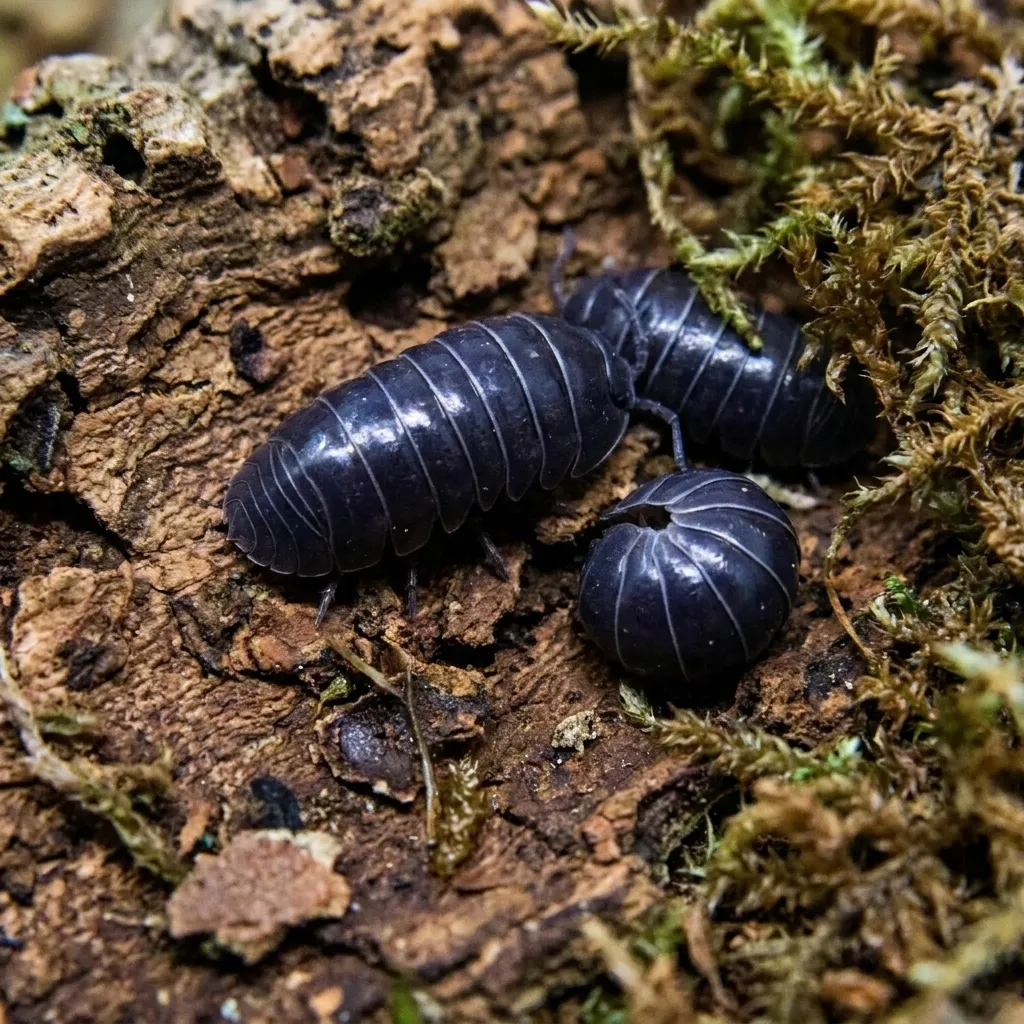
The common pillbug, Armadillidium vulgare, is a true terrestrial isopod, not an insect. It rolls into a ball when disturbed, a behavior that helps distinguish it from many flatter sowbugs. For a beginner colony, start with a secure container, breathable cover, decaying leaves, calcium, and a moist retreat. Keep enough drier area that the animals can move away from the damp end when needed.
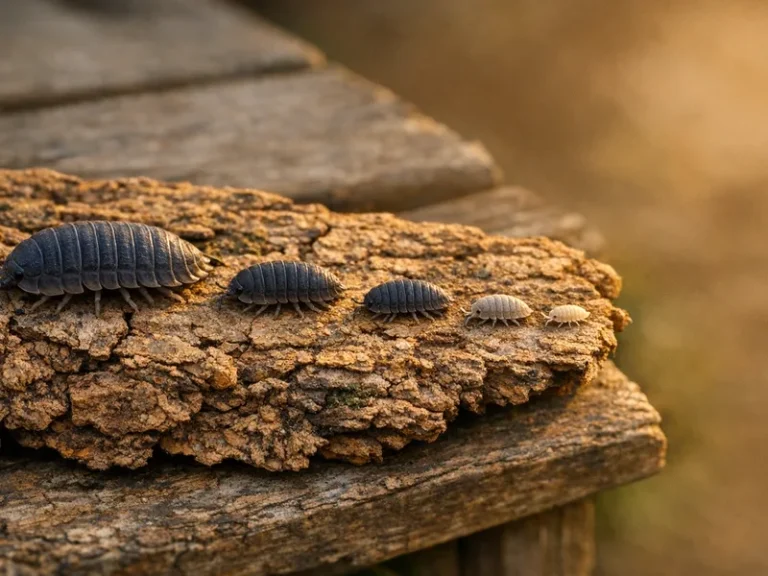
Observe under one piece of bark rather than turning over every hide at once. A healthy culture usually contains animals of several sizes as it establishes. Remove uneaten rich food before mold develops, but leave most leaf litter to break down gradually. If a collected animal came from outdoors, check local rules and avoid releasing captive animals later; a culture can carry organisms that do not belong in the wild.
Keep learning
Use the related guide for full species or product details. Check current store availability before ordering.
Have a care question? Ask our community.
Join Reptile Keepers USA, our free Facebook group for reptile, amphibian and invert keepers. Share your setups, get care help and swap feeder tips.
Join the free group