Why Isopods Need Leaf Litter
Why it matters
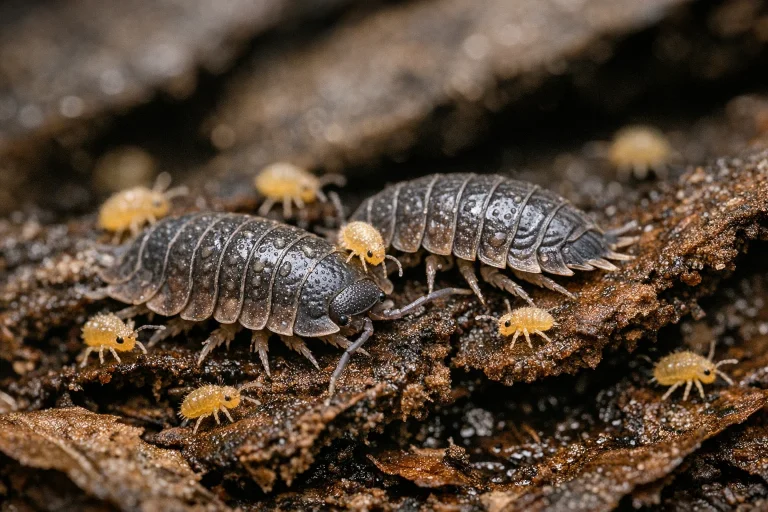
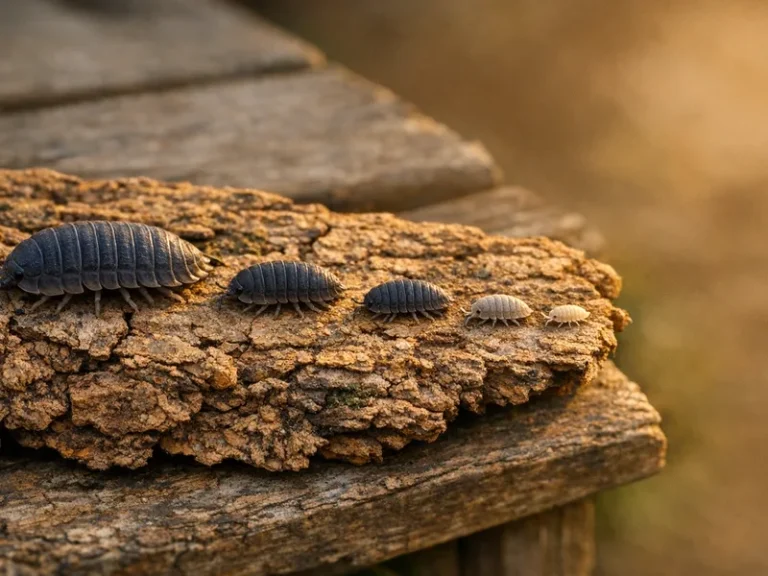
Terrestrial isopods are decomposers. Fallen leaves give them material to graze as it softens and hosts microbes, while the leaf layer creates shaded pockets that slow moisture loss. A culture fed only bright fresh vegetables may survive for a while yet miss its steady base diet and hiding structure.
The idea
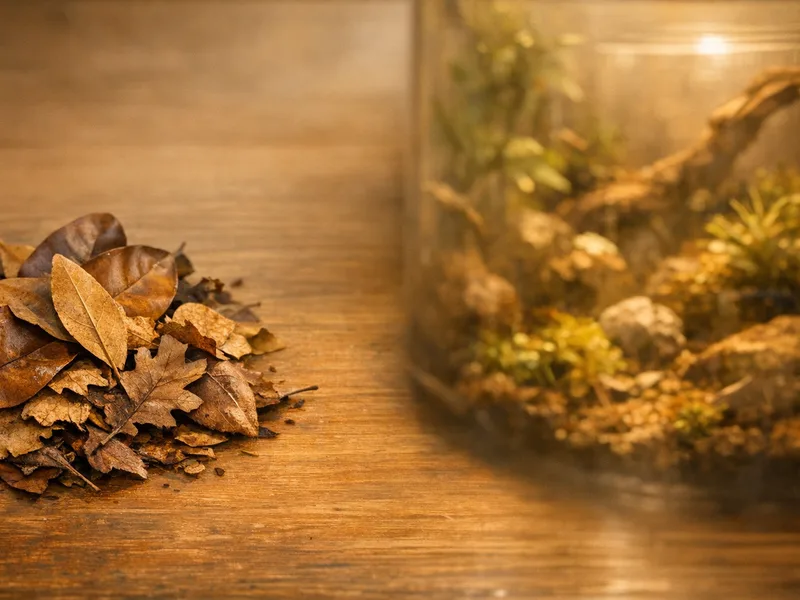
Use pesticide-free, well-aged deciduous leaves over a suitable organic substrate. Keep a thick layer so isopods can feed and hide beneath it.
Choose leaves from a known pesticide-free source. Age and prepare them according to your colony practice, then layer them deeply over organic substrate. Push some under bark so shy animals can feed out of sight. Each week, lift one corner and note whether leaves are intact, skeletonized, or almost gone; replenish before the bin becomes bare.
How to use it
Add more leaves as the old layer breaks down. Keep one refuge moist and ventilated rather than soaking the whole bin.
What to check and common mistakes
A bin with bare substrate and only occasional vegetable scraps is missing the colony’s basic food structure. Avoid leaves from sprayed roadsides or unknown treated yards.
If food scraps mold quickly, do not remove all leaves with them. Pick out the wet supplemental food, improve ventilation, and leave the dry-to-damp litter structure in place. Avoid decorative leaves that were dyed, scented, or treated.
Leaf litter does several jobs at once
For isopods, leaf litter is a slow food supply, a roof over damp substrate, and a surface on which microbes help break material down. A decorative scattering that leaves most soil exposed may not provide enough of any of these functions. Spread a generous layer, keep some pieces dry and some over the damp refuge, and add more as the colony consumes it. Choose leaves known to be safe and free of pesticides or roadside contamination.
The goal is gradual decomposition, not a wet mat that rots into a sour layer. Lift a small area during checks to look at moisture and activity, then replace the cover. If supplemental food is uneaten, reduce that offering before removing all litter; the colony still needs its base resource. Leaf litter also supports springtails and other decomposers, so it is part of the biological system rather than clutter to clean away.
Keep learning
Use the related guide for full species or product details. Check current store availability before ordering.
Have a care question? Ask our community.
Join Reptile Keepers USA, our free Facebook group for reptile, amphibian and invert keepers. Share your setups, get care help and swap feeder tips.
Join the free group