Can Pesticides Kill Isopods and Springtails?
Pesticides absolutely can kill isopods and springtails, and the household products that do it are rarely the obvious ones. A direct bug spray in the terrarium is an easy mistake to avoid once you know not to make it, but an indoor fogger two rooms away, a flea treatment on the family dog, or a candle burning next to the tank for weeks are the sources that actually catch experienced keepers off guard. The safest rule is simple: treat the room the tank sits in as carefully as the tank itself.
Fumes and residue travel further than most keepers expect, not just a direct spray
Springtails and the smallest juveniles are usually affected before adult isopods
Keep the room the tank sits in as chemical-free as the tank itself

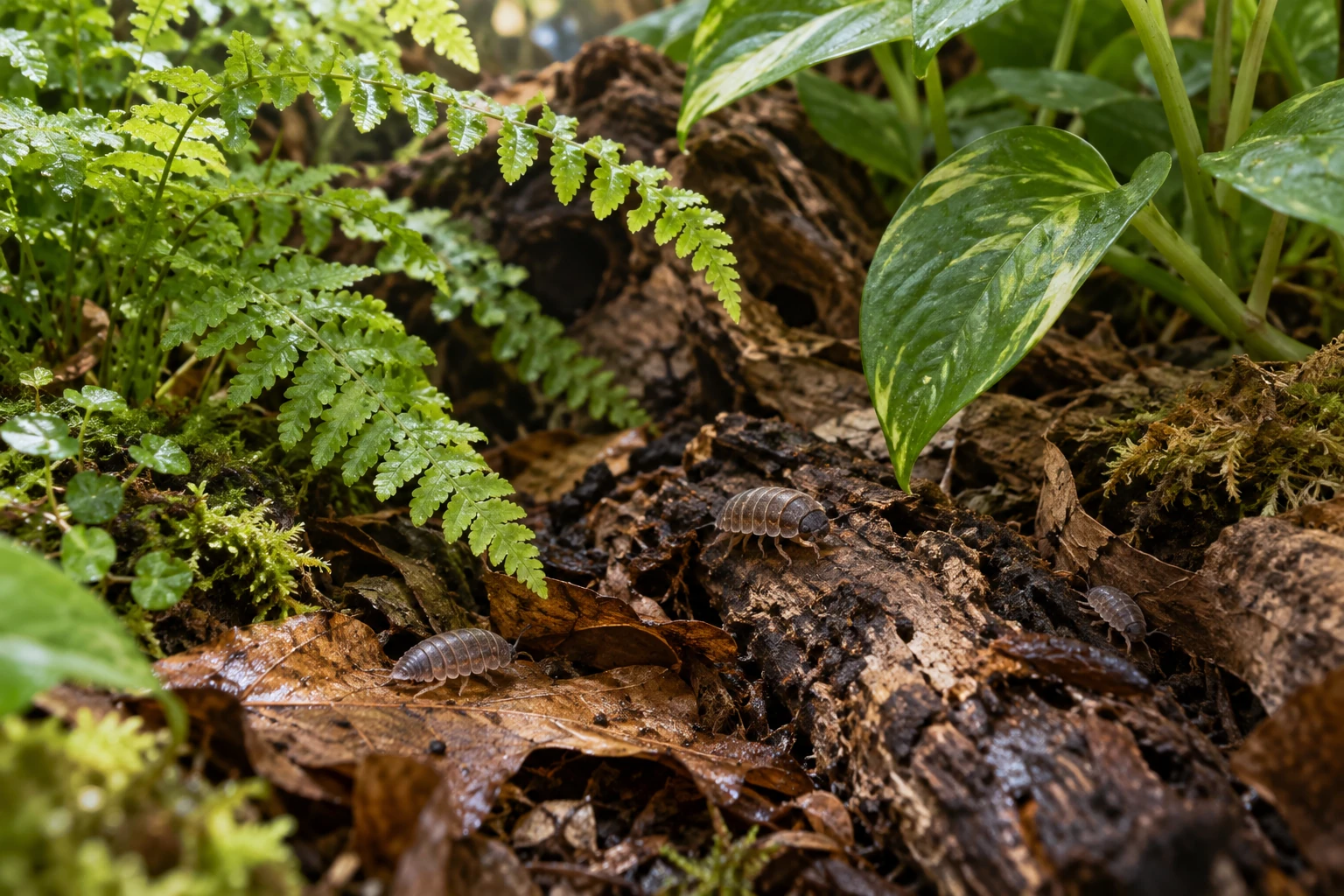
The Household Sources Keepers Miss
A cleanup crew rarely dies from something a keeper did to the tank directly. Most household chemical losses trace back to something happening in the rest of the house that never seemed connected: a room sprayed for bugs, a pet treated for fleas, bait set out for ants, or a candle burned nearby for weeks on end. None of these feel like a terrarium risk in the moment, which is exactly why they catch experienced keepers as often as beginners.
Indoor Foggers and Sprays
A whole-room fogger or a broad indoor spray settles on every surface in the room, not just the floor, and that includes a tank's lid, vents, and the air the enclosure exchanges with the room for hours or days afterward. Even a spot treatment along baseboards on the other side of the room can drift further than expected. The safest move is relocating the tank to another room entirely before any fogger or broad spray treatment, and airing the treated room out well before it comes back.
Flea and Tick Treatments on Other Pets
A dog or cat treated with a spot-on, collar, or spray carries that treatment on its fur and in household dust for days to weeks afterward, and a pet that jumps on furniture near the tank, or gets petted right before someone handles the enclosure, can transfer residue without anyone noticing. Treat a pet somewhere away from the terrarium room when you can, wash your hands before doing any tank maintenance afterward, and keep a freshly treated pet off surfaces near the enclosure for the first few days.
Ant Bait, Roach Bait, and Pest Control Visits
Bait stations are designed to be carried back to a nest, which means the active ingredient travels through a house in ways a spot spray does not, and a station placed near a terrarium stand is closer than it looks. A professional pest control visit is the biggest single event to plan around: ask what was applied and where, keep the tank in a different room if the treatment includes the room it sits in, and give the space real time to air out before moving the tank back.
Diatomaceous Earth Is Not an Exception
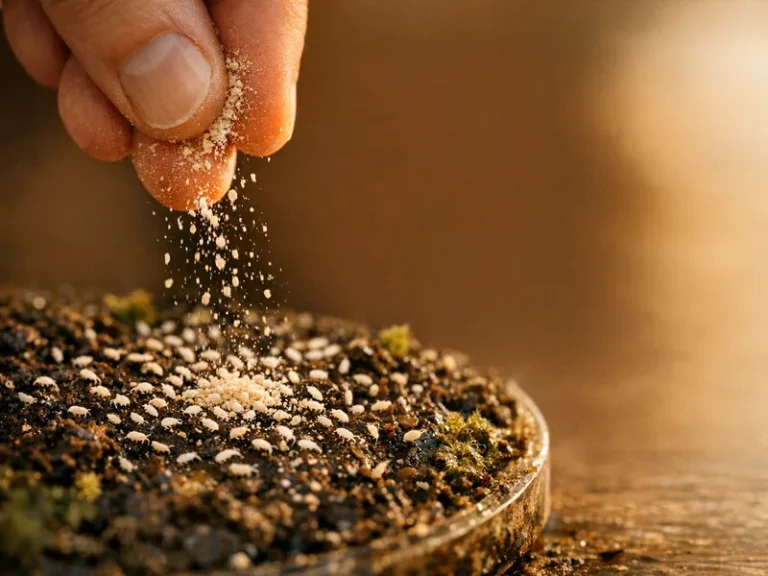
Diatomaceous earth gets used around baseboards and in potted plants because it is marketed as a natural pest option, but natural does not mean harmless to a cleanup crew. It works by abrading the waxy coating on a small arthropod's exterior until it dries out, and that mechanism does not know the difference between a pest ant and a springtail. Keep it away from the tank, and away from any substrate ingredient that might end up in one, whatever the pest target is.
Scented Candles and Oil Diffusers
These feel harmless because they are marketed for people, not insects, but a candle or diffuser running for hours next to a lightly vented enclosure keeps releasing airborne compounds the crew cannot get away from. It is a slower, lower-grade version of the same exposure problem as a spray. Keep any strongly scented candle or diffuser in a different room from the tank, not just across the same one.
Why Isopods and Springtails Notice What Other Pets Don't
Isopods and springtails are unusually reactive to airborne and contact chemicals compared to most animals a household chemical might reach, and that sensitivity is not a guess. Researchers actually use a springtail species we sell, Folsomia candida, as a standard test animal for measuring whether a soil is chemically safe, a role it has held in published soil science for decades precisely because it reacts to contamination that plenty of other organisms tolerate. Isopods share a version of the same vulnerability: both groups take up moisture directly through a thin, permeable exterior, and both live in constant, close contact with whatever settles into the substrate they eat. That combination is what makes a room-wide exposure a tank-wide problem faster than it would be for almost any other pet in the house.
Before You Treat, Spray, or Diffuse Anything
A little planning around the tank removes most of this risk without changing how you deal with pests or pets anywhere else in the house. Not every setup allows moving the tank, though, especially in a single-room apartment or with a tank too large to relocate easily. If moving it is not realistic, seal the lid and any large vents with plastic wrap or a taped cover for the treatment window and the airing-out period afterward, and run a portable air purifier in the room if you have one. For anything you can plan ahead of, like a scheduled pest control visit or a flea and tick treatment for another pet, ask what is being used and when before it happens, so you can decide whether sealing the tank in place or moving it for a few hours fits your situation better.
What About Store-Bought Plants
A living plant added to the tank is its own contamination path, since nursery growers commonly treat plants with systemic pesticides that get absorbed into the plant's own tissue rather than sitting on the surface, and no amount of rinsing removes that. It is a different enough problem, with a different fix, that it gets its own guide: see are store-bought plants safe for isopods before adding one to any tank.
If You Already Lost a Crew
If a household chemical event already happened and the tank is empty or close to it, the most important step is removing the actual source before restocking, not just replacing the animals into the same conditions. Once the room has genuinely aired out and any treated pet, plant, or surface is no longer part of the routine near the tank, our guide to restarting a cleanup crew after a die-off walks through the repopulation steps themselves. A fresh isopod and springtail combo, kept to a short quarantine period like any new culture, gives the restart the best odds in a tank you already know is clear.
Reading the Pattern of a Chemical Loss
The Clean Restart Kit
A fresh substrate base, pesticide-free litter, and a hardy restock for a tank recovering from chemical exposure.
Frequently Asked Questions
Written by the TC INSECTS breeding team · Porter, Texas · Live Arrival Guarantee on every order
Have a care question? Ask our community.
Join Reptile Keepers USA, our free Facebook group for reptile, amphibian and invert keepers. Share your setups, get care help and swap feeder tips.
Join the free group