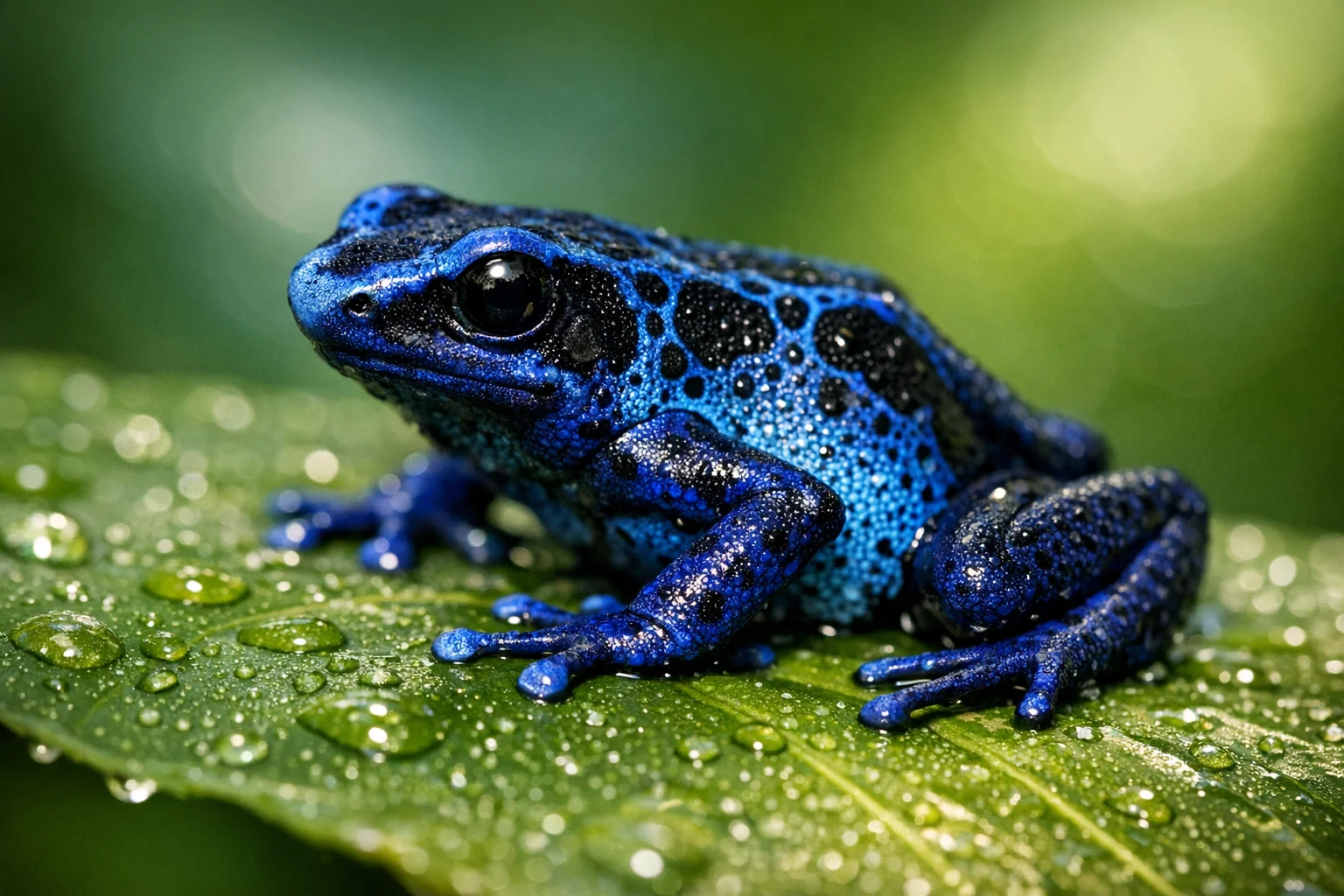
Feeding Dart Frogs: How Many Fruit Flies and How Often
Feeding Dart Frogs: How Many Fruit Flies and How Often
Flightless fruit flies are the staple diet for dart frogs, and most keepers offer roughly 20 to 40 dusted flies per frog per feeding, daily for froglets and about every other day for adults. Two flightless strains cover nearly every dart frog: the smaller Drosophila melanogaster for froglets and small species, and the larger hydei for bigger adults. Dust every feeding, and keep two cultures going so you never run short.
until they slow after ~10-15 min
adults about every other day
start a fresh one before the old fades

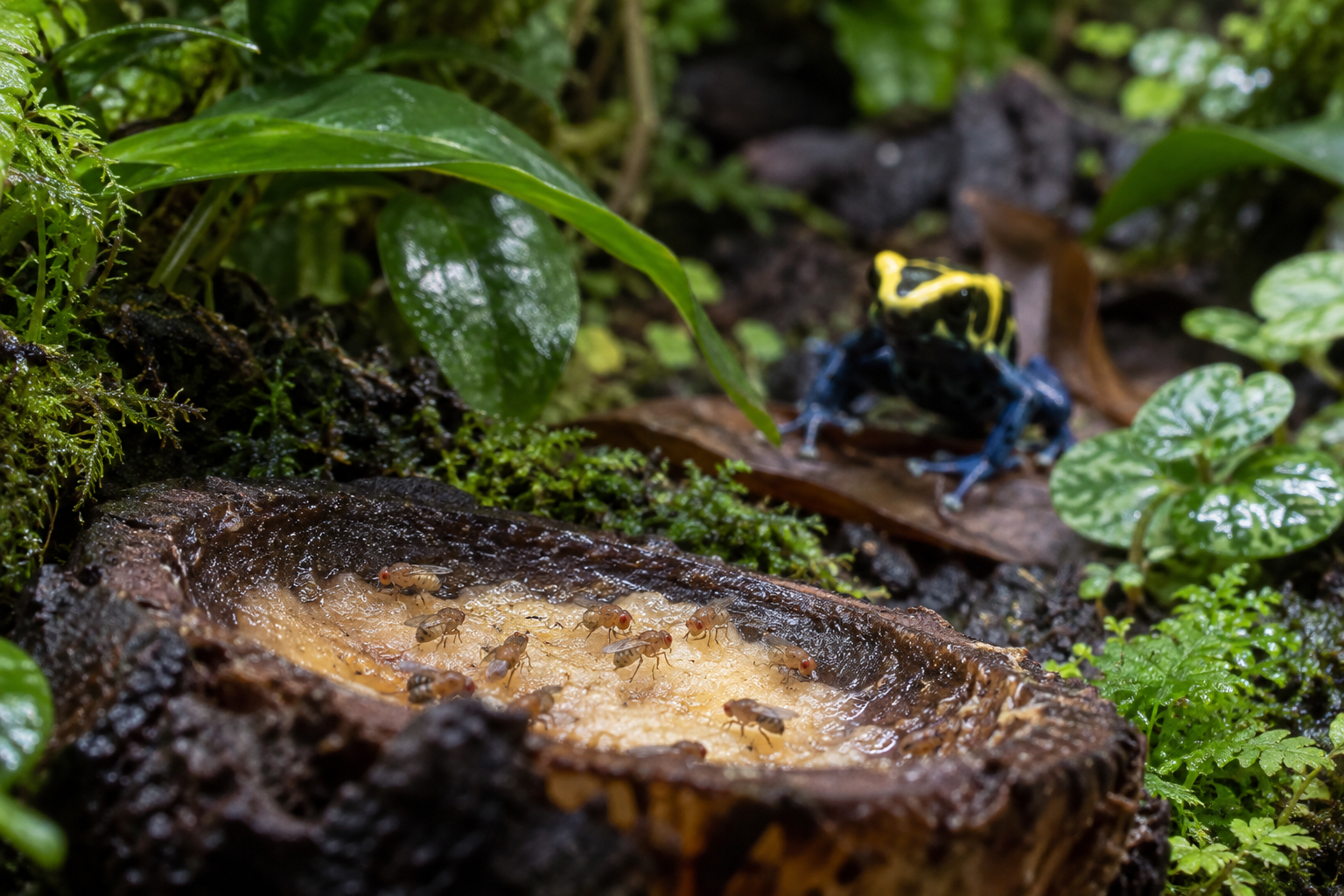

Two Flightless Strains Cover Every Frog
Flightless fruit flies are the backbone of a dart frog diet, and the strain you choose comes down to the size of your frog's mouth. On our cultures the smaller Drosophila melanogaster runs about 2.5 to 3mm, the right bite for newly morphed froglets and small species like thumbnails. The larger hydei runs about 3.5 to 4mm and is much bulkier, better for bigger adult frogs.
Because the flies are flightless, a spilled culture means a few flies to wipe off the counter, not a kitchen invasion. Many keepers with a mix of frogs keep both strains going so they can match fly size to each animal.
How Many Flies and How Often
A common feeding is around 20 to 40 flies per frog, offered until the frogs slow down after ten to fifteen minutes rather than counted to the exact fly. Froglets and frogs under a year eat daily to fuel fast growth, while adults do well fed about every other day. Back off if a frog starts to look heavy.
In a group the boldest frogs eat first, so tip in enough that the smaller, shyer frogs also get their fill. A small piece of banana in the tank works as a feeding station where flies gather and you can watch who is actually eating.
Run Two Cultures on a Rotation
A fruit fly culture is a living cup, not a jar of bugs: adult flies lay eggs in the media and a new wave hatches out over weeks. On our cultures melanogaster hits heavy production around two weeks and hydei around three, then keeps producing for a few weeks more before winding down.
The rule that keeps you from ever running short is simple: start a fresh culture before the old one fades. Running two staggered cultures at once gives a steady supply so a slow week never leaves your frogs unfed. Our fruit fly culture care guide covers keeping them producing, and you can restock strains or media from our cultures shop.
Springtails for the Smallest Froglets
For the smallest new froglets, springtails are a perfect first food. They are tiny enough for a mouth that cannot yet handle a fruit fly, and in a bioactive tank they double as a cleanup crew that grazes mold while a froglet picks them off.
Seed a springtail culture into the enclosure early and it becomes a self sustaining snack station, then layer in melanogaster as the froglet grows and hydei once it is a full sized adult.
Dust Every Feeding
Dart frogs get nearly all their calcium and vitamins from dusted flies, so dusting is not optional here, it is the whole plan. Fruit flies run about 1 part calcium to 3 parts phosphorus, which leans the wrong way, so a fine, fresh supplement powder before every feeding does the heavy lifting for healthy bones.
The method is quick: tip a scoop of flies into a cup, add a pinch of a fine powder, swirl to coat, and tap them into the tank before they climb out. Keep the powder fresh, since vitamins fade and a tiny fly carries only a tiny dose. Our calcium and supplement guide has the details.
Frequently Asked Questions
Ready to Stock Up?
Written by the TC INSECTS breeding team · Porter, Texas · Live Arrival Guarantee on every order
Have a care question? Ask our community.
Join Reptile Keepers USA, our free Facebook group for reptile, amphibian and invert keepers. Share your setups, get care help and swap feeder tips.
Join the free group