Dairy Cow Isopod Care Sheet
Why it matters
Dairy Cows are larger and more conspicuous than dwarf cleanup crews. They can consume supplemental protein eagerly and reproduce into a dense colony. Those strengths also mean a small animal enclosure may not be the right place to begin with them; a separate culture gives the keeper control over population size and food.
Setup
Use a roomy ventilated bin with a moisture gradient, thick leaf litter, cork cover, and a constant calcium source.
Start in a roomy bin with substantial leaf litter, decayed wood, cork cover, calcium, and a defined damp corner. Add protein food in modest amounts on a removable dish. Watch how quickly it disappears and remove uneaten pieces. Move only a planned starter group into a display enclosure after confirming compatibility.
Everyday routine
Give small protein-rich supplemental meals, but remove leftovers before they spoil. Maintain the leaf litter and damp refuge as the colony expands.
What to check and common mistakes
Dairy Cows can multiply quickly and may not suit every animal enclosure. Keep a separate backup colony and confirm compatibility before using them as a cleanup crew.
If the colony crowds the food dish, add more cover and check whether routine leaf litter has been depleted. Do not respond by leaving large wet portions overnight. Avoid placing a booming Dairy Cow colony with especially vulnerable animals without researching the specific pairing.
Managing a vigorous Dairy Cow colony
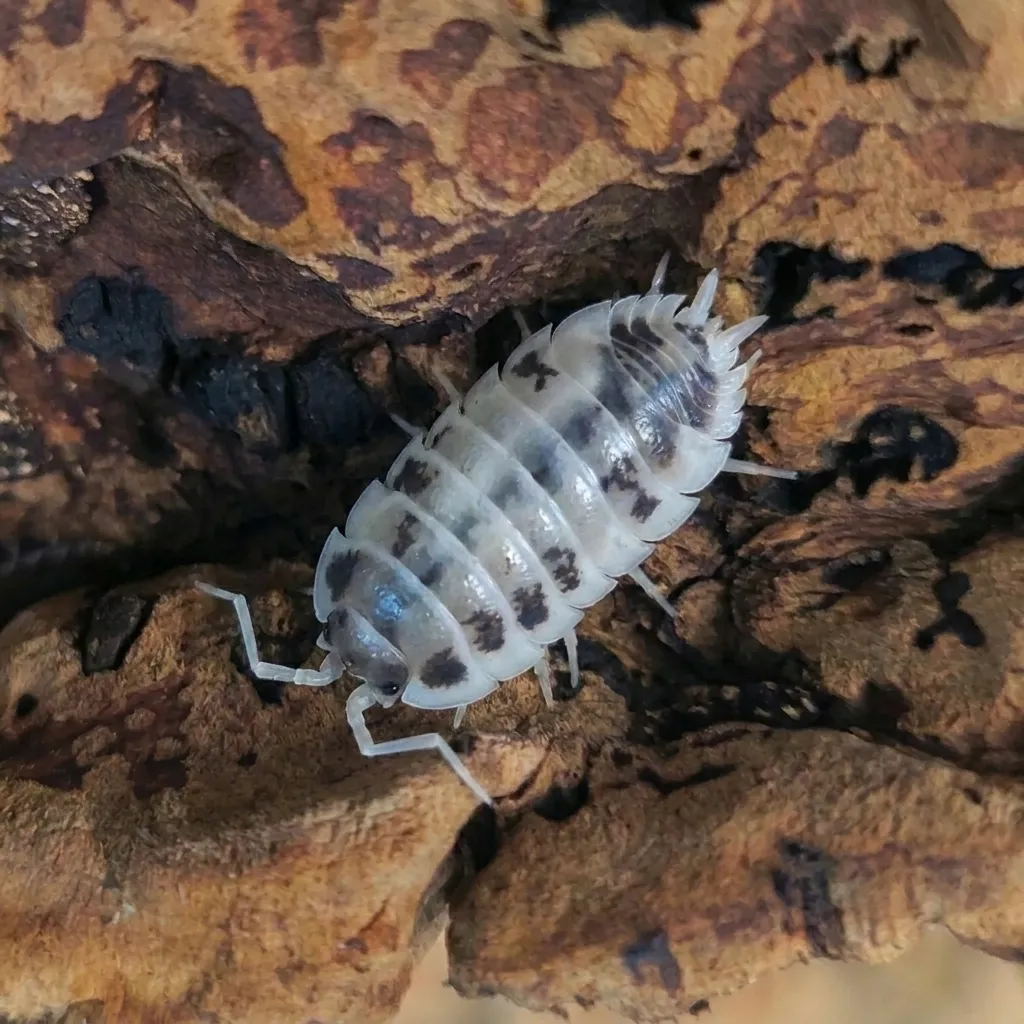
Dairy Cows are a Porcellio laevis morph that often grows into a large, food-responsive colony. Give them generous floor area, hides, leaf litter, a calcium source, and a moisture gradient rather than a uniformly wet tub. They may gather heavily at supplemental food, so remove leftovers before decay fouls the substrate. Their bold pattern is useful for observation, but colony size and activity are better indicators of whether the setup is working.
As the culture expands, add leaf litter and substrate before crowding becomes severe. Move a portion to a new bin with established food and cover instead of making the original tub progressively wetter or richer. If using Dairy Cows in a bioactive enclosure, consider the needs of the resident animal and whether a vigorous large isopod is an appropriate cleanup-crew choice. Keep a separate breeding bin so the display tank is not the only colony.
Keep learning
Use the related guide for full species or product details. Check current store availability before ordering.
Have a care question? Ask our community.
Join Reptile Keepers USA, our free Facebook group for reptile, amphibian and invert keepers. Share your setups, get care help and swap feeder tips.
Join the free group