Can Jumping Spiders Eat Mealworms?
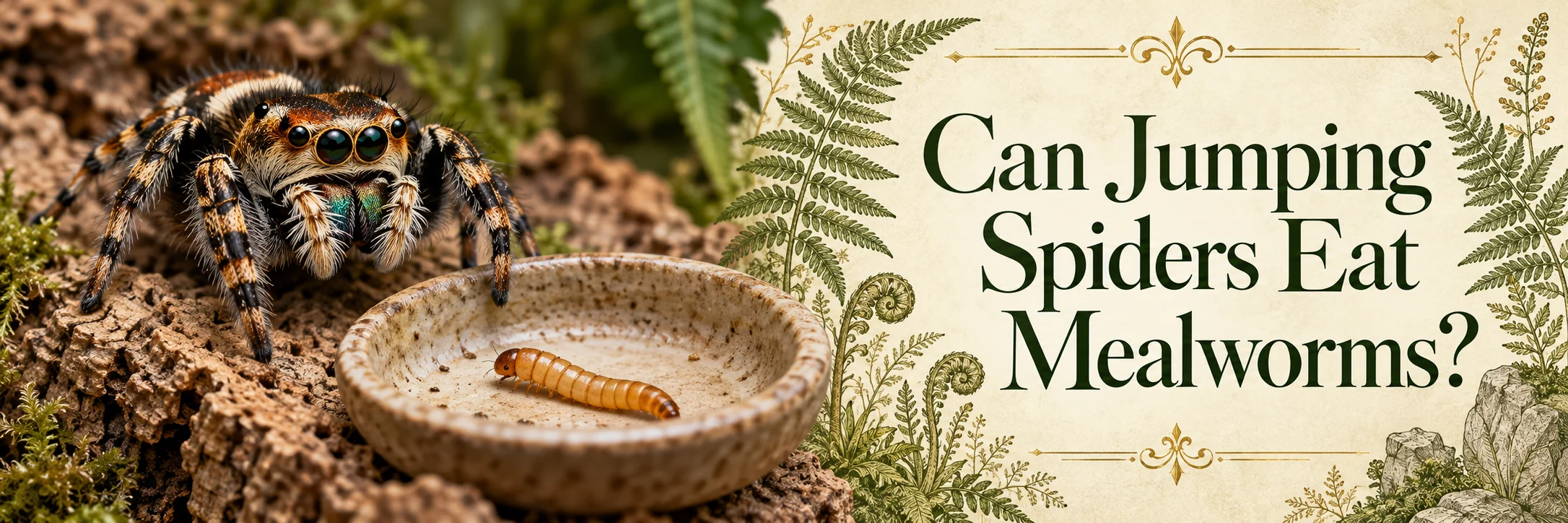
Yes, a jumping spider can eat a mealworm, but only a larger juvenile or adult, and only one small one at a time. Mealworms have real, biting mandibles built for chewing through grain, so the size has to be right, the spider should be watched while it eats, and a mealworm should never be left loose in the enclosure where it can turn around and nip a resting or molting spider. Treat it as an occasional, fattier treat that adds variety, not a replacement for the flightless fruit flies that should stay the staple, especially for anything still small. Here is how to size a mealworm correctly and offer it without any risk to your spider.
Not for slings; too big and too strong-jawed for a small spider
Small size only, pierced or pre-killed for nervous keepers
Mealworms are an occasional treat, not the everyday diet
The short answer: yes, with real limits
A larger juvenile or adult jumping spider can absolutely eat a mealworm, and many keepers offer one now and then as a change of pace from a steady diet of fruit flies. It is a genuinely bigger, more filling meal, and most adult spiders take to it readily once they are large enough to subdue one.
The limits matter just as much as the yes. Offer only one small mealworm at a time, size it to the spider rather than grabbing whatever is in the container, and stay close enough to intervene if your spider struggles with it. Skip this feeder entirely for slings and small juveniles, no matter how tempting it is to mix things up early.
Why size and species matter so much here
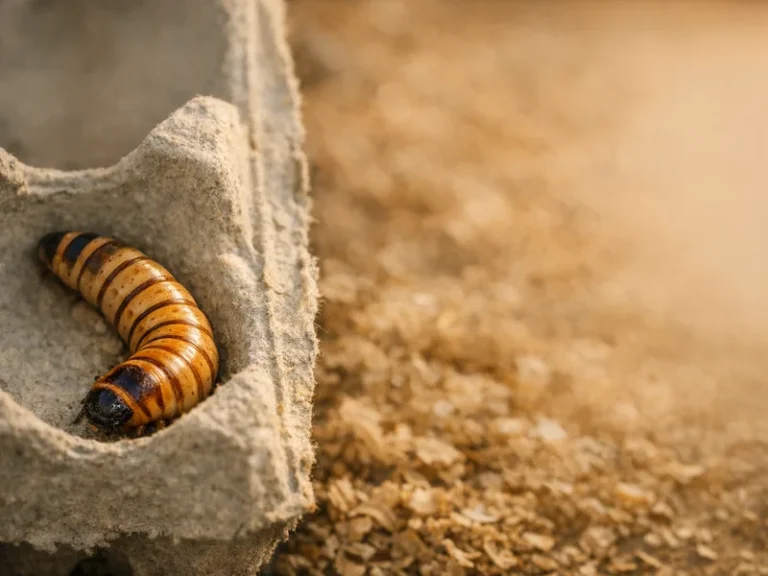
A mealworm is the larval form of the darkling beetle, Tenebrio molitor, and it comes with a set of real chewing mandibles built for boring through grain and wood. Those jaws are proportionally strong for the worm's size, and on a small or young jumping spider they are a genuine hazard if the roles reverse, even for a moment, during feeding.
That is a very different risk profile than a soft-bodied fruit fly, which cannot fight back at all. Match the mealworm size to your spider: our mealworms come in a small 1/2 inch and an even smaller mini 1/4 inch size, and for anything but a large, confident adult, the mini is the safer starting point.
How to offer a mealworm safely
Offer a single mealworm using feeding tongs or a small dish rather than dropping it loose into the enclosure, and watch the first few feedings closely. If your spider strikes and subdues it quickly, you are in good shape. If your spider seems hesitant, or the mealworm is thrashing more than it should, that is exactly the moment nervous keepers reach for a pre-kill: a gentle pinch to the head end, or a quick puncture with a pin, stops the worm from fighting back while it still reads as fresh prey to the spider.
Never leave an uneaten mealworm in the enclosure to deal with later. A mealworm can dig into loose substrate and survive there a long time, and a spider that is resting, digesting, or sealed into a molt is in no position to defend itself from a worm wandering around looking for something to chew on. Remove anything not eaten within a reasonable window, the same rule you would already follow with any other feeder.

Why it should stay a treat, not the diet
A mealworm is noticeably fattier and more heavily armored than a fruit fly, and that is exactly why it works best as an occasional treat rather than an everyday meal. A diet built entirely around mealworms is not the balanced diet a jumping spider does best on, the same way a person would not thrive eating only the richest item on the menu at every meal.
Once or twice a month for an adult that is clearly ready for one is a reasonable place to start, built around a base diet of appropriately sized insects the rest of the time. If you are ever unsure whether your spider is ready for its first mealworm, it is safer to wait and offer another round of its usual food instead.
What to feed instead while your spider is small
For a sling or small juvenile, skip mealworms entirely and stick with flightless fruit flies, which stay the right bite size for months of growth and cannot fight back or wander off to hide in the substrate. A single producing culture keeps feeders on hand without having to buy prey one at a time for an animal this small.
As your spider grows into a larger juvenile or adult, small red runner roaches are a good next step up before you ever reach for a mealworm, since their fast, erratic movement triggers a strong feeding response without the same mandible risk. Our feeding by size guide covers the full progression from sling to adult in one place.
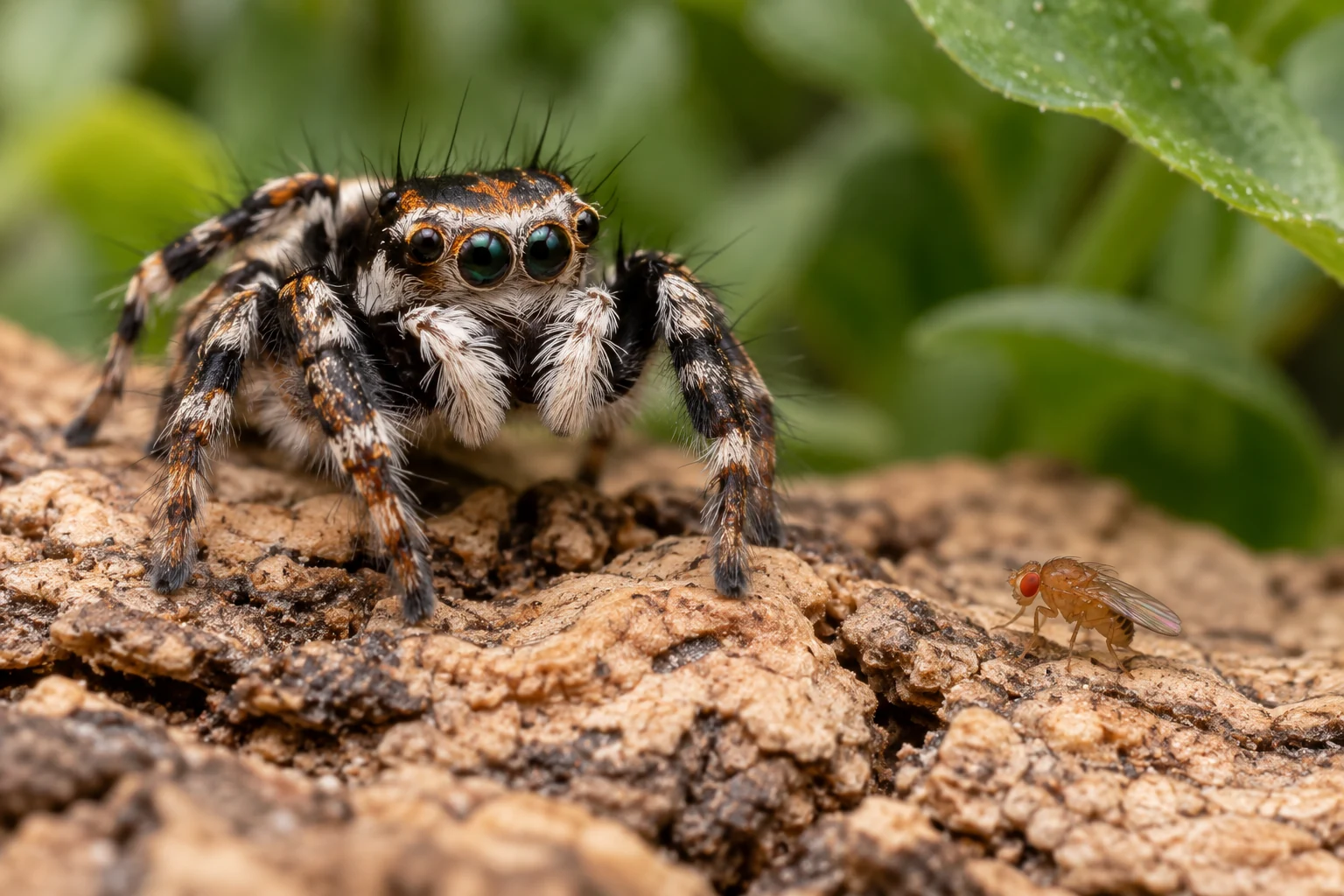
Size the Mealworm Right
The right size for the question above, plus the staple that should stay in rotation. Tap to add and check out in one click.
Frequently Asked Questions
Written by the TC INSECTS breeding team · Porter, Texas · Live Arrival Guarantee on every order
Have a care question? Ask our community.
Join Reptile Keepers USA, our free Facebook group for reptile, amphibian and invert keepers. Share your setups, get care help and swap feeder tips.
Join the free group