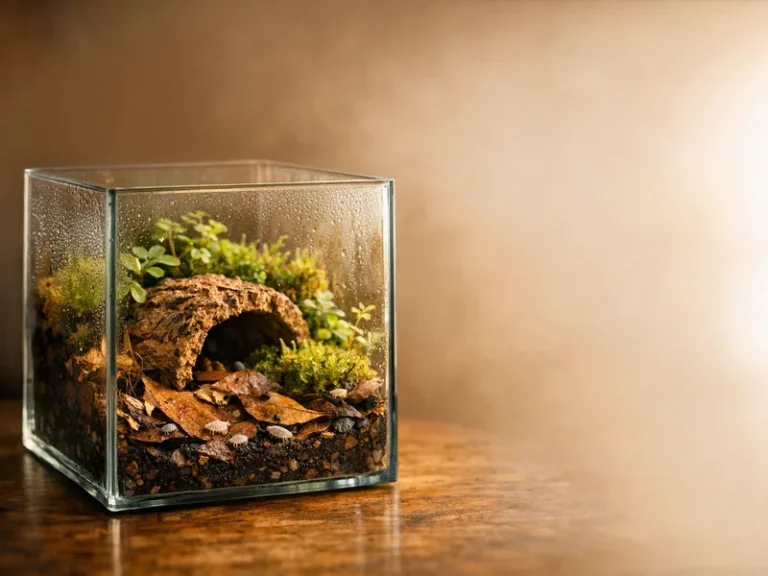
Most isopods do well at normal room temperature without a heat mat. If you add gentle warmth for a particular colony, preserve a cool retreat and monitor both temperature and moisture.
No, most isopods do not need a heat mat. For the great majority of species, a normal home somewhere in the 65 to 78 F range is already inside their comfort zone with no added heat at all. Where a heat mat earns a place is narrower than people expect: a little gentle warmth, up around 75 to 80 F, can speed up breeding in an established colony, and cold tolerance varies enough by species that a chilly garage or drafty room is a bigger risk for some isopods than others, a big robust genus like Porcellio shrugs off a cool spell that would slow a smaller species down hard. If you do decide to add heat, the mistakes are what get isopods into trouble, not the warmth itself, so we would rather walk you through doing it safely than talk you out of it outright.
No added heat needed in a normal home
Gentle warmth, not a hot bin
Never under the whole bin, never unregulated
The short answer: room temperature is usually enough
Most isopods sold in the hobby, including common beginner picks like Powder Orange, Powder Blue, and Dwarf White, do perfectly well at normal indoor room temperature, generally somewhere in the 65 to 78 F range. If your house sits in that band year round, you do not need a heat mat, a heat lamp, or any other added warmth for the colony to stay healthy and keep breeding.
That is genuinely good news for a beginner setup, because it means one less piece of equipment to buy and one less thing that can fail or overheat a bin. Our beginner isopods are chosen in part because they are this forgiving on temperature.
When gentle warmth actually helps
Warmth's real benefit is speed, not survival. Isopods breed on a temperature curve, and nudging a colony up toward the 75 to 80 F range can noticeably speed up how fast a culture builds numbers compared with a cooler room, since reproduction and molting both run faster in that warmer band. This is a legitimate reason to add gentle heat if you are trying to boom a colony for a harvest or a big bioactive build.
The trade-off is moisture. A warmer bin dries out faster, so if you warm a colony to speed up breeding, plan to check and mist it more often than you would at plain room temperature. Our full breakdown of what actually moves the needle on breeding speed is in our guide to making isopods breed faster.
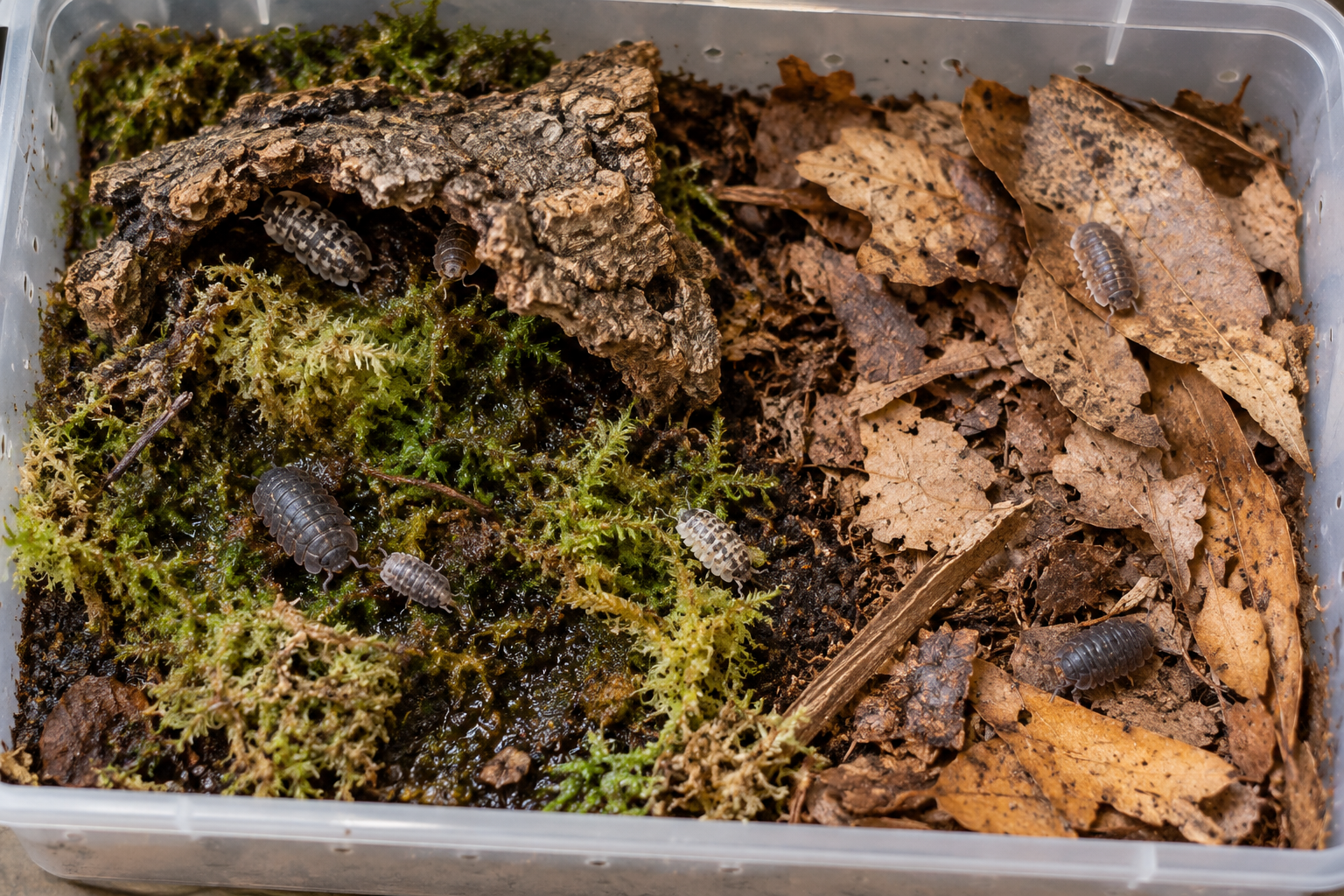
Cold tolerance is not the same across every species
Room temperature covers most homes, but a bin that sits somewhere genuinely cold, a garage, a basement, a drafty windowsill in winter, is a different situation, and species do not all handle that the same way. Below roughly 60 F, breeding slows to a crawl across most species even though the animals themselves often survive just fine, they simply stop reproducing at any real pace.
Larger, hardier genera like Porcellio, including the Dairy Cow (Porcellio laevis), tend to tolerate a cool spell better than small, delicate species do. If your bin lives somewhere cold, the safer fix in most cases is moving it to a warmer room or shelf rather than adding a heat source, since that solves the problem without introducing the risks a heat mat brings.
If you do add a heat mat, do it this way
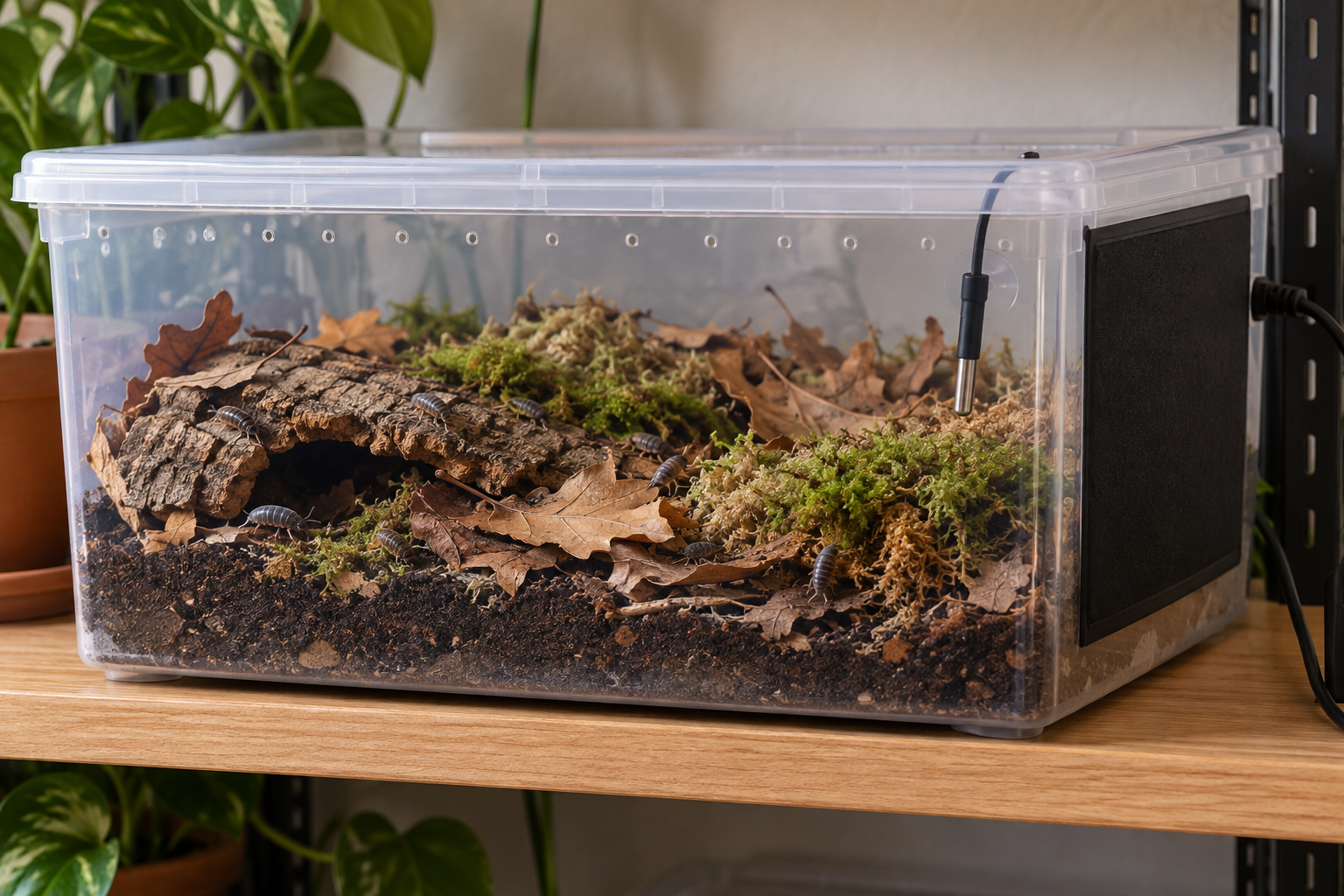
A heat mat used carelessly is more likely to hurt a colony than help it, and the biggest mistake is running one under the entire footprint of the bin. That cooks or dries out the whole enclosure with no cool refuge left for the isopods to retreat to, which defeats the purpose and can kill a colony outright.
Do it the safer way instead: mount the heat source low on one side only, so the bin keeps a natural temperature gradient with a cooler zone the isopods can move to, and always run it through a thermostat rather than plugging it straight into an outlet. An unregulated mat can climb well past a safe temperature on a warm day, and a thermostat is the one piece of equipment that actually prevents that.
Watch the substrate, not just the thermometer
Whatever your temperature setup, moisture is what tells you if it is working. A heat source, even a well-managed one, pulls humidity out of a substrate faster than room temperature does, so a bin running warm needs more frequent checks and misting than one sitting at a stable room temperature.
If a warm bin's substrate keeps drying out faster than you can reasonably keep up with, that is a sign to dial the heat back rather than push through it. Our isopod and springtail combos ship with a springtail culture already paired in, and springtails are a good early warning system since they tend to be more moisture-sensitive than the isopods sharing the bin.
The bottom line on heat
For the vast majority of keepers, the right answer is no heat mat at all, just a stable room somewhere in the 65 to 78 F range. Reach for gentle supplemental heat only if you have a specific reason, usually speeding up breeding for a big harvest or a bioactive build, and only with a thermostat and a one-sided setup that leaves the isopods a cooler zone to retreat to.
Get the temperature right and pair it with steady moisture, and you have covered the two biggest levers in how fast and how healthy a colony grows. If breeding still is not picking up once temperature and moisture are both solid, our guide on why a colony won't breed covers the other reasons a culture stalls.
Room-Temp-Ready Isopods and Springtails
The hardy, no-fuss picks that do not need a heat mat, plus the substrate that holds moisture if you ever add gentle warmth.
Frequently Asked Questions
Written by the TC INSECTS breeding team · Porter, Texas · Live Arrival Guarantee on every order
Have a care question? Ask our community.
Join Reptile Keepers USA, our free Facebook group for reptile, amphibian and invert keepers. Share your setups, get care help and swap feeder tips.
Join the free group