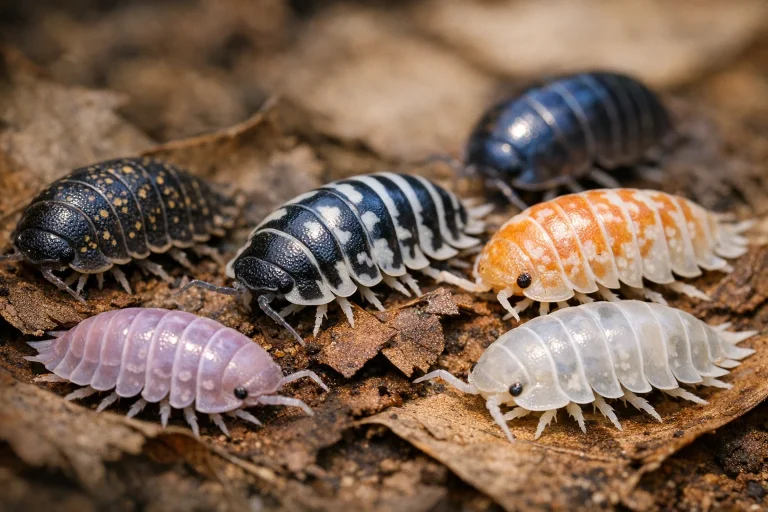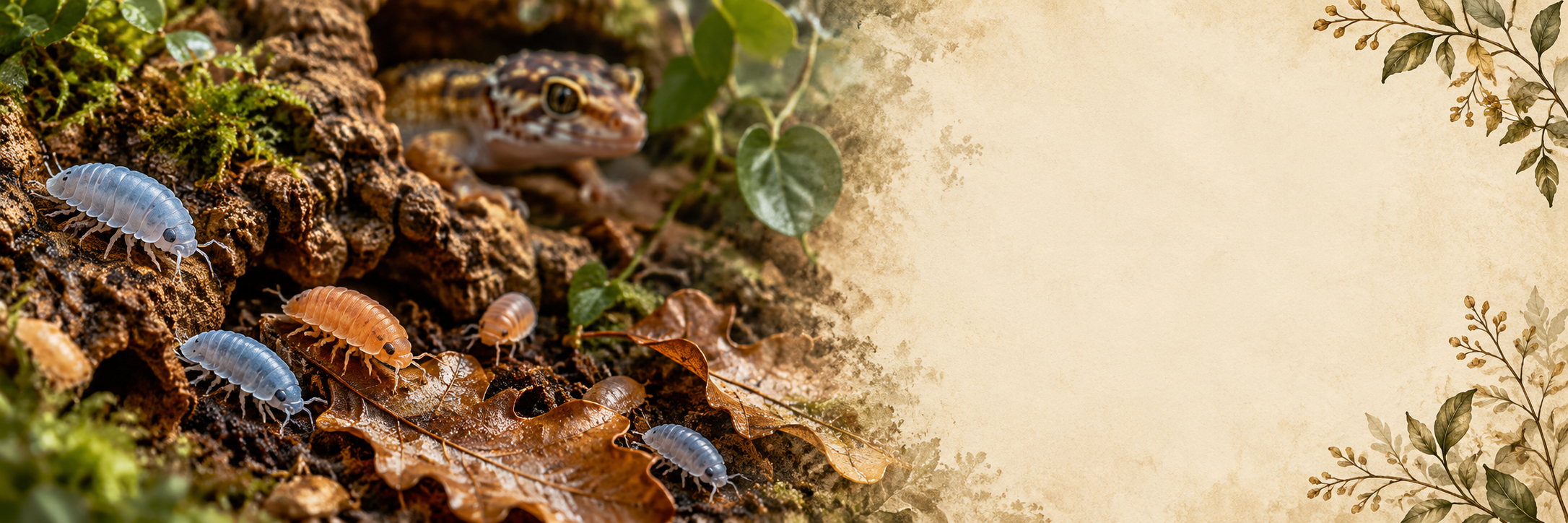
Most isopods you would ever keep are completely safe with reptiles, and the handful of nibbling reports you can find online almost all trace back to one species, the big Porcellio laevis, better known as the Dairy Cow. Dairy Cows are large, hungry, protein-driven decomposers, and on rare occasions an underfed one has been documented nibbling at the toes or skin folds of a small, still animal. That is a species-choice issue, not a reason to avoid bioactive isopods altogether: smaller, milder species like Powder Blue and Powder Orange (Porcellionides pruinosus) and Dwarf White (Trichorhina tomentosa) are safe with essentially any reptile, including the smallest and most delicate geckos. Our Powder isopods are exactly that safe, all-purpose starting point.
Large, hungry; rare toe-nibbling reports on still reptiles
Not aggression; a big decomposer looking for protein
Small, mild species with no nibbling reports
The documented reports: what actually happened
Search isopod and reptile keeper communities long enough and you will find a real, recurring report: a Dairy Cow isopod (Porcellio laevis) nibbling at the toes, tail tip, or skin folds of an animal sharing its enclosure. It is not a myth or an isolated one-off, but it is also not common, and it is not the isopod equivalent of a predator attacking prey. Every documented case fits the same pattern: a large, robust isopod, a still or otherwise vulnerable animal, and a food gap the isopod colony was trying to fill.
This is worth taking seriously without overreacting to it. The behavior is opportunistic scavenging on dead skin, shed, or a genuinely stationary animal, not a hunting behavior, and it shows up in only a small minority of Dairy Cow setups, almost always ones where the isopod crew was not getting enough supplemental protein on its own. Knowing that pattern is what lets you make a clean species choice instead of worrying about bioactive isopods in general.
Why Porcellio laevis specifically
Dairy Cows earn their reputation as one of the hungriest, most powerful decomposers in the hobby, and that same protein drive is the whole story behind the nibbling reports. A Dairy Cow crew that is not offered enough protein on its own will forage more aggressively for it, and a motionless, soft-skinned animal is an easier target than tough leaf litter. That is why we treat them as a species to keep in their own colony rather than loose in a pet's enclosure, the same conclusion we reach in our ball python cleanup crew guide.
Size and stillness are the other half of the equation. A very small gecko, especially one that is sick, freshly hatched, or otherwise not moving normally, is the classic case, but even a large animal that sits still for long stretches, like a snake resting on the substrate, gives a hungry crew more opportunity than a quick, active lizard does. The risk scales with how still and how exposed the animal is, not with the isopod being unusually aggressive, so the simplest answer is to keep this one species out of a pet's enclosure altogether.

Why we keep Dairy Cows in their own bin
Feeding is the mechanism behind the behavior: an underfed crew forages harder, so a colony given its own protein, a light pinch of fish flake or a dedicated feed like our Isopod Supreme Feed, is far less likely to bother anything. But our standing advice is simpler than trying to manage that inside a live enclosure. Keep Dairy Cows and other big Porcellio as their own display or feeder colony, not as a cleanup crew sharing space with a pet.
For the animal's actual enclosure, reach for the small, mild species instead. Powder Blue, Powder Orange, and Dwarf White do the same cleanup job without the protein drive that creates the reports, so you get a living substrate without a pairing you ever have to think about. That single choice resolves almost every version of this concern before it starts.
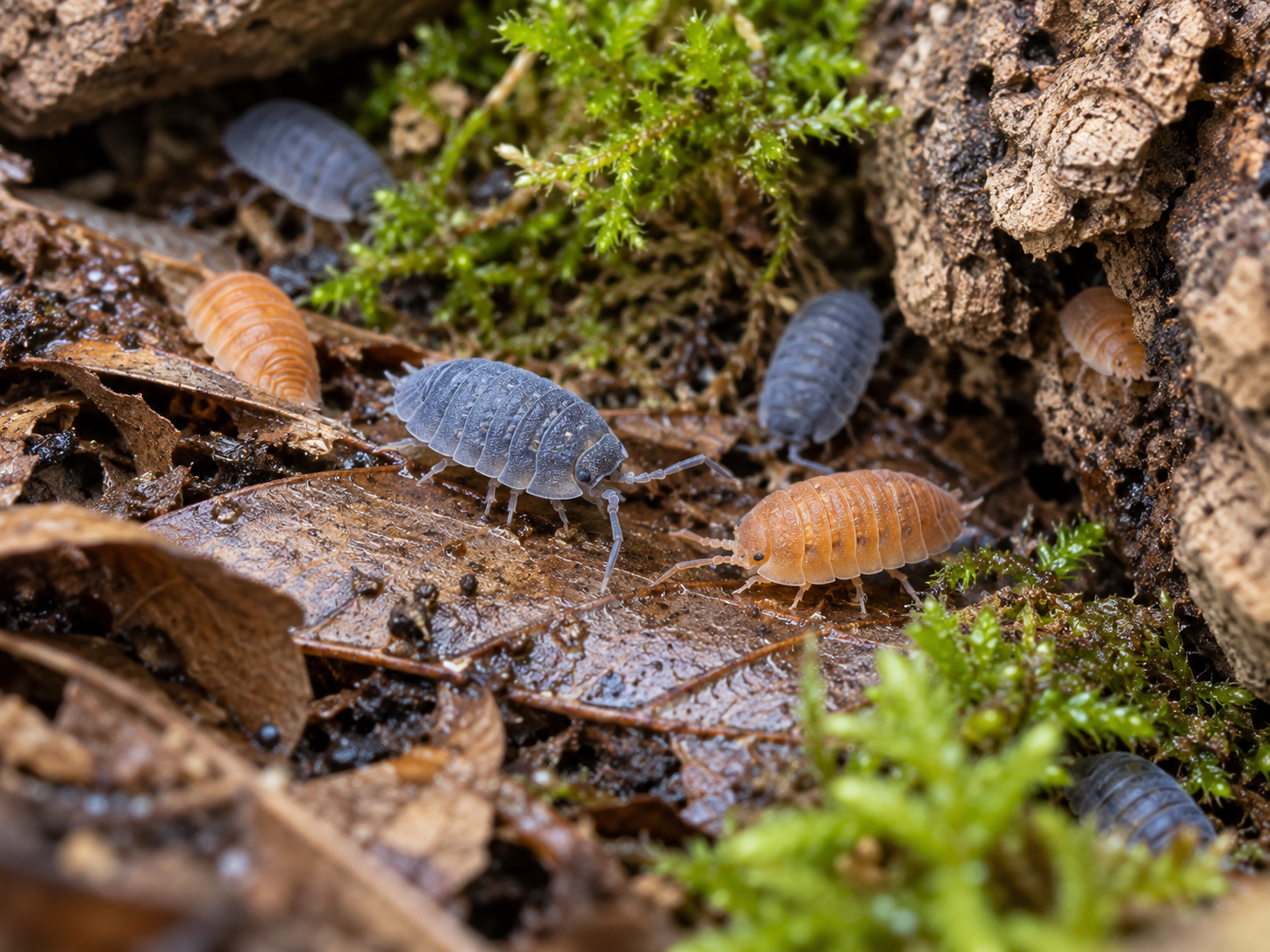
The safe-with-almost-anything picks
If you want to skip the whole calculation, a handful of species have essentially no nibbling reports at any life stage of any reptile, because they are simply too small and too mild to be a factor. Powder Blue and Powder Orange, both color forms of Porcellionides pruinosus, are the standard all-purpose pick: fast-breeding, hardy, and small enough that they have never been implicated in the kind of reports Dairy Cows generate (see our Powder Blue vs Powder Orange comparison if you are picking between the two).
Dwarf White isopods (Trichorhina tomentosa) are the other safe default, and arguably the safest of all. They are tiny, spend most of their time tunneling through the substrate rather than roaming the surface, and reproduce parthenogenetically with no size advantage ever building up in the colony. Between Powder Blue, Powder Orange, and Dwarf White, you have a genuinely safe cleanup crew for a gecko, a snake, a dart frog, a jumping spider, or anything else in the hobby.
What about other Porcellio and Armadillidium species?
Dairy Cow is the specific, documented case, but the underlying pattern, a large protein-driven isopod paired with a still animal, applies loosely to other big Porcellio too. Species in a similar size class are worth the same precaution: enjoy them in their own colony, and keep the small, mild species for the enclosures that house a pet, even without specific reports attached to that exact species.
Mid-size Armadillidium, on the other hand, are generally considered gentler and less protein-aggressive than large Porcellio, and they are a reasonable middle ground if you want a slightly bigger, more visible isopod than Powder Blue or Dwarf White without stepping up to Dairy Cow territory. As always, a consistent supplemental feeding routine is what keeps any isopod crew from looking elsewhere for protein.
The bottom line for your setup
For the vast majority of reptile keepers running a bioactive enclosure, this is a non-issue: Powder Blue, Powder Orange, and Dwarf White cover cleanup duty safely for essentially every common pet reptile, amphibian, and invertebrate in the hobby. Keep Dairy Cow and other large Porcellio as their own display or feeder colony rather than loose in a pet's enclosure, where their size and protein drive are a needless variable rather than a benefit.
This is husbandry, not medicine: nothing here is about treating an injury, it is about which species you seed so the question never comes up. Choose the small, mild species for any enclosure with an animal and feed every crew its own protein, and a cleanup crew is one of the lowest-maintenance parts of a bioactive setup, not a source of worry. For the broader question of handling isopods yourself, see our guide on whether isopods bite or are safe to handle.
Everything You Need for a Reptile-Safe Cleanup Crew
The mild, safe-with-anything species behind the picks above, ready to add in one tap.
Frequently Asked Questions
Written by the TC INSECTS breeding team · Porter, Texas · Live Arrival Guarantee on every order
Have a care question? Ask our community.
Join Reptile Keepers USA, our free Facebook group for reptile, amphibian and invert keepers. Share your setups, get care help and swap feeder tips.
Join the free group