Why Won't My Tarantula Eat?
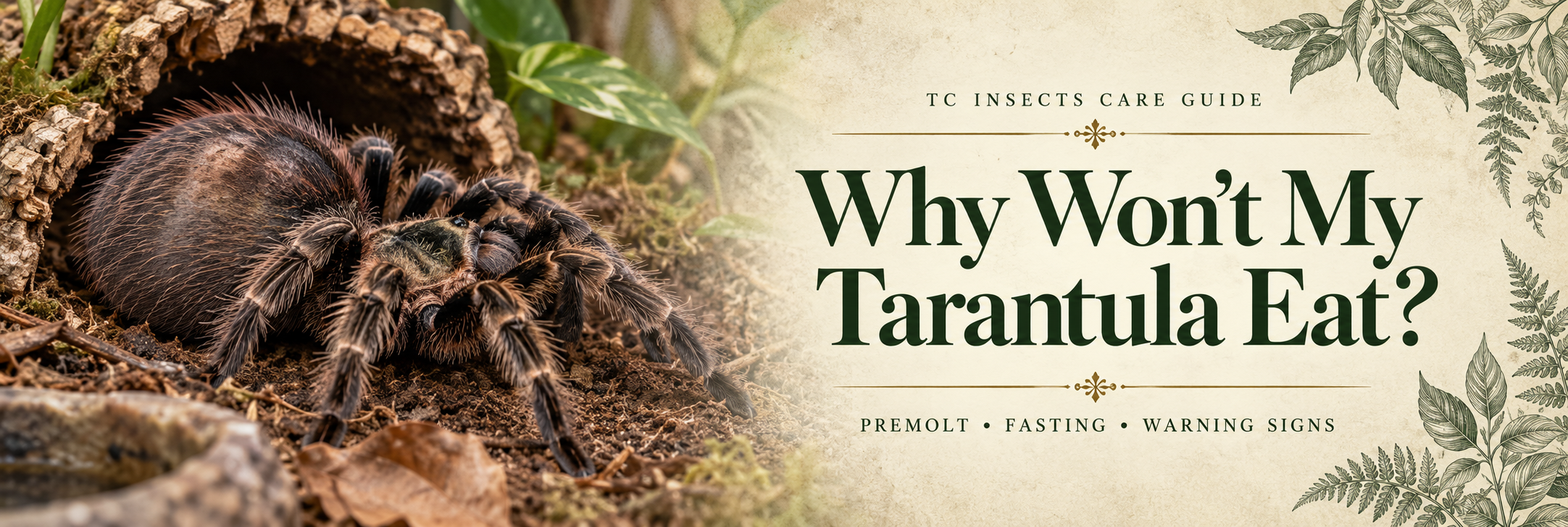
A tarantula that refuses food is, in almost every case, simply getting ready to molt, not starving or sick. The clearest premolt sign is a slow color change: the abdomen often looks tighter and shinier than usual, and on many New World species the thinning bald spot on top of the abdomen visibly darkens as the new exoskeleton forms underneath. Fasting itself is normal and can run anywhere from a couple of weeks to several months depending on the species, its age, and its sex, so a tarantula that skips meals is rarely an emergency. The one sign that is not normal premolt is a shriveled, sunken abdomen instead of a plump one, and if you see that, keep reading for what to check and which feeder to try next.
Darkened bald spot, plump shiny abdomen, sealed retreat
Varies hugely by species, age, and sex
Not plump like premolt; check water, then act

The quick answer: it is almost always premolt
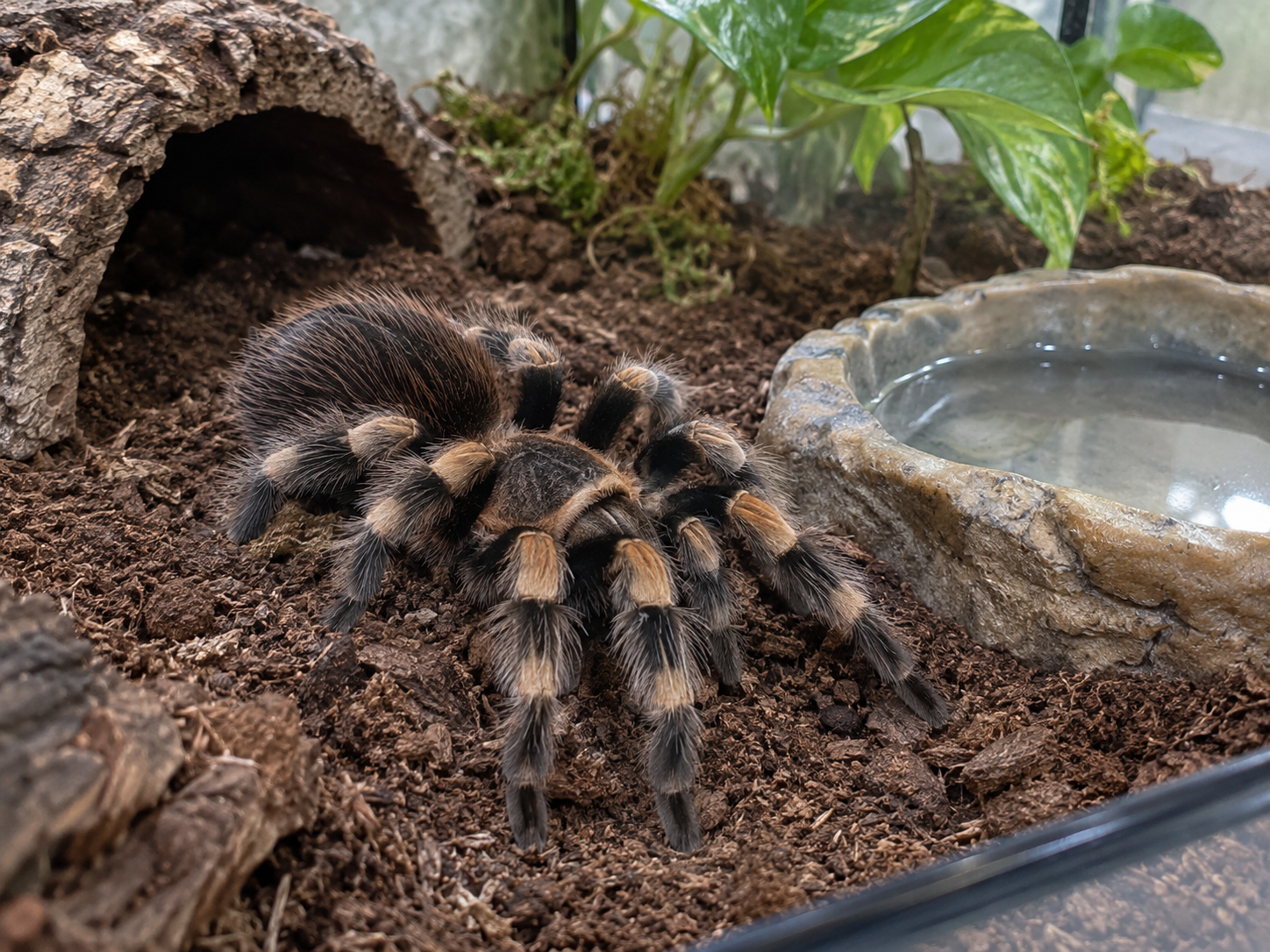
Start with the odds. The single biggest reason a healthy tarantula stops eating is that it is getting ready to molt, and this holds true across slings, juveniles, and adults alike. Premolt is a normal, temporary shutdown: the spider stops hunting, often tucks itself into a burrow or a silk-lined retreat, and simply waits out the process of growing a new exoskeleton underneath the old one. None of this is cause for concern on its own.
The three things to check are color, shape, and behavior. Color: any bald or thinning patch on the abdomen darkens as the new exoskeleton shows through. Shape: the abdomen looks tight, glossy, and full rather than shrunken. Behavior: the spider digs in, webs up an entrance, or otherwise seals itself away. If two or three of those line up, you are watching a normal premolt fast, not a sick spider.
Reading the premolt signs species by species
The darkening bald spot is specifically a New World tarantula trait. Species that kick urticating hairs as a defense, such as many Grammostola and Aphonopelma, wear a thin patch into the hair on top of the abdomen over time, and that patch visibly darkens as the fresh exoskeleton forms underneath it before a molt. Old World species, which have no urticating hairs and therefore no bald spot, still give you a version of the same cue: an overall dulling or darkening of their normal coloration and a noticeably shinier, tighter-looking abdomen. Our guide on New World and Old World tarantulas covers the rest of that split if you are not sure which type you keep.
Either way, expect reduced activity alongside the color change. A premolt tarantula moves less, retreats more, and may stop coming out for water it would normally drink. That combination, refusing food, hiding, and a color or sheen change, is the calling card of an approaching molt, and the correct response is to leave the spider alone and remove any uneaten prey so nothing bothers it while it is vulnerable.
Normal fasting varies far more than new keepers expect
There is no single fasting number for tarantulas because the range across species, ages, and sexes is genuinely wide. A fast-growing sling might skip only a week between molts, while a mature, slow-growing adult female of a species like Brachypelma can refuse food for two, three, even six months at a stretch with no ill effects. Bigger and older generally means longer, slower cycles, and a well-fed adult carries enough reserves to make a long fast a non-event.
This is why patience beats panic. If your tarantula has a plump abdomen, was eating normally before it stopped, and is not showing the shrivel described below, a multi-week or even multi-month fast is well within normal. Mark the date it stopped eating so you have a real timeline instead of a guess, and keep offering fresh food on a normal schedule that the spider can simply ignore until it is ready.
When it is not premolt: stress, rehousing, and temperature
A few real, non-molt reasons also stop a tarantula from eating. A recent rehouse or a disturbed enclosure is the most common: tarantulas are creatures of habit, and a new home, a new substrate smell, or even just moving the enclosure to a new shelf can shut off appetite for one to two weeks while the spider settles in. Handling, rearranging decor, or a curious pet peeking into the enclosure can do the same thing on a smaller scale. Our guide to choosing the right tarantula has more on how different species handle change and disturbance.
Temperature is the other common cause. Tarantulas are ectotherms, so a room that runs cool, especially through a cold snap, slows their metabolism and their interest in hunting right along with it. Most commonly kept species do fine at normal room temperature, roughly 70 to 80 degrees F, so if your home is running noticeably colder than that, warming the room even a few degrees is often all it takes to bring the appetite back.
A prey swap can break a feeding strike
Sometimes a tarantula is simply not interested in the feeder on offer, not sick and not molting. A dubia roach is calm, quiet, and slow-moving, which most tarantulas find easy to hunt, but an occasional individual responds better to faster, twitchier prey. If a dubia roach has sat untouched for more than a week outside of an obvious premolt, pull it and try a smaller or larger dubia roach sized to the spider, or switch it out for a red runner roach, whose faster scurrying can trigger a strike from a spider that is ignoring calmer prey.
Size matters as much as species. Prey that is too large can intimidate a cautious tarantula into leaving it alone entirely, while prey that is too small may not register as worth the effort for a large adult. As a rule of thumb, offer something roughly half to the same size as the spider's own body; our full feeding guide by age has exact portions from sling to adult. Always remove anything left unbitten after a day or two, since a roaming feeder should not share the enclosure with a spider that may enter premolt shortly after.
The one real warning sign: a shriveled abdomen
Here is the honest exception to all of the above. A premolt abdomen looks plump, tight, and glossy. A shriveled, wrinkled, or visibly sunken abdomen is the opposite picture, and it points to dehydration or a genuinely extended lack of food rather than a normal fast. That distinction, plump and shiny versus shrunken and dull, is the single most useful thing to check before you decide whether to worry.
If you see the shrivel, start with the basics: confirm the water dish is full and reachable, check that humidity and temperature are in the range your species needs, and offer an appropriately sized feeder. A spider that perks up and rehydrates is fine. One that keeps declining, stays shriveled for more than a few days, or shows other signs of real distress is past what husbandry alone can fix, and that calls for an experienced exotics vet rather than continued guessing at home. For the flip side of feeding troubles, our post on a tarantula on its back covers what to expect once it finally does shed.
Feed a Tarantula That Will Not Eat
The right size and species for every stage above. Tap to add and check out in one click.
Frequently Asked Questions
Written by the TC INSECTS breeding team · Porter, Texas · Live Arrival Guarantee on every order
Have a care question? Ask our community.
Join Reptile Keepers USA, our free Facebook group for reptile, amphibian and invert keepers. Share your setups, get care help and swap feeder tips.
Join the free group