Tortoise Cleanup Crew
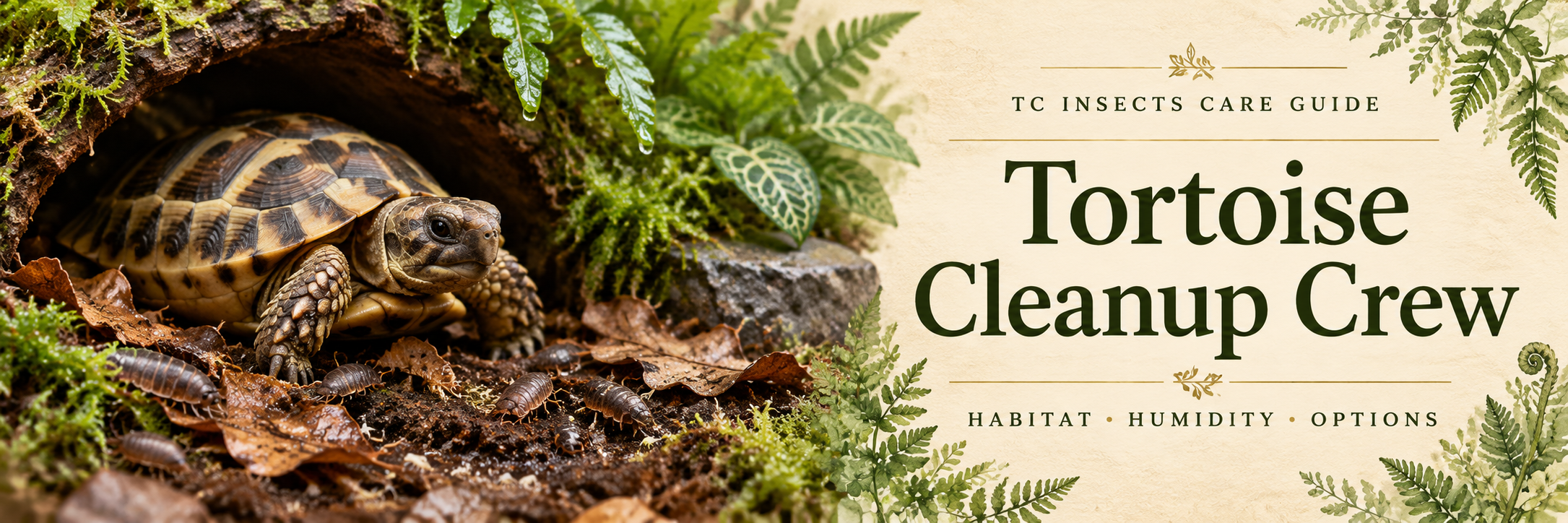
Not automatically, and the honest starting question is whether your tortoise's enclosure even fits a bioactive approach before you pick species. Tortoises are large, heavy, diurnal grazers, and many commonly kept species, Russian tortoises and sulcatas among them, are kept on a drier, more open substrate that a cleanup crew simply cannot live in long term. Tropical, more humid-leaning setups, the kind often used for red-footed tortoises, are a different story, and can genuinely support isopods and springtails the same way a humid reptile enclosure does. The short version: match the crew to the setup, not the other way around, and if your tortoise lives on a dry, sandy substrate, honest manual spot-cleaning is still the right call.
Dry, open-range setups are usually too arid for isopods to survive
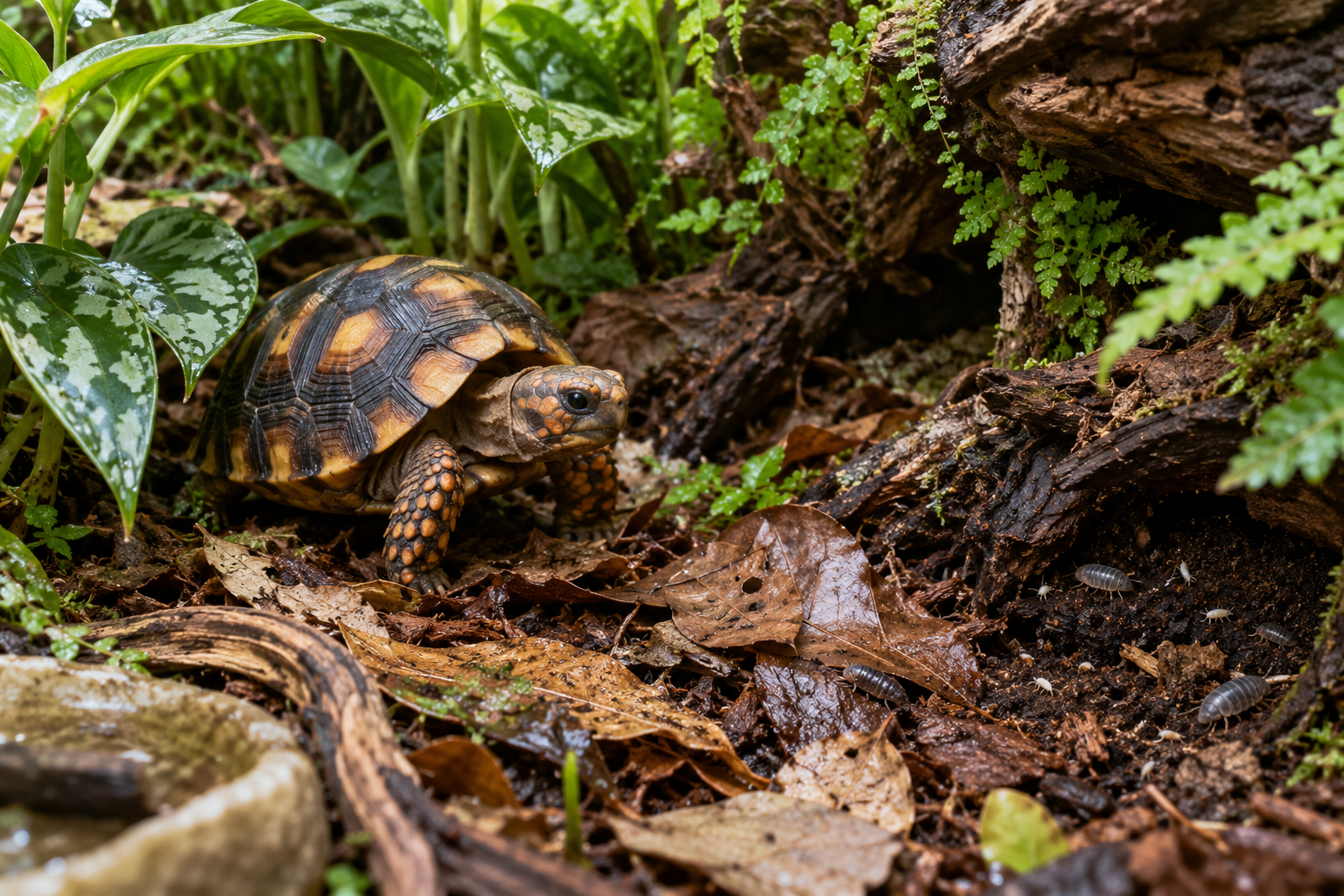
Red-foot and similar setups can run a real bioactive crew
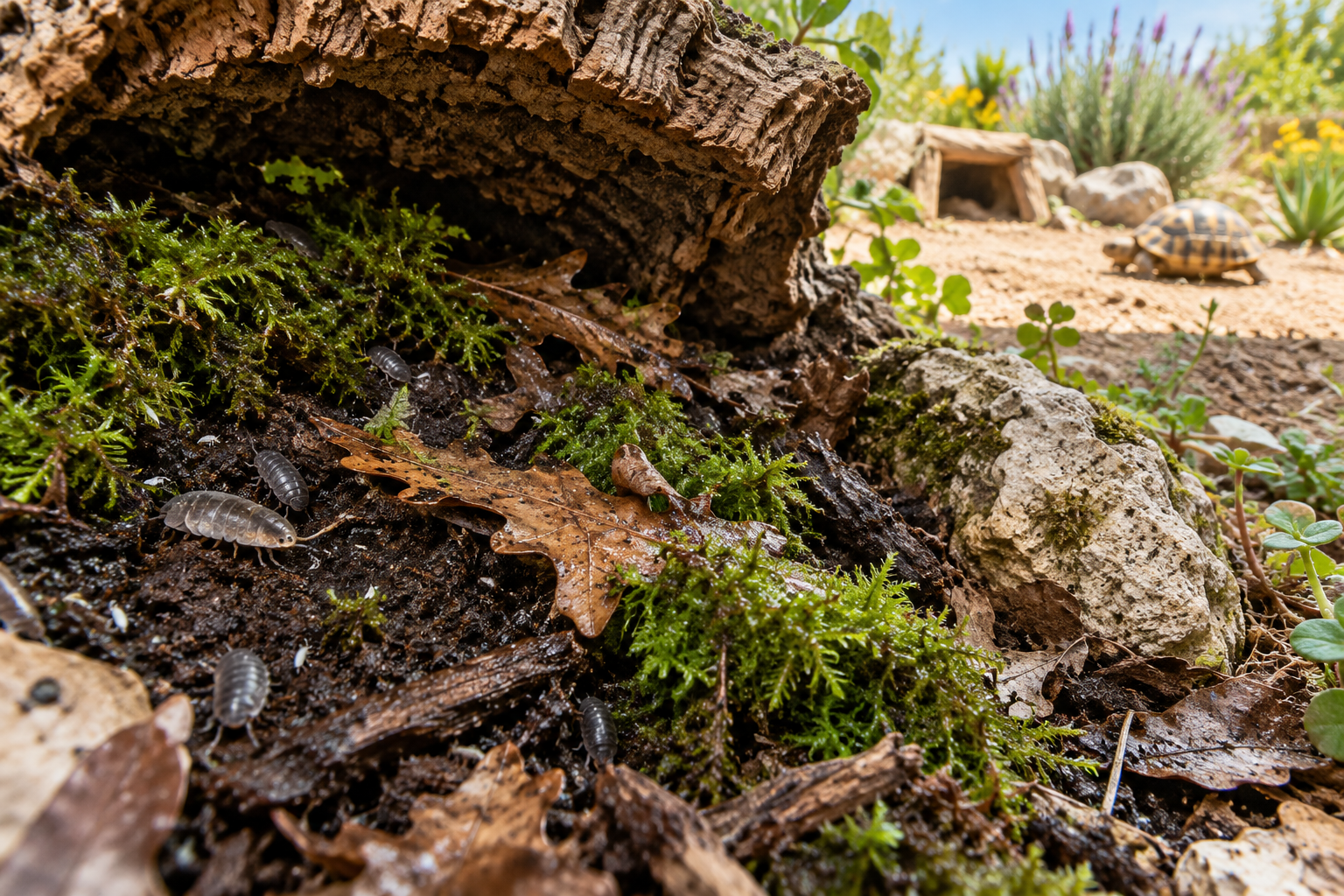
A dry substrate calls for hands-on cleaning, not a live crew
Ask the setup question before the species question
Most cleanup crew content starts with which isopods to buy. For a tortoise, the more useful first question is whether a bioactive approach fits the enclosure at all, since tortoises span an unusually wide range of natural humidity, from a Russian tortoise's dry steppe background to a red-footed tortoise's humid forest floor. A cleanup crew is a living population that needs a consistently damp zone somewhere in the enclosure to survive, so the answer genuinely depends on which tortoise you keep and how you have it set up, not a blanket yes for the whole genus-spanning hobby.
This is different from a snake or gecko enclosure, where the keeper usually picks the humidity level to suit the animal from day one. Many tortoise species are intentionally kept on a drier substrate because that is what keeps them healthy, which means the enclosure was never built with a moisture-loving decomposer crew in mind, and forcing one in is more likely to stress the crew, or the tortoise, than to work well. For the baseline habits any isopod crew needs to survive at all, our isopod care guide is a good starting point.
When a cleanup crew genuinely fits
Tropical, forest-floor species, red-footed and yellow-footed tortoises are the most common examples, are typically kept on a richer, more moisture-retentive substrate with a genuinely humid microclimate somewhere in the enclosure, which is exactly the environment a cleanup crew needs. In a setup like this, isopods and springtails can establish and work much the same way they do in a bioactive reptile terrarium, breaking down waste, shed skin, and dropped food.
The scale is the real adjustment. A tortoise enclosure is large and the animal is heavy, so you are seeding a bigger area and accounting for a lot of foot traffic compacting the substrate, which is harder on a crew than a lighter animal walking the same ground. Give the crew a head start of several weeks before the tortoise moves in, the same establishment window we recommend for a ball python's cleanup crew, so it is genuinely established before it has to handle a full grown tortoise's waste.
When it does not fit, and that is fine
Dry, open-range species kept on a sandy or lightly moist substrate are a poor match for a live cleanup crew, plainly, because isopods and springtails cannot maintain a population without a damp refuge somewhere in the enclosure. Trying to keep one corner permanently damp enough for a crew inside an enclosure built to stay dry for the tortoise's health is working against your own setup, and it usually ends with either a dead crew or an uncomfortably humid spot the tortoise avoids.
None of that is a problem. Plenty of very well kept tortoises are maintained with a simple substrate and old-fashioned manual spot-cleaning, the same way plenty of ball pythons are kept perfectly well on paper towel in a rack. A cleanup crew is a tool for a specific kind of humid, naturalistic build, not a requirement every reptile or tortoise owner has to check off.
The right crew for a humid tortoise setup
If your setup does support one, keep the picks gentle and hardy rather than large and aggressive. Powder isopods (Porcellionides pruinosus) and Dwarf Whites (Trichorhina tomentosa) build numbers quickly, tolerate a warm humid enclosure, and handle the waste load of a big grazing animal without needing constant attention, paired with springtails for mold control, the same combination detailed in our guide on which isopods are safe with your reptile.
Leave the big, protein-driven Dairy Cow isopod (Porcellio laevis) out of any enclosure that also holds the tortoise, for the same reason we leave it out of a snake or gecko's home: it is a superb decomposer, but its documented habit of nibbling a vulnerable animal makes it a needless risk around any live pet. Keep it as its own separate display colony instead.
Feeding and grazing habits change the math too
Tortoises are grazers that spend a lot of time nose down in the substrate, hunting for dropped greens and pellets, which means a cleanup crew in a tortoise enclosure is competing with the tortoise itself for some of the same dropped food. That is not a dealbreaker, but it does mean feeding the crew a little supplemental protein and calcium on its own schedule, rather than assuming leftover greens alone will sustain it.
It also means keeping an eye on moisture in the exact spot where the tortoise grazes most. A humid pocket that a tortoise repeatedly walks through and flattens will dry out and compact faster than an undisturbed corner, so plan the damp zone somewhere the tortoise visits less, and let the crew do most of its work out of the main grazing path.
The bottom line
A tortoise enclosure does not automatically need a cleanup crew, and whether one makes sense depends far more on the humidity and style of the setup than on the tortoise species itself. A humid, tropical, forest-floor build can run a real isopod and springtail crew successfully, sized up for a big animal and given time to establish. A dry, open-range setup is better served by honest manual spot-cleaning, and that is a completely normal, well kept way to keep a tortoise.
If you are unsure which camp your setup falls into, the simplest test is your substrate: if you can maintain a consistently damp pocket without the rest of the enclosure turning swampy, a crew has a real shot. If keeping any part of the substrate damp fights against what your tortoise needs to stay healthy, skip the crew and clean by hand instead.
The Right Crew for a Humid-Leaning Tortoise Setup
Gentle, hardy isopods and springtails sized for a big, heavy-grazing enclosure.
Frequently Asked Questions
Written by the TC INSECTS breeding team · Porter, Texas · Live Arrival Guarantee on every order
Have a care question? Ask our community.
Join Reptile Keepers USA, our free Facebook group for reptile, amphibian and invert keepers. Share your setups, get care help and swap feeder tips.
Join the free group