How Much Ventilation Do Isopods Need?

Air moves across the bin instead of just escaping upward
Fine enough that mancae cannot squeeze through
Add or cover holes based on what you actually see
Balance fresh air with moisture retention
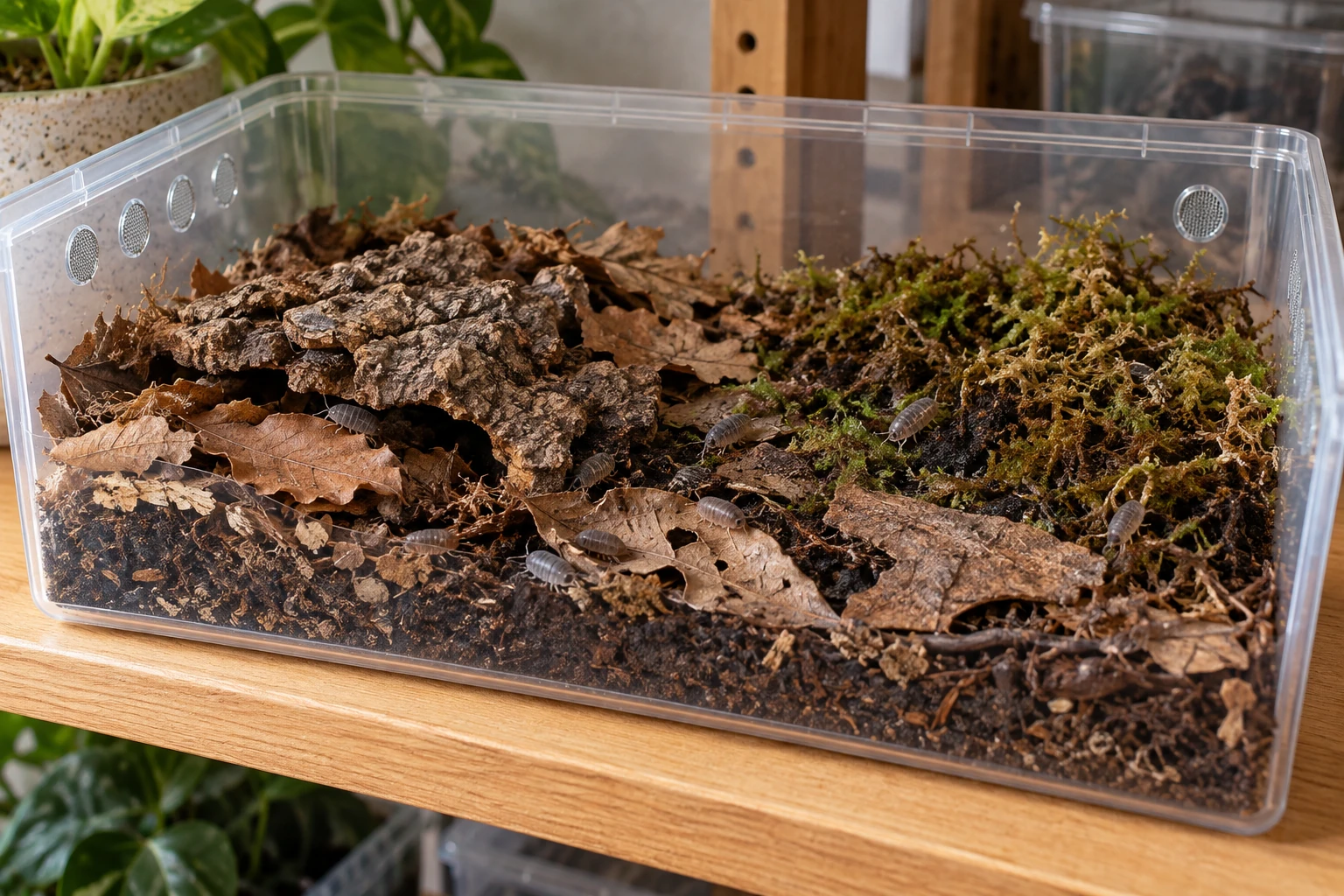
Isopods need enough ventilation to keep the air from going stale and stagnant, but not so much that the bin dries out, and the practical rule most keepers land on is a modest number of small cross ventilation holes on opposite sides near the top, adjusted by what the bin actually looks and smells like week to week. There is no single percentage that works for every bin, so the method below matters more than any one number.
Watch the bin, then adjust the vents
Use cross ventilation and fine mesh, and let condensation, substrate moisture and smell guide your adjustments.
Why there is no single ventilation percentage
Ask around and you will get different answers about exactly how much of an isopod bin's surface area should be ventilation, and honestly, sources genuinely disagree. That is because the right amount depends on bin size, species, room humidity, and how deep and moist your substrate is, so a fixed percentage rarely holds up across different setups.
A more useful approach is to start small, with a modest number of holes, and adjust based on what the bin tells you over the first week or two. Add more holes if you see heavy standing condensation on the walls or catch a sour smell when you open the lid. Cover a hole or two with tape or mesh if the substrate is drying out faster than you can keep up with.
Why cross ventilation beats top only holes
Cross ventilation, small holes placed on opposite sides of the bin rather than only in the lid, lets air actually move through the enclosure instead of just escaping straight up and out. That movement helps keep the whole bin at a more even humidity level, top to bottom.
Top only vents tend to dry a bin out fastest right at the surface, since that is the shortest, most direct path for moisture to escape, while the substrate lower down can still be plenty damp. Placing holes near the top of the side walls, rather than down near the substrate, also keeps airflow from blowing directly across the animals themselves. Our isopod care guide for beginners covers the rest of a starter setup alongside this.
The two failure modes
Too little ventilation leads to stagnant, stale air, a sour smell, and conditions that invite mold and mite problems. If a bin already seems to be struggling, our guide to isopod die offs walks through what a real crash looks like and how to tell it apart from a normal slow week.
Too much ventilation causes the opposite problem, and it is honestly the faster killer of the two. A bin can go from properly damp to bone dry in a day or two in a hot, dry room, especially through a Texas summer, and a dried out bin stresses a whole colony at once rather than gradually.
Hole size and mesh
Keep individual holes small, fine enough that mancae, the tiny newborn isopods, cannot squeeze through and escape. Adult isopods are easy to contain, but a batch of mancae can find gaps that look far too small to matter.
If you want more airflow without opening up a bigger escape risk, cover larger holes with fine mesh or no see um screen instead of drilling more, smaller ones. That gives you real airflow control without compromising containment.
Smell is a useful signal too
A healthy isopod bin should not smell strong at all. As we cover in our do isopods smell bad guide, a sour or ammonia like smell usually points to an airflow or moisture problem, not the isopods themselves being naturally unpleasant.
Pair a quick smell check with a look at the substrate surface each week. Together they tell you far more about whether your current ventilation setup is working than any single measurement would.
Tropical vs arid species want different airflow
Humidity loving tropical species like the group sold under the Cubaris name need more moisture retention overall, so those bins tend to run with fewer, smaller holes and lean noticeably humid. Our Cubaris lineup has the full species list if you are building toward a humid setup.
Arid leaning species like Porcellio and Armadillidium want more airflow and a drier overall bin. Powder Orange and Powder Blue (Porcellionides pruinosus) in particular tolerate a drier setup better than most, which is part of why they show up on so many beginner lists in the first place.
Keep reading: Bioactive Substrate in a Rack System: Tub vs Tank
The Airflow and Moisture Kit
The ventilation and moisture basics from above, ready to apply to any bin.
Frequently asked questions
How much ventilation do isopods need?
Enough to keep the air from going stagnant, without so much that the bin dries out. Most keepers use a modest number of small cross ventilation holes on opposite sides near the top, then adjust based on condensation and smell.
Is cross ventilation better than top ventilation for isopods?
Yes, generally. Cross ventilation lets air move across the bin instead of only escaping straight up through the lid, which keeps humidity more even top to bottom and avoids drying the surface out faster than the rest of the substrate.
What happens if an isopod bin does not have enough airflow?
Stale, stagnant air builds up, often paired with a sour smell, and conditions become more likely to trigger mold or a mite problem. A bin that has never had a die off can still develop one if airflow stays too low for too long.
Can too much ventilation hurt isopods?
Yes, and it is often the faster problem of the two. A bin with too many holes can dry out within a day or two in a hot, dry room, stressing an entire colony at once rather than gradually.
How big should ventilation holes be for isopods?
Small enough that mancae, the tiny newborn isopods, cannot squeeze through. If you want more airflow without a bigger escape risk, cover larger holes with fine mesh instead of drilling more holes.
Do tropical isopods need less ventilation than arid species?
Yes. Humidity loving tropical species like Cubaris generally do best with fewer, smaller holes and a more humid bin, while arid leaning species like Porcellio and Armadillidium want more airflow and a drier overall setup.
Keep learning
Have a care question? Ask our community.
Join Reptile Keepers USA, our free Facebook group for reptile, amphibian and invert keepers. Share your setups, get care help and swap feeder tips.
Join the free group