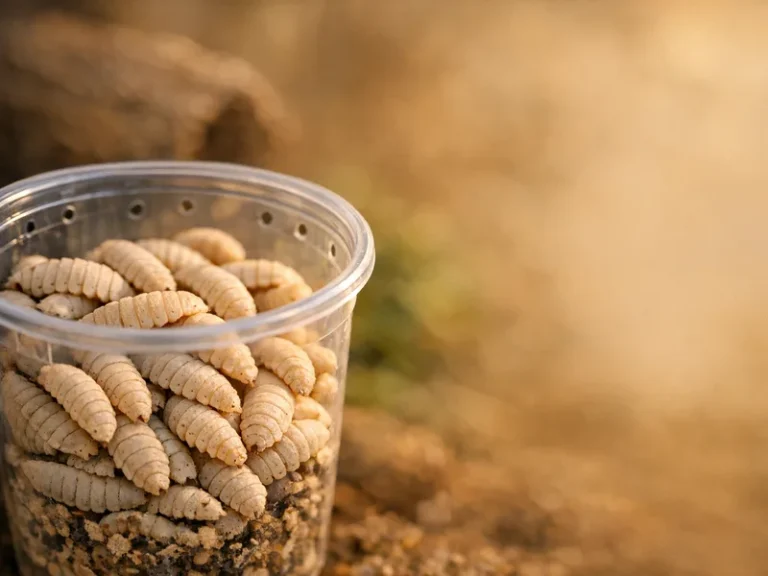
Fruit flies start smaller; bean beetles finish easier
Soft melanogaster fruit flies are the safest choice for the tiniest mouths. Roughly 3mm bean beetles become useful once an animal can already handle larger hydei flies.
A 3mm beetle against two fly sizes
About 2.5–3mm
The soft-bodied first choice for tiny spiderlings, L1 mantises, and small froglets.
About 3.5–4mm
A larger soft fly for predators that have graduated beyond melanogaster.
About 3mm
Similar length to melanogaster but firmer because of the hardened beetle shell.
After animals accept hydei
Bean beetles become a fair size match once the predator comfortably handles larger flies.
Dry beans or living fly media?
Bean beetles
Adults live roughly one to two weeks without eating or drinking. They mate and lay eggs on dry beans. A fresh culture starts producing in three to four weeks and may remain productive for four to six weeks.
Fruit flies
Flies live on moist culture media and need an active culture cycle. They are easy to keep but require more attention, staggered cultures, and dusting at feeding time.
Which feeder actually stays put?
Fresh bean beetles usually do not develop working flight muscles. Old, crowded, or hot cultures can produce dispersal-built adults that fly, so restart cultures regularly.
True wingless fruit flies cannot fly. Flightless lines usually stay grounded but may flutter in a very warm room. Both feeders remain low-risk when cultures stay fresh, ventilated, and cool.
Match the feeder to the predator
Start with melanogaster
Add hydei or bean beetles after several molts when the spider is visibly larger.
Use melanogaster first
Introduce bean beetles after the nymph takes hydei comfortably.
Springtails, then flies
Bean beetles are too firm for the earliest stages and should remain an occasional later feeder.
Rotate both feeders
Once hydei are easy prey, bean beetles add convenient variety.
Protein-rich, but not a calcium source
Both feeders are useful protein sources, but neither supplies a balanced calcium-to-phosphorus ratio. Dust appropriately and maintain variety.
Bean beetles
Protein-rich with a firm shell. Dust lightly before feeding and offer as part of a varied rotation.
Fruit flies
Soft-bodied and excellent for tiny animals, but still calcium-poor. Dusting is essential for fly-heavy diets such as dart frog feeding.
Bean Beetles vs Fruit Flies FAQ
Can I feed bean beetles to a jumping spiderling?
Not to a brand-new sling. Begin with melanogaster and introduce bean beetles after several molts when the spider handles hydei-sized prey.
Do bean beetles or fruit flies smell bad?
Healthy fresh cultures should have little odor. Strong sour or rotten smells usually indicate old media, excess moisture, or contamination.
Can bean beetles fly out of the culture?
Fresh uncrowded cultures usually produce non-flying adults, but crowded, warm, aging cultures can produce flying forms.
How long does each culture last?
Bean beetle cultures begin producing in about three to four weeks and may stay productive four to six weeks. Fruit fly production usually lasts several weeks and works best with staggered cultures.
Do bean beetles need calcium dusting?
Yes. Bean beetles are low in calcium and should be lightly dusted just like other small feeder insects.
Is it better to keep just one feeder?
Running both covers more life stages: fruit flies for the smallest predators and bean beetles for larger animals that benefit from easier culture upkeep.
Cover every small predator stage
Start tiny with fruit flies, then add low-maintenance bean beetles as your animals grow.
Written by the TC Insects breeding team · Porter, Texas · Live Arrival Guarantee on every order
Have a care question? Ask our community.
Join Reptile Keepers USA, our free Facebook group for reptile, amphibian and invert keepers. Share your setups, get care help and swap feeder tips.
Join the free group