Wild Springtails vs. a Bought Culture
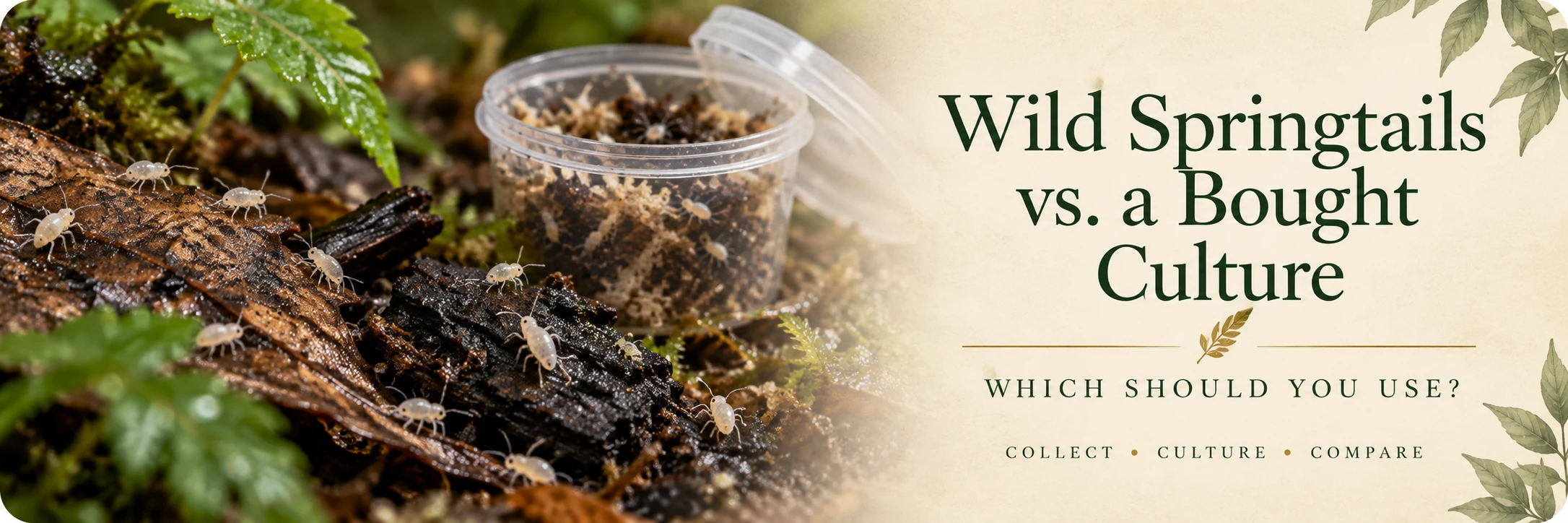
Wild Collembola need a microscope and a key to name with any confidence
Predatory mites, grain mites and other tiny arthropods often ride along too
Freezing or baking kills a springtail as fast as it kills a hitchhiker
Wild collection or a known culture?
Yes, you can use springtails you catch outside, but a bought culture is the safer choice for almost every setup, because you cannot see what else is riding along in a scoop of wild soil. Wild collection is free and the population is right outside your door, while a purchased culture arrives as a known, single species with no guesswork about whether it will even reproduce in captivity. The real difference is not danger to you or a pet, it is reliability: an unidentified wild sample is an experiment, and a bought culture is a known quantity from day one.
Choose your starting point
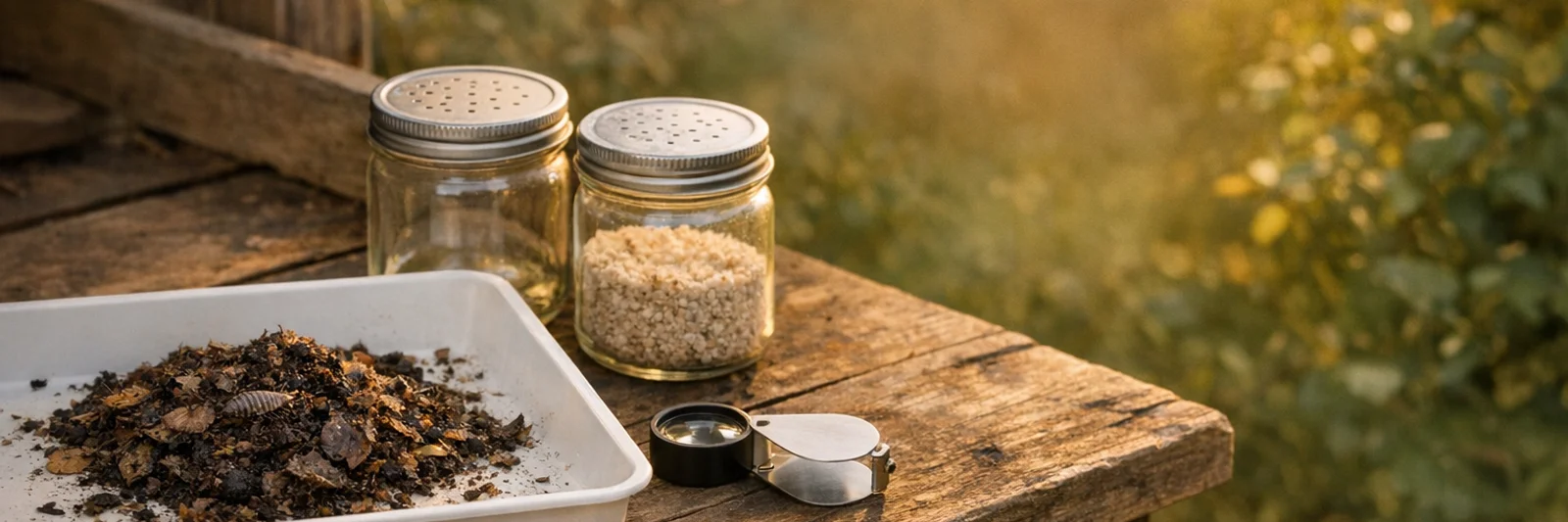
The original guide below compares species identification, hitchhikers, collection methods, isolated trials, and purchased cultures.
Can You Actually Use Springtails You Catch Outside?
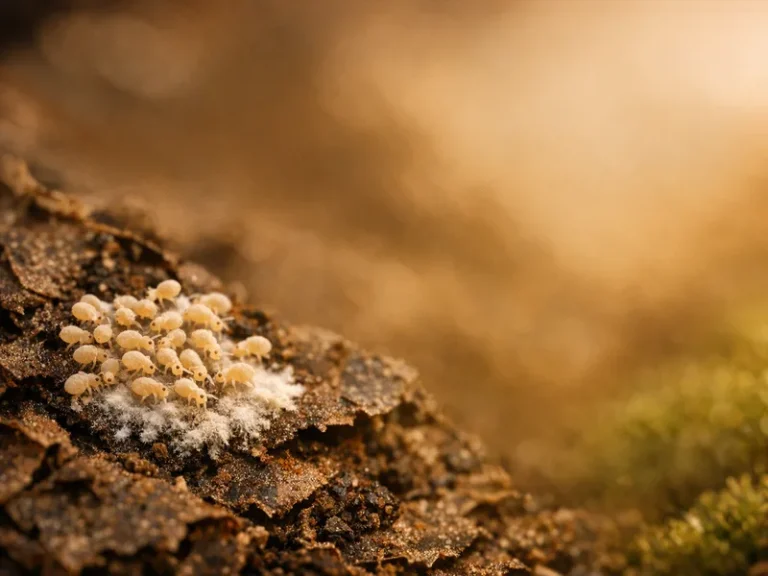
Technically, yes. Springtails, the tiny hexapods scientists call Collembola, live in soil and leaf litter almost everywhere there is moisture, so a scoop of damp dirt from your own yard usually has some in it. The honest question is not whether you can catch some, it is whether what you catch will actually behave like a cultured species once it is living in a container on your shelf. That is a different question from whether wild-caught feeder insects are risky to feed a reptile, covered in our guide on wild-caught insects and reptile safety, since springtails are livestock for a culture, not a meal.
A cultured species like the temperate white springtail, Folsomia candida, has been bred in captivity for generations specifically because it tolerates a container, reproduces predictably, and will not surprise you. A wild sample is none of those things by default. It might be a species that thrives in a deli cup, or it might need a very specific leaf litter, humidity swing, or food source you cannot easily replicate. You will not know which until you have already sunk a few weeks into trying.
The Three Real Problems With a Wild Sample
None of the three problems below are about whether springtails themselves are dangerous to have around, they are harmless to plants, people and pets no matter where they came from. The problems are all about whether a wild sample will actually work as a culture.
You do not know what species you have
Collembola is a huge group, thousands of described species, and telling one pale, small springtail from another usually takes a microscope and a taxonomic key, not a glance. That matters because care needs vary by species: some tolerate a bone dry pot, others crash the moment the surface dries even slightly. Buying a named species like temperate white or tropical pink means you already know its temperature and humidity range before the cup even arrives. Our springtail species reference lists that range for every species we sell, and a wild sample gives you none of it.
Hitchhikers ride along in every wild sample
Scoop wild soil or leaf litter and springtails are rarely the only thing in the cup. Predatory mites are the most damaging hitchhiker, since they hunt and eat springtails directly rather than just competing with them, and they move fast enough to be established before you notice anything is wrong. Grain mites, nematodes, and the occasional small centipede or ant can ride in too. None of it announces itself. It just shows up a week or two later as a culture that is thinning out for no obvious reason.
It might just never take off
Even a clean wild sample with no hitchhikers can simply fail to establish, and experienced keepers who have tried this describe the results as genuinely inconsistent from one attempt to the next. A species that looks abundant under a log outside is adapted to that exact log, not to a plastic container with your choice of moisture and food. There is no guarantee of success the way there is with a species already proven to culture well in captivity.
Why You Cannot Sterilize Live Springtails Like You Can Leaf Litter
Wild leaf litter can be made safe with heat or cold: bake it dry or freeze it for a stretch, and whatever pests or mold were riding on the dead leaves do not survive the trip, a method our leaf litter sterilization guide covers in detail. That trick does not exist for the springtails themselves. Freezing or baking a wild springtail sample kills the springtails exactly as fast as it kills a hitchhiking mite, since both are small, soft-bodied animals with no real heat or cold tolerance advantage over each other.
That is the one honest fact most collection guides gloss over. You can clean the leaf litter you add to a tank. You cannot clean the living animal you are trying to culture, you can only isolate it and watch. That single difference is why a wild springtail sample carries a permanent asterisk that a bought culture never has.
If You Still Want to Collect, Do It This Way
Collect only from land you know has never been sprayed or treated, your own untreated yard rather than a roadside, a park, or anywhere near farmland, for the same reason we tell people to be picky about where they collect leaf litter. Target damp, shaded leaf litter or the underside of a rotting log, and take a small sample rather than stripping a patch bare. Leave the habitat mostly intact. You are borrowing a starter population, not harvesting the whole colony.
Use a spoon or small scoop rather than your bare hand, and collect a bit of the surrounding damp litter along with the springtails, since that carries some of the microbial film they already graze on. Skip any patch where you also see ants, since ants and springtails rarely share a small container well. One sample from one spot beats mixing samples from several locations, since mixing raises the odds of combining two different, unidentified species at once.
Run It as an Isolated Trial Culture First
Whatever you collect goes into its own clean container, never straight into an established bioactive tank and never anywhere near an animal enclosure. Set it up exactly like a normal charcoal or substrate culture, feed it sparingly, and give it real time, several weeks at minimum, before judging whether it is working. A trial culture that is genuinely thriving looks like any healthy springtail culture: numbers visibly climbing, springtails active on the surface, no sour smell.
Watch closely for anything moving differently than a springtail, faster, more erratic, hunting rather than grazing, since that is the profile of a predatory mite working through your sample. Our guide to mites in a springtail culture covers telling the two apart. If you see that, or the population simply is not growing after several weeks, the safest move is to discard the attempt rather than push a questionable sample toward a tank with plants, isopods, or an animal already living in it.
When a Bought Culture Is Just the Better Call
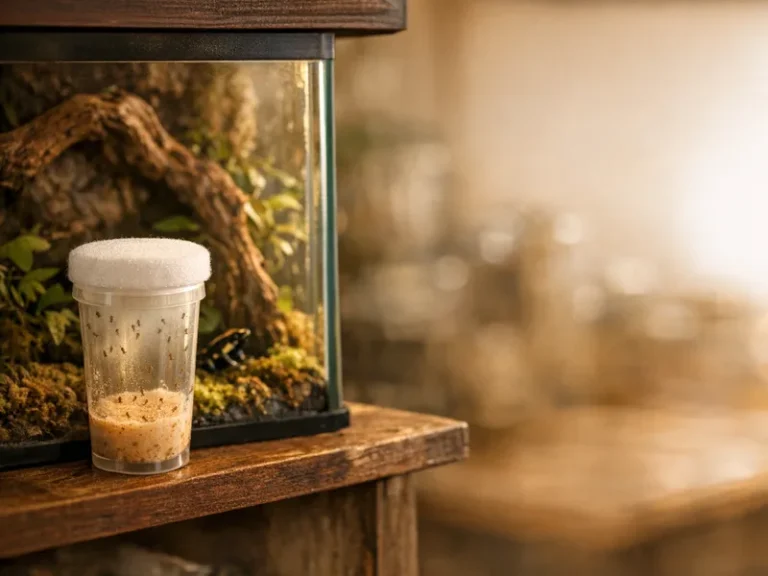
A purchased culture skips every open question above. You get a named, common species like temperate white springtails, know its ideal temperature and humidity before you open the cup, and are not troubleshooting an unidentified population's basic biology on top of learning to keep a culture at all. For most keepers building a bioactive tank on any kind of schedule, that reliability is worth more than free.
Wild collection still has a place, mainly as a hobby project in its own right or a backup when you are experimenting, not as the default way to stock a tank you actually care about. If reliability matters more than the free and local appeal, shop springtail cultures and start from a species already proven to work, then use our first-day care guide once it lands.
The Known-Species Starter Kit
A named, ID'd culture with a known temperature range, no wild-sample guesswork required.
Frequently asked questions
Can I use springtails I find in my yard instead of buying a culture?
Yes, technically you can, but success is inconsistent because you will not know the exact species or whether it adapts well to a container. A bought culture like temperate white springtails is already proven to reproduce in captivity, which a wild sample is not. Wild collection works best as a side project, not the way you stock a tank you are counting on.
What hitchhikers come in with a wild springtail sample?
Predatory mites are the biggest risk, since they hunt springtails directly rather than just competing with them. Grain mites, nematodes, and the occasional ant or small centipede can also ride along in a scoop of wild soil or leaf litter. None of them are visible at the time you collect, which is exactly why an isolated trial culture matters before anything goes further.
Can you sterilize wild springtails the same way you sterilize leaf litter?
No. Baking or freezing kills the mold spores and pests on dead leaf litter without harming the litter itself, but a live springtail has no more heat or cold tolerance than the hitchhikers riding with it. You can sterilize the inert material you add to a tank. You cannot sterilize a living animal you intend to keep alive.
Why might a wild springtail culture just fail?
Even a clean sample with no hitchhikers can fail because the species you happened to catch is not one that adapts well to a container. Springtails living under a log outside are suited to that log's exact conditions, not necessarily to a deli cup. Experienced keepers describe wild culturing as genuinely inconsistent from one attempt to the next.
Is it safe to add a wild springtail sample straight to my terrarium?
No, run it as its own isolated trial culture first, well away from any established tank, plants, or animal enclosure. Give it several weeks and watch for anything moving faster or more erratically than a springtail, a sign of a predatory mite. Only a population that is clearly thriving with no odd movement is worth considering for anything beyond its own container.
Is a bought springtail culture worth it over a free wild one?
For most keepers, yes. A purchased culture arrives as a known species with a known temperature and humidity range, so you are not troubleshooting basic biology and hoping it works out. Wild collection is free and can be a fun side project, but a bought culture is the dependable way to stock a tank you actually care about.
Keep learning
Have a care question? Ask our community.
Join Reptile Keepers USA, our free Facebook group for reptile, amphibian and invert keepers. Share your setups, get care help and swap feeder tips.
Join the free group