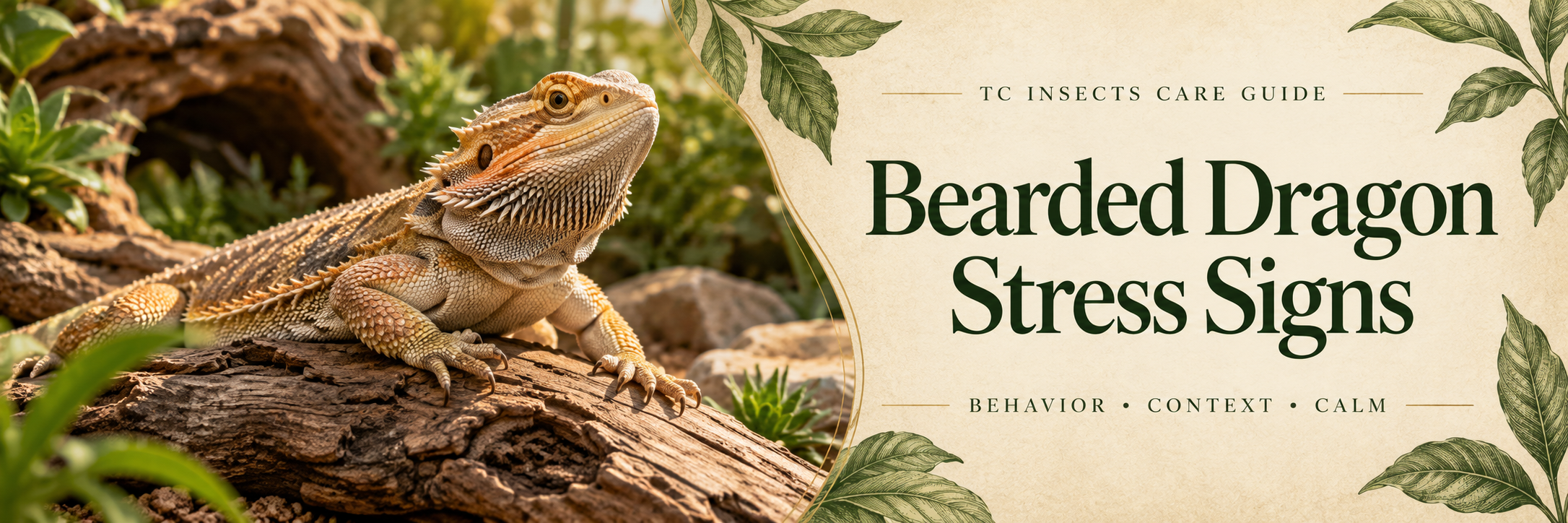
Bearded Dragon Stress Signs
A black beard, glass surfing, or a flattened body can be ordinary temperature control and display in a bearded dragon (Pogona vitticeps), or they can be genuine stress signals, and the difference comes down to context and how long the behavior lasts. This guide reads each sign honestly, then gives a fix order that clears up real stress fastest: basking and cool-end temperatures first, then enclosure size and sightlines, then reflections, hides, and handling. Full target numbers are in our care sheet if you want to check your setup against them.
Temperature control clears fast once the dragon reaches basking temperature.
A dark beard with no obvious cause in a properly heated tank points to stress.
Check basking and cool-end temperatures with a probe before changing anything else.


Reading the Signs: Which Are Normal?
A lot of bearded dragon body language looks alarming but is not. A flattened, pancaked body under the basking light with the eyes closed is ordinary sunbathing, since spreading out and darkening the skin absorbs more heat. Gaping while basking is the same idea in reverse, releasing extra heat the way a dog pants, and it is expected once the dragon warms up.
Arm waving is a submission signal, very common in juveniles, and simply means the dragon is acknowledging something bigger nearby, a keeper, another dragon, or even its own reflection. Head bobbing is usually territorial display. None of these four need a fix on their own; context and duration are what separate normal behavior from an actual problem.
Black Beard: Display, Stress, or Illness?
A beard that darkens near the basking light and fades within twenty to thirty minutes once the dragon warms up is ordinary temperature control, not distress. A beard that darkens mid afternoon with no clear trigger, especially paired with a puffed or flattened body, is more likely stress from temperature, space, or a reflection.
A beard that stays black for hours in a correctly heated enclosure, with nothing obvious nearby to explain it, is not normal and is worth investigating. If it comes with appetite loss or unusual lethargy, treat it as a possible health question rather than pure behavior, since the two can look similar from the outside.
Glass Surfing: What It Really Means
Glass surfing, running or scratching repeatedly along the enclosure wall, is close to always a stress behavior rather than temperature control. The most common trigger is a reflection the dragon reads as a rival dragon in its space, which explains why it often gets worse in a bright room or at a particular time of day.
An enclosure that is too small for the dragon's size, or a recent change like new decor or a room rearrangement, can trigger the same behavior. Covering the reflective panel and giving a new setup a week or two to settle in resolves most cases without any other change.
Fix It In This Order
Work through fixes in this order rather than changing everything at once, so you actually learn what was causing the behavior. First, measure the basking surface and cool end with a probe thermometer, since a poor gradient causes more stress behavior than almost anything else in this species.
Next, check enclosure size against the 48 by 24 by 24 inch adult minimum, cover any glass the dragon can see its own reflection in, and make sure a hide actually fits the dragon rather than leaving it exposed. Last, look at handling frequency for a dragon still settling in, and check whether it can see another pet's enclosure, a busy walkway, or a mirror from its normal resting spot.
Handling and the First Two Weeks
A newly arrived bearded dragon needs time to settle before handling becomes part of the routine. Let it eat reliably for a week or two in a quiet spot first, since frequent handling on top of a brand new environment is one of the more common, avoidable sources of stress in that early window.
Once it is eating and moving normally, short, calm handling sessions are fine and most dragons genuinely tolerate them well. Offering a calm, slow feeder such as dubia roaches rather than something that scatters can also keep mealtime steadier for a dragon that is still settling in, since it controls the pace instead of a scramble of loose feeders.
When a Sign Means More Than Stress
Most black beards, flattened postures, and even a stretch of glass surfing resolve once the enclosure is fixed. But a sign that does not improve after real husbandry changes, or that comes with appetite loss, weight loss, or lethargy, is no longer just a behavior question.
Once the room and enclosure check out, feed a calm, slow feeder like black soldier fly larvae rather than something that scatters and adds its own excitement to a dragon that is still settling down, and resume the normal weekly rotation once appetite is steady again.
Sign vs. Likely Cause
The Calm Feeding Kit
Feeders that stay put in a dish instead of scattering, so mealtime does not add more excitement to a stressed enclosure.
Written by the TC INSECTS breeding team · Porter, Texas · Live Arrival Guarantee on every order
Have a care question? Ask our community.
Join Reptile Keepers USA, our free Facebook group for reptile, amphibian and invert keepers. Share your setups, get care help and swap feeder tips.
Join the free group