Superworms vs BSFL: Fat vs Calcium
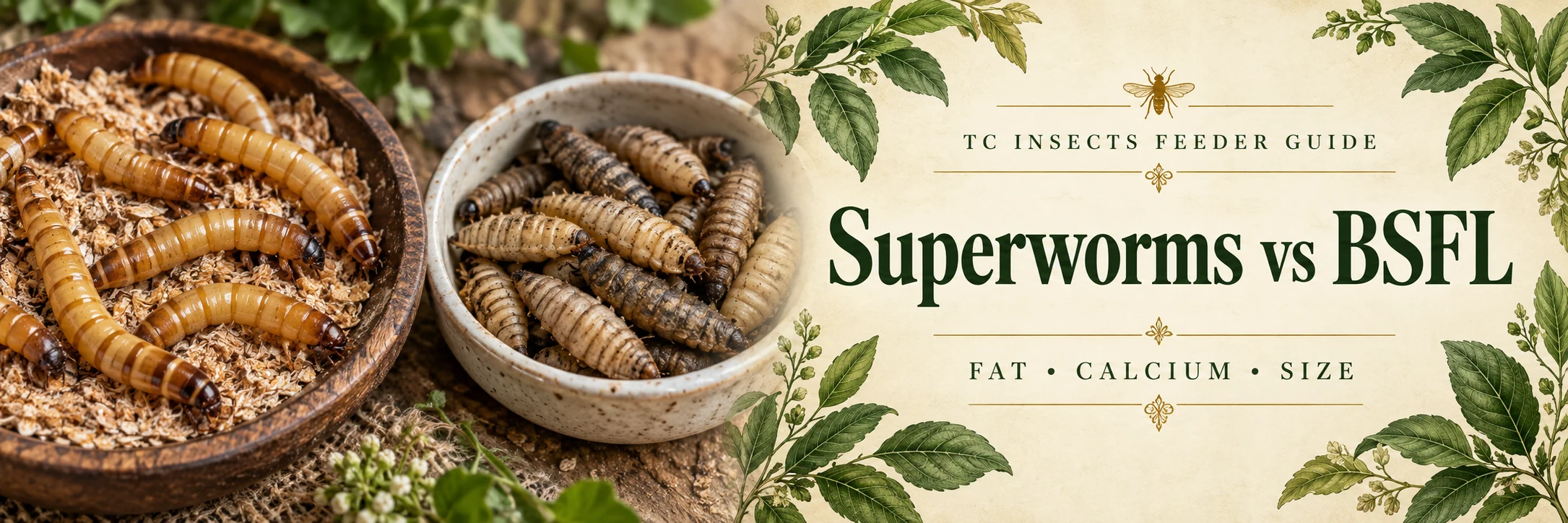
Published feeder tables put superworms among the fattiest feeders
Many times the calcium of a superworm; less dusting needed
Superworms suit big mouths; BSFL suit almost any
Choose superworms for energy and BSFL for calcium
Superworms (Zophobas morio) and black soldier fly larvae (Hermetia illucens) sit at opposite ends of the feeder table: superworms are big, fatty, calcium-poor, and lively, and black soldier fly larvae are small, moderate in fat, and carry more calcium than any other common feeder. The rule that follows is simple. Superworms are a rotation feeder for large, active animals that burn fat, bearded dragons, water dragons, monitors, tokays, and big frogs, two or three feedings a week at most. BSFL are a staple for almost everything else, geckos, small lizards, tree frogs, juveniles, and any female building eggs. This guide compares the two on nutrition, size, handling, storage, and cost, and gives the animal-by-animal answer.
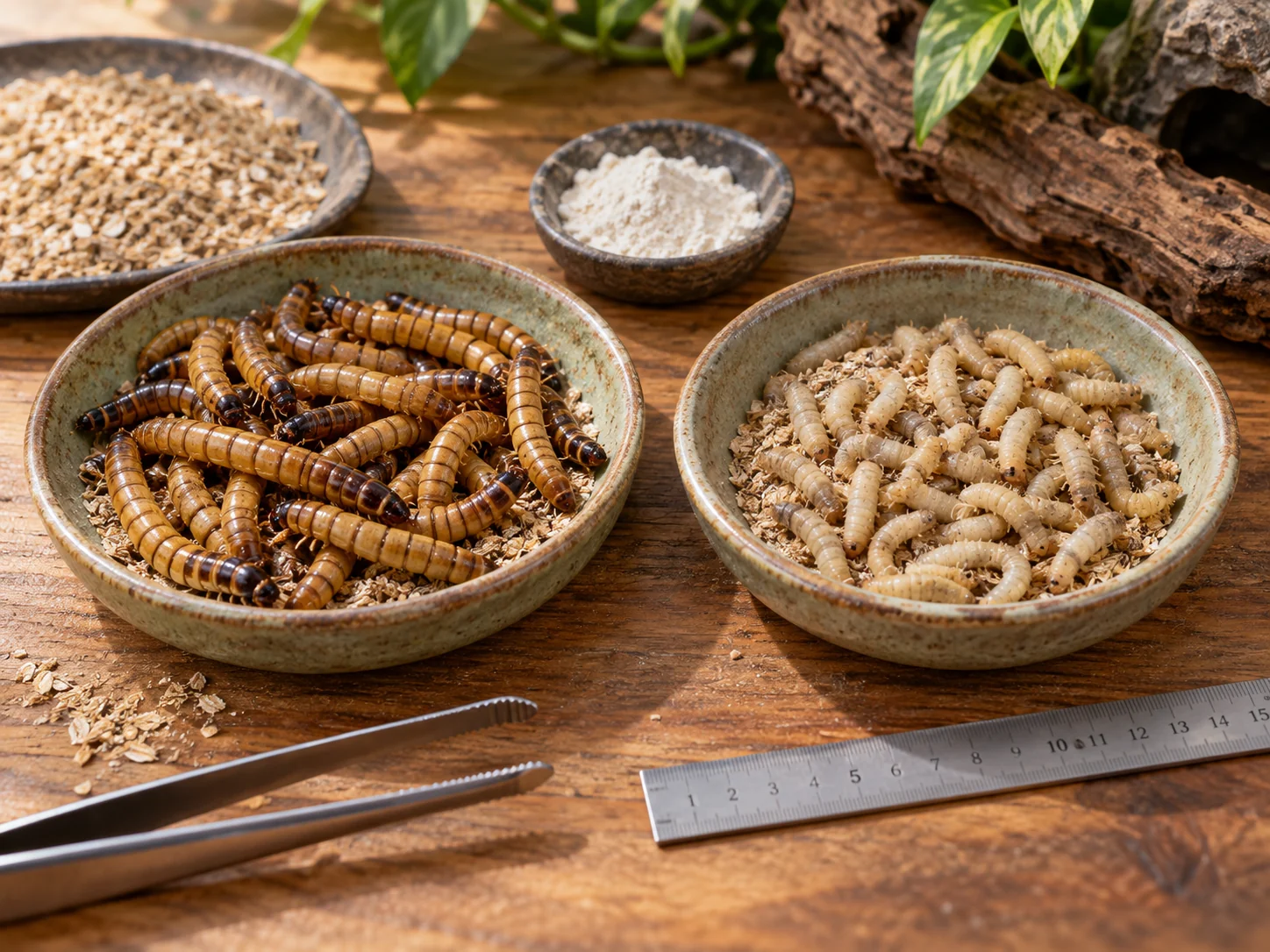
Different nutrition, different size, different role
Superworms are large, lively, and high in fat; BSFL are smaller, naturally calcium-rich, and better suited to staple use for many animals.
Nutrition: fat versus calcium
Published feeder nutrition tables agree on the shape of the comparison even where the exact numbers vary: superworms are among the fattiest feeders sold and carry very little calcium relative to phosphorus, while black soldier fly larvae carry a moderate amount of fat and enough calcium that their calcium-to-phosphorus ratio is close to what a reptile needs without dusting. Protein is broadly similar by weight. Our feeder nutrition comparison chart lays the numbers side by side.
What that means at the food dish: a superworm is a rich meal that puts weight on an animal quickly and has to be balanced with calcium dusting and a leaner staple. A BSFL is a modest meal that tops up calcium every time it is eaten and can be fed plain most days. Neither is a complete diet on its own, but BSFL can be the backbone of one and superworms cannot.
Size and who can eat them
Superworms are 1.5 to 2 inches long and thick, with a hard exoskeleton and strong jaws. They fit adult bearded dragons, water dragons, monitors, tegus, tokay geckos, large chameleons, big frogs, and tarantulas and scorpions. They are too big and too tough for leopard geckos as anything but an occasional cut treat, and out of the question for small geckos, anoles, tree frogs, and juveniles.
Black soldier fly larvae come in sizes from a quarter inch to three quarters of an inch and are soft, so they fit nearly everything: small geckos, anoles, tree frogs, dart froglets on the smallest size, juveniles of every species, and adult dragons and chameleons on the large size. The feeder size chart puts BSFL in three columns and superworms in one.
Biting, movement, and the feeding response
Superworms bite. They have strong mandibles, they can nip a small animal or a keeper's finger, and a superworm left loose overnight can chew on a resting lizard or gecko, which is why they are tong-fed or dish-fed and never left in an enclosure. Our page on whether superworms bite covers the handling. What they offer in return is movement: a superworm thrashes, and a bored or picky animal often strikes a superworm when it ignores everything else.
BSFL do not bite and wriggle rather than thrash. Most animals take them readily from a dish; a few sight hunters ignore a larva that has stopped moving, and a leopard gecko sometimes needs a tap on the dish. Our post on whether leopard geckos can eat BSFL covers the acceptance question for the species that asks it most. BSFL escape a shallow dish, so use one with a lip.
Storage and shelf life
Superworms keep for weeks at room temperature in an inch of dry bran with a slice of carrot or potato, and they must never be refrigerated, since the cold kills them within days. Kept warm and crowded they stay larvae; isolated, they pupate into beetles, which is how they are bred. BSFL keep a couple of weeks at cool room temperature and a few weeks in the refrigerator, need no food, and pupate into harmless flies if left warm and dry.
So the two live in different places: superworms on a shelf, BSFL in the refrigerator. Both are among the easiest feeders to hold for a month, and the refrigerator list keeps the two from getting mixed up, which is a common and fatal mistake with superworms.
Cost per 100 and where each wins
Both are inexpensive by the hundred, with superworms costing a little more per insect at small counts and BSFL among the cheapest feeders per 1,000. Because a superworm is a much bigger meal, cost per feeding often favors superworms for a large animal, while cost per month favors BSFL for a small one that eats a few larvae at a time. The superworm shop and the BSFL shop both sell by the 25, 100, and 1,000.
Superworms win as a rotation feeder for large active animals, as a strike trigger for a picky eater, and as a treat that puts weight on a thin adult. BSFL win as an everyday staple for small and medium animals, as the calcium feeder for females in breeding season, and as the low-dusting feeder for anyone tired of the shake cup.
The animal-by-animal answer
Bearded dragon adult: BSFL as a staple with dubia, superworms two or three feedings a week. Bearded dragon juvenile: BSFL and small dubia, no superworms. Leopard gecko: BSFL as part of the rotation, superworms rarely and cut. Crested gecko: BSFL a couple of times a week, no superworms. Chameleon: BSFL in the rotation, superworms occasionally for a large adult. Tree frogs and anoles: small BSFL, no superworms. Water dragons, monitors, tegus, tokays: both, with superworms as a regular rotation item. Tarantulas and scorpions: either, as a weekly meal.
If you keep one animal and want one feeder beyond dubia, the answer is BSFL for nearly every species under a foot long and superworms for the big ones. If you keep both, the rule is calcium every day and fat a couple of times a week, which is BSFL most days and a superworm when the animal has earned it.
The Fat-and-Calcium Kit
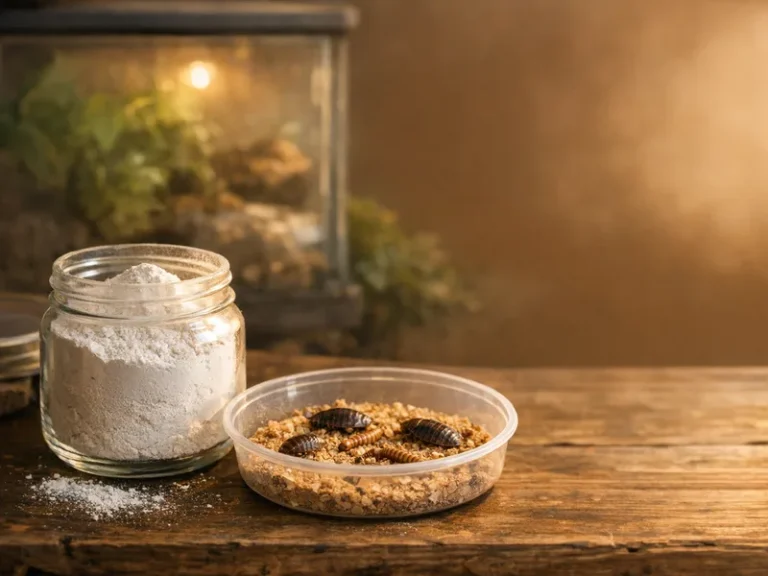
Superworms for the rotation, BSFL in two sizes as the staple, and calcium for the superworm days.
Frequently Asked Questions
Are superworms or BSFL better for a bearded dragon?+
Both, in different roles. BSFL are a staple alongside dubia for adults and juveniles because of the calcium. Superworms are a rotation feeder for adults only, two or three feedings a week, because of the fat. Juveniles get no superworms.
Which has more calcium, superworms or black soldier fly larvae?+
Black soldier fly larvae, by a wide margin. Published feeder tables put superworms among the fattiest and most calcium-poor feeders, while BSFL carry enough calcium that their calcium-to-phosphorus ratio is close to what a reptile needs without dusting.
Can leopard geckos eat superworms?+
Rarely, and cut, as a treat. Superworms are too big, too tough, and too fatty to be part of a leopard gecko's regular diet. BSFL in the medium size are a better rotation feeder for a leopard gecko, alongside small dubia and mealworms.
Do superworms bite?+
Yes. They have strong mandibles and can nip a small animal or a finger, and a superworm left loose overnight can chew on a resting lizard. Tong-feed or dish-feed them and remove any uneaten ones. BSFL do not bite.
How do I store superworms and BSFL?+
Superworms on a shelf at room temperature in an inch of dry bran with a carrot slice; never refrigerate them, since the cold kills them in days. BSFL in the refrigerator, where they keep a few weeks with no food. Kept warm and dry, BSFL pupate into harmless flies.
Which is cheaper, superworms or BSFL?+
Both are inexpensive by the hundred. BSFL are among the cheapest feeders per 1,000, so they win on cost per month for a small animal. A superworm is a much bigger meal, so cost per feeding often favors superworms for a large animal.
More helpful guides
Have a care question? Ask our community.
Join Reptile Keepers USA, our free Facebook group for reptile, amphibian and invert keepers. Share your setups, get care help and swap feeder tips.
Join the free group