One Isopod Species Taking Over Your Mixed Bin?
Yes, one isopod species can genuinely crowd out another in a mixed bin, and it is almost never a dramatic event. The faster-breeding, more food-driven species keeps eating and multiplying while the slower one quietly produces fewer young each month until it is gone. That is a different problem from the genetics question covered in our guide to mixing isopod species, which is about whether to combine species at all. This post picks up after you already have, and one side is losing. Here is why it happens, how to catch it early, and what to actually do about it.
A faster-breeding species out-reproduces a slower one for the same food and space
No juveniles from the losing species for several weeks is the earliest tell
Separate a group while breeding adults of the losing species are still alive

Why One Species Starts Winning
This comes up constantly in the hobby, and keepers describe the same pattern again and again: the slower species does not get attacked or driven out, it just produces fewer young each month until you realize you have not seen a new one in weeks. A faster-breeding, more mobile species reaches the food first, claims the damp refuge first, and simply out-reproduces a slower one even when both would do fine kept on their own. Treat this as widely reported keeper experience rather than settled biology. Nobody has run a controlled study on which species outcompete which in a home bin, but the pattern is consistent enough across independent accounts to take seriously.
A Head Start From Faster Broods
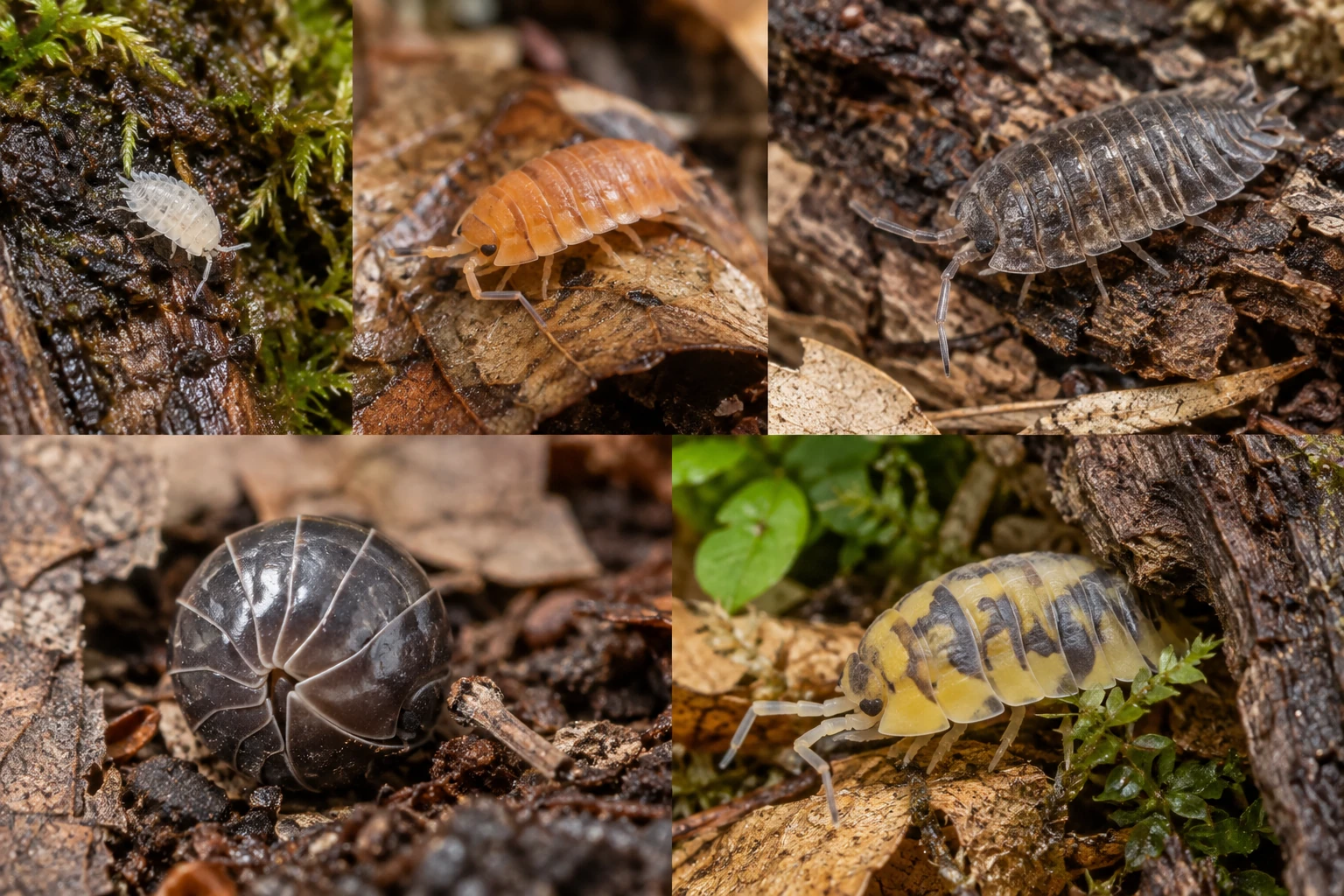
Some species simply reach reproductive age and produce a new brood faster than others, and in a shared bin that head start compounds. A colony already producing juveniles every few weeks will have far more mouths competing for the same food and hides by the time a slower species raises its first or second litter. This is exactly the reputation Dwarf White (Trichorhina tomentosa) and Powder isopods (Porcellionides pruinosus) have as fast, forgiving starter species: the trait that makes them easy alone can flood a shared bin before a slower species gets established.
When Mating Attempts Add Stress
A less obvious mechanism some keepers report is interspecies harassment. Males from the more numerous species will sometimes attempt to mate with females of the other species, and the stress from that alone can cause a female to abort a brood or carry a much smaller one than usual. This is harder to verify than a straightforward food-and-space race, and it likely does not happen in every mixed bin, but it is a commonly cited reason a slower species can decline even in a roomy enclosure with food to spare.
The Early Signs Worth Watching For
Catching this early means watching for absence, not conflict, since you will rarely see anything that looks like a fight. The clearest early sign is no new juveniles from the slower species for three or four weeks running, even though you know it was breeding before. Watch the damp refuge too: if only one species is ever camped there while the other keeps getting pushed onto drier, more exposed ground, that access gap will show up in the head count within a month or two. A slower species that used to be easy to spot on the leaf litter and is now only found deep in the substrate is worth a closer look, since retreating that hard from the surface often means it is losing the easy food.
Count matters more than impression. It is easy to assume a bin is fine because you can still find a few of the losing species when you dig, but a colony that has gone from dozens to a handful over two months is not stable, it is on its way out slowly. The fix window is while breeding-age adults of that species are still present. Once only juveniles or none at all are left, a rescue group has nothing to found a new colony with, and restocking from scratch becomes the only option.
Your Options Once You Notice It
Once you have confirmed it, there are three honest paths, and which one fits depends on why you set up a mixed bin in the first place. None of them is wrong, but only one of them is quick.
Separate a Rescue Group Now
If you want to keep both species, physically remove a group of the losing species while breeding adults are still there. A dozen or more adults, if you can find that many, into their own small enclosure with fresh substrate, a dedicated damp refuge, and food they do not have to share is the most reliable fix, because it removes the competition entirely rather than trying to referee it inside the same bin.
Widen the Gradient and Add More Hides
If you would rather keep one bin, give the losing species more of what it needs without removing the faster one: extend the damp zone so there is more contested ground to spread into, add a second cork or bark hide away from the first, and put a second small food station on the losing species' side of the bin so it stops competing head to head for the same dish. This works better in a larger enclosure, where two species with genuinely different habits, one a surface dweller and one a burrower, have room for real niche separation. Our isopod genus comparison is worth a look before you decide which pairing has a real shot at coexisting long term.
Let It Play Out
For a pure display or cleanup crew bin where you do not care which species ends up dominant, doing nothing is a legitimate choice between two similarly sized, similarly tempered species. The bin will not collapse, it will simply settle into whichever species wins, and the honest trade-off is that you lose the visual variety you may have bought a combo pack for in the first place. The one case worth stepping in for is a big size or temperament mismatch: keepers commonly report a larger or more predatory species opportunistically eating a smaller one caught mid-molt, when it is soft and defenseless, so a pairing with a large size gap is worth separating rather than leaving to sort itself out.
Setting Up a Rescue Bin Today
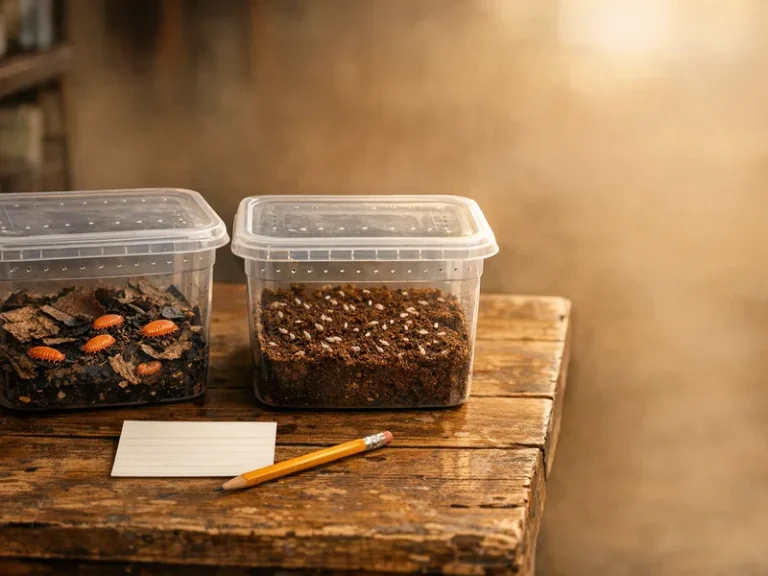
A rescue setup does not need to be fancy, and the point is speed, not a show enclosure. A small, ventilated container, a couple of inches of fresh substrate from our isopod culturing supplies, a handful of leaf litter for cover, and a single damp corner is enough to hold a rescue group while it re-establishes. Feed it on its own schedule with a steady, powdered food the smallest members can reach, since one reason a slower species falls behind in a shared bin is that a coarser or less frequent feeding leaves the smaller, less aggressive animals with nothing once the faster species has already eaten.
If the losing species had no breeding adults left to rescue, treat it as a restart rather than a rescue: a small, hardy species is the easiest way to seed a new bin quickly, and running a short quarantine period before adding it to any other culture is worth the wait even for a species you already keep, since it catches problems before they reach an established colony.
This Is Not the Same as Interbreeding
It is worth being clear about what this guide does not cover. If the two isopods sharing your bin are the same species or the same genus, like two color forms of a Powder isopod, the risk is genetic, not competitive: they will interbreed and blur a pure color line within a few generations, which is harmless to the animals but ruins a line you may have wanted to keep pure. That is a different problem with a different fix, and our guide to mixing isopod species in one bin, linked above, covers it in full before you decide what to combine next.
Losing a Species vs Just Watching One
The Mixed Bin Rescue Kit
Fresh substrate, extra cover, and a dedicated food source to give a crowded-out species its own fair start.
Frequently Asked Questions
Written by the TC INSECTS breeding team · Porter, Texas · Live Arrival Guarantee on every order
Have a care question? Ask our community.
Join Reptile Keepers USA, our free Facebook group for reptile, amphibian and invert keepers. Share your setups, get care help and swap feeder tips.
Join the free group