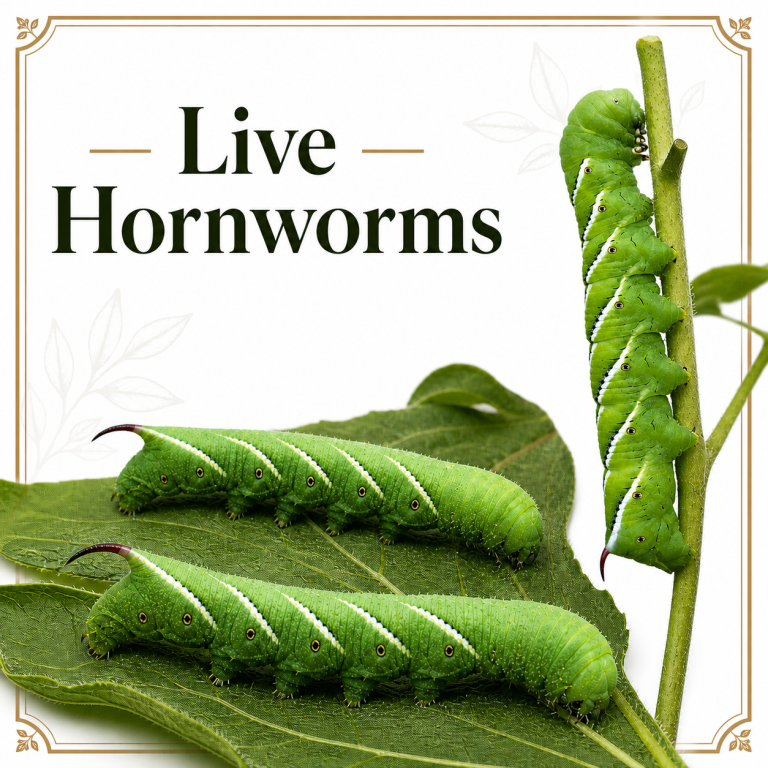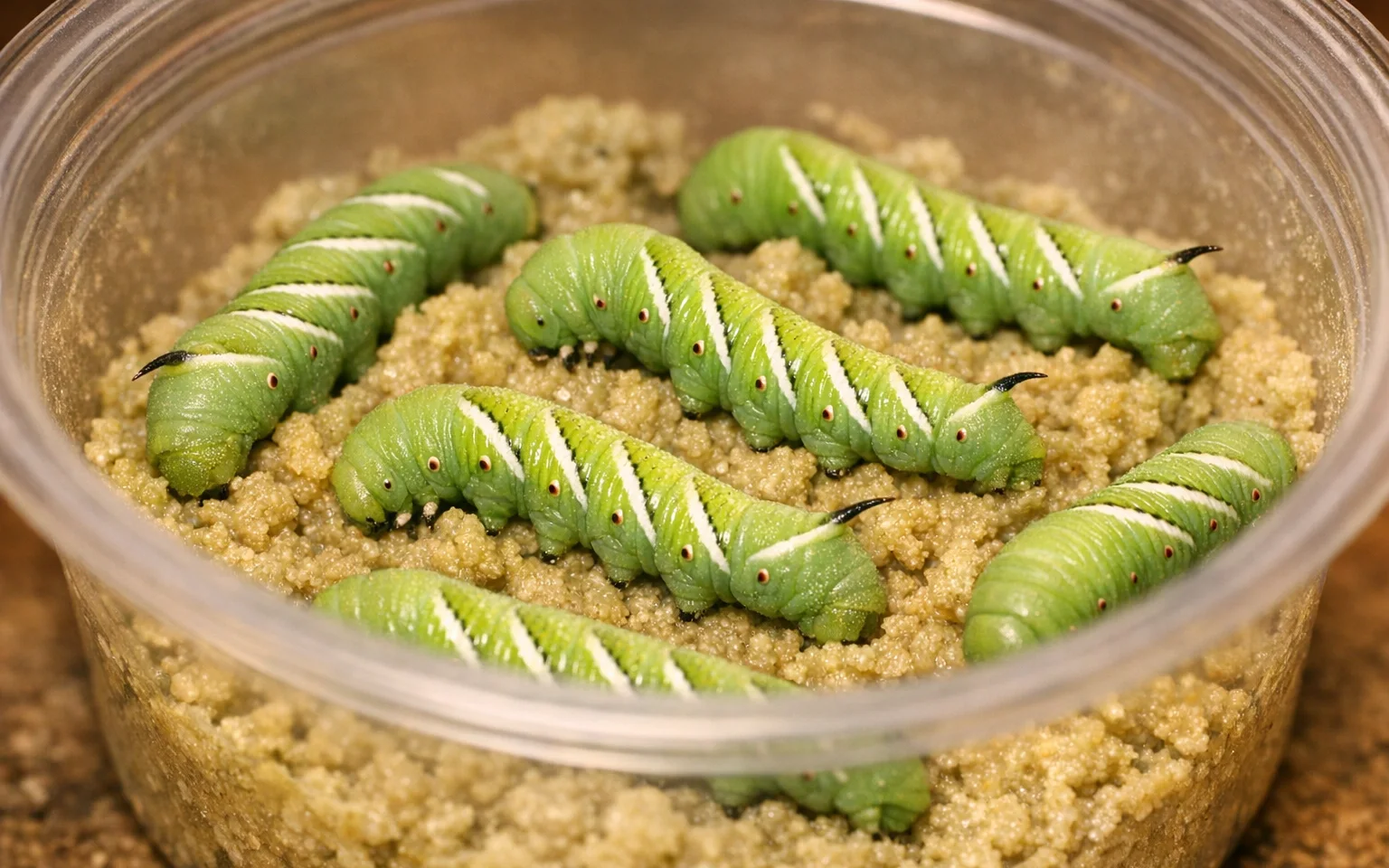
Hornworm Cup Arrival Guide
Why it matters
A hornworm cup is both a shipping container and a short-term feeding system. The prepared chow, ventilation, and cup orientation are designed to work together. Rearranging them immediately can put droppings into the food or trap moisture against the lid. The main planning problem is growth: a small hornworm may become too large for a small reptile quickly.
Setup
Read the cup instructions and confirm the lid is secure, the chow is intact, and air can circulate. Keep the cup out of direct sunlight.
Photograph the cup as received if anything looks wrong. Check the chow, lid, and larvae before changing orientation. Follow the label for how to place the cup, and set it in a stable area away from a sunny window. Mark the date and plan which animals can safely eat each size.
Everyday routine
Check daily for condensation, spoiled chow, and rapidly growing larvae. Follow the supplier’s cup orientation so waste stays away from the food.
What to check and common mistakes
Hornworms grow quickly; plan to feed them while they still fit your animal safely. Remove obviously dead larvae and contact the seller about arrival issues promptly.
Condensation, liquefied chow, or a foul smell are different from normal frass. Remove clearly dead larvae, keep the cup ventilated, and contact customer service promptly if the shipment arrived compromised. Never feed a worm that is too large for the animal just to use it before it grows.
How to inspect a hornworm cup
Read the label and inspect the cup as soon as it arrives. The worms should have access to the prepared chow and enough headroom for movement without being crushed against the lid. A little frass is normal; pooled liquid, foul odor, or mushy worms are not. Keep the cup positioned as directed so waste does not foul the food. Do not add random produce to a commercial hornworm cup unless the supplier’s instructions call for it.
Hornworms grow quickly, so plan feeding days before they outgrow the prey size your animal needs. Rotate the cup gently to check the food and remove any clearly dead worms without handling every healthy one. If a worm darkens and wanders, it may be approaching pupation; compare that behavior with the guide on moth development. A cup kept too warm can race through its useful feeder window, while a dirty cup can fail before the animals are fed.
Keep learning
Use the related guide for full species or product details. Check current store availability before ordering.
Have a care question? Ask our community.
Join Reptile Keepers USA, our free Facebook group for reptile, amphibian and invert keepers. Share your setups, get care help and swap feeder tips.
Join the free group