Mealworm Pupa Care Sheet
Why it matters
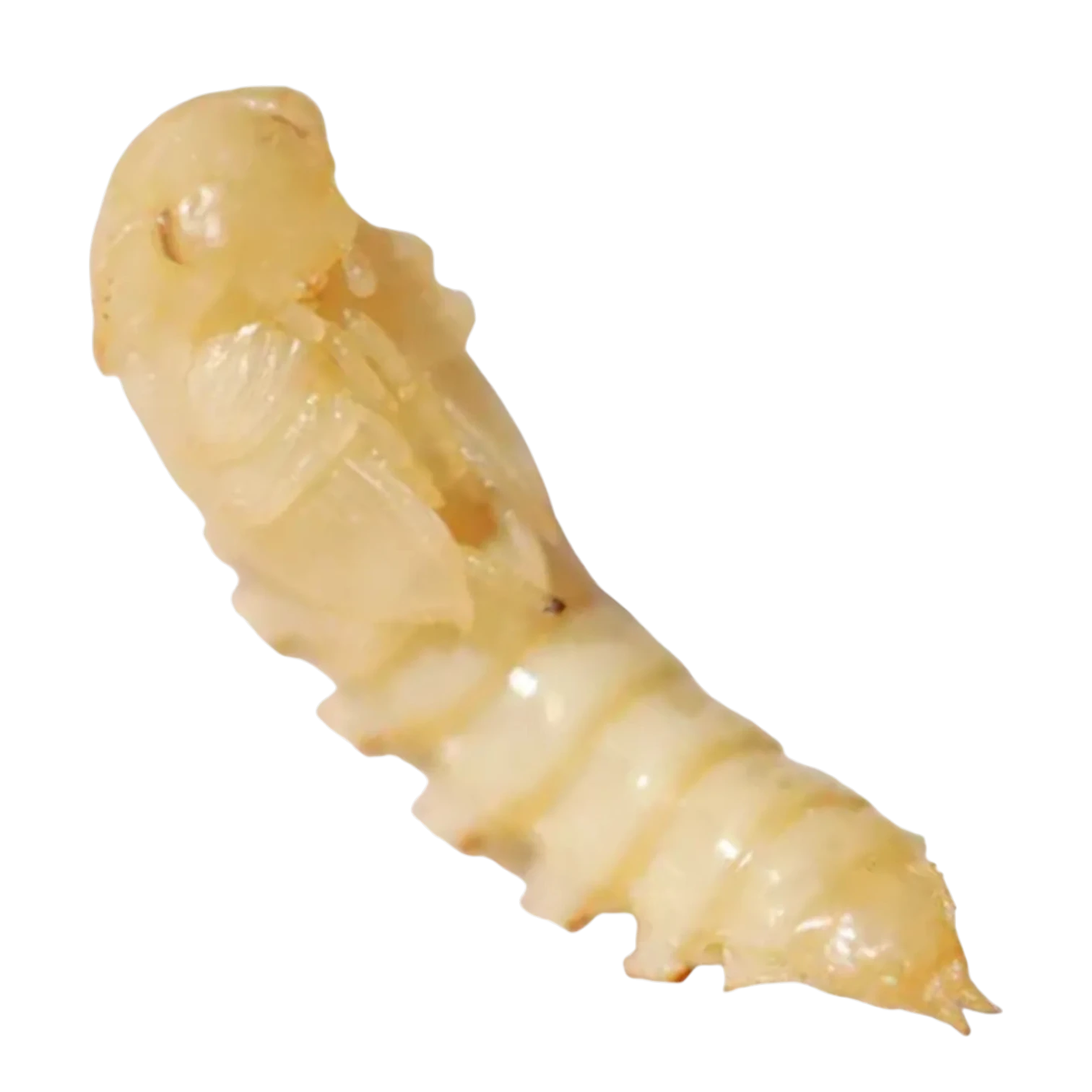
Pupation is the bridge between a feeding colony and a beetle-breeding colony. A larva that stops moving and curls is not automatically dead: mealworm pupae look very different from the familiar worm stage. Separating them lets the keeper observe emergence and gives soft new beetles a less crowded start.
Setup
Move pupae into a separate shallow tray with good airflow. They need a clean, dry resting place and protection from hungry larvae or beetles.
Use a labeled tray for pupae, with enough floor area that they are not stacked. Check it without shaking the pupae, and transfer hardened adults into the beetle breeding bin. Keep a second tray for newly collected pupae if batches emerge on different days. Record dates so you can see whether the colony is developing normally.
Everyday routine
Check the tray regularly and transfer newly emerged beetles into the breeding bin. Avoid handling soft, newly emerged beetles until they harden.
What to check and common mistakes
A pupa can twitch when touched; that does not make it a larva again. Remove any that become visibly moldy, and keep the tray out of direct sun.
Do not put wet produce directly on a pupa. Moisture on a motionless insect encourages mold, and crowding makes inspections harder. A pupa may twitch when lightly touched; look for firm condition and gradual development rather than assuming no movement means death.
What happens after pupation
A pupa is the transition between larva and adult beetle, so it will not crawl or eat like a mealworm. Move it gently to a separate dry tray where larvae cannot disturb it. Leave enough airflow and avoid burying pupae under damp produce. Check the tray daily for newly emerged adults, which may be pale at first and darken as the body hardens. Transfer those adults to the breeding bin once they are active.
Separating life stages makes the colony easier to maintain and troubleshoot. Larvae can be harvested for feeding, pupae protected through transformation, and beetles given a clean breeding area. Record the date of the first pupae and adult emergence so you know whether the colony is moving forward. If pupae discolor badly, smell, or fail in large numbers, review heat, moisture, and crowding before adding more breeding stock.
Keep learning
Use the related guide for full species or product details. Check current store availability before ordering.
Have a care question? Ask our community.
Join Reptile Keepers USA, our free Facebook group for reptile, amphibian and invert keepers. Share your setups, get care help and swap feeder tips.
Join the free group