BSFL Cup Bedding Care Guide
Why it matters
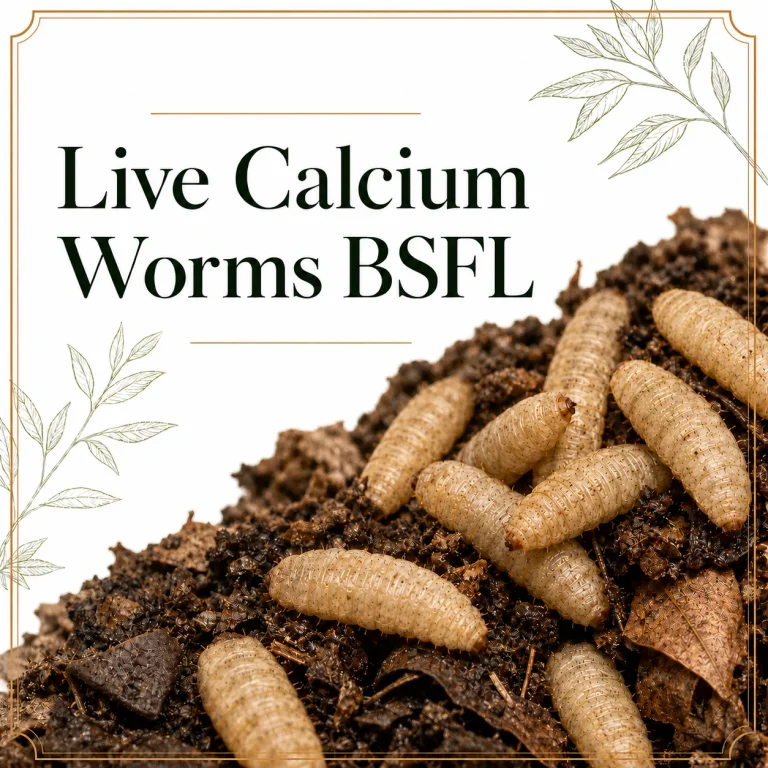
Black soldier fly larvae live in and process their medium, so the goal is balance rather than a spotless dry cup. Too little moisture dries their food; too much turns it anaerobic and foul. Their movement and color also change as they approach the next life stage, so a single wandering larva is not enough to diagnose a crash.
Setup
Leave larvae in a breathable, escape-resistant cup or transfer them to a ventilated bin. Follow the package instructions for the supplied medium.
Keep the medium loose and breathable. Add only small amounts of food if the supplier’s instructions call for it, then wait until the previous portion is being used. Place the cup where temperature is stable and air can move across the lid. Check the underside for pooled liquid and the top for excessive crusting.
Everyday routine
Keep the medium moist enough for the larvae but never soupy. Remove spoiled food and avoid adding large wet scraps that heat up or ferment.
What to check and common mistakes
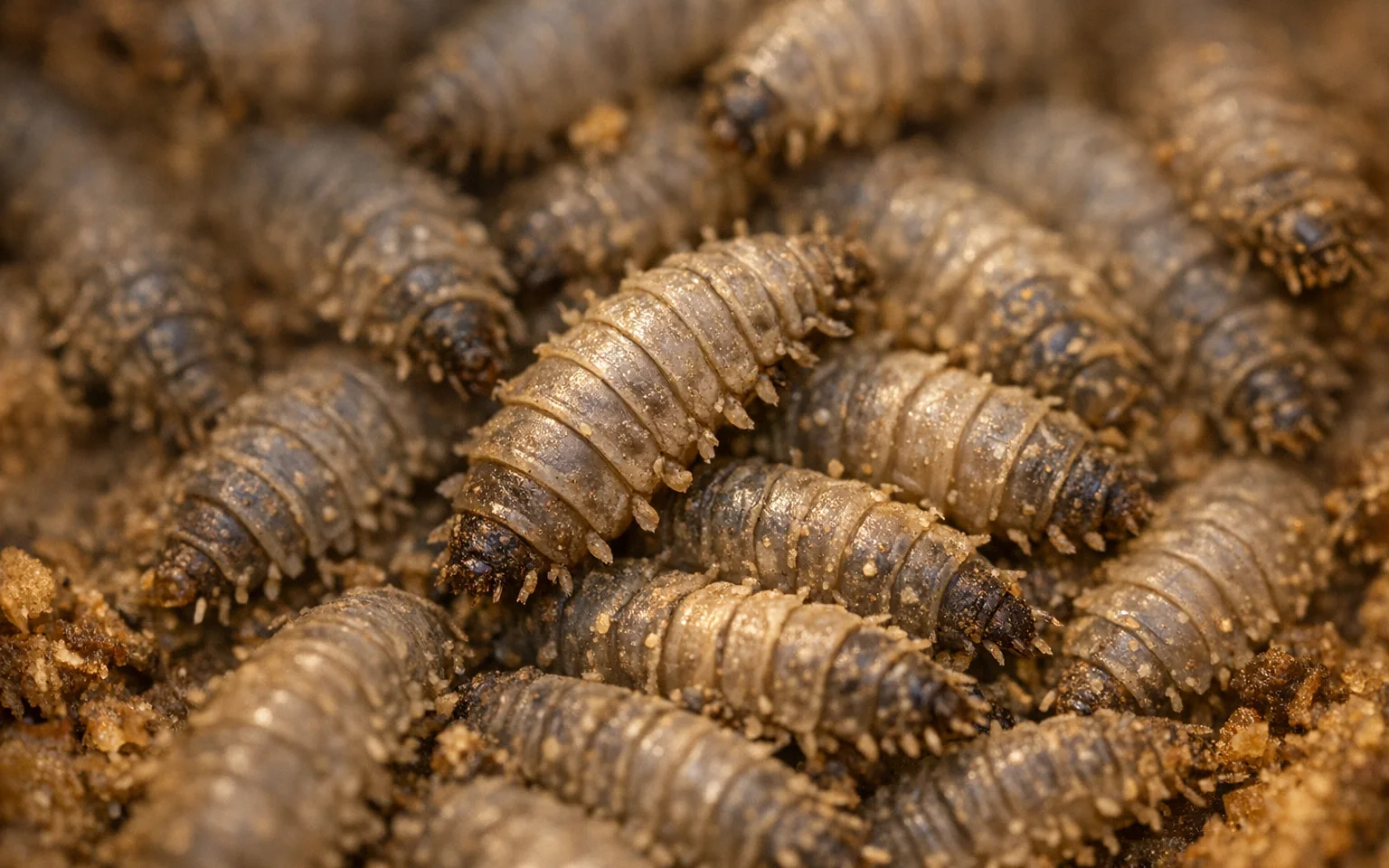
Darkening and wandering can signal a normal change of life stage, but a sour smell or mass die-off calls for a bedding check. Consult the full BSFL guide.
If many larvae climb out together, inspect heat, wetness, and food condition. If the cup smells rotten, remove spoiled material and avoid feeding questionable larvae to a pet. A few darker pre-pupae may be normal; the full care sheet explains the life-stage change.
Reading the bedding
The bedding in a black soldier fly larva cup should be workable, not wet sludge. Tip the cup gently to see whether the larvae are distributed through the medium and whether moisture is collecting at the bottom. Avoid adding free water. If the medium smells sharply sour or appears waterlogged, remove the bad material and move healthy larvae to a clean, appropriate holding cup. A few wandering larvae can be part of normal development, but many climbing at once warrant a check of the medium.
Keep a breathable lid secure and protect the cup from direct sun. At feeding time, use a spoon or sifter to separate a small portion from the bedding and offer larvae in a dish where the animal can find them. Discard uneaten larvae according to the pet’s care routine. Regular small inspections are easier and safer than waiting until the medium has clearly spoiled.
Keep learning
Use the related guide for full species or product details. Check current store availability before ordering.
Have a care question? Ask our community.
Join Reptile Keepers USA, our free Facebook group for reptile, amphibian and invert keepers. Share your setups, get care help and swap feeder tips.
Join the free group