

Porcellio hoffmannseggii Orange Isopods for Sale
TC INSECTS ships live captive-bred Porcellio hoffmannseggii “Orange” as a mixed-size starter group for display cultures and dedicated Titan morph collections. This is the selectively bred orange color morph of the standard Titan isopod. Therefore, care, behavior, and adult size are identical to standard *P. hoffmannseggii*. The color morph is the only material difference.
Overview
Brandt described Porcellio hoffmannseggii in 1833 from the southern Iberian Peninsula. The species is native to Spain, Portugal, Morocco, and the Balearic Islands. It is one of the largest common terrestrial isopods in the hobby, with adults reaching up to about 40 mm. The “Orange” form is a captive color variety that has been selectively isolated from standard grey stock.
What Makes Orange Different from Standard Titans
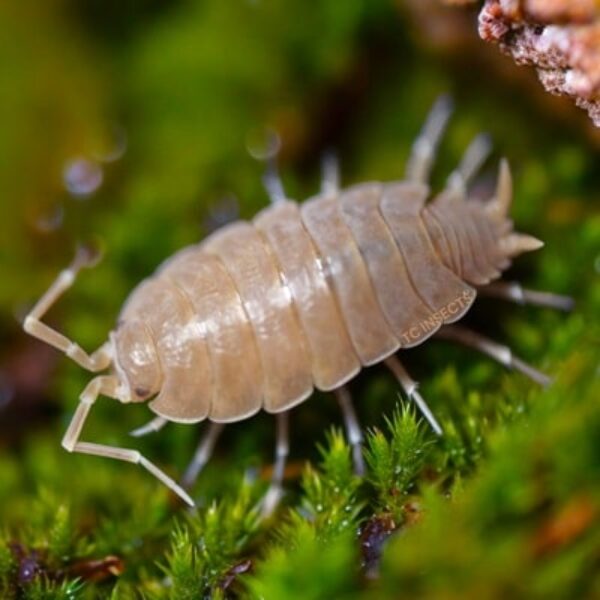
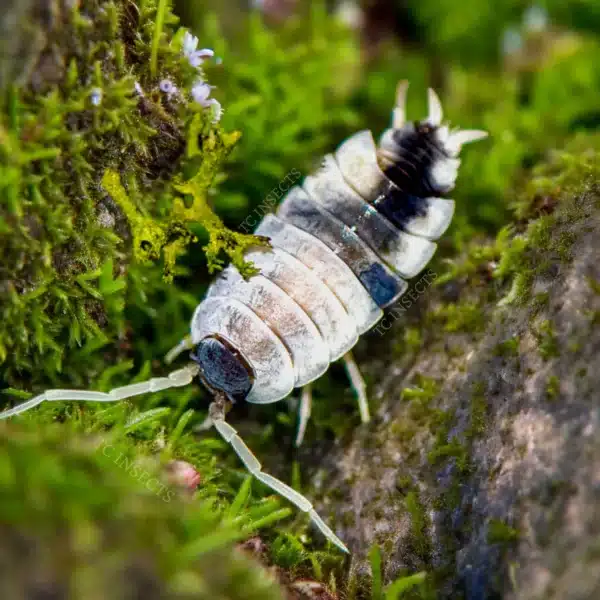
Standard P. hoffmannseggii runs charcoal grey to dark brown with a pale white skirt along the body edge. The Orange morph, in contrast, shows vivid orange pigmentation throughout — including the antennae. Additionally, this morph breeds true. Two orange parents reliably produce orange offspring. As a result, the Orange morph can be maintained as a stable color line when kept in a dedicated culture without mixing with standard grey stock.
The orange coloring also has a practical display advantage. Because these are a large, territorial species, the bright color makes behavioral interactions — posturing between males, foraging patterns, and movement across the enclosure — much easier to observe than in charcoal-colored individuals on dark substrate.
Honest Note: Spelling and Same-Species Status
The accepted scientific name is Porcellio hoffmannseggii — two f’s, two g’s, and two i’s at the end. The hobby commonly circulates several short forms: “hoffmannseggi” (one i), “hoffmanseggii” (one f), and other variants. All refer to the same species. TC INSECTS uses the correct two-i spelling throughout this page.
Additionally, “Orange” is not a separate species or a distinct locale. It is a selectively bred color morph of the standard Titan. Therefore, if you already own standard Titan isopods, adding Orange gives the same keeping experience in a vivid color. The specific reason to choose Orange over standard Titan is the morph color, the breeds-true genetics, and the display visibility advantage.
Honest Note: Mixing Orange and Standard Titans
The Orange morph breeds true — orange × orange offspring will be orange. However, if Orange individuals are kept with standard grey Titans, offspring in later generations will likely show mixed or intermediate coloring. As a result, keepers who want to maintain a pure Orange line should keep this morph in a dedicated bin separate from their standard Titan culture.
Mixing both morphs is not harmful to the animals. However, it makes it harder to preserve the distinct orange line over time.
Care and Setup
Setup Framework
Care for P. hoffmannseggii “Orange” follows the same framework as standard Titans: dry-leaning overall with one moist corner, strong ventilation, generous floor space for territorial males, and continuous calcium access. Below, each section covers the details specific to keeping this large morph successfully.
Temperature
Hold the culture between 68 and 78°F. Stable room temperature suits most setups well. Avoid direct sun, cold drafts, and heat lamps aimed at the container. Generally, a stable ambient room temperature in the low to mid 70s works reliably for this species year-round.
Humidity
Keep roughly one-third of the enclosure moist with sphagnum moss and rotting wood. Let the remaining two-thirds stay dry with leaf litter, cork bark, and good airflow. The moist corner must always be available for hydration and molting. However, avoid spreading dampness across the whole enclosure.
Stagnant moisture combined with poor airflow is one of the most reliable ways to stress a Titan colony of any color. Therefore, ventilation and the dry zone matter as much as the moist corner itself.
Space and Hides
Large Porcellio species need more floor space than dwarf or small cleanup crew species. Males establish and defend territories, so the enclosure should offer multiple separate hides spread across both the dry and moist zones. A minimum 15 to 25 liter bin suits a starter culture. Furthermore, territorial confrontations between males become more visible in an Orange morph culture precisely because the color makes them easier to spot and follow during posturing and movement.
Food
Keep dried hardwood leaf litter and rotting white wood available at all times. These form the base of the diet. On top of that, offer small amounts of vegetables two to three times per week. Carrot, squash, sweet potato, and zucchini all work well.
Additionally, rotate in a light protein source such as TC INSECTS Isopod Food, fish flakes, or dried shrimp two to three times per week. Remove uneaten fresh food within 24 to 48 hours. Also keep TC Calcium Ultra Fine, cuttlebone, or crushed eggshell available at all times. Continuous calcium access is especially important for a species this size, since larger molts consume more calcium per individual.
Ventilation
Use a fully ventilated lid plus cross-vents on the sides. Strong airflow suits this dry-leaning species. In particular, stagnant air with standing moisture causes slow colony stress more reliably in large Porcellio than in smaller species. A large bin with proper cross-ventilation outperforms a small sealed container for this morph.
Bioactive Use
The Orange morph suits dry to semi-dry bioactive setups with generous floor space, bark hides, and strong ventilation. It does not suit wet or humid vivariums. For bioactive use, first add TC INSECTS Assorted Hardwood Leaf Litter before introducing the colony. Then pair with Springtails to manage the moist corner and fine organic debris.
Breeding Notes
Females carry developing young in a marsupium and release pale mancae once ready. The colony breeds at a moderate pace once settled, slower than common cleanup crew species but steadily in the right conditions. Furthermore, because the Orange morph breeds true, offspring from this culture will develop the vivid orange coloring of the parents as they mature.
To support breeding, keep calcium available at all times, maintain the moist corner, provide rotting wood throughout, and minimize substrate disturbance. Additionally, males need enough space and enough separate hides to reduce territorial stress during the post-molt window when freshly molted adults are soft.
As the colony grows, provide more floor space or split into a second container. Splitting also protects the morph line by creating a backup culture.
Best For
- Display cultures where full-body vivid orange — including orange antennae — is the visual goal
- Titan morph collections alongside standard Titans for color contrast in separate bins
- Keepers who want to maintain a true-breeding color line over generations
- Intermediate keepers comfortable with territorial male management and dry gradient care
- Dry to semi-dry bioactive setups where orange adults against dark substrate provide clear visual feedback on colony activity
- Patient breeding projects where color morph genetics add long-term interest
Not Best For
- First-time isopod keepers. Start with Dwarf Whites, Powder species, or Giant Canyons first.
- Wet or humid vivariums. This morph shares the dry-gradient requirements of all Titans.
- Small sealed containers. Territorial males and large adult size both require generous floor space.
- Keepers who plan to house Orange with standard grey Titans and still expect orange offspring. Mixed cultures will produce mixed colors over time.
- Feeder use. Size, moderate breeding pace, and price point make them unsuitable as reptile food.
Origin Notes
Porcellio hoffmannseggii is native to the southern Iberian Peninsula, Morocco, and the Balearic Islands. The Orange morph is a captive color variety with no documented separate wild locality. TC INSECTS describes this as a selectively bred form of the species rather than assigning it a geographic origin distinct from the standard Titan.
However, the Iberian origin of the species matters for care. It explains the preference for dry-leaning conditions, warm stable temperatures, and strong airflow rather than the moderate or high humidity that tropical species need.
Receiving and Acclimation
Open your package soon after delivery in a calm indoor area. Inspect the culture carefully. Move the packing material directly into the prepared enclosure rather than picking out individuals, since juveniles are easy to miss.
First Week Priorities
Prepare the enclosure before opening the culture. The dry zone should feel genuinely dry. The moist corner should be in place with sphagnum moss and rotting wood. Place leaf litter, multiple bark hides, and a calcium source before adding the isopods. Then set them near the moist corner under cover and leave them mostly undisturbed for the first week.
Hiding after shipping is normal for this species. Activity increases once the colony settles, particularly during low-light periods and after fresh food is added.
Recommended Add-Ons
- TC INSECTS Isopod Food for regular protein rotation and balanced supplemental nutrition.
- TC INSECTS Assorted Hardwood Leaf Litter as the primary food and cover layer including rotting wood.
- TC INSECTS Ultra Isopod Habitat Kit for a richer starter setup with generous space and structure for a large territorial species.
- TC Calcium Ultra Fine for continuous calcium support through large adult molts.
- Springtails to manage the moist corner and fine debris alongside the Orange morph colony.
Frequently Asked Questions
What is the difference between Orange Titans and standard Titans?
The only biological difference is color. Standard P. hoffmannseggii runs charcoal grey to dark brown with a pale white skirt. The Orange morph shows vivid orange throughout, including the antennae. Care, size, behavior, and temperament are identical. Additionally, the Orange morph breeds true — orange parents reliably produce orange offspring — which is a feature standard grey stock does not offer as a selling point.
What does “breeds true” mean?
It means that offspring from two Orange parents will develop the orange coloring of the parents. Therefore, a dedicated Orange culture maintains its color over generations without producing grey individuals. However, if you mix Orange with standard grey Titans, offspring in subsequent generations may not be orange. Keeping the morph lines separate is the only way to preserve color purity over time.
Can I keep Orange Titans with standard grey Titans?
Yes, without harm to the animals. Both are the same species and mix without conflict. However, the offspring of mixed pairings may not be orange. Therefore, if maintaining the Orange color line matters to you, house the two morphs in separate bins. If color purity is not a concern, keeping them together is fine.
How does this compare to Porcellio magnificus for an orange display culture?
Magnificus is a distinct species, not a Titan morph. Both are vivid orange adults. However, magnificus is smaller (up to about 1.5 inches), requires a truly dry setup, has a light feeding response, and shows white-to-orange juvenile development. The Orange Titan is larger (up to 40 mm), more forgiving in humidity, eats more readily, and is entirely orange at all adult stages. Both are intermediate-to-advanced species with slow breeding and territorial behavior.
Why does the product title sometimes show “hoffmannseggi” with one i?
The hobby has circulated several short forms of this species name for many years: “hoffmannseggi” (one i), “hoffmanseggii” (one f), and others. All refer to the same species. The accepted scientific name is Porcellio hoffmannseggii Brandt, 1833 — two f’s, two g’s, and two i’s. TC INSECTS uses the correct spelling in product page text. The one-i short form is so widespread in hobby search terms that both forms find this page effectively.
Are Orange Titans beginner-friendly?
No. Like all Titans, this morph needs a dry-leaning gradient, strong ventilation, generous floor space for territorial males, and continuous calcium access. These requirements make it an intermediate-level species. Start with Dwarf Whites, Powder species, or Giant Canyon isopods if you are new to the hobby, then work up to Titans once those cultures are running well.
Learn More About Porcellio hoffmannseggii
These sources give useful context on the taxonomy, natural range, and biology behind this species and its care needs.
- WoRMS: Porcellio hoffmannseggii Brandt, 1833. The World Marine, Freshwater and Terrestrial Isopod Crustaceans database entry for the species, confirming the correct spelling, author citation, and distribution on the Iberian Peninsula and North Africa. Useful for verifying the two-i correct form of the species name and the subspecies structure that includes the nominal form and P. magnificus.
- iNaturalist: Porcellio hoffmannseggii. Community observation records and habitat photographs from the species’ native Iberian and North African range. The images show the dry rocky and scrubland environments that explain why a dry-leaning gradient with strong airflow suits this species better than moderate or high ambient humidity setups.
- PMC / NCBI: Water conservation in terrestrial isopods. Peer-reviewed research on how isopod breathing structures interact with humidity and water loss. This paper explains in clear terms why a dry overall enclosure with a small moist corner, rather than general moderate humidity, suits a large dry-adapted Iberian Porcellio species like this one.


Reviews
There are no reviews yet.