

Cubaris White Panda Isopods for Sale
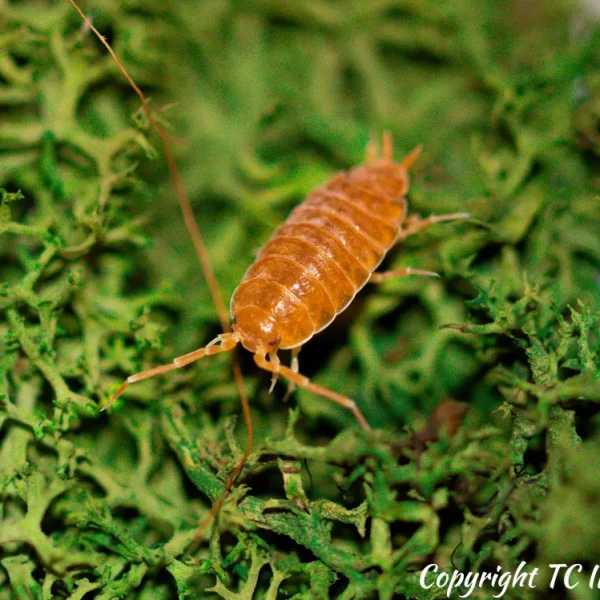
Cubaris sp. “White Panda” is a tropical Cubaris-type isopod sold for its sharp white-and-dark contrast and rounded body shape. The pattern is the entire reason hobbyists buy this species, so the page below treats it as a display and collection animal rather than a cleanup crew workhorse.
Each starter culture ships as a mixed-age group so the colony can settle and breed at its own pace. Because the species is sold under an unconfirmed designation, this page focuses on practical captive care rather than wild-locality claims.
Overview
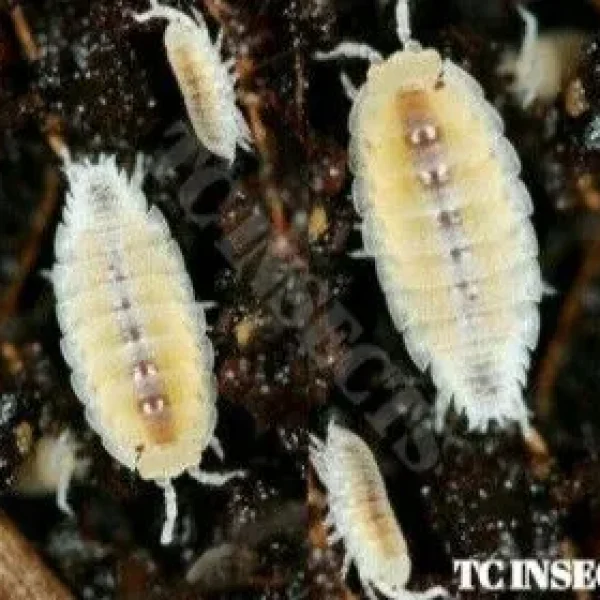
White Panda isopods carry a bright white base with darker panda-style markings on the dorsal plates. The contrast reads well in display jars, especially against dark substrate, dark bark, and moss. As a result, this species photographs better than many warmer-toned Cubaris.
However, the colony is not a fast cleanup crew. Expect a slow first stretch after arrival, followed by steady growth once conditions stabilize. Treat them as a patient display project, not a quick-build bioactive seed.
Why Keep Cubaris White Panda Isopods?
- High-contrast pattern: White-and-dark markings stand out against dark substrate and bark in display bins.
- Collector appeal: Adds a recognizable Cubaris pattern to a tropical isopod lineup.
- Compact size: Small adults fit well in display jars and planted vivariums.
- Curl response: Tight conglobation makes them easy to photograph in their classic curled pose.
- Long-term project: Suits keepers who enjoy watching a Cubaris colony build slowly over many months.
Honest Note on Pattern Variation
The panda pattern varies between individuals. Some isopods show heavy dark markings, while others lean almost fully white with smaller dark patches. Therefore, a starter culture will not look uniform, and photos online may show only the cleanest individuals. The pattern also shifts slightly between molts, especially in younger animals.
If you want a warmer-toned Cubaris instead of a contrast-based one, Cubaris Amber Isopods are a better fit. For a confirmed-species tropical Cubaris with a softer gray-tan tone, consider Cubaris Murina “Little Sea” Isopods.
Honest Note on Species Identification
This isopod is sold as Cubaris sp. “White Panda” because the exact species is not confirmed in the hobby trade. The name should be treated as a hobby trade designation rather than a described species. Because of this, the wild locality is not documented and this page does not claim one. Captive care is based on general tropical Cubaris husbandry instead.
Honest Note on Slow Establishment
New keepers often message us thinking their culture is empty during the first few weeks. This is normal. White Panda isopods hide deep after shipping, and juveniles stay tucked under bark and leaf litter for a long time before they appear at the surface. Therefore, resist the urge to dig through the bin. The colony is almost always larger than it looks.
Care and Setup
White Panda isopods do best in a stable tropical setup with a clear moisture gradient. Keep one side moist and the other slightly drier so the colony can pick its preferred zone. The subsections below cover the core requirements.
Temperature
Hold the enclosure between 72 and 78°F. Short dips outside this range are usually fine, but sustained heat above 80°F can stress the colony. Avoid heat lamps, vents, and sunlit windows.
Humidity
Aim for moderate to high humidity with a reliable moist retreat. However, leave one corner slightly drier under bark so the isopods can pick their level. Soaking the entire bin is the most common care mistake with this species.
Substrate
Use a deep, dark organic substrate at least 2 to 3 inches thick. Mix in decaying hardwood, leaf litter, and a small amount of sphagnum. In addition, dark substrate makes the panda contrast pop, which is the entire visual reason to keep this species.
Food
Offer leaf litter and decaying wood as the base diet. Add small portions of TC INSECTS Isopod Food, occasional vegetables like squash or carrot, and very light protein. Remove uneaten wet food before it molds.
Ventilation
Use moderate ventilation. A few small air holes or a partial mesh lid will keep airflow steady without drying the culture too fast. Stagnant air encourages mold and mites in humid Cubaris setups.
Calcium
Keep calcium available at all times. A small dish of TC Calcium Ultra Fine or crushed cuttlebone supports healthy molts. This matters more for Cubaris than for common cleanup isopods.
Bioactive Use
White Panda isopods can work in tropical bioactive setups, but they should not be the only cleanup species. Pair them with Springtails or a faster isopod for daily mold and biofilm work.
Breeding Notes
White Panda isopods breed slowly to moderately once stable. Females carry developing young in a marsupium, and mancae stay under bark and leaf litter for weeks after release. Therefore, deep substrate digs and frequent disturbance will stall a culture faster than almost any other care mistake.
For steady output, hold humidity stable, keep TC INSECTS Assorted Hardwood Leaf Litter available year-round, and refresh decaying wood as it breaks down. In addition, give the colony at least two to three months before expecting visible population growth.
Best For
- Cubaris collectors building a high-contrast isopod lineup
- Display cultures kept in clear bins or jars with dark substrate
- Planted vivariums with stable tropical humidity
- Intermediate keepers ready for a patient colony
- Long-term breeding projects focused on a patterned Cubaris line
Not Best For
- New keepers who want a fast, forgiving starter culture
- Dry desert-style enclosures with no humid retreat
- Heavy cleanup crew duty in large reptile enclosures
- Use as a feeder insect
- Mixing with predators that will eat the small starter group before it establishes
Origin and Locality Notes
The exact wild origin of Cubaris sp. “White Panda” is not clearly documented in the hobby trade. The line is broadly associated with Southeast Asian Cubaris stock, but the precise locality should not be treated as confirmed. Because of this, captive care should focus on stable tropical conditions rather than mimicking a specific wild habitat.
In practice, that means warm temperatures, steady humidity, deep organic substrate, decaying hardwood, leaf litter, and calcium access. This setup style works for most tropical Cubaris-type isopods sold under unconfirmed trade names.
Receiving and Acclimation
Open the package promptly when it arrives. Many isopods will tuck into moss, paper, or substrate during shipping, so check the packing material carefully before assuming any are missing. Curled or slow-moving isopods after transit are normal and usually recover within a day.
Prepare the enclosure ahead of delivery. Place the shipping cup or packing material directly into the prepared bin and let the isopods walk out on their own. As a result, the colony stays less stressed and juveniles are protected. Feed lightly for the first few days and avoid disturbing the culture while it settles.
Recommended Add-Ons
- TC INSECTS Ultra Isopod Habitat Kit for a richer, more stable Cubaris setup from day one.
- TC INSECTS Assorted Hardwood Leaf Litter for cover, food, and humidity support.
- TC INSECTS Isopod Food for varied nutrition beyond leaf litter alone.
- TC Calcium Ultra Fine for healthy molts and exoskeleton support.
- Springtails for mold control and faster bioactive cleanup pairing.
Frequently Asked Questions
Are Cubaris White Panda isopods beginner-friendly?
They sit in the intermediate range. Careful beginners can keep them, but they need stable humidity, a real moisture gradient, calcium access, and patience while the colony settles. For a faster starter, Dwarf White Isopods are a better fit.
How fast do White Panda isopods breed?
Reproduction is slow to moderate. Expect a quiet first one to three months while the culture settles, then steady growth once conditions stabilize. Frequent digging and dry spells are the most common reasons hobby colonies stall.
Why does the colony look empty after I open the cup?
Hiding after shipping is normal. White Panda isopods tuck into moss, paper, and substrate during transit and often stay under cover for the first few days. Place the shipping material directly into the prepared bin and check again in a week.
How does White Panda compare to Cubaris Amber?
White Panda is built around white-and-dark contrast, while Cubaris Amber Isopods are built around warm honey-amber color. Both sit at intermediate care level. Pattern-focused collectors usually prefer White Panda, while color-focused collectors usually prefer Amber.
How does White Panda compare to Cubaris Murina?
Cubaris Murina “Little Sea” is a confirmed species with a softer gray-tan tone and similar care needs. White Panda is sold under an unconfirmed trade designation and is bought for its sharper contrast pattern. Care is broadly similar.
Will every isopod look the same?
No. The panda pattern varies between individuals, and markings can shift slightly between molts. Some animals show heavy dark patches, while others lean mostly white. A starter culture will show a mix.
Learn More About Cubaris Isopod Care
The following non-commercial references give helpful background on terrestrial isopod biology and tropical enclosure care for keepers buying their first patterned Cubaris culture.
-
UC ANR IPM: Pillbugs and Sowbugs. Useful background on terrestrial isopod biology and moisture needs, which transfers directly to keeping tropical Cubaris in captivity.
-
British Myriapod and Isopod Group: Isopod Identification Keys. Helpful for understanding how isopod species are formally described, which clarifies why unconfirmed trade names like “White Panda” stay under Cubaris sp. designations.
-
MSD Veterinary Manual: Reptile Husbandry. Practical guidance on humidity and ventilation balance for tropical enclosures, which applies when adding isopods to bioactive reptile or amphibian setups.


Reviews
There are no reviews yet.