
Cubaris White Shark Isopods for Sale
Overview
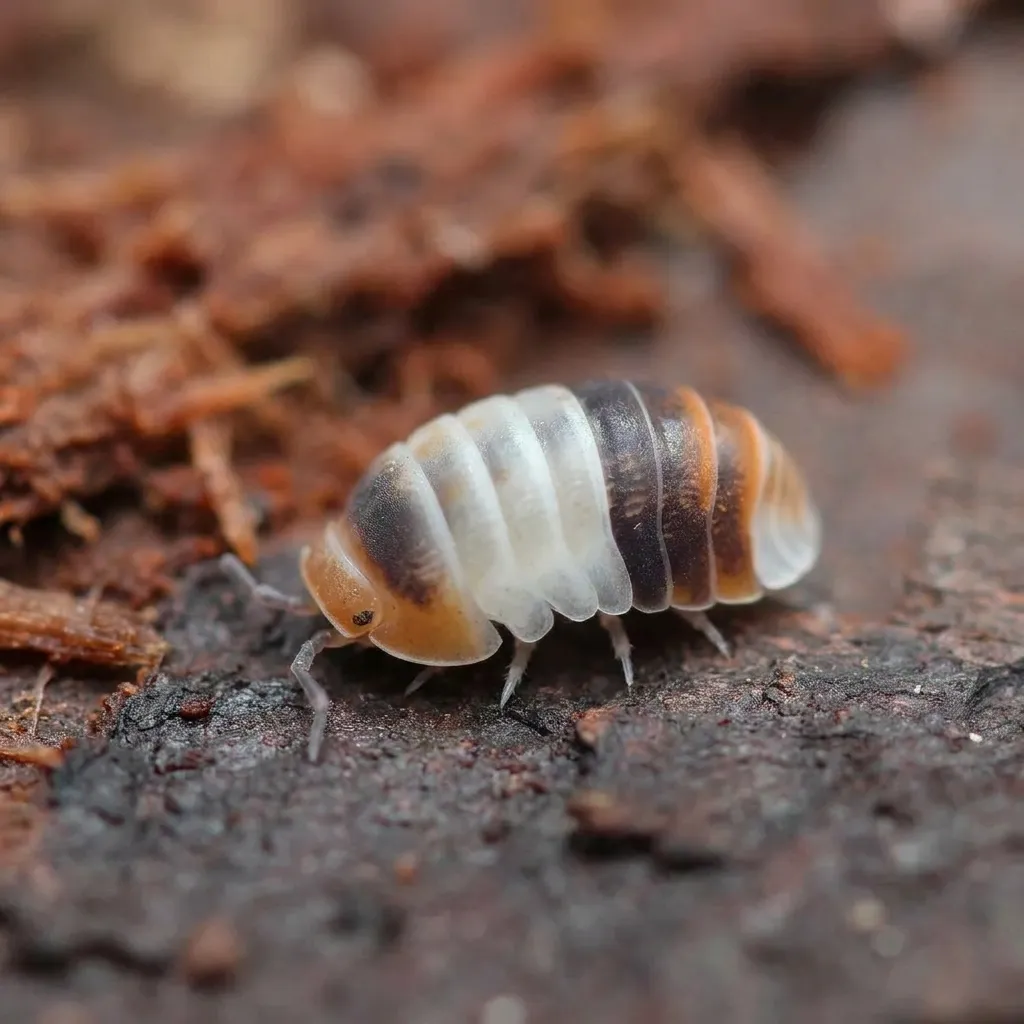
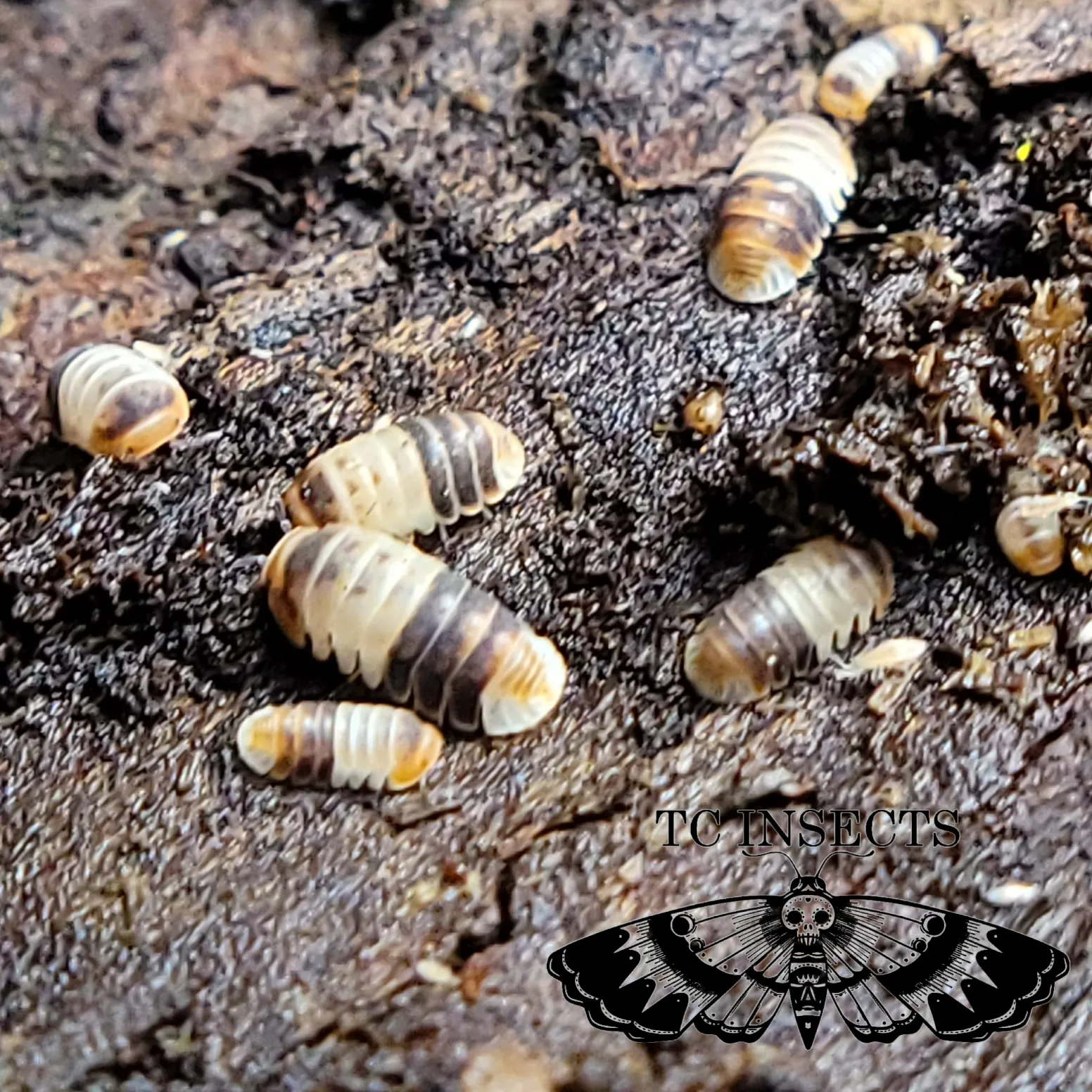
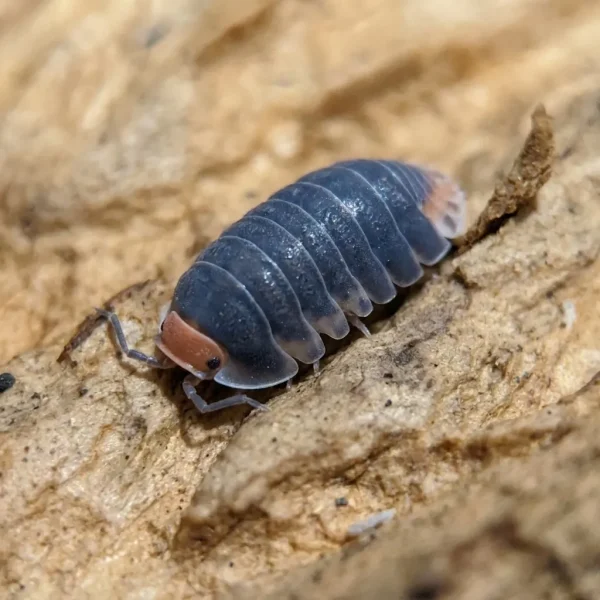
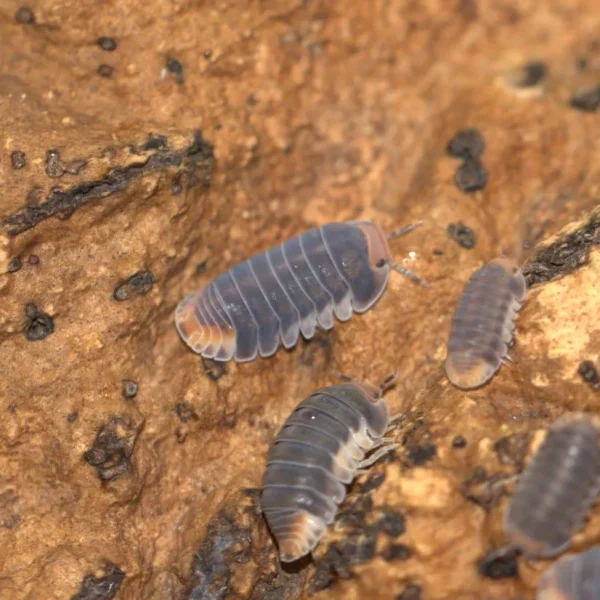
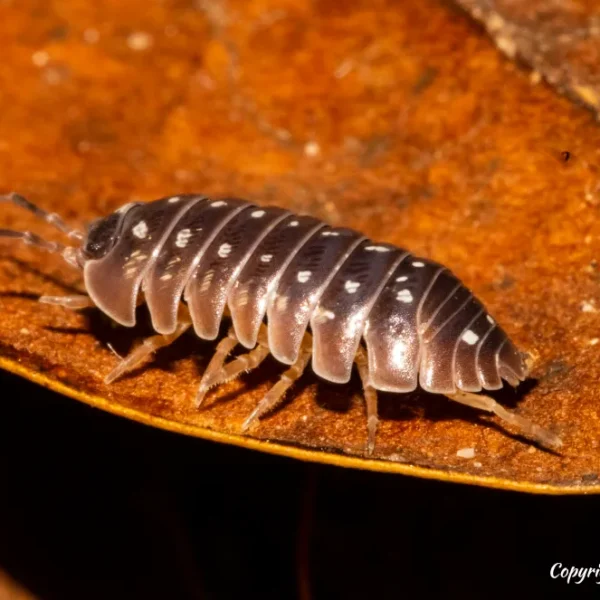
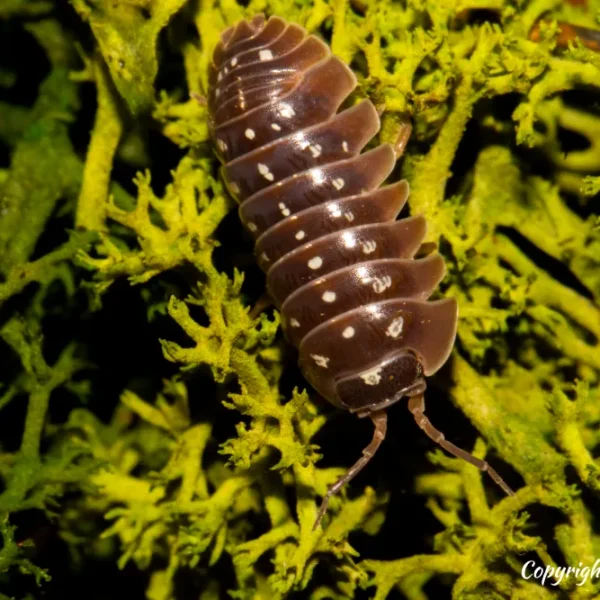
Cubaris sp. “White Shark” is a top-tier collector morph in the Cubaris genus, sold in the hobby trade for its bold black and white contrast pattern that loosely resembles shark markings. Adults reach roughly 1 cm, which is smaller than many other Cubaris species like Panda King or Pak Chong. The combination of compact size and dramatic contrast pattern is the main reason this morph sits in the collector tier rather than the working cleanup tier.
This is one of the highest-priced isopods in our catalog, and pack sizes are capped at 5 or 10 individuals to reflect the genuine rarity of the line. Cubaris as a genus also requires more attention than the Powder species or dwarf cleanup isopods. Therefore, this product is built for established collectors who already understand Cubaris husbandry rather than first-time isopod buyers.
Why Keep Cubaris White Shark?
Customers usually pick this morph for one or more of these reasons:
- Bold contrast pattern at small size. First, the black and white markings read sharply against dark naturalistic substrate. As a result, White Shark holds visual impact in a display culture even at the 1 cm adult size.
- Compact Cubaris footprint. Next, the smaller body size suits keepers who want a Cubaris morph but do not have room for a larger species. Therefore, a single 6-quart bin can house a working breeding colony.
- Moderate to strong reproduction. Additionally, White Shark breeds noticeably faster than many other Cubaris species once a starter group is established. This makes it more attainable as a breeding project than some of the slower collector morphs.
- Genuine rarity. Finally, this line is harder to find than common Cubaris species. Accordingly, adding White Shark to a collection brings real variety to a varied Cubaris lineup.
Honest Note for First-Time Cubaris Buyers
If this is your first Cubaris species, the per-isopod price means a husbandry mistake costs significantly more than the same mistake with a Powder Blue or Dwarf White culture. Cubaris generally needs higher humidity, deeper substrate, more bark and leaf litter cover, and a stable temperature range. They are not as forgiving as the Powder species when conditions swing. Therefore, many keepers start with a less expensive Cubaris like Murina “Little Sea” or Murina “Papaya” to learn the genus before stepping up to a top-tier morph like White Shark.
Care and Setup
Cubaris care is more demanding than most Powder species, but White Shark is not the most difficult Cubaris in the trade. Stable high humidity, deep substrate, plenty of cover, and patience produce the best results. Moreover, the moderate to strong reproduction rate means a well-cared-for colony rewards the investment more reliably than some other top-tier Cubaris lines.
Temperature
Aim for 72 to 80°F. The species prefers stable warmth and does not tolerate cold drops or sudden swings. Avoid placing the culture near windows, vents, or in unheated rooms during cooler months. A consistent room-temperature setup usually works well.
Humidity
Aim for high humidity with consistently moist substrate. One side should always be wet with sphagnum moss and damp substrate, while the other side can run slightly less wet with leaf litter and bark. However, never let the entire enclosure dry out. Cubaris White Shark tolerates drying poorly compared to the Powder species.
Substrate
Use a deep, moisture-retaining substrate blend. Coconut fiber mixed with flake soil, decayed hardwood, and a sphagnum moss layer works well. Then top with deep leaf litter and several pieces of cork bark or hardwood. In addition, add calcium sources such as TC Calcium Ultra Fine, crushed cuttlebone, eggshell, or limestone. Calcium availability is especially important for the bold pattern to hold across successive molts.
Food
White Shark feeds on decaying plant matter as the base diet. Leaf litter, decaying hardwood (avoid pine and cedar), magnolia pods, and cork bark surfaces should always be available. Add small portions of vegetables like carrot, squash, sweet potato, or mushroom. Protein sources like shrimp meal, fish flakes, dried minnows, or insect frass support reproduction. Alternatively, a prepared balanced diet like TC INSECTS Isopod Food simplifies feeding and adds calcium support. Feed lightly and remove uneaten food before mold takes hold in the humid enclosure.
Ventilation
Gentle ventilation works best. Sealed bins crash with mite blooms, especially in the high-humidity conditions Cubaris needs. However, heavy ventilation dries the culture out fast at this moisture target. A vented lid with small mesh or carefully sized slots strikes the right balance.
Disturbance
White Shark hides under bark and leaf litter most of the time, and frequent disturbance stresses the colony. Therefore, set up the culture well, then leave it mostly alone. Check moisture and food weekly rather than daily. The colony will be more visible during quiet evening hours when the enclosure is undisturbed.
Breeding Notes
White Shark breeds at a moderate to strong rate once a starter group is established, which is unusual for top-tier Cubaris. Many other rare Cubaris species reproduce slowly enough that a colony takes a year or more to grow visibly. White Shark builds population faster than that when conditions are stable. Generally, expect several months for the initial settling phase, then steady population growth with consistent calcium, humidity, leaf litter, and minimal disturbance. Females carry developing young in a brood pouch under the body.
Best For
- Established Cubaris keepers ready for a top-tier morph
- Display vivariums where bold black and white contrast suits dark naturalistic substrate
- Dedicated breeding bins targeting a rare designer line
- Collectors building a varied Cubaris lineup across multiple morphs
- Keepers who want a smaller Cubaris that fits in a 6-quart bin without crowding
Not Best For
- First-time isopod keepers, since the price tier and Cubaris husbandry are not forgiving of beginner mistakes
- Cleanup crew use, since the per-isopod price is far too high for working cleanup and the culture should not be exposed to large dirty enclosures
- Feeder use, since the price per individual rules out any feeder application
- Drier reptile enclosures, since White Shark requires high humidity that those setups cannot maintain
- Sealed, no-ventilation tubs, which crash humid Cubaris cultures with mites faster than they crash drier-tolerant species
- Mixed-species bioactive setups with larger isopods that may outcompete this morph
Origin and Locality Notes
The Cubaris genus contains a wide range of tropical and subtropical species, many originating from Southeast Asia. White Shark is commonly associated with Thailand in the hobby trade, though precise wild locality and full species identification have not been confirmed for most top-tier Cubaris hobby morphs. The product is sold as Cubaris sp. “White Shark” to reflect that the genus is confirmed while the exact species and wild origin remain hobby designations. Accordingly, this page focuses on practical captive care of the morph rather than claiming a precise wild locality.
Receiving and Acclimation
Open the package indoors as soon as possible after delivery. Then inspect the culture gently without exposing the isopods to direct sun, heat, cold, or dry air. Given the price per isopod, a careful acclimation matters more here than it would with a lower-tier culture. Some individuals may hide in moss, paper, or substrate during shipping, so check the packing material carefully before discarding anything.
Transfer the shipping material into a prepared enclosure that already includes deep moisture-retaining substrate, sphagnum moss, leaf litter, bark hides, and calcium. Place the packing near the moist side so the colony moves in naturally. After that, leave the enclosure undisturbed for the first two weeks. Check moisture and offer a very small amount of food after the first week, but do not dig through the culture during the settling phase.
Recommend ed Add-Ons
- TC INSECTS Ultra Isopod Habitat Kit for a richer setup that suits premium Cubaris morphs and breeding colonies
- TC INSECTS Isopod Food for a calcium-supported diet that helps maintain pattern definition and reproduction
- TC INSECTS Assorted Hardwood Leaf Litter for the deep leaf-litter cover this species needs to feel secure
- TC Calcium Ultra Fine for molting and exoskeleton support, particularly important for protecting a top-tier breeding colony
- Springtails to handle mold and biofilm in the high-humidity setup these isopods require
Learn More About Isopod Biology
The references below cover background information that helps keepers understand Cubaris and broader terrestrial isopod biology. Each source comes from an academic, museum, or government site rather than a competing retailer.
- World Register of Marine Species: Isopoda. Scientific taxonomy reference for the order Isopoda. Useful for understanding how the Cubaris genus fits within the broader isopod classification, and why hobby trade names often outpace formal scientific identification.
- University of Nebraska-Lincoln Department of Entomology: Sowbugs and Pillbugs. Practical overview of terrestrial isopod biology and decomposer behavior. Useful for understanding why deep leaf litter and decaying wood matter in any captive isopod setup, especially the high-humidity Cubaris tropical setups.
- Natural History Museum (UK): Woodlice Overview. Covers the wider terrestrial isopod family, anatomy, molting, and the conditions woodlice need to thrive. Helpful context for keepers building a tropical bioactive setup that supports a humidity-dependent species like White Shark.
Cubaris White Shark Isopod FAQs
Is this my first Cubaris worth starting with?
Not really. White Shark is priced in the top tier, so a setup mistake costs a lot more than the same mistake with a cheaper culture. First-time Cubaris keepers usually do better starting with Murina “Little Sea,” Murina “Papaya,” or another entry-level Cubaris to learn the husbandry, then stepping up to White Shark once you have a successful culture running.
How is White Shark different from Powder isopods?
Two main differences. First, the genus: Cubaris needs higher humidity and deeper substrate than the Porcellionides pruinosus Powder morphs. Second, the price tier: White Shark costs significantly more per isopod than any Powder morph. The bold black-and-white pattern is also unique to this species and does not have a direct equivalent in the Powder lineup.
Why are pack sizes limited to 5 or 10?
White Shark is a genuinely rare line. We cap pack sizes to keep stock available to multiple buyers rather than selling out an entire production batch to one or two large orders. Established keepers often add to their colony in multiple smaller orders over time.
How fast does the culture grow?
Moderate to strong once established, which is unusually fast for a top-tier Cubaris. Many other rare Cubaris species reproduce so slowly that the colony takes a year or more to grow visibly. White Shark builds population faster than that under stable conditions. Generally, expect several months for the initial settling phase, then steady growth.
Can White Shark live in a bioactive vivarium with my reptile?
Technically yes, if the enclosure runs high humidity and the reptile is small enough not to disturb the colony. However, given the price tier, most keepers run White Shark in a dedicated culture bin rather than risking the colony in a working display tank. Once the population builds, surplus animals can be moved to a display setup.
What does the shark pattern actually look like?
Bold black and white contrast with darker patterning across the back that loosely resembles shark markings. The name is hobby-trade, not scientific. The contrast holds best on calcium-supported diets and clean substrate, so feeding and husbandry directly affect how dramatic the pattern looks.
Reviews
There are no reviews yet.