


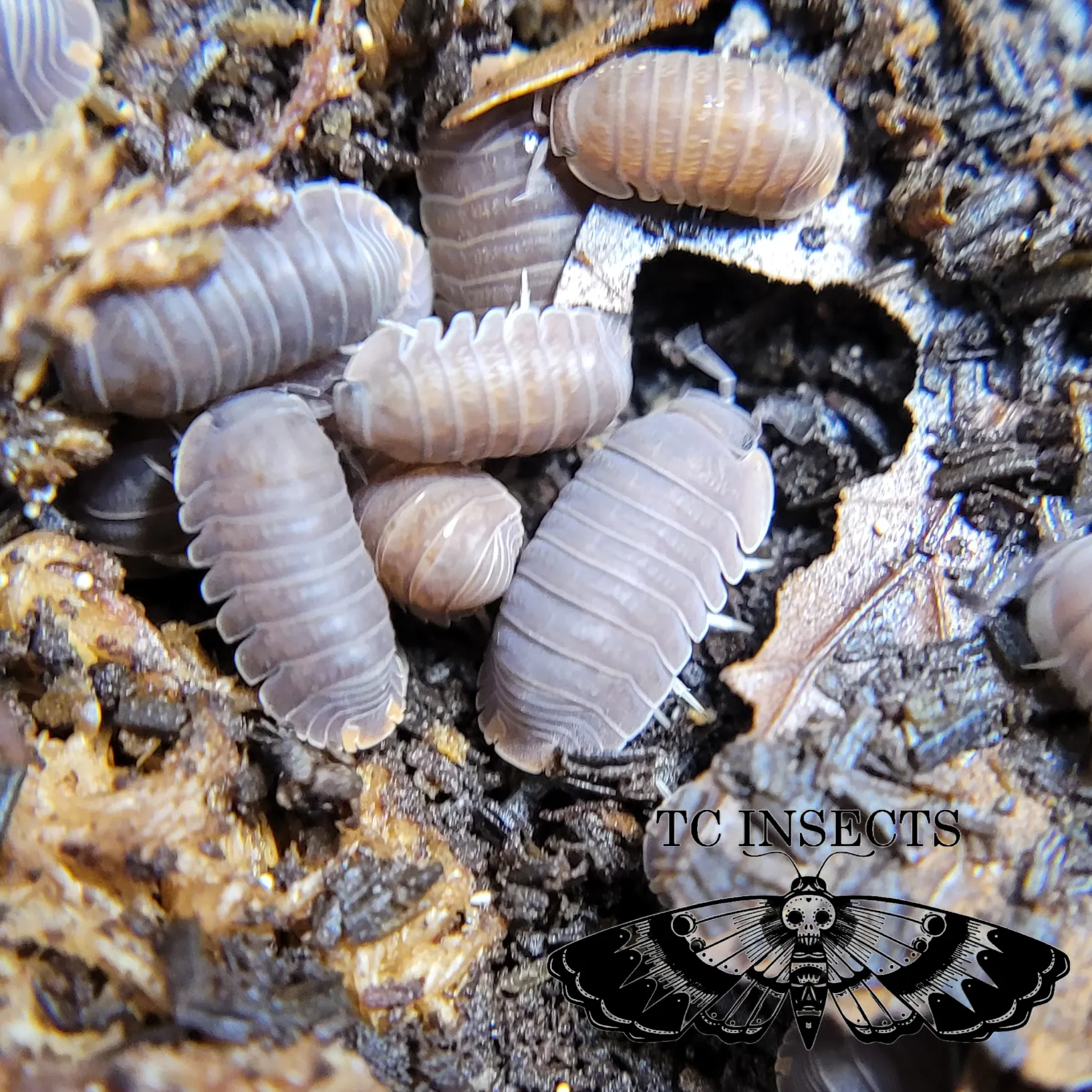
Cubaris sp. Borneo Isopods for Sale
TC INSECTS ships live captive-bred Cubaris murina “Borneo” for bioactive terrariums, collectors, and keepers entering the Cubaris genus. This is the most affordable Cubaris in the TC INSECTS range and the entry-level option for the genus. For full species background on Cubaris murina, see the Little Sea product page.
Honest Note: “Borneo” Is a Collection Locality, Not a Color Morph
The most important thing to understand about Cubaris sp. “Borneo” is what the name refers to. It refers to the island of Borneo — the collection locality where
these animals were first found for the hobby trade. It does not describe a color change, a pattern mutation, or a new species. The animal looks the same as the
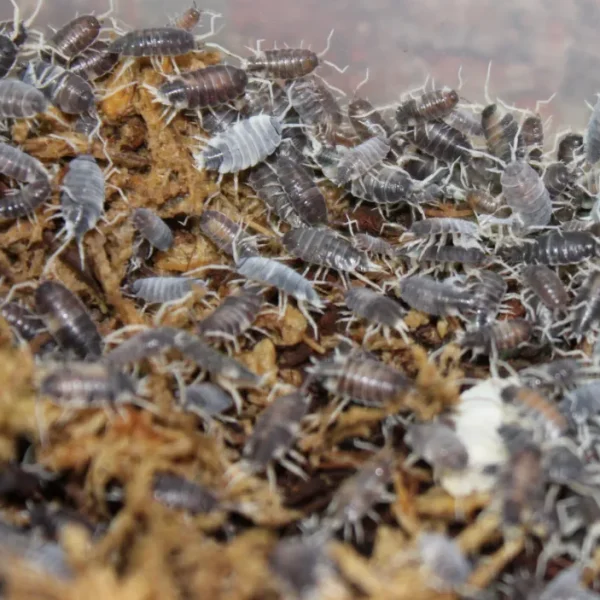
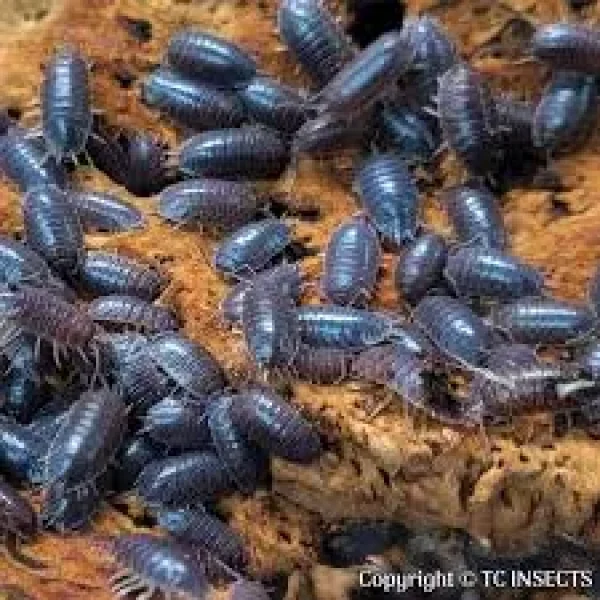
standard gray “Little Sea” C. murina: dark gray body, small orange marks at the tail.
Multiple hobby sources confirm this. TerrariumTribe states that “Borneo” is “an (unconfirmed) locality of C. murina and has no distinguishing features.” KMK Isopods lists it as Cubaris murina “Borneo” in their species catalog. Leg & Leaf confirms the name comes from the collection location. The TC INSECTS product listing acknowledges “exact taxonomy is not fully resolved” — which is the correct honest position given the available evidence.
This does not make it a poor product. It makes it an honest one. Cubaris murina from Borneo is a prolific, active, beginner-friendly species at the lowest price in the TC INSECTS Cubaris range. Keepers who want the Cubaris experience without the premium price find this the practical first choice.
What “Borneo” Means as a Collection Source
Borneo is the world’s third-largest island. It spans parts of Malaysia (Sabah and Sarawak), Brunei, and Indonesia (Kalimantan). Its rainforests rank among the oldest and most biodiverse on Earth. The island hosts thousands of species found nowhere else, and many invertebrates from Borneo remain undescribed by science.
Cubaris murina is a cosmopolitan species — it occurs across tropical Asia, the Malay Archipelago, and many other regions. Borneo falls within this natural range. The “Borneo” collection represents animals from a specific wild-collected locality within that distribution, brought into the captive hobby trade and bred there since.
For collectors who track locality-specific stock, a Borneo-origin C. murina has a specific geographic identity even though it looks the same as other populations. That is the collector value of the “Borneo” name: not a visual trait, but a specific place of origin.
How Borneo Fits the C. murina Range
The TC INSECTS Cubaris murina range has four entries. Little Sea is the standard wild-type gray form. Papaya is the true albino — pink body, pink eyes. Glacier is the white-out expression — white body, white eyes. Borneo is the collection locality variant — the same animal as the standard Little Sea, from a specific Borneo collection source.
In the C. murina range, Borneo sits alongside Little Sea as the wild-type gray form. If you want a gray C. murina at the standard care level, you choose between these two.Borneo is the budget entry point into the range. If you want a color morph with a specific visual identity, you choose Papaya or Glacier.
Care
Care for the Borneo form is identical to the standard Little Sea. Full care details — setup, humidity, temperature, protein appetite, daytime activity, and plant-eating notes — are on the Little Sea page. The summary below covers key parameters.
Setup Framework
Use a ventilated enclosure with 2 to 4 inches of organic substrate. Keep the substrate consistently moist throughout — KMK Isopods notes this form prefers high
humidity (70 to 90%) with little to no fully dry zone, slightly more uniform than the moisture-gradient approach for other species. Maintain 70 to 80°F. Add cork
bark hides, sphagnum moss, and leaf litter across the surface. The colony becomes more active and visible as numbers grow.
Food
Keep TC INSECTS Assorted Hardwood Leaf Litter available at all times as the diet base. Offer protein through TC INSECTS Isopod Food, dried shrimp, or fish flakes two to three times per week. As with all C. murina forms, this is a protein-driven species — regular protein offerings support breeding and activity.
Calcium and Springtails
Keep TC Calcium Ultra Fine, cuttlebone, or limestone available at all times. Pair with Springtails for mold control in the humid zone.
Breeding Notes
This form breeds fast once established. KMK Isopods notes it is “more surface-active than many Cubaris” and “breeds quickly when established.” Females carry young in a marsupium. Mancae burrow into the moist substrate after release. The colony grows quickly and becomes a reliable bioactive cleanup crew in tropical vivariums at working population size.
Best For
- Keepers entering the Cubaris genus at the lowest price point in the range — no other Cubaris in this catalog costs less
- Tropical bioactive terrariums needing a fast-breeding, surface-active Cubaris cleanup crew
- Collectors who track locality-specific stock and want Borneo-origin C. murina alongside a Florida-origin or North American form
- Keepers who want gray wild-type C. murina behavior and appearance without the premium price of color morphs
Not Best For
- Keepers specifically wanting a color morph with a distinct visual identity — this form looks the same as the standard Little Sea. See Papaya or Glacier for visually distinct morphs.
- Dry or low-humidity setups — the 70 to 90% humidity requirement applies.
- Densely planted vivariums with delicate ferns — the plant-eating tendency of C. murina applies here.
Receiving and Acclimation
Open the package in a calm indoor area soon after delivery. Place all packing material into the prepared enclosure. Position animals near the moist zone under leaf litter or bark. Because the animals are the same gray color as substrate and leaf litter, check packing material carefully before discarding anything. Leave the culture mostly undisturbed for several days.
Recommended Add-Ons
- TC Calcium Ultra Fine alongside cuttlebone for steady calcium access.
- TC INSECTS Assorted Hardwood Leaf Litter as the primary diet base.
- TC INSECTS Isopod Food for the protein rotation — two to three times weekly for this protein-driven form.
- TC INSECTS Isopod Habitat Kit for a complete beginner-ready starter setup.
- Springtails for mold control — especially useful given the uniformly moist conditions this form prefers.
Frequently Asked Questions
Is Cubaris sp. “Borneo” a different species from the standard Little Sea?
Almost certainly not. Multiple hobby sources identify it as Cubaris murina — the same species as the standard Little Sea — collected from Borneo rather than
from the original standard collection point. TerrariumTribe states it “has no distinguishing features” from the standard gray C. murina. The TC INSECTS listing
uses Cubaris sp. because exact formal taxonomy in hobby-trade Cubaris is rarely settled. The most accurate working description is Cubaris murina from a
Borneo collection locality.
Does it look different from the standard Little Sea?
No. Both show the standard gray C. murina coloring — dark gray body with small orange marks at the tail. There is no color, pattern, or size distinction reported in any specialty source.
If you want a visually distinct C. murina, see the Papaya (pink body, pink eyes) or Glacier (all white including eyes).
If you want the standard gray wild-type form at the lowest possible price, Borneo is the practical choice.
Why would I buy Borneo instead of the standard Little Sea?
Three reasons. First, price — Borneo is the least expensive Cubaris in the TC INSECTS catalog. Second, locality — collectors who track collection origins get animals from a specific Borneo source. Third, availability — whichever gray wild-type C. murina form is in stock is the right choice if you want the standard gray form at the accessible care level.
What is Borneo and why does a collection locality matter?
Borneo is the world’s third-largest island, home to one of Earth’s oldest and most biodiverse rainforests. It sits within the natural range of Cubaris murina.
Collecting animals from a specific island or region within the species’ range gives keepers locality-specific genetic stock. Some collectors specifically seek out
locality variants of common species to maintain geographic diversity in their cultures — just as some reptile keepers prefer locality-specific ball pythons or dart
frogs from particular regions.
Learn More About Cubaris murina Borneo
-
Wikipedia: Borneo. Borneo is the world’s third-largest island, shared between Malaysia, Brunei, and Indonesia. It hosts one of the oldest and most biodiverse tropical rainforests on Earth, with thousands of endemic species and many invertebrates still awaiting formal description. Cubaris murina‘s range includes the Malay Archipelago and Southeast Asia broadly, placing Borneo squarely within its natural distribution. Understanding Borneo’s ecological context explains why a “Borneo” collection locality is meaningful to collectors who track where their isopod stock originated.
-
GBIF: Cubaris murina Brandt, 1833. The Global Biodiversity Information Facility species record for C. murina, with distribution data confirming the species’ presence in the Malay Archipelago and tropical Southeast Asian regions that include Borneo. The map shows C. murina as a genuinely widespread pan-tropical species rather than a narrowly distributed specialist — which directly explains why Borneo-origin animals show the same appearance and care needs as animals from any other part of the species’ range.
-
Wikipedia: Cubaris murina. The species article documents the full range, known color morphs, and hobby uses of C. murina. The four recognized captive color morphs — Papaya, Glacier, Anemone, and Florida Orange — are all listed. “Borneo” does not appear as a recognized color morph, consistent with the identification of “Borneo” as a collection locality rather than a visually distinct form. This distinction matters for buyers choosing between the different C. murina options in this catalog.



Reviews
There are no reviews yet.