
Armadillidium germanicum Isopods for Sale
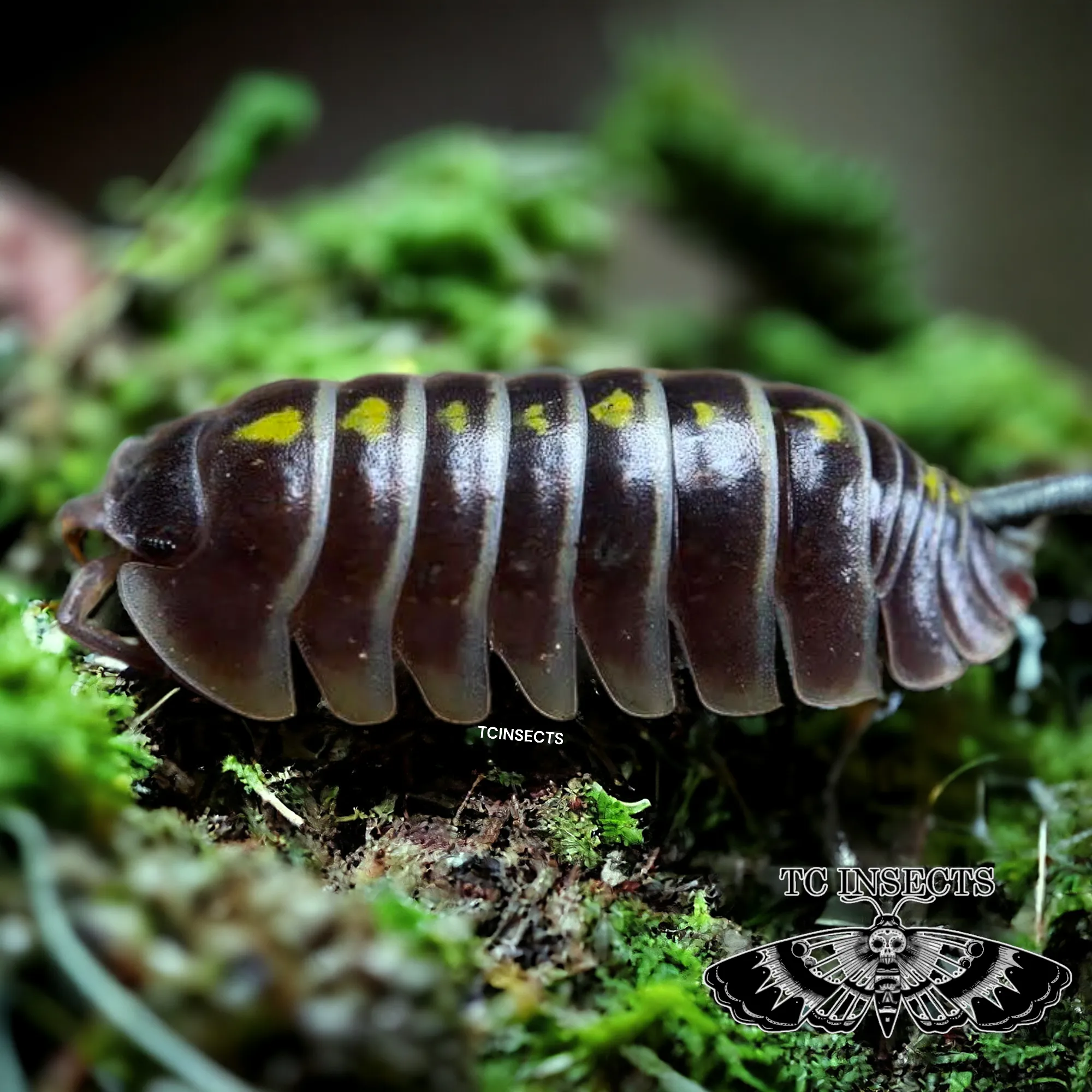
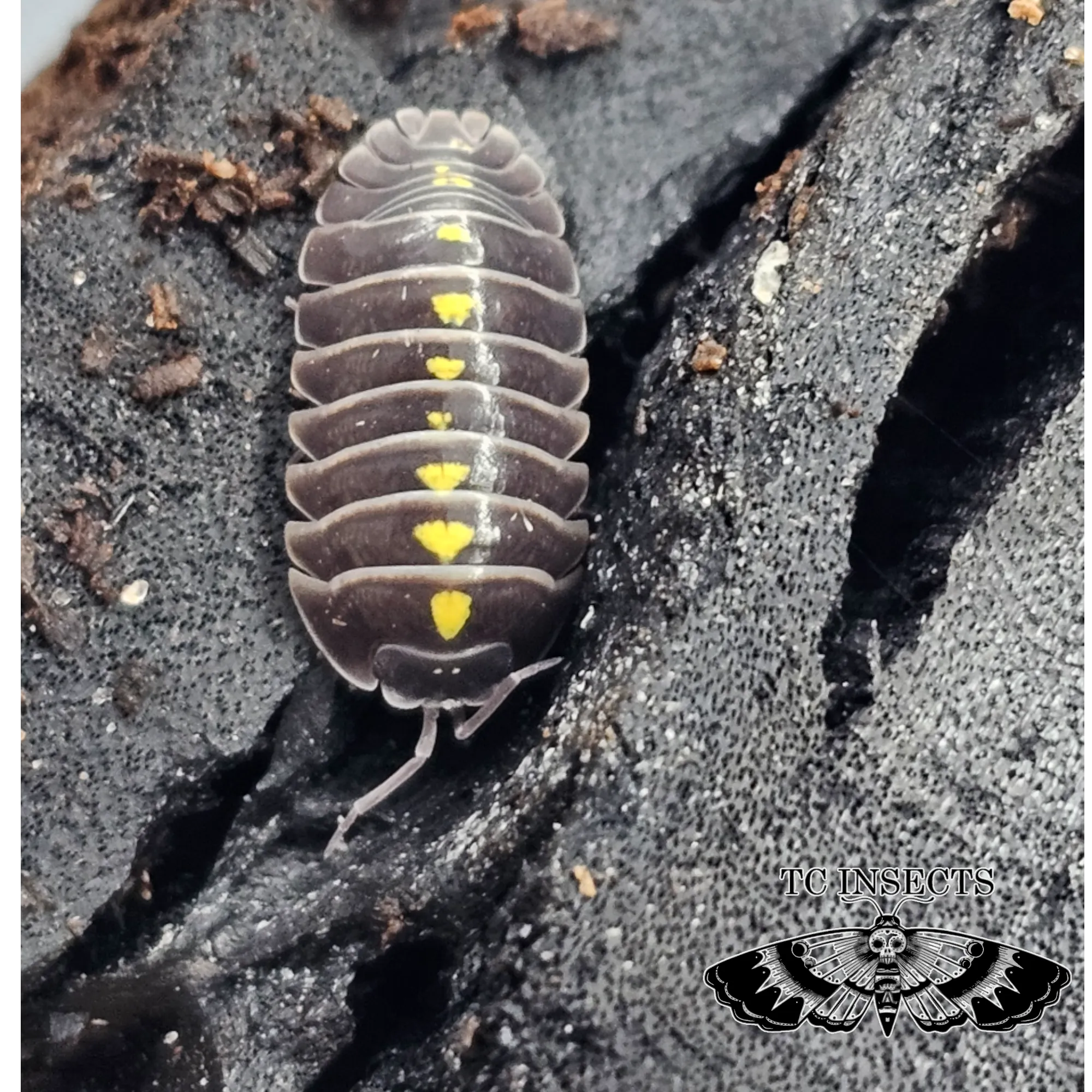
Armadillidium germanicum is a glossy black Alpine pill bug with bold yellow markings, sold in the US hobby under two interchangeable trade names: “Darth
Vader” and “Adige Valley.” This listing is a live culture from TC
INSECTS, packed for intermediate keepers building an Armadillidium shelf or a bold-contrast display setup. The species was formally described by German
zoologist Karl Wilhelm Verhoeff in 1901 in Zoologischer
Anzeiger, and the current US trade line comes from northern Italy, specifically the Adige Valley region in Trentino-Alto Adige.
Overview
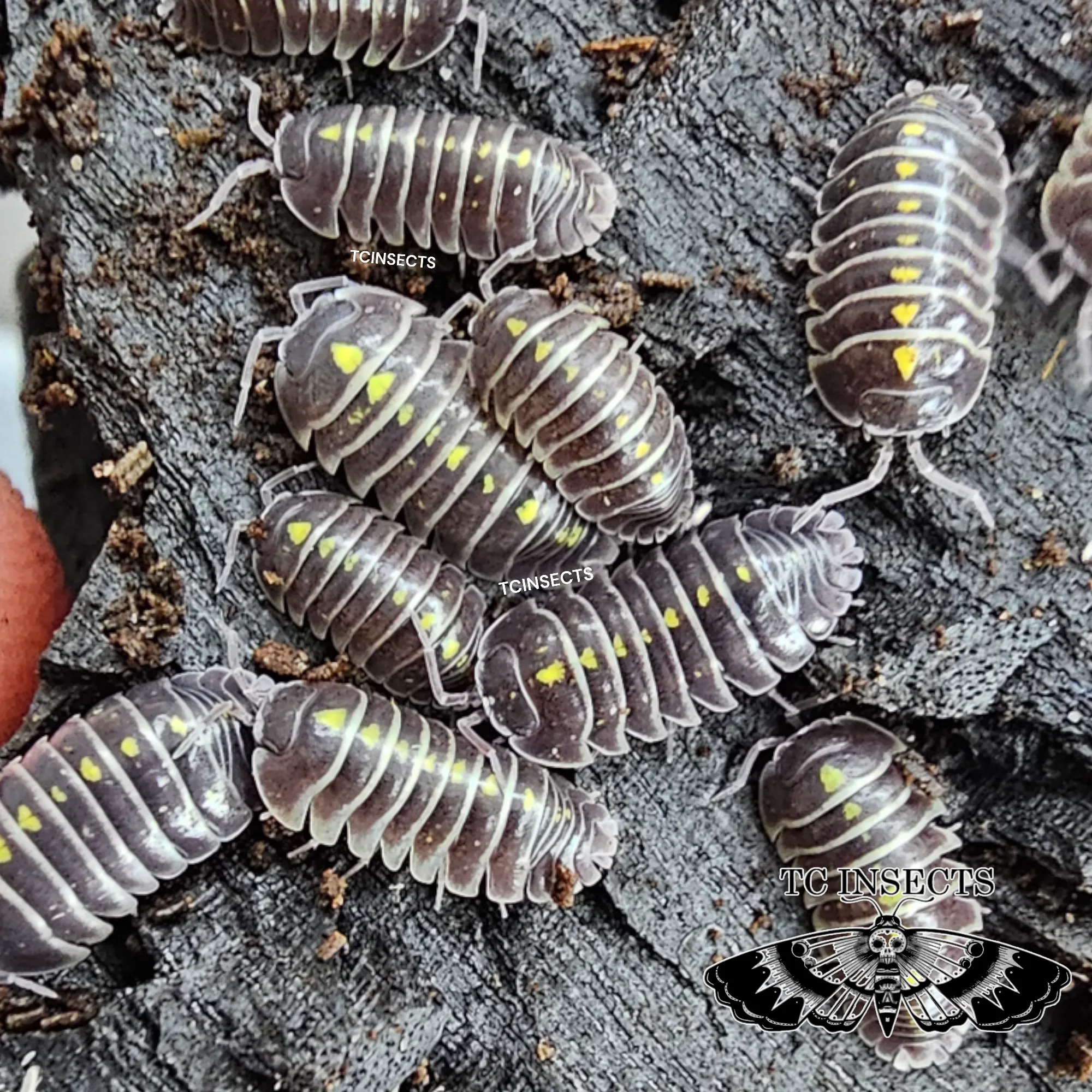
The visual signature of this species is the combination of a glossy jet-black armored body and a single line of bright yellow dots or markings running along the
back. That black-and-yellow contrast is what gave rise to the
“Darth Vader” trade name in the hobby. The body conglobates into a tight ball when disturbed, the classic pill bug behavior of the genus. Adults reach about 12
to 16 mm, putting this species in the mid-size range for
Armadillidium.
Wild populations live in northern Italian Alpine valleys, with the Adige Valley locality covering Trento, Bolzano, and the Monte Baldo area. The species’ broader
range extends across the Alps, and Verhoeff’s original 1901
description was based on European Alpine specimens rather than a strict German-only population. The species is documented in the literature as preferring
limestone-rich habitats with lava rock or similar mineral
substrate, which directly informs the calcium care recommendations below.
Why Keep Armadillidium germanicum?
- High color contrast: Glossy jet-black body with bright yellow markings, one of the more striking Armadillidium available in the hobby.
- Conglobating behavior: Rolls into a tight ball when disturbed, classic pill bug display behavior.
- Adige Valley locality: A documented northern Italian Alpine origin gives collectors specific provenance data.
- “Darth Vader” novelty value: The hobby trade name carries cultural recognition that helps with display and education contexts.
- Alpine shelf fit: Pairs naturally with Armadillidium gestroi (Ligurian Italian) and other Italian and Mediterranean Armadillidium species on a collector shelf.
Honest Note on the Species Name vs Italian Locality
The species name germanicum is Latin for “German,” which leads some buyers to assume the species is German in origin. The reality is more nuanced. Karl Wilhelm Verhoeff was a German zoologist who described the
species in 1901 from European Alpine specimens, and the name reflects the original description context rather than an exclusive German range. The species actually occurs widely across the Alps, including northern Italy,
and the current US hobby trade line traces specifically to the Adige Valley in the Trentino-Alto Adige region of northern Italy. If you are cross-shopping competitor listings and see different locality claims, the Italian origin
is the documented one for current hobby stock. Label your culture as A. germanicum with the Adige Valley locality to keep records traceable.
Honest Note on Adult Size
Hobby listings vary on adult size for this species. Some pages state up to 2.5 cm (25 mm), but documented colony measurements from established breeders place adults in the 12 to 16 mm range, which is the more reliable
estimate. Individual animals can occasionally exceed that range depending on diet and conditions, but a 25 mm adult would be exceptional. Expect a mid-size Armadillidium rather than a large one, and budget enclosure size accordingly.
Honest Note on the Armadillidium ruffoi Question
For collectors who track Armadillidium taxonomy closely, it is worth knowing that A. ruffoi, an Italian Armadillidium described by Arcangeli in 1940, is documented in published references as possibly conspecific with A.
germanicum and may represent its southernmost variety. The two are clearly very close relatives. This does not affect care or husbandry, but it does mean that the formal taxonomic boundaries between A. germanicum and
some Italian populations may shift in future revisions. For now, treat your culture as A. germanicum “Adige Valley” with the understanding that the underlying taxonomy is still actively studied.
Care and Setup
A. germanicum care is built around four things: stable cool to moderate warmth, a clear moisture gradient, steady airflow, and reliable calcium availability. The species suits a Mediterranean-to-Alpine care style rather than tropical humidity.
Temperature
Aim for 65 to 75°F as the everyday range. The species is adapted to northern Italian Alpine conditions, which means stable cool to moderate temperatures rather than tropical highs. Room temperature works for most keepers. Avoid sustained heat above the mid-80s and avoid cold drafts.
Humidity
Keep one section moist (roughly one-third of the enclosure) with sphagnum moss and damp substrate, and let the rest stay drier with leaf litter and bark. The substrate should not be uniformly wet. Hobby breeders describe this species as preferring semi-moist conditions rather than damp ones.
Substrate
Use an isopod substrate blend that holds light moisture without compacting. A coco fiber base mixed with decomposed hardwood, sphagnum, and crushed limestone or oyster shell works well. The species is documented as
favoring limestone-rich and lava rock habitats in the wild, which makes added mineral substrate especially appropriate here. A small piece of lava rock or limestone in the enclosure can also serve as a visible hide that the colony will use.
Food
Leaf litter and decaying hardwood should always be available. Supplement with TC INSECTS Isopod Food, calcium, and small portions of vegetables. Feed lightly because slower breeders eat less and uneaten food molds quickly in the moist zone.
Ventilation
Cross-ventilation works best. Two side vents or a vented lid beats a single small airhole. Good airflow keeps the substrate from souring while the moist retreat handles hydration needs.
Bioactive Use
This species works in bioactive enclosures with moderate humidity and a clear moisture gradient. It suits Mediterranean-themed or Alpine-themed naturalistic vivariums where the bold black and yellow can be appreciated. For tropical dart frog setups, a more humidity-tolerant species like Dwarf Whites is a better fit.
Breeding Notes
Mature females are slightly larger than males and carry developing young in a brood pouch called a marsupium. Reproduction is moderate, with stable cultures producing visible juveniles within the first month or two and
consistent colony growth once established. Stable cool-to-moderate temperatures, calcium availability, and a reliable moisture gradient are the most important inputs. Larger starter counts establish more reliably because
they include more breeding-age adults from the start. The bold yellow markings are usually visible from a young age, which makes juvenile counts easier than for species with more cryptic patterning.
Best For
- Display vivariums featuring high-contrast Alpine pill bugs
- Collector shelves featuring Italian and Mediterranean Armadillidium species
- Naturalistic Alpine or Italian-themed setups with limestone or lava rock features
- Intermediate keepers comfortable with moisture-gradient management
- Star Wars fans and novelty keepers who want a “Darth Vader” themed culture
Not Best For
- Fully wet tropical setups (use a tropical species instead)
- High-volume feeder cultures (the slower pace and collector-grade pricing do not fit feeder economics)
- First-time isopod keepers wanting the easiest possible starter (try an A. vulgare Gem Mix first)
- Setups requiring sustained warm temperatures (the Alpine origin means this species prefers cool to moderate ranges)
- Sterile or completely freshly built enclosures with no leaf litter or decaying wood
Origin and Locality Notes
The species was described by Verhoeff in 1901 from European Alpine specimens. The current US hobby trade line specifically traces to the Adige Valley region in Trentino-Alto Adige, northern Italy, including documented populations from Trento, Bolzano, and the Monte Baldo area. The wild habitat is Alpine limestone and lava rock terrain with characteristic Mediterranean-to-temperate moisture patterns. Manage the captive line as a documented Alpine Italian population with known care needs.
Receiving and Acclimation
Bring the package indoors as soon as it arrives and open it in a calm area away from direct sun, heat, or cold drafts. Prepare the enclosure before opening the cup so the isopods move directly into a stable environment with substrate, leaf litter, bark hides, a moist moss retreat, calcium, and a drier feeding zone already in place.
Gently tip the cup contents, including shipping material, into the prepared enclosure near the moist side. Some animals will stay curled or hidden during the first few days because conglobating species often roll up when stressed. Feed lightly during the first week, then increase feeding once the colony becomes more active. Avoid digging through the culture during this settling period.
Recommended Add-Ons
- TC INSECTS Premium Isopod Habitat Kit for a straightforward starter setup matched to the moisture-gradient approach
- TC INSECTS Assorted Hardwood Leaf Litter for food, cover, and the natural grazing layer
- TC INSECTS Isopod Food to supplement leaf litter
- TC Calcium Ultra Fine for healthy molts on a species that evolved with limestone bedrock
- Springtails to handle mold in the moist retreat alongside the germanicum culture
Frequently Asked Questions
Why is it called “Darth Vader”?
The hobby trade name reflects the visual: a glossy jet-black body that resembles the Star Wars character’s armor, accented by a bright yellow stripe or row of dots along the back. The “Adige Valley” trade name refers to the
same animal but emphasizes the documented Italian locality. Both names refer to the same species, Armadillidium germanicum.
Is this species really from Germany?
The species name germanicum means “German” in Latin and reflects the 1901 description by German zoologist Karl Wilhelm Verhoeff from European Alpine specimens. The species itself occurs across the Alps, and the
current US hobby trade line specifically comes from the Adige Valley in northern Italy. So the scientific name reflects the original description context rather than a German-exclusive range.
What is the difference between “Darth Vader” and “Adige Valley”?
Nothing, they are two names for the same animal. “Darth Vader” describes the visual; “Adige Valley” describes the Italian locality. Some hobby sellers use one name, some use the other, and many use both interchangeably.
Are these isopods beginner-friendly?
Generally yes for intermediate beginners. They tolerate a reasonable care window once the moisture gradient is set up correctly. First-time keepers usually do better starting with an easier species like an A. vulgare Gem Mix before moving up.
How big do they get?
About 12 to 16 mm at adult size based on documented breeder colony measurements. Some hobby listings claim larger sizes (up to 25 mm), but those are not supported by the bulk of breeder data. Plan for a mid-size Armadillidium.
What about the trace copper advice some pages mention?
That recommendation is not standard hobby practice and is not supported by published isopod care literature. Copper is toxic to most invertebrates at elevated concentrations, and normal substrate, leaf litter, and decaying
wood already provide trace amounts naturally. Focus on calcium, moisture, ventilation, and leaf litter instead, and skip the trace-copper supplementation.
Learn More About Armadillidium and Alpine Pill Bugs
The following references offer useful background on the species and the broader pill bug family it sits in.
-
World Register of Marine Species: Armadillidium germanicum Verhoeff, 1901. The authoritative species record, useful for confirming the scientific name, the original 1901 description by Verhoeff in Zoologischer Anzeiger, and the family placement in Armadillidiidae.
-
British Myriapod and Isopod Group: Woodlouse and Waterlouse Recording Scheme. Background on the wider terrestrial isopod group from a long-running scientific recording body, helpful for understanding how pill bugs and other woodlice live, feed, and reproduce.
-
Natural History Museum: Giant isopods, curious crustaceans on the ocean floor. A short, plain-language overview from the NHM that puts the woodlouse family in context with their marine relatives.


Reviews
There are no reviews yet.