How Fast Do Feeder Insects Grow?
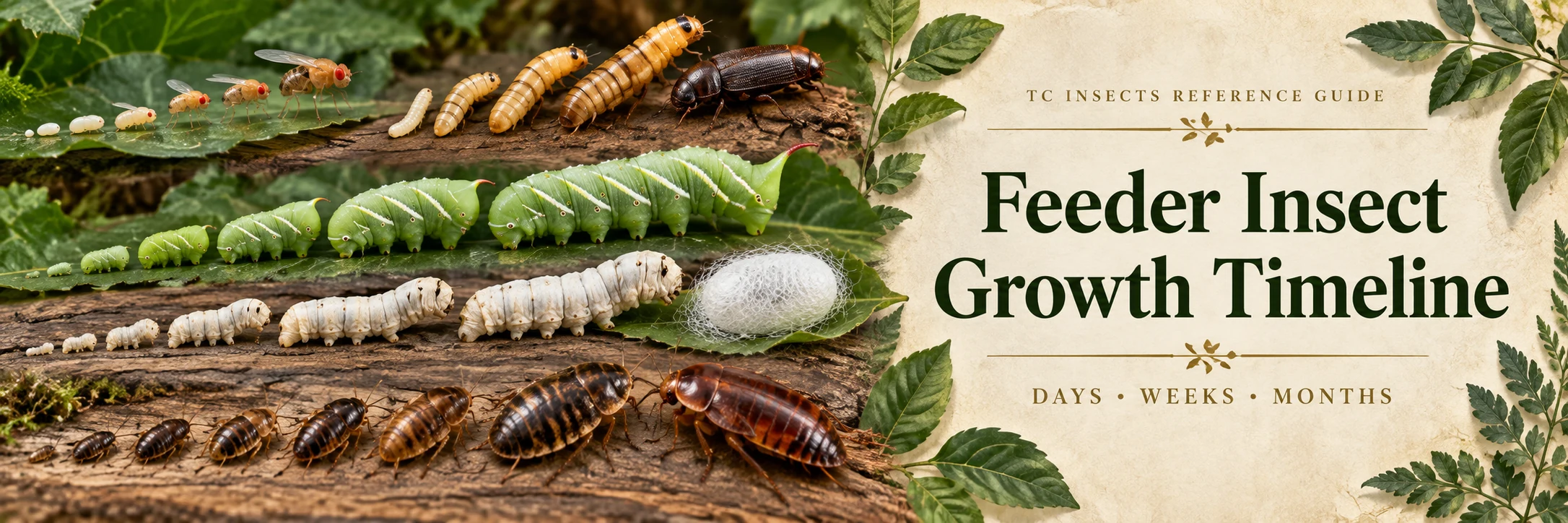
Reach feeding size in less than a week at 78 to 85 F
Averages slower than dubia's 4 to 6 months to reach a full adult
Every species on this page grows faster warm and slower cool, sometimes by months
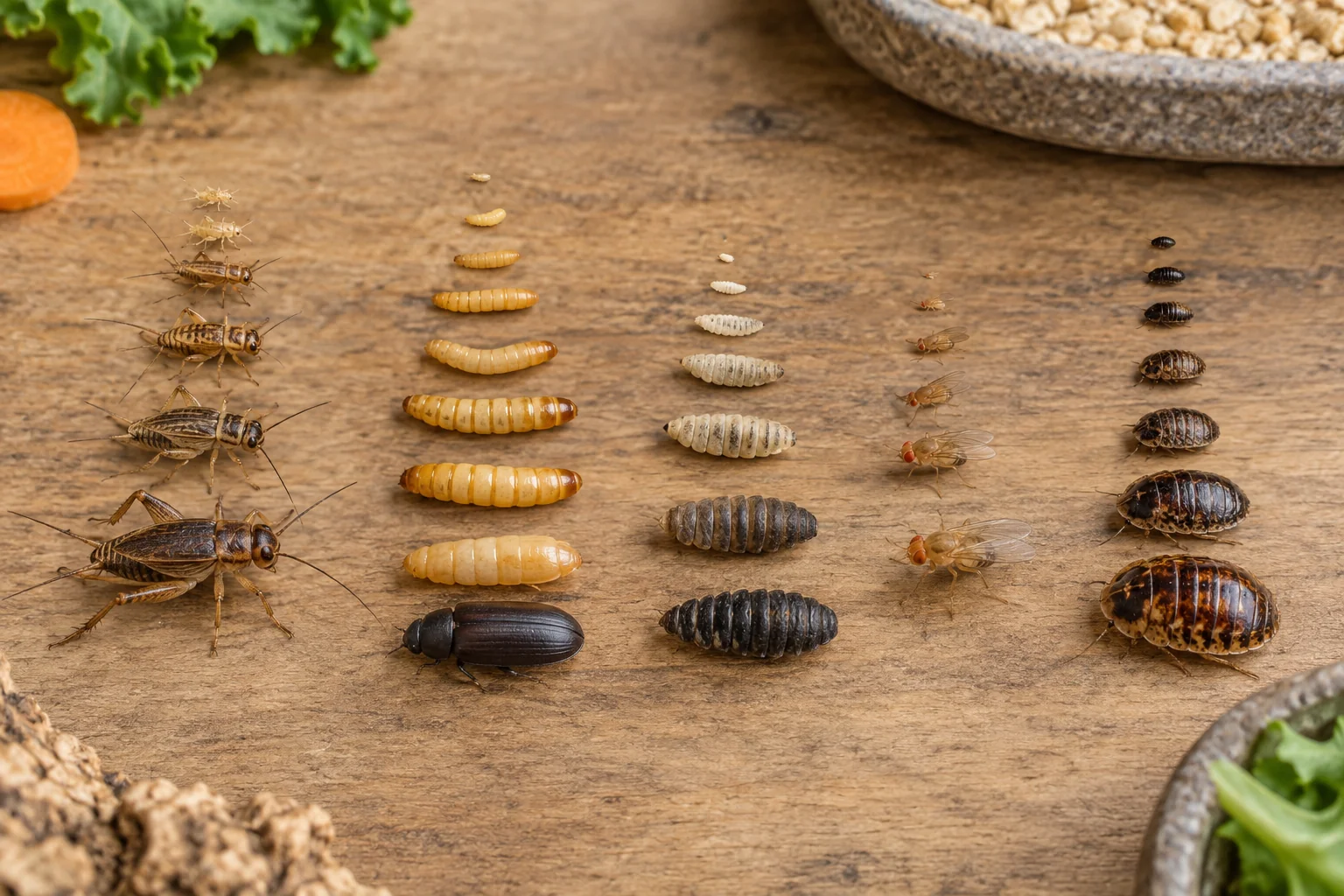
Compare days, weeks, and months across every feeder
Growth speed varies enormously by feeder: a hornworm reaches feeding size in as little as 5 to 7 days, a silkworm needs about 6 weeks egg to moth, a bean beetle completes a generation in 3 to 4 weeks, and a dubia roach needs 4 to 6 months to reach adulthood. Every number here moves with temperature, warmer speeds growth and cooler slows it, sometimes by months. This is the side-by-side timeline TC has never put in one place: hatch to feeding size to full adult, species by species, pulled from our own care guides plus published research where our numbers stop short, so you can plan a breeding project or a feeder order around real timing instead of guessing.
Compare days, weeks, and months across every feeder
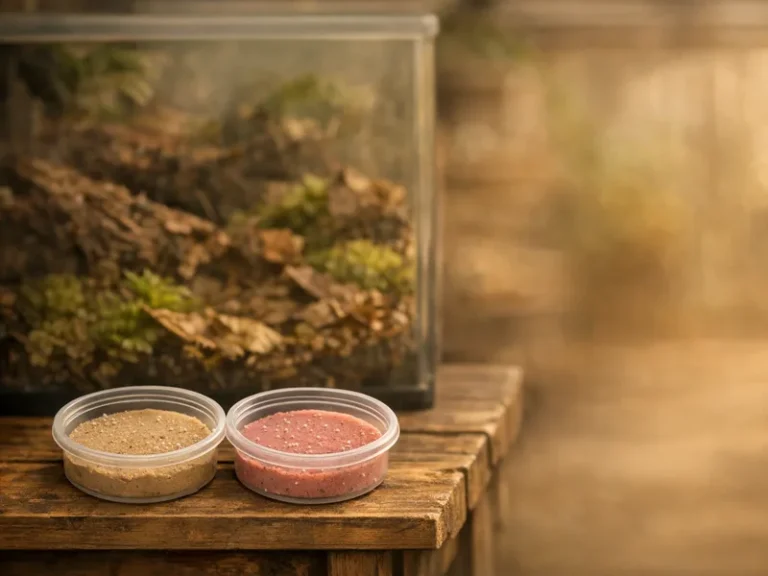
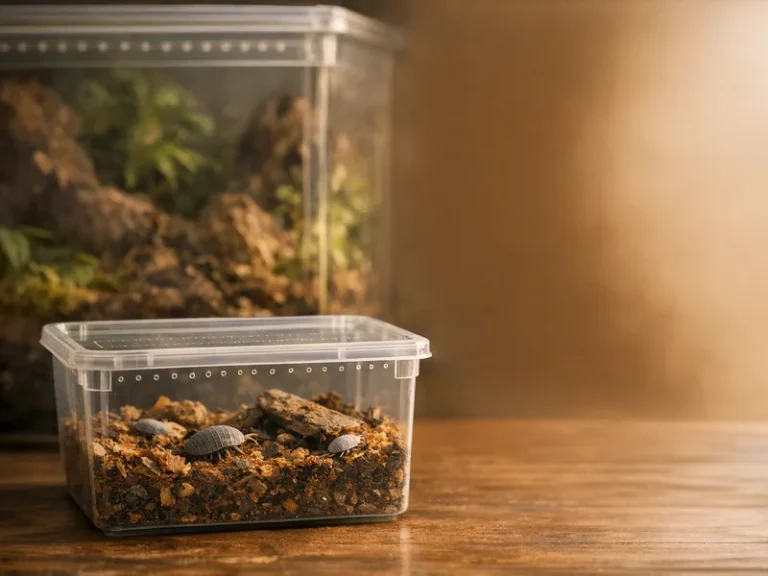
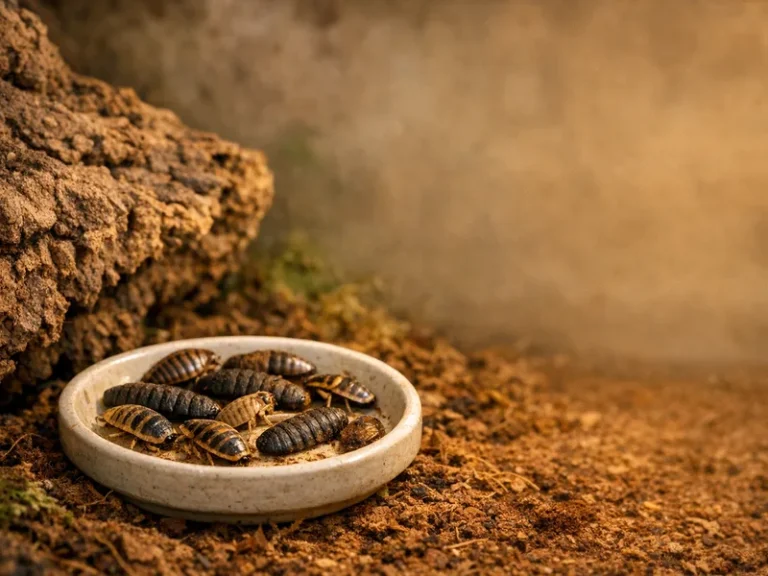
Use this visual reference with the detailed timeline, chart, and care notes below.
Fruit Flies and Bean Beetles: Generations in Weeks, Not Months
These two run the fastest clocks of anything on this page, which is exactly why they show up so often as backup or starter feeders for the smallest predators.
Fruit Flies
A fruit fly generation completes in about 10 to 14 days, egg to adult, at 75 to 78 F, TC's own guidance for Drosophila melanogaster. That closely matches published lab research putting it at roughly 9 to 10 days at a steady 77 F. A living culture stays productive for a few weeks before it naturally slows down and needs replacing rather than lasting indefinitely.
Bean Beetles
A bean beetle generation runs about 3 to 4 weeks egg to adult at 80 F, the exact figure our bean beetles for biology labs guide uses for timing a classroom culture. Adults then live only 1 to 2 weeks, since they never eat or drink once grown, and a whole culture stays productive for roughly 4 to 6 weeks before it needs a fresh restart.
Mealworms, Superworms, and BSFL: The Worm-Bodied Feeders
These three get confused for each other constantly, but their clocks could not run more differently, from a worm that pupates on schedule to one that refuses to unless you isolate it.
Mealworms
A large, nearly grown mealworm larva becomes a pupa in about 1 to 3 weeks, then a beetle roughly 1 to 3 weeks after that, call it 3 to 6 weeks total, while a young mini or small larva needs 6 to 10 weeks just to reach pupation, our mealworm colony guide walks through both timelines. A full colony cycle, egg to a new egg-laying beetle, takes about 3 months at a steady room temperature.
Superworms
Left in a group, superworm larvae suppress each other's development and can sit as larvae for many months on purpose, which is normal, not a sign anything is wrong. Isolate one larva alone and it typically pupates within 1 to 3 weeks, then emerges as a beetle about 2 weeks after that, the full mechanics covered in our superworm breeding guide. One rule overrides everything else here: never refrigerate them, since cold kills a superworm outright rather than slowing it the way it does a mealworm.
Black Soldier Fly Larvae (BSFL)
BSFL larvae move through several instars and reach the point of darkening and pupating in about 2 to 4 weeks at room temperature, then take roughly another couple of weeks in the pupal stage before an adult fly emerges. If you would rather pause that clock, cool storage around 50 to 60 F holds larvae dormant and usable for weeks, close to a month, with no feeding required in the meantime.
Hornworms and Silkworms: Grow Once, Feed, Done
Neither of these is bred for generation after generation at home the way a roach or worm colony is. You grow a batch once, to a size or a life stage, and that is the whole project.
Hornworms
A young hornworm larva can reach a usable feeding size in as little as 5 to 7 days at 78 to 85 F, and it can nearly double in size again in a day or two once it gets going, all detailed in our container-by-container growth guide. That speed cuts the other way too: the usable window before one gets too large or starts wandering toward pupation is only about 1 to 2 weeks, and cold can kill a hornworm outright rather than just slowing it down.
Silkworms
Silkworm eggs hatch in about a week, the caterpillar then eats through five growth stages over roughly 3 to 4 weeks before it starts spinning around day 25, and the cocoon itself takes another 10 to 14 days to produce a moth. Total time egg to moth runs about 6 weeks at 78 to 85 F, stretching toward 8 weeks in a cooler 70 F room, with the full walkthrough in our egg-to-moth raising guide.
Dubia and Red Runner Roaches: The Slowest, Longest-Lived Staples
Roaches trade speed for payoff. Every worm and beetle culture above eventually needs a restart, while an established roach colony just keeps producing once it gets there; the trade-off is a much longer wait to arrive.
Dubia Roaches
Dubia mating starts within about a week of both sexes reaching adulthood, but our own dubia breeding guide is upfront that a colony producing a genuine harvestable surplus is realistically several months out, not weeks. Widely reported figures across roach-keeping guides put the full nymph-to-adult journey at about 4 to 6 months across 7 nymphal instars, which lines up with that several-month timeline rather than contradicting it.
Red Runner Roaches
TC's own guidance says a small starter colony needs about a couple of months before it produces enough feeder-sized nymphs to harvest regularly, with a productive female laying roughly 1 to 2 oothecae a month at 20 to 30 nymphs each. That couple-of-months figure describes early, usable nymphs, not full adulthood. A controlled study raised at 80 F found individual nymphs averaging closer to 7 months to reach full adult maturity, with a range of about 4 to 9 months across 5 instars, so treat red runner maturation as genuinely slower than the fastest estimate you find, even though feeder-sized nymphs show up much sooner than that.
Why Every One of These Numbers Moves With Temperature
Every timeline on this page assumes a specific temperature, and that assumption matters more than almost anything else. Hornworms grow fastest at 78 to 85 F and slow down noticeably in the low 70s. Silkworms do best at 72 to 85 F, and mealworms hold a steady pace around 75 F, with cooler rooms adding real days to every stage rather than a token delay. Dubia and red runner roaches want it warmer still, 80 to 95 F, to breed at any real pace at all. Warmer speeds metabolism and growth across every one of these species, cooler slows it, and the gap between a warm room and a cool one can run from days to entire months depending on the species.
Warmer is not automatically better, though. Hornworms and superworms both die in the cold rather than simply slowing down, so the same logic that makes heat useful also makes the wrong kind of cold genuinely dangerous, not just inconvenient. Match each species to its own stated range instead of assuming more heat always helps, since a colony pushed too hot can stress or crash just as easily as one left too cold.
Using This Timeline to Plan Your Own Feeder Rotation
If you are buying to feed a pet this week, hornworms and silkworms are the two that will not wait around, order them close to when you actually need them since both grow whether or not you are ready. If you are planning to breed a self-sustaining colony instead, start it months before you expect to need the supply, not the week your feeders run low, since every roach and worm on this page takes weeks to months to ramp up production.
The fastest-cycling options here, fruit flies and bean beetles, are also the cheapest way to find out whether breeding your own feeders suits you at all, while a dubia or red runner colony is the long-term payoff for someone feeding multiple animals for years rather than a quick win. If you would rather just order feeders sized to your reptile right now instead of breeding your own, shop live feeders across every species on this page.
The Feeder Timeline Starter Kit
One example from the fast, mid, and slow end of this timeline so you can see the difference yourself.
Frequently asked questions
How long does it take a hornworm to reach feeding size?
As little as 5 to 7 days at a warm 78 to 85 F, starting from a young larva. Hornworms can nearly double in size again in a day or two once they get going, which is also why the usable feeding window before one gets too large is short, generally only about 1 to 2 weeks.
How long do dubia roaches take to reach adulthood?
Widely reported figures put a dubia nymph's full journey to adulthood at about 4 to 6 months across 7 instars. TC's own breeding guide is consistent with that, noting mating starts within about a week of adulthood, but a colony actually producing a harvestable surplus is realistically several months out from a fresh start, not weeks.
How fast do silkworms grow from egg to moth?
About 6 weeks total at a warm 78 to 85 F: roughly a week to hatch, 3 to 4 weeks of eating and growing, and 10 to 14 days inside the cocoon before a moth emerges. A cooler room in the 70s F can stretch that out closer to 8 weeks.
Do superworms turn into beetles on their own?
Only if you isolate one. Left in a group, superworm larvae suppress each other's development through crowding and can stay larvae for many months. Pull one out alone and it typically pupates within 1 to 3 weeks, then emerges as a beetle about 2 weeks after that. Never refrigerate them, since cold kills a superworm rather than slowing it.
Why do my feeder insects seem to grow slower than these numbers?
Temperature is almost always the answer. Every timeline on this page assumes a specific warm range for that species, and a room running even a few degrees cooler than that can add days to a fast-growing feeder like a hornworm or weeks to months to a slower one like a dubia roach or red runner. Check your actual room temperature before assuming something is wrong.
Which feeder insect grows the fastest?
It depends on what you mean by fast. For a full generation, fruit flies and bean beetles lead, both cycling in a matter of weeks. For raw individual growth speed, nothing beats a hornworm, which can nearly double in size in a day or two and reach feeding size in under a week.
Keep learning
Have a care question? Ask our community.
Join Reptile Keepers USA, our free Facebook group for reptile, amphibian and invert keepers. Share your setups, get care help and swap feeder tips.
Join the free group