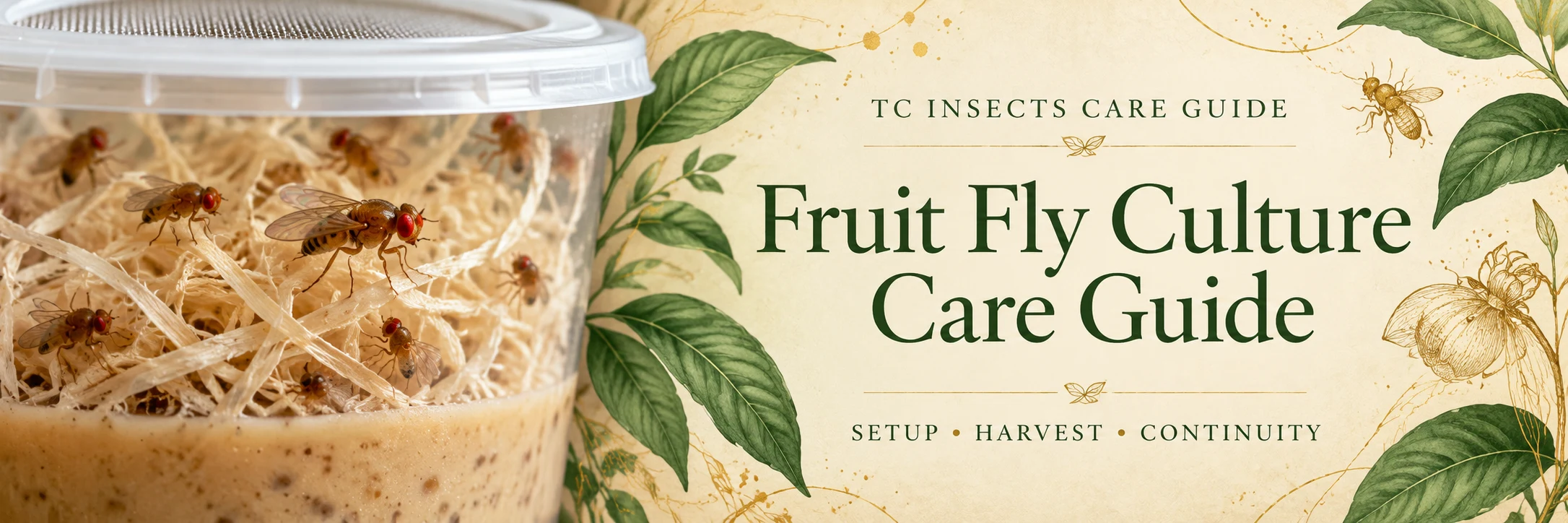
Fruit Fly Culture Care Guide
Keep flightless fruit-fly cultures productive, harvest them cleanly, and maintain a dependable supply for dart frogs, mantises, small geckos, and other tiny insectivores.
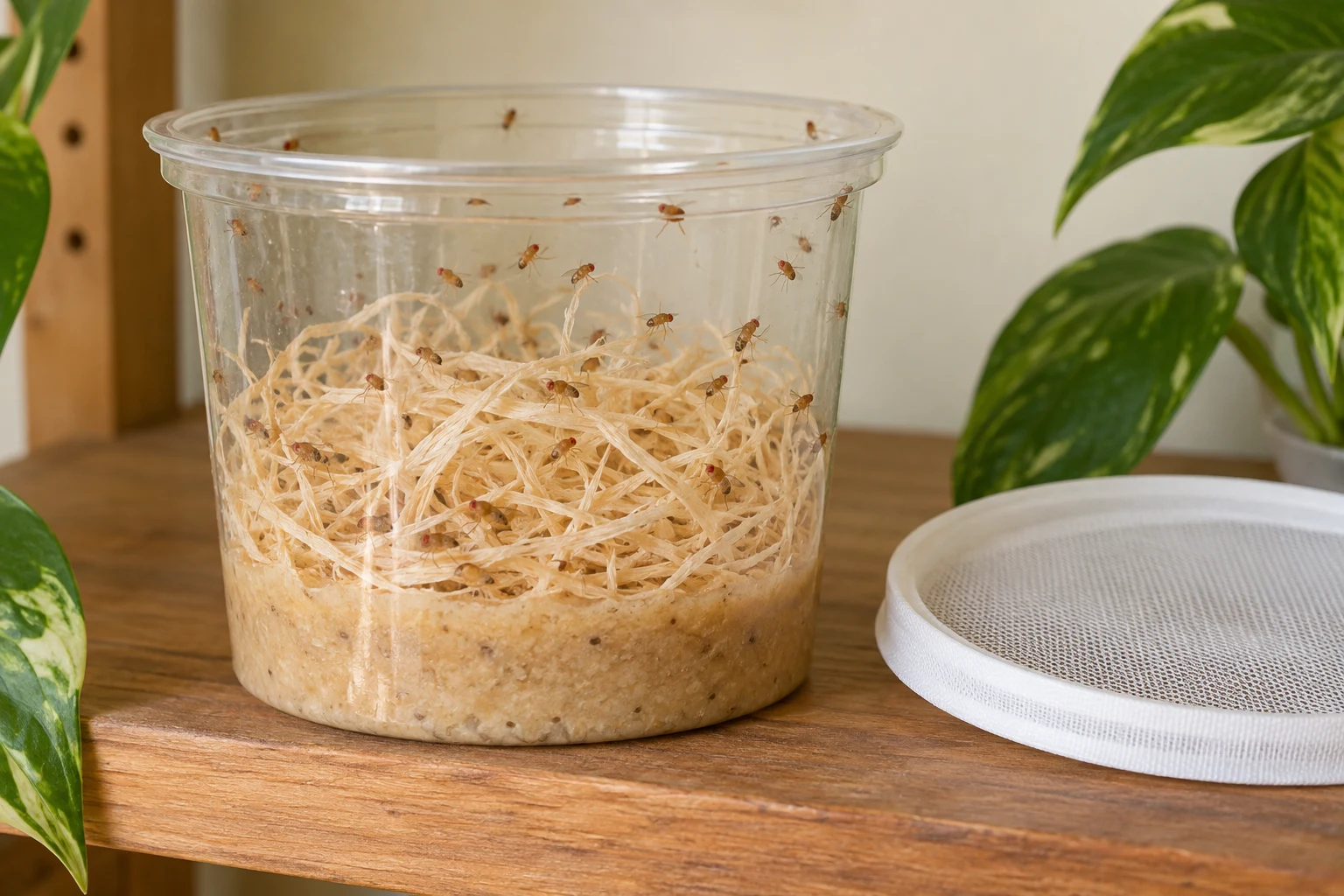
A productive culture
Clean media, climbing material, ventilation, and steady room temperature support each new generation.

Harvest and dust
Tap flies into a separate cup, coat lightly with calcium and vitamins, then feed before they climb out.

Always keep a backup
Stagger cultures by about two weeks so a new cup reaches production before the older one fades.
Melanogaster vs. hydei
D. melanogaster
- Best for froglets and the tiniest mouths.
- Begins producing in about 10–12 days.
- Reaches full production around two weeks.
- Fastest option for rebuilding supply.
D. hydei
- Larger and bulkier for bigger frogs and mantises.
- Begins producing in about two weeks.
- Reaches full production around three weeks.
- Produces fewer, more substantial flies.
Media, climbing space, and a repeating lifecycle
Your culture arrives with nutritious media on the bottom, excelsior or similar packing material for climbing and pupation, and a ventilated lid. Adults lay eggs in the media, larvae develop, pupae form on the packing, and a new generation emerges for harvest.
Keep the cup upright, out of direct sun, and away from vents or heat lamps. Warmer rooms speed the cycle; cooler rooms slow it.
Safe temperature range
Maintain about 68–78°F. Cultures may stall below roughly 60°F and can crash above about 85°F.
A productive culture usually yields flies for three to four weeks after it reaches full production, then naturally winds down.
Harvest cleanly and dust every feeding
Tap into a cup
Gently tap flies into a separate dusting cup instead of working directly over the enclosure.
Add supplement
Use a fine calcium and multivitamin powder, especially for dart frogs.
Swirl and feed
Coat gently and tap the flies into the habitat before they climb out.
How many cultures do you need?
How many cultures do you need?
Keep a steady supply without ever running dry.
Shop fruit fly cultures.
These counts follow the common keeper rule of about one culture for every 2 to 3 dart frogs, plus a spare, with hydei at the low end because a hydei culture makes fewer flies. Real output depends on temperature and culture age, so add a culture if you run short. Dart frogs eat about 20 to 40 flies per frog at a feeding; see our dart frog feeding guide.
Let the culture settle naturally
Inspect promptly
Open and check within one hour of delivery, the window for the Live Arrival Guarantee. Look for live adults and intact media.
Recover gently
If the cup was shaken, set it upright for a day. Let a chilled culture warm gradually at room temperature; never force it with a heat lamp or sunny window.
Read the culture before it crashes
Not producing
It may be too cold or simply early. Give it steady room temperature and time; new flies emerge in waves.
Heavy mold
A little surface mold can occur, but heavy mold indicates failure. Isolate it and start a fresh culture.
Mites
Tiny moving specks in the media can crash a culture. Keep cultures clean and isolate affected cups.
Wet, sludgy media
The culture is past its prime. Harvest the remaining flies and replace it with a fresh backup.
Fruit fly culture FAQ
Will the flies escape into my house?
These are flightless strains, so they crawl instead of flying. Careful handling and replacing the lid promptly keep escapes minimal.
How long will one culture feed my frogs?
Once a healthy culture reaches full production, it typically produces for about three to four weeks in waves. Output varies with temperature, species, and culture age.
How many cultures should I keep?
A common starting point is one active culture for every two to three dart frogs, plus one backup, staggered by about two weeks.
Can I make my own cultures?
Yes. With clean cups, media, packing material, and starter flies, keepers can continuously seed fresh cultures.
What should I do if the culture arrived cold?
Set it upright and allow it to warm gradually at 68–78°F. Do not use direct sun, heat lamps, or a heating vent.
Set a two-week reorder reminder
Cultures crash after a few weeks, so the rule of thumb is a fresh culture about every 2 weeks. Add a reminder to your calendar now and a fresh culture will always be on the way before the old one fades.
Reminder downloaded. Open it to add to your calendar.
Shop flightless fruit flies
Choose melanogaster or hydei for your animals, and keep a backup culture started before the current one begins to fade.
Shop fruit fly cultures More care sheetsHave a care question? Ask our community.
Join Reptile Keepers USA, our free Facebook group for reptile, amphibian and invert keepers. Share your setups, get care help and swap feeder tips.
Join the free group