Do Springtails Actually Eat Mold?
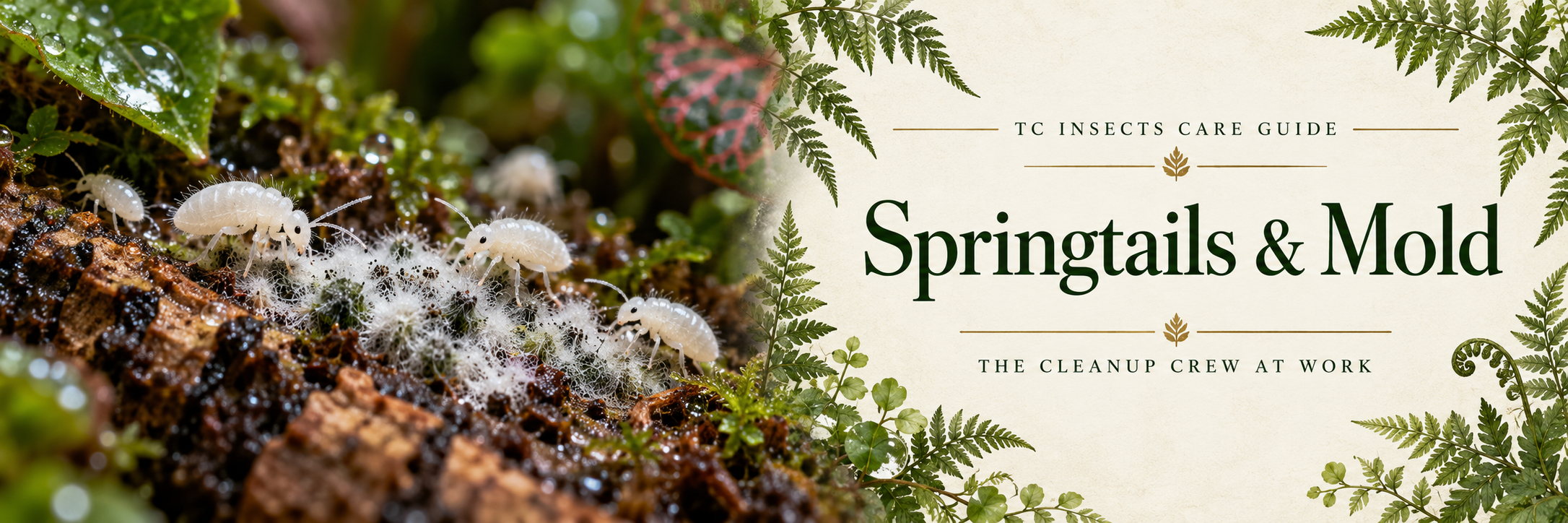
Yes. Many springtails graze fungi, including the fuzzy mold that can grow on damp leaf litter, wood, and substrate. They also feed on decaying plant material and other microscopic foods; the exact diet varies by species. An established springtail culture can help keep small surface blooms in check, especially when added early to a bioactive enclosure. It cannot replace proper drainage, airflow, and removal of rotting food.
Plus decaying wood and leaf litter, not living plants
Small blooms may shrink as springtails graze; there is no reliable fixed timetable
Add springtails at setup, not after mold shows up
The short answer: yes, and it is basically their job
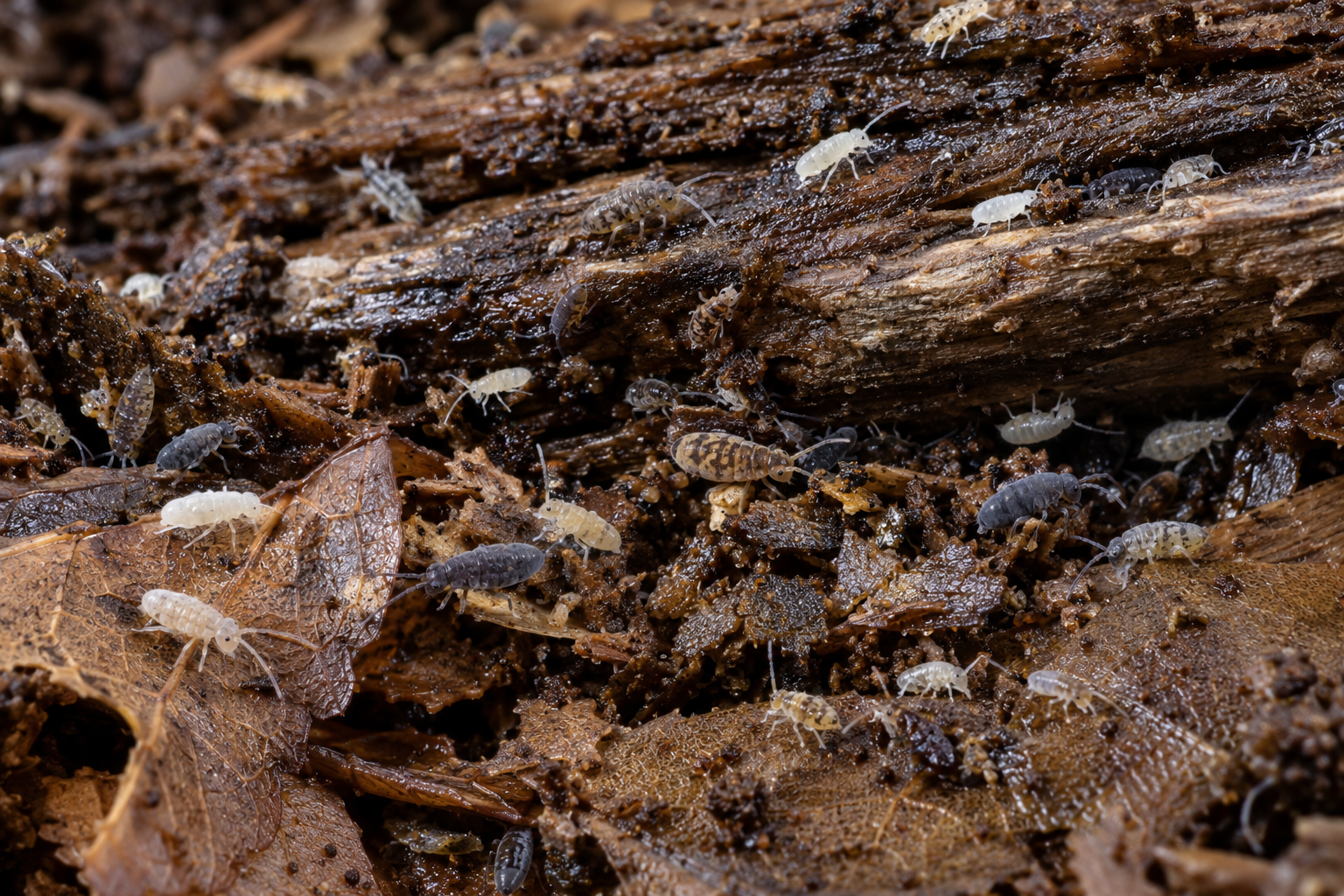
In the wild, springtails are decomposers that live in soil and leaf litter and feed mainly on fungal hyphae, mold, mildew, algae, and decaying plant matter. They only rarely touch living plant tissue, and healthy roots and leaves are not on the menu. Drop that same animal into a terrarium and the 'problem' every new bioactive keeper runs into, a patch of fuzzy mold on damp substrate or fresh wood, is really just a fungus bloom on damp organic material. That is precisely a springtail's dinner table, which is why they are one of the most useful animals you can add to a build that is prone to mold.
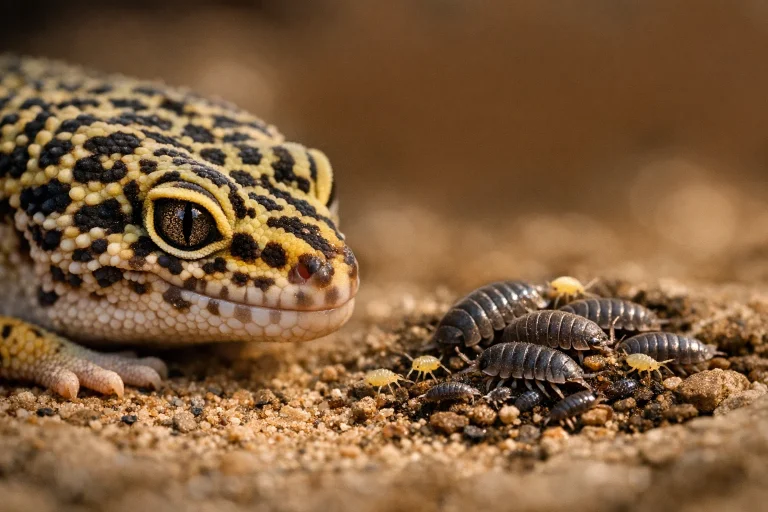
Isopods get most of the attention in cleanup crew talk, but they specialize in heavier material: dead leaves, waste, shed skin, the occasional dead insect. Springtails cover the ground isopods walk right past, the thin surface film of mold and mildew that forms on damp wood, cork, and substrate. The two are not competing for the same food, they are splitting the job, which is why almost every bioactive setup guide pairs them rather than picking one.

How fast a colony actually knocks a bloom down
There is no dependable number of hours for a colony to clear a mold bloom. A dense, established springtail population may visibly graze a small patch, while a new culture may have little immediate effect. Results depend on the springtail species, colony size, the fungus involved, the amount of mold, and whether excess moisture continues to feed it. Judge progress over several days and correct the conditions causing repeated growth.
Springtail numbers can change as food, moisture, and temperature change. A visible bloom may draw them to one spot, but their presence does not guarantee the mold will disappear. Keep the substrate damp rather than waterlogged, remove excess food, and allow suitable airflow.
Why they are the first thing you add to a new build
Brand-new substrate, cork bark, and hardwood are basically a mold buffet for the first few weeks. Raw wood and coco fiber still carry sugars and starches from processing, humidity is usually high while everything settles in, and there is no established microfauna yet to intercept any of it. That combination is exactly why so many brand-new bioactive builds develop a white fuzzy bloom in the first week or two, a situation we cover in detail in our new terrarium mold guide.
Seed springtails at setup, or even a couple of weeks before the animal moves in, and the crew is already established and hungry by the time those sugars start leaching out. The bloom that would otherwise look alarming to a new keeper barely gets a foothold, because something is already there to eat it the moment it appears. Waiting until after you see mold to buy a culture is not wrong, it just means the springtails are playing catch-up instead of running ahead of the problem.
What springtails will not fix
Springtails are not a substitute for good ventilation or a properly built substrate. If mold keeps roaring back in the same spot despite an active, established culture, that is a sign the tank is staying too wet or has poor airflow, not a sign you need to buy more bugs. A springtail crew can keep pace with normal, expected mold, but it cannot out-eat a genuine drainage or humidity problem that keeps generating more food than the colony can process.
They also will not do anything for a slimy, gel-like bloom rather than a dry fuzzy one, since that usually points to standing water or a different issue entirely rather than the ordinary surface fungus springtails graze on. If you are also seeing small flies around the same damp substrate, that is frequently a separate, related issue worth working through on its own; our fungus gnat guide covers the pet-safe fixes for that specifically.
Pair them with isopods for full coverage
A springtail-only crew handles the fine mold film well, but a heavier decaying leaf, a dead feeder insect, or a large waste deposit is really an isopod's job. That is why the standard cleanup crew recommendation is always both animals together rather than one or the other: isopods process the heavy material, springtails graze the fine fungal layer left behind, and between them very little organic matter sits around long enough to become a problem.
If you do not already have isopods established, start with a hardy beginner species and let the two crews build together rather than in stages. Most keepers setting up a new bioactive tank add both at the same time so the whole crew is working from day one instead of playing catch-up.
How many to seed, and when to add more
Start with a healthy culture distributed across the damp, sheltered areas of the enclosure. Container volume alone does not determine how many springtails you need: the culture’s actual population, enclosure footprint, moisture, and available food matter more. A colony may persist and reproduce when those conditions stay suitable, but check that it is establishing before relying on it for cleanup.
If mold is spreading, first remove rotting food and correct excess moisture or poor airflow. You can add a healthy culture after those fixes, but more springtails alone may not solve a persistent bloom. Our cleanup crew calculator offers a starting estimate for seeding an enclosure.
Everything to Put Mold to Work
The cultures and litter behind the answer above. Add what your build needs, then send it all to your cart in one tap.
Frequently Asked Questions
Written by the TC INSECTS breeding team · Porter, Texas · Live Arrival Guarantee on every order
Have a care question? Ask our community.
Join Reptile Keepers USA, our free Facebook group for reptile, amphibian and invert keepers. Share your setups, get care help and swap feeder tips.
Join the free group