Feeder Insects and Impaction
Impaction is almost never about one specific bad feeder. It comes down to four things stacking up: a hard, chitin-heavy body, prey that is too big for the animal eating it, a reptile that is too cold or dehydrated to digest normally, and loose substrate swallowed along with the meal. Soft-bodied feeders like black soldier fly larvae, hornworms, and silkworms carry the least risk, while firm, larger feeders like superworms and adult beetles need more careful sizing. Get the size and the husbandry right with the guide below, and see our black soldier fly larvae for the easiest-digesting staple on our farm.
Prey wider than the eye-space gap is the top real cause
Soft-bodied, low-chitin, high-moisture feeders
A cold gut and swallowed sand add risk the feeder does not
The real answer: it is rarely just one bug
It is tempting to want one villain to cut from the rotation, one feeder insect that causes impaction and the rest that are safe. The honest answer is more useful and less dramatic: impaction risk comes from several factors stacking together, and the feeder species is only one of them. A hard, chitin-heavy body matters, prey sized too large for the animal matters more, and the animal's own condition, its temperature and hydration, plus what else is in the enclosure, matters just as much.
This page ranks feeders by how hard-bodied they are, walks through the sizing rule that matters more than species, and covers the animal-side and enclosure-side factors that get overlooked. Get all four right and impaction becomes a rare event instead of a lingering worry.
Body matters: ranking feeders from softest to hardest
Soft-bodied, high-moisture feeders are the easiest for any insectivore to break down. Silkworms carry very little indigestible chitin and are about as gentle as a feeder gets, black soldier fly larvae are soft-bodied with good moisture built in, and hornworms run roughly 85 percent water with a low-fat, easy-to-digest body. Dubia roaches and red runner roaches sit in the same soft-bodied category and are considered easy to digest as well.
Mealworms carry a firmer, more chitinous exterior than a roach or a worm, which is normal for a hardening larva and not dangerous on its own, just a reason to size them carefully. Superworms go a step further: they are firm-bodied with working jaws, they run 1.5 to 2 inches at the large size, and one worm is meant to be a meal, not a bite. The hardest-shelled stage of any of these feeders is the adult beetle, once the exoskeleton has fully hardened, which is exactly why breeder or grow-out beetles are not a feeder anyone offers on purpose.

Size matters more than species: the eye-space rule
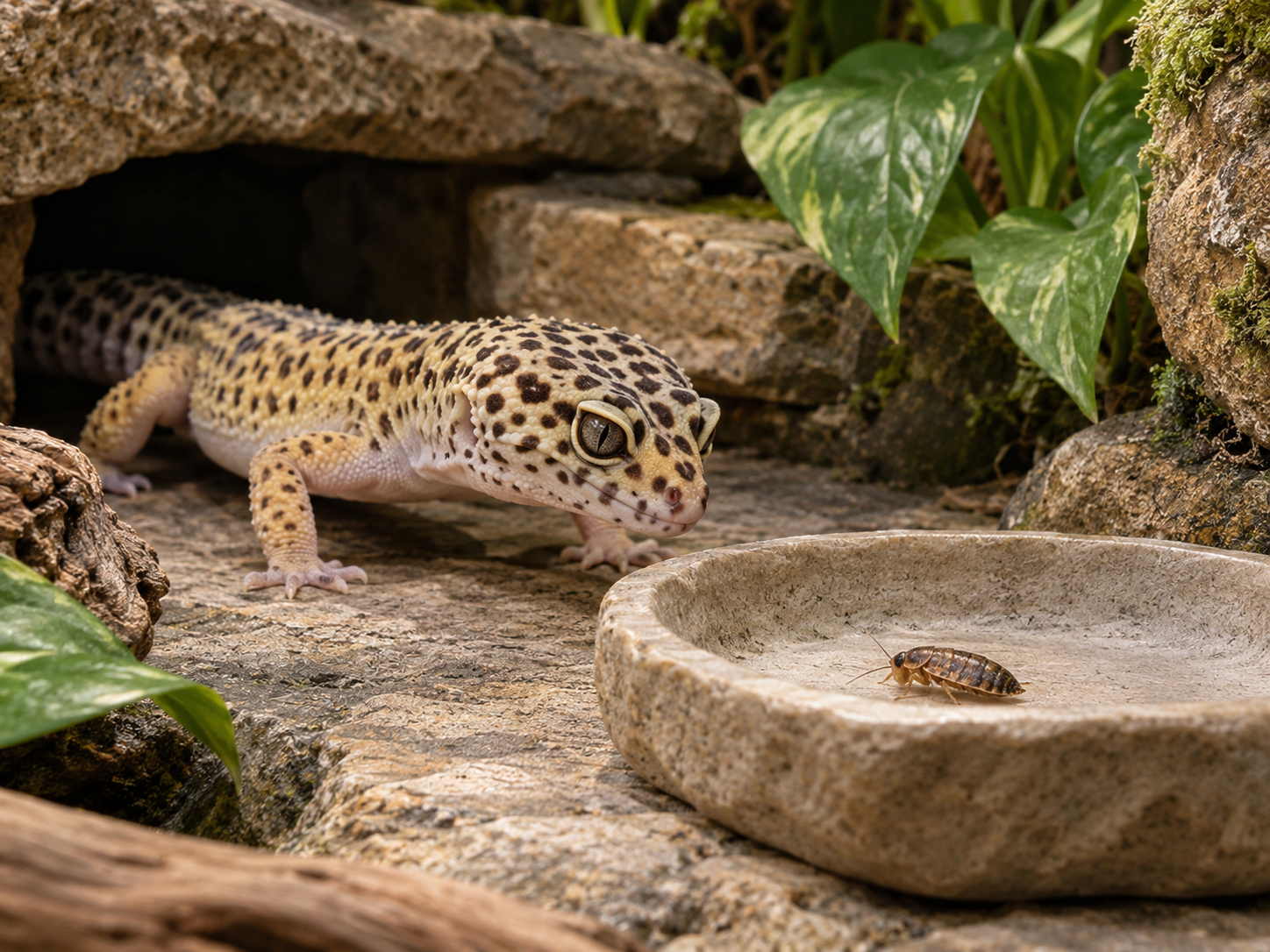
The single best predictor of impaction is not which species you feed, it is whether the feeder is too big. The standard rule of thumb is that a feeder should be no longer than the width between your animal's eyes. That one measurement scales with the animal, applies across every species on this page, and is the simplest guard against a feeder that is too large to pass safely. Our full feeder insect size chart breaks the rule down by species and by pet.
This is also why growing juveniles are overrepresented in impaction stories: keepers forget to size up as the animal grows, so a feeder that was safe last month quietly becomes too big this month. When you are between two sizes, go smaller. A slightly undersized feeder just means offering one more; a slightly oversized one is the actual risk.
The animal matters: cold and dehydrated guts move slower
A feeder can be perfectly sized and still cause trouble if the animal eating it cannot process it properly. Reptiles digest using external heat, so an animal that is too cool for its species will move food through its gut far more slowly than one basking at the right temperature, and a slow-moving gut gives any meal more time to become a problem. This is exactly why keepers are told to offer a warm basking spot after a big feeding, not just before one.
Dehydration works the same way, from the other direction: without enough water on board, a reptile's gut simply has less to work with to keep a meal moving. Feeders that carry their own moisture, like hornworms and BSFL, are a mild hedge here, but they do not replace an animal having proper access to water and the right thermal gradient in its enclosure.
The enclosure matters too: loose substrate
A meal is not the only thing that can end up in a reptile's gut. Loose, particulate substrate such as loose sand or fine loose soil can be swallowed accidentally along with a feeder, especially by an animal that lunges or strikes hard at moving prey, and that swallowed substrate is a separate impaction risk layered on top of whatever it was chasing. This is why many keepers feed in a separate dish or a bare-bottomed feeding container rather than directly on loose substrate.
None of this means loose substrate is automatically dangerous, plenty of animals are kept on it without incident, but it is a real variable that has nothing to do with which feeder species you chose. If you free-feed on loose substrate and have any doubts, moving feeding time to a dish removes this variable entirely.
The safest rotation: soft-bodied feeders, sized right
Put the whole picture together and the practical takeaway is simple: lean on soft-bodied, easy-to-digest feeders as your rotation's base, and treat firmer, larger feeders as an occasional addition sized with extra care. Black soldier fly larvae are a particularly easy staple, soft-bodied, naturally calcium-rich, and sized in small, medium, and large so you can match them to almost any mouth with only light dusting.
Round out the rotation with hornworms for hydration, silkworms for a lean, gentle treat, and dubia roaches as the everyday staple, checking any new size against the eye-space rule before it goes in the enclosure. Our superworms versus mealworms guide goes deeper on sizing and storing the two firmer feeders on this list, if either is already part of your rotation.
The Easiest-Digesting Staple on Our Farm
Soft-bodied, naturally calcium-rich, sized for almost any mouth. The lowest-risk feeder in the rotation.
Frequently Asked Questions
Written by the TC INSECTS breeding team · Porter, Texas · Live Arrival Guarantee on every order
Have a care question? Ask our community.
Join Reptile Keepers USA, our free Facebook group for reptile, amphibian and invert keepers. Share your setups, get care help and swap feeder tips.
Join the free group