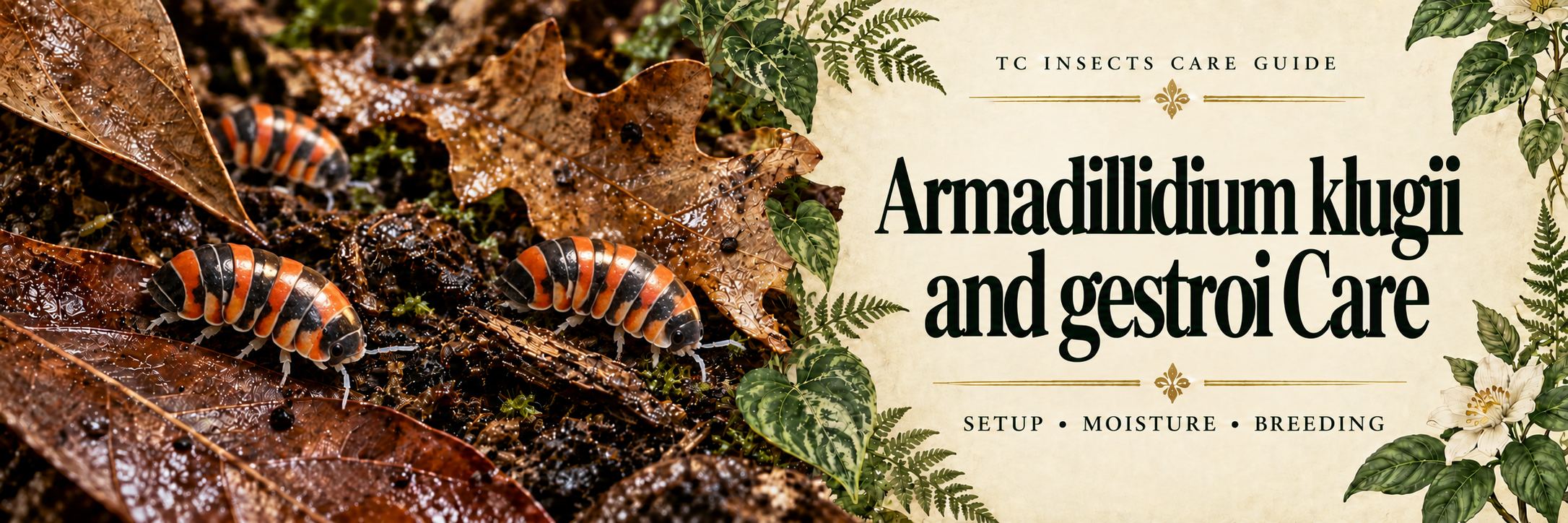
A practical guide to keeping Armadillidium klugii and gestroi.
Armadillidium klugii and Armadillidium gestroi are two Adriatic and Mediterranean pillbugs TC keeps that get overshadowed by their famous cousin, the Zebra isopod (Armadillidium maculatum). Klugii comes from the Croatia to Montenegro coastline, with newer sightings reported in Albania and Greece, and TC carries it in three named morphs: Orange Clown, Pudding, and Dubrovnik. Gestroi is a larger, yellow-spotted pillbug first described in 1900 from coastal Liguria, Italy. Both roll into a tight ball the way every true Armadillidium does, and both keep just as easily as a beginner Zebra or vulgare, they are simply less talked about.
Adriatic coastline; newer sightings in Albania and Greece
A larger, yellow-spotted pillbug
Easy, prolific rolling pillbugs, not a step up in difficulty
Two Armadillidium collectors overlook
Search interest in this genus overwhelmingly goes to the Zebra isopod, and it is easy to see why, the banding is striking and the marketing is everywhere. That leaves klugii and gestroi as two genuinely easy, genuinely attractive species that most keepers never hear about, even though TC stocks four named morphs across the two species. If you already keep an easy Armadillidium and want the next one, these two are a natural next stop before you spend real money on a rarer genus.
Neither species is a downgrade from Zebra, they are simply less marketed. Care-wise they belong in the same easy tier as any common Armadillidium, which our isopod genus comparison covers at the family level.
Armadillidium klugii: Orange Clown, Pudding, and Dubrovnik
Armadillidium klugii is native to the Adriatic coastline from Croatia down through Montenegro, with newer sightings reported further south in Albania and Greece. TC carries it under three named morphs: Orange Clown, a bright orange-toned line; Pudding, a softer, more muted color form; and Dubrovnik, named for the coastal city near the heart of the species' range. All three are the same species and the same care, the names simply track distinct color and locality lines the way Zebra's own morphs do.
Dubrovnik in particular sells out regularly given how few breeders work with it, so if you do not see it in stock when you are ready to buy, Orange Clown and Pudding are equally good starting points from the same species.
Armadillidium gestroi: the yellow-spotted pillbug from Liguria
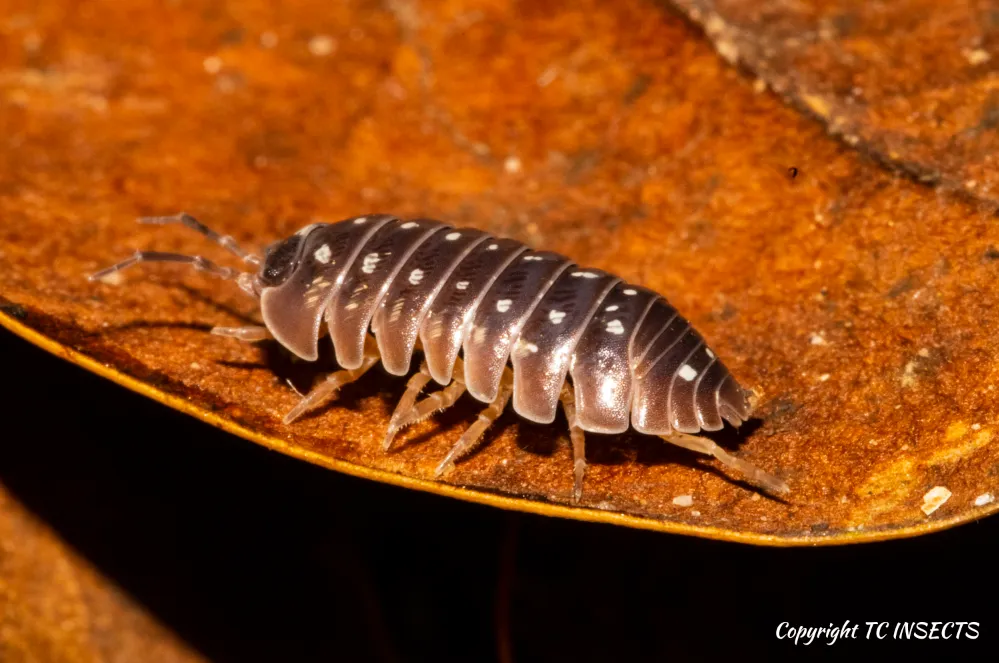
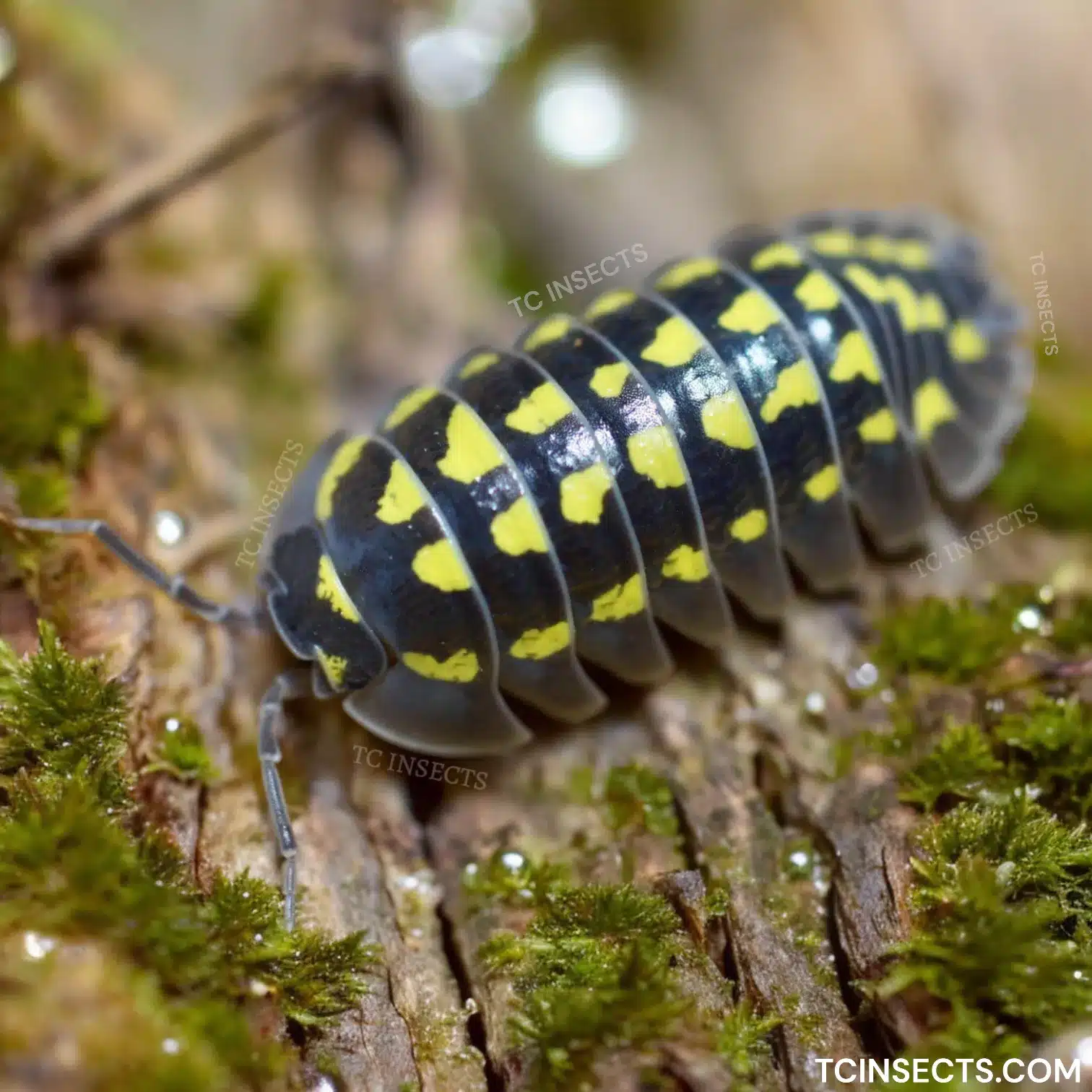
Armadillidium gestroi was first described in 1900 from coastal Liguria in northwestern Italy, and it is a noticeably larger pillbug than klugii, with a base body marked by yellow spotting that gives it real visual presence in a mixed collection. It is a true rolling isopod like every other Armadillidium here, tucking into a tight ball at the first sign of disturbance.
Because it runs larger than most beginner Armadillidium, gestroi also reads well in a display enclosure where you want individual animals to actually be visible, not just a moving carpet of small bodies.
Care: identical to any easy Armadillidium
Nothing about klugii or gestroi asks for a different setup than a beginner Zebra or vulgare culture. Give them a moisture-retentive substrate with a damp side and a drier side rather than a uniformly soaked bin, leaf litter to graze and hide in, and room-temperature conditions in the neighborhood of 65 to 78 F. Both species tolerate the normal humidity swings of an ordinary bioactive or culture bin without special accommodation.
Like every Armadillidium, calcium supports healthy molting, so keep a cuttlebone chunk or reptile-safe calcium source available in the bin, per our isopod calcium guide. Nothing here is genus-specific, it is the same baseline that keeps any easy Armadillidium culture healthy.
Breeding and colony growth
Both klugii and gestroi breed at the same genuinely prolific pace you would expect from an easy Armadillidium once a culture is established, generally reaching a visible, harvestable population within a few months given steady conditions and a reasonable founding group. Neither species needs special breeding intervention beyond the basics: steady moisture, steady temperature, and being left alone.
If a culture seems stuck rather than simply young, the causes are the same ones that stall any isopod colony, our guide on why an isopod colony won't breed works through them in order.
Building an Armadillidium collection
If Zebra is where you started, klugii and gestroi are the logical next additions, same easy care, genuinely different looks, and species most other keepers are not already showing off. Our Zebra isopod morph guide covers the wild-type and Chocolate Zebra side by side if you have not picked up that species yet.
And if you are building toward a true display collection rather than just a working culture, our best display isopods guide ranks the showier species worth chasing once you have the easy tier covered.
Beyond the Zebra: Klugii and Gestroi
The named klugii morphs and gestroi behind the species above, ready to add to your Armadillidium collection.
Frequently Asked Questions
Written by the TC INSECTS breeding team · Porter, Texas · Live Arrival Guarantee on every order
Have a care question? Ask our community.
Join Reptile Keepers USA, our free Facebook group for reptile, amphibian and invert keepers. Share your setups, get care help and swap feeder tips.
Join the free group