Tarantula Dehydration Signs: Shrivel, Curl or Death Curl?

Body moves normally; fix water and humidity, recheck in a day or two
Lost the pressure to hold legs out; often past what husbandry alone fixes
A different posture entirely; leave it alone and let it finish
Read the posture before taking action.
A shriveled, wrinkled abdomen with the spider otherwise standing and moving normally is early dehydration, and it is usually fixable within a day or two of correcting water and humidity. Legs curled in tightly underneath the body, called a death curl, is the far more serious stage, since a spider that has lost enough internal pressure to pull its own legs in is often past what a water dish alone can fix. A tarantula flat on its back with legs relaxed outward is neither of those, it is very likely a normal molt, so hold off before doing anything else. Here is how to tell the three apart and what to actually do for each.
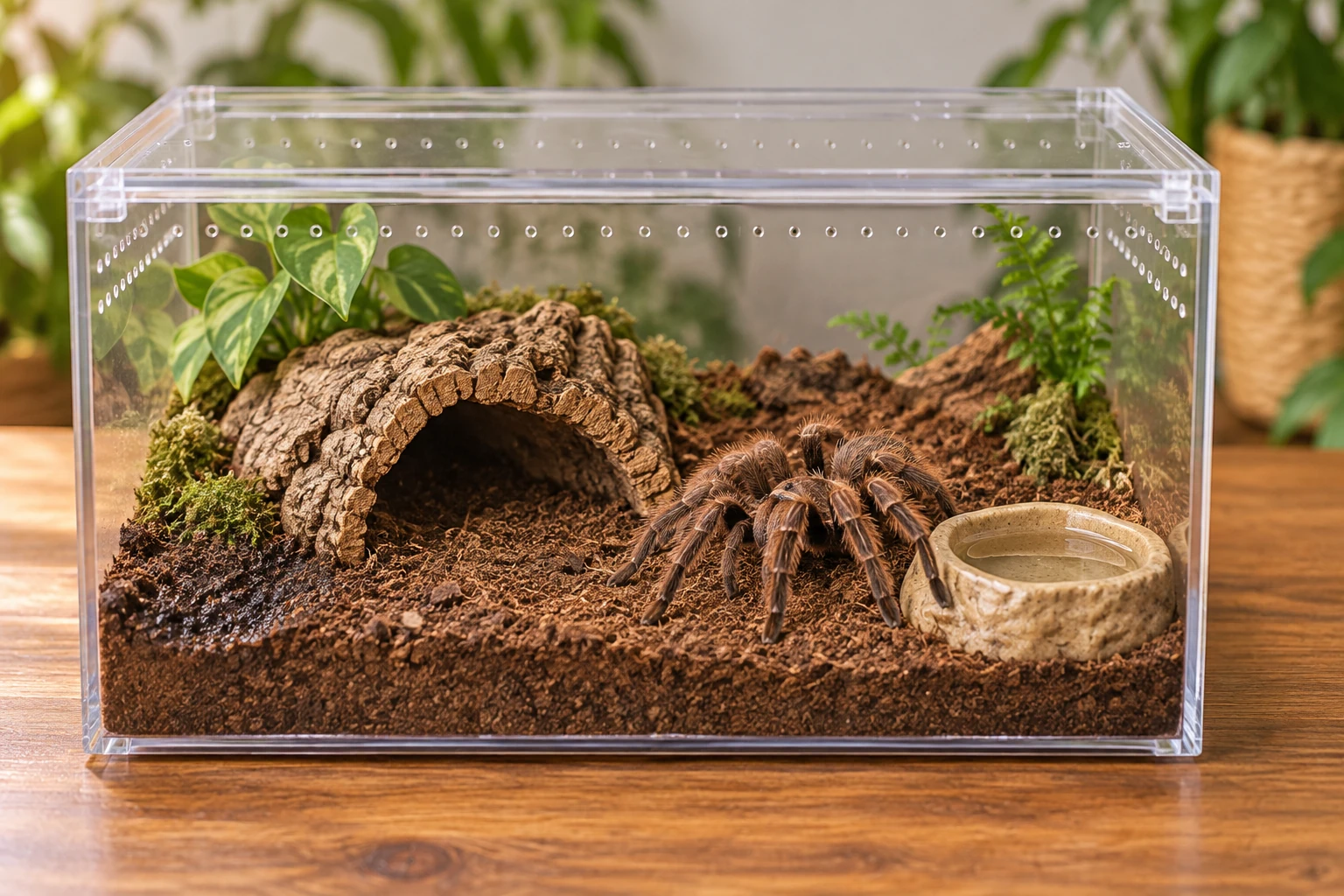
Accessible water. A balanced enclosure.
The original guide below distinguishes early shrivel, a serious curl, and normal molting posture. Keep water available and observe without unnecessary handling.
What does tarantula dehydration actually look like?
A tarantula holds its legs extended using fluid pressure, not muscle. Hemolymph, the tarantula's blood, gets pumped into each leg to straighten it, while muscles only pull the legs back in. That single fact explains almost every posture in this guide. When a spider loses too much fluid, whether from dehydration, an injury, or old age, it can no longer generate enough pressure to hold its legs out, and they curl in underneath the body instead. A milder version of the same fluid problem pulls water out of the abdomen first, leaving it shriveled while the legs still work fine. Staging how far that process has gone is the difference between a same-day fix and a genuine emergency.
Stage one: a shriveled abdomen with normal movement
This is the mildest and most common stage, and it is genuinely fixable. The abdomen looks wrinkled, dented, or noticeably smaller than usual, while the spider still walks normally, holds its legs out, and reacts when you approach. Confirm the water dish is actually full and within reach, since a knocked-over or bone-dry dish is the single most common cause. Check humidity against what the species needs, and dampen one corner of the substrate if it has dried out completely. A tarantula at this stage often perks up and refills within a day or two once water is genuinely available again.
Do not confuse this with premolt, which looks the opposite: a premolt abdomen is plump, tight, and glossy, not shriveled. If your spider has stopped eating but its abdomen still looks full, our guide to feeding strikes covers that normal fasting pattern instead, since the fix there is patience, not water.
Stage two: the death curl, legs curled tightly underneath
A death curl looks different from the shrivel above: the legs fold in tightly underneath the spider, on its feet, its side, or its back, and stay curled no matter how the body is oriented. It shows up for three main reasons: severe dehydration that has gone past what the abdomen alone can show, a real injury with hemolymph loss, or old age and natural decline, most often in a mature male nearing the end of his lifespan. Only the dehydration cause is reliably fixable. A death curl from old age or a badly injured spider often cannot be reversed no matter what you try, and that honest limit matters more than any technique below.
Two other postures get mistaken for a death curl and are not emergencies at all. A molting tarantula lies on its back with legs relaxed and spread outward, not curled tight, and needs to be left completely alone; our molting guide covers that full process. A stressed spider after a rehouse or disturbance pulls its legs up close over its own carapace while staying upright on its feet, which settles down with a quiet week. A true death curl keeps the legs tucked underneath regardless of which way the spider is sitting.
The ICU method: what it is, and why keepers argue about it
For a spider in a real death curl or showing severe dehydration, keepers often reach for a homemade ICU: a small plastic container with a few air holes, lined with paper towel soaked in lukewarm water and wrung out enough that no standing puddle remains. The spider goes in, the lid goes on, and it sits somewhere dim and warm for a couple of hours at most, checked periodically rather than left unattended. The goal is raising ambient humidity so the spider stops losing water through its book lungs, not soaking it. Never let standing water touch the underside of the abdomen, since that is exactly where the book lungs sit, and a spider cannot breathe through wet lungs any better than a drowning animal can.
Here is the honest part: the ICU method is genuinely contested. Even keepers who recommend it admit that a spider's recovery right after an ICU stay is sometimes coincidental timing with an approaching molt rather than proof the ICU itself worked. It is not a substitute for a full water dish and correct humidity going forward, only a short-term emergency step for a spider already in trouble. Reserve it for a real death curl or severe shrivel with sluggish movement, not routine care.
What actually causes a tarantula to dehydrate?
Most dehydration traces back to something simple: an empty or hard-to-reach water dish, or a room that runs drier than the species needs. The setup mistake that surprises new keepers most is a heat mat. Most commonly kept tarantulas do fine at normal room temperature and need no supplemental heat at all, and a heat mat run under a small enclosure dries the substrate and pulls moisture out far faster than a spider can replace it by drinking, often causing the exact problem it was added to prevent. Our enclosure setup guide covers the substrate depth and water dish placement that prevent this from the start.
If your home runs cold enough that you genuinely need extra heat, warm the whole room a few degrees before reaching for a heat mat, and keep a full water dish and a slightly damp substrate corner as standing habits, not just a response to a problem. Moisture-holding substrate and sphagnum moss make that damp corner easy to maintain.
Shrivel, Death Curl or Molt?
The Tarantula Rehydration Kit
Substrate and moss to hold a damp corner during recovery, plus a sized dubia roach for once your spider is eating again.
Frequently asked questions
What does a dehydrated tarantula look like?
Early dehydration shows as a shriveled, wrinkled, or noticeably smaller abdomen while the spider still walks and reacts normally. More severe dehydration can progress to a death curl, where the legs fold in tightly underneath the body regardless of how it is positioned. Check the water dish and humidity first at the shrivel stage, since that is usually enough to fix it within a day or two.
Is a tarantula death curl always fatal?
Not always, but it is serious. A death curl caused by dehydration alone is often reversible with prompt humidity and an emergency ICU setup. One caused by old age, a mature male's natural decline, or a severe injury is much less likely to recover no matter what you try. Treat any death curl as an emergency and rule out simple dehydration first.
How do I rehydrate a dehydrated tarantula at home?
For mild shrivel, refill the water dish, confirm it is reachable, and dampen one corner of the substrate. For a severe case or a death curl, an emergency ICU, a small container lined with lukewarm damp paper towel with no standing water, held for a couple of hours, is the step experienced keepers reach for, checking often rather than leaving it unattended.
What is the difference between a death curl and a molt?
A molting tarantula lies on its back with legs relaxed and spread outward and should be left completely alone. A death curl folds the legs in tightly underneath the spider no matter how it is sitting, standing, or lying, and points to severe dehydration, injury, or old age instead of a normal molt in progress.
Can a heat mat cause my tarantula to dehydrate?
Yes, and it is a common setup mistake. Most tarantulas do fine at normal room temperature with no supplemental heat at all. A heat mat under a small enclosure dries the substrate and speeds up water loss faster than a spider can replace it, which can cause the very dehydration it was meant to prevent.
How long can a tarantula survive without water?
It varies by species, humidity, and how the enclosure is set up, so there is no single safe number. A tarantula showing only a shriveled abdomen with normal movement usually has time to recover once water is available again. One already in a death curl or moving sluggishly needs help within hours, not days, so do not wait to see if it improves on its own.
Keep reading: feeding pre-killed prey and mites and quarantine.
Early dehydration shows as a shriveled, wrinkled, or noticeably smaller abdomen while the spider still walks and reacts normally. More severe dehydration can progress to a death curl, where the legs fold in tightly underneath the body regardless of how it is positioned. Check the water dish and humidity first at the shrivel stage, since that is usually enough to fix it within a day or two.
Not always, but it is serious. A death curl caused by dehydration alone is often reversible with prompt humidity and an emergency ICU setup. One caused by old age, a mature male's natural decline, or a severe injury is much less likely to recover no matter what you try. Treat any death curl as an emergency and rule out simple dehydration first.
For mild shrivel, refill the water dish, confirm it is reachable, and dampen one corner of the substrate. For a severe case or a death curl, an emergency ICU, a small container lined with lukewarm damp paper towel with no standing water, held for a couple of hours, is the step experienced keepers reach for, checking often rather than leaving it unattended.
A molting tarantula lies on its back with legs relaxed and spread outward and should be left completely alone. A death curl folds the legs in tightly underneath the spider no matter how it is sitting, standing, or lying, and points to severe dehydration, injury, or old age instead of a normal molt in progress.
Yes, and it is a common setup mistake. Most tarantulas do fine at normal room temperature with no supplemental heat at all. A heat mat under a small enclosure dries the substrate and speeds up water loss faster than a spider can replace it, which can cause the very dehydration it was meant to prevent.
It varies by species, humidity, and how the enclosure is set up, so there is no single safe number. A tarantula showing only a shriveled abdomen with normal movement usually has time to recover once water is available again. One already in a death curl or moving sluggishly needs help within hours, not days, so do not wait to see if it improves on its own.
Keep learning
Have a care question? Ask our community.
Join Reptile Keepers USA, our free Facebook group for reptile, amphibian and invert keepers. Share your setups, get care help and swap feeder tips.
Join the free group