
White Ducky Isopods for Sale
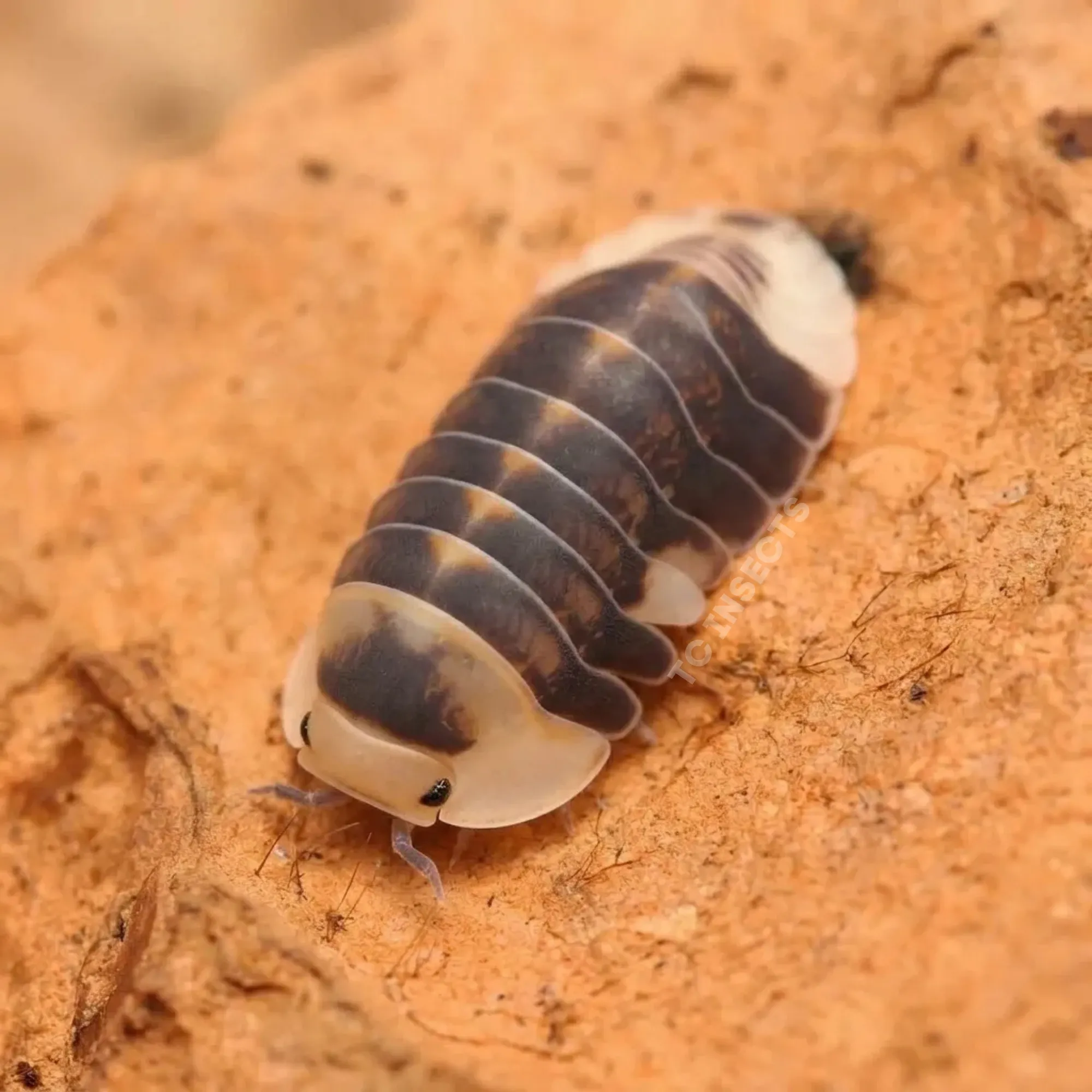
Cubaris sp. “White Ducky” is a black-and-white Thai Cubaris in the broader Rubber Ducky family. The body carries a pale white face, a deep gray to nearly black mid-section, and a white rump, with some animals showing
caramel-toned markings between the dark segments. Adults reach roughly 1.5 to 2.1 cm and breed slowly with small broods. This is a collector display animal rather than a working cleanup crew, and a culture rewards
keepers who can hold conditions stable over months.
Overview
White Ducky sits in the upper-mid pricing tier of true Cubaris. The high-contrast black-and-white pattern is the main draw, especially against dark substrate and natural cork bark. Care frameworks transfer cleanly from
other Thai Ducky-family Cubaris, so keepers with experience on Rubber Ducky, Red Pak Chong, or Rubber Bee will recognize the basic framework. However, this is not a starter species. Beginners should establish a
forgiving culture first and return to White Ducky with experience in hand.
Why Keep White Ducky Isopods?
- High-contrast pattern. The white face and rump set against a dark mid-section give the line one of the cleaner contrast looks among Ducky-family Cubaris.
- Ducky-family collector status. They fill the black-and-white slot on a Thai Cubaris shelf alongside Rubber Ducky, Red Pak Chong, and Rubber Bee.
- Stable color across generations. The pattern holds across the colony rather than fading or hybridizing within itself.
- Familiar care framework. Husbandry transfers cleanly from other Thai cave-region Cubaris, so keepers do not need to learn a new system.
- Pairs cleanly with Springtails. A shared springtail population helps manage surface mold during the slow startup phase.
Honest Note on the “White” in White Ducky
The trade name causes the single most common buyer expectation mismatch on this morph. White Ducky animals are not solid white. The white sits at the face and the rump, with a deep gray to nearly black mid-section in
the middle and sometimes caramel-toned banding between dark segments. Hobby sources describe the line variously as “black and white variation,” “chrome-like silver and white,” and “white anterior and posterior ends,
capping off a deep gray body.” Buyers expecting a uniformly white animal will be disappointed, while buyers expecting a high-contrast black-and-white pattern will get what they paid for. Worth knowing before purchase.
This morph is also sold by some breeders as “White Head Ducky,” which appears to be the same line under a slightly different trade name. If you see that designation elsewhere, the care framework is the same.
Care and Setup
White Ducky responds best to a stable humid setup with a clear moisture gradient. The goal is steady moisture, soft cover, calcium access, and a low-disturbance routine.
Temperature
Aim for 72 to 78 F. Room temperature in most homes is fine. However, avoid sustained heat above the low 80s, sudden cold drops below the mid-60s, and any heat source in direct contact with the bin.
Humidity
Keep humidity high overall, with one side of the bin consistently moist with sphagnum moss or hydrated substrate. The opposite side should stay slightly drier with leaf litter and rotting hardwood cover. A 70/30 or 80/20 moist-to-drier ratio is a practical starting point. However, a fully waterlogged bin is a common cause of molt failure in true Cubaris species, so stable moisture beats chasing high humidity numbers.
Substrate
Use a deep organic mix with coconut fiber, flake soil, sphagnum moss pockets, and broken-down hardwood. Substrate depth around 2 to 3 inches works well. Additionally, scattered limestone pieces give the colony a direct calcium-grazing surface that Thai cave-region Cubaris often use.
Food
Leaf litter and decaying hardwood form the dietary base. Supplement with TC INSECTS Isopod Food a couple of times per week, plus small portions of vegetables and a light protein item such as fish flake or dried shrimp. Remove uneaten food before it molds. In humid Cubaris setups, food management matters more than total food volume.
Ventilation
Moderate ventilation works best. If condensation never clears off the lid, increase airflow. If the moist side dries within a day, hydrate and reduce ventilation slightly. Stable airflow beats either extreme.
Bioactive Use
White Ducky works as a display population in a humid bioactive enclosure but is not a heavy-duty cleanup crew. For working cleanup in a larger reptile or amphibian enclosure, pair them with a faster workhorse species and keep White Ducky as the visible accent layer.
Breeding Notes
Production is slow with small broods. New cultures commonly go through a quiet first month while the founder group settles, and visible juveniles can take longer to appear than with Powder series or Dairy Cow Isopods.
Calcium access matters during this phase. A pinch of TC Calcium Ultra Fine dusted lightly over a feeding area every couple of weeks supports molting and brood development. Avoid digging through the substrate to check
progress, since repeated disturbance is one of the most common reasons new Cubaris cultures stall. Additionally, do not co-house White Ducky with other Ducky-family Cubaris in the same bin because pedigree tracking
becomes impossible once lines mix.
Best For
- Cubaris collectors filling out the Rubber Ducky family shelf.
- Display vivariums where the high-contrast pattern is meant to be visible.
- Intermediate keepers with prior experience on Thai Ducky-family Cubaris.
- Patient breeders comfortable with small broods and slow colony growth.
Not Best For
- Buyers expecting a solid white animal. The white sits at the face and rump only, with a dark mid-section in between.
- Co-housing with other Ducky-family Cubaris. Pedigree tracking becomes impossible once lines mix.
- Dry desert enclosures. Without a reliable humid zone, they will not establish.
- Feeder use. Slow growth and unit cost make them impractical as reptile food.
- Heavy-duty cleanup duty in large bioactive enclosures.
- Beginners. Start with Porcellionides pruinosus morphs or Dwarf Whites first.
Origin and Locality Notes
White Ducky is commonly associated with Thailand in the hobby trade and is widely described as a color variation within the broader Rubber Ducky family. As a result, this line shares the Thai limestone-region care
framework with related Ducky-family Cubaris. However, the exact wild collection locality has not been publicly released, which is typical across the Ducky family because collection sites are often protected from over-
harvest. The species identity is undescribed, and “Cubaris” is hobby shorthand that may eventually be revised as taxonomy in this group continues to change.
Receiving and Acclimation
Open the package indoors in a calm, temperature-stable area away from direct sun, heat sources, and cold drafts. Animals may stay still or curl up when stressed after shipping. This is normal and does not always mean they
are dead. Transfer the animals and any included moss or shipping debris directly into a pre-prepared bin with deep moist substrate, leaf litter, multiple cork bark hides, calcium, and a damp moss retreat already in place.
Plan for a quiet first week to two weeks. New cultures commonly stay hidden under cover while they settle, and frequent digging through the substrate slows recovery rather than speeding it. Hydrate the moist side as
needed, offer only a pinch of food, and let the colony come to the surface on its own schedule.
Recommended Add-Ons
- TC INSECTS Ultra Isopod Habitat Kit for a richer starter setup suited to premium Cubaris and long-term colonies.
- TC INSECTS Isopod Food for a balanced supplemental diet that supports molting and steady brood development.
- TC INSECTS Assorted Hardwood Leaf Litter for grazing surface, juvenile cover, and a slow-release organic food source.
- TC Calcium Ultra Fine for steady calcium access during molts and brood development.
- Springtails for shared bin use to help control surface mold during the slow startup phase.
Frequently Asked Questions
Are White Ducky Isopods actually white?
Partly. The white sits at the face and rump, with a deep gray to nearly black mid-section in between. Buyers expecting a solid white animal will not get that, while buyers expecting a high-contrast black-and-white pattern will. The trade name causes more buyer confusion than any other Ducky-family Cubaris.
Is White Ducky the same species as Rubber Ducky?
Based on common hobby reporting, yes. Most sources describe White Ducky as a color variation, version, or morph of Cubaris sp. “Rubber Ducky” rather than a separate species. As a result, husbandry transfers cleanly between the two. However, the species identity is undescribed in either case.
Are White Ducky Isopods beginner-friendly?
No. They are an intermediate-to-advanced project. Beginners should establish a forgiving culture such as Porcellionides pruinosus “Powder Orange” or Dwarf Whites first, then return to White Ducky once a reliable husbandry routine is in place.
How fast do White Ducky Isopods breed?
Slowly, with small broods. New colonies often need patience before visible juveniles appear, and growth tends to be gradual rather than explosive. Stable conditions and minimal disturbance matter more than any feeding trick.
Can I keep White Ducky with other Cubaris?
Not in the same bin. Co-housing with Rubber Ducky, Red Pak Chong, Rubber Bee, or other Ducky-family Cubaris makes pedigree tracking impossible, and any future sales of culture surplus become unsellable as a pure line. Run each in its own dedicated tub.
What humidity range works best?
High overall humidity with a clear moisture gradient. Aim for one consistently moist zone and a slightly drier opposite side. However, avoid a wet, swampy bin in all cases, since waterlogged conditions cause molt failure in true Cubaris species.
Learn More About Terrestrial Isopods
The following references give keepers useful background on isopod respiration, biology, and ecology that supports better Cubaris culture decisions.
-
NCBI PubMed Central: Developmental Processes of Air-Breathing Organs Among Terrestrial Isopods. A peer-reviewed scientific paper on how terrestrial isopods breathe through pleopodal lungs. This explains at a biological level why stable humidity is the single most important husbandry variable for any Cubaris culture, since dry pleopods cannot exchange gas effectively.
-
University of Missouri Extension: Sowbugs and Pillbugs. A university extension overview of terrestrial isopod biology, feeding habits, and reproductive cycles. As a result, it gives keepers a useful framework for understanding why broods are small, why leaf litter matters, and how the marsupial brood pouch shapes reproduction in this group.
-
Field Studies Council and Biological Records Centre: Woodlice and Waterlice Atlas. A UK scientific reference on isopod biology, including the pleopodal respiratory system shared by all terrestrial isopods. Useful background for keepers building a long-term understanding of why moisture and substrate depth matter across the entire group, not just Cubaris.



Reviews
There are no reviews yet.