
Rubber Ducky Isopods for Sale
TC INSECTS ships live captive-bred Cubaris sp. “Rubber Ducky” as a display and breeding culture for experienced isopod keepers and collectors. This is the most visually distinctive isopod in the hobby and one of the most
recognized collector invertebrates worldwide. However, it is also one of the more demanding species to keep well. Therefore, this page covers what the animal actually needs, why, and what honest expectations look like for
new keepers.
Overview
Cubaris Brandt, 1833, is a genus of woodlice in the family Armadillidae — a different family from the Porcellionidae that includes all the Porcellio species in this catalog. The Armadillidae family is characterized by strongly
convex body shapes and includes species that can conglobate (roll into a tight ball). As a genus, Cubaris species show lower reproduction rates and longer lifespans than most other isopod genera. The Rubber Ducky is a
formally undescribed species within this genus, hence the “sp.” designation — the trade name “Rubber Ducky” has no formal scientific species description behind it.
The Duck Face — Shape and Color
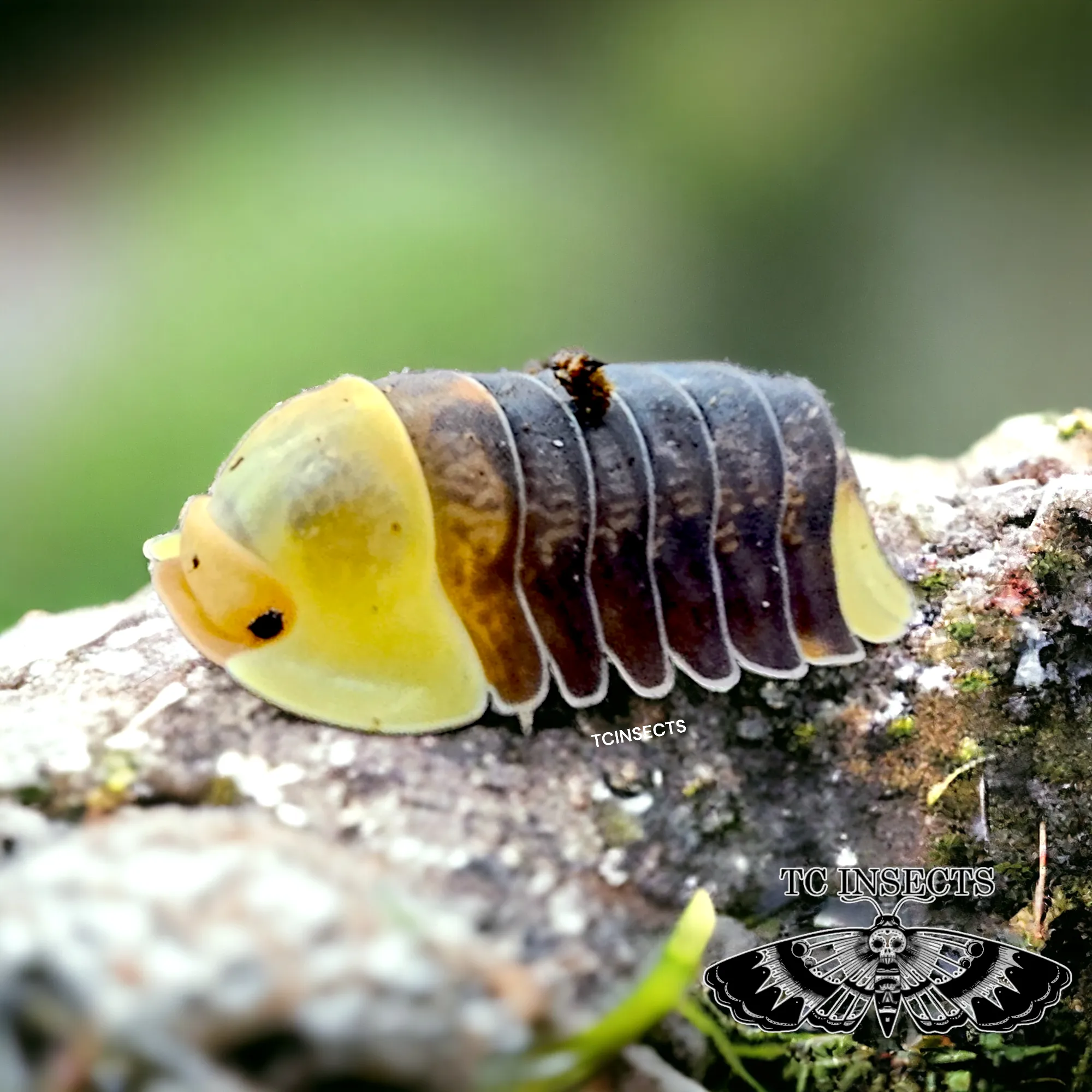
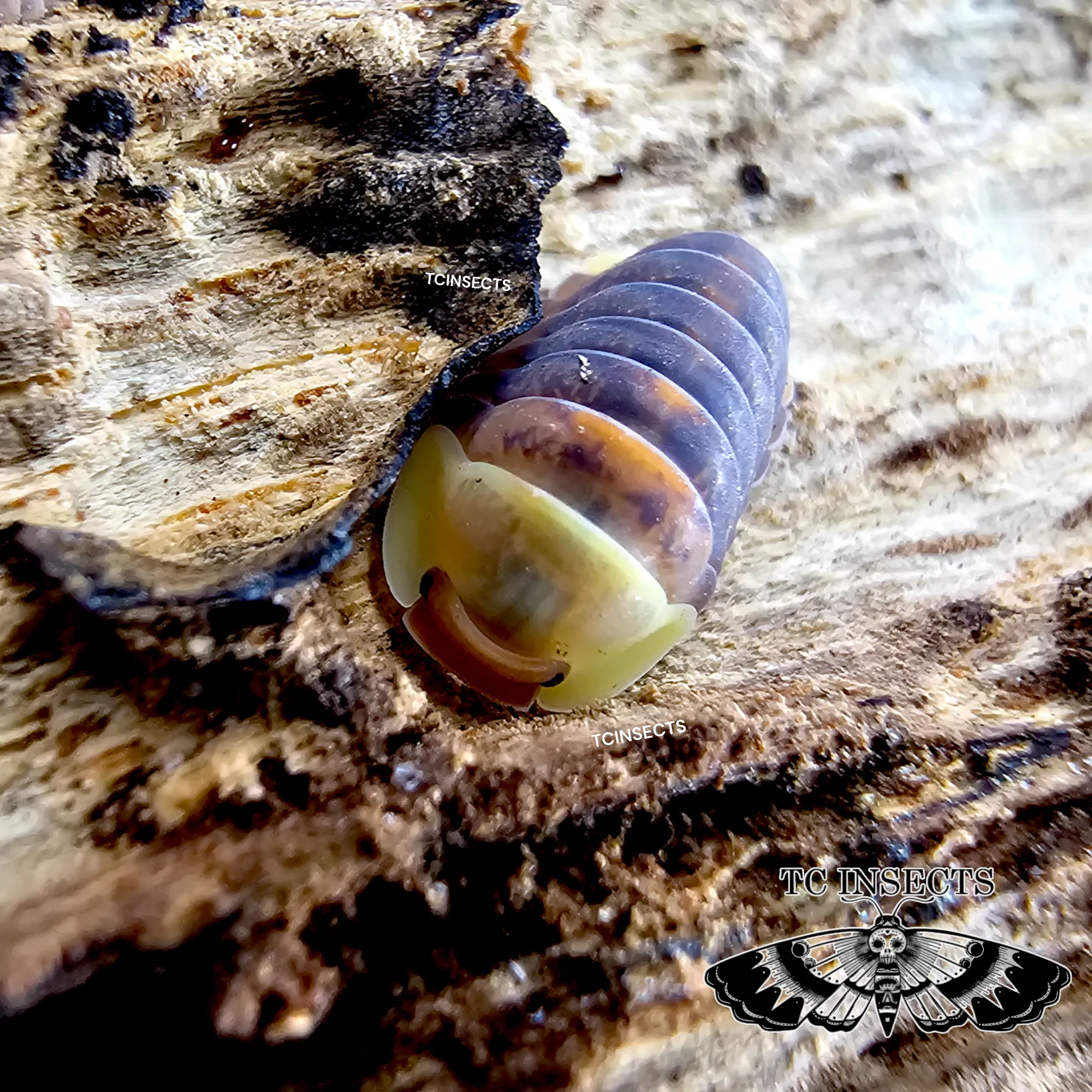
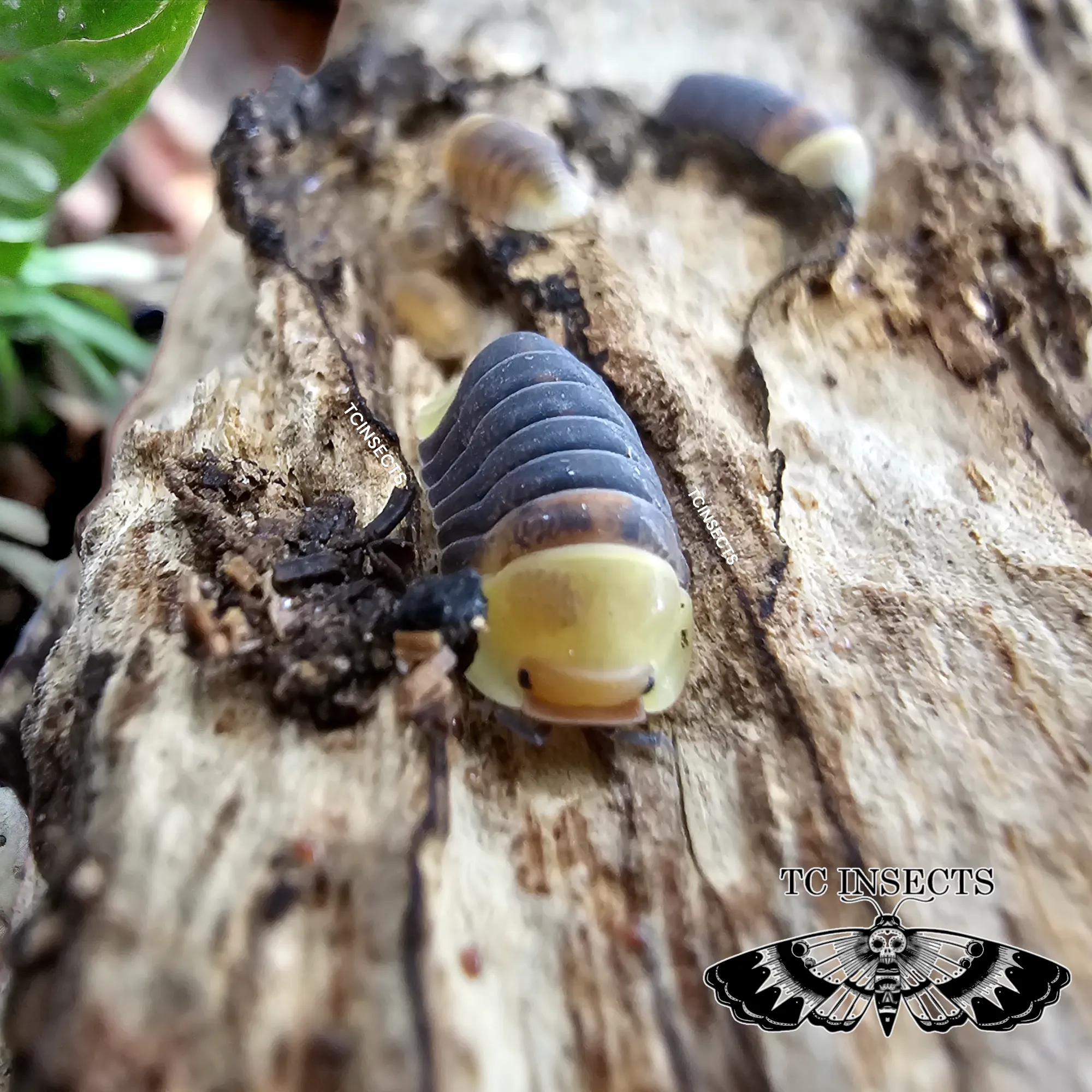
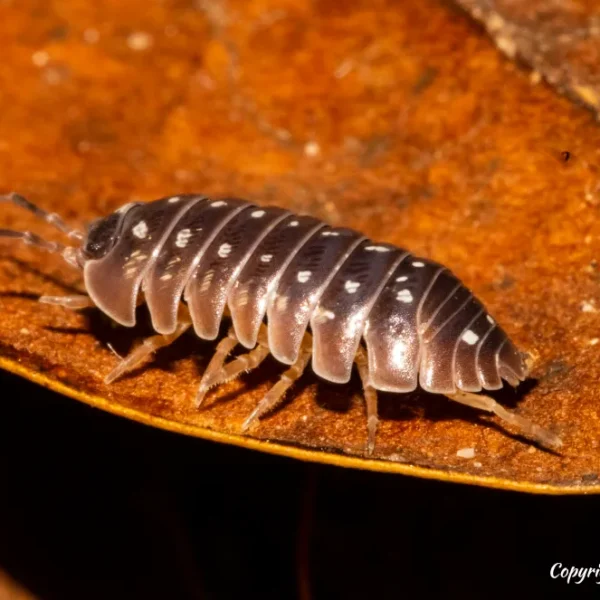
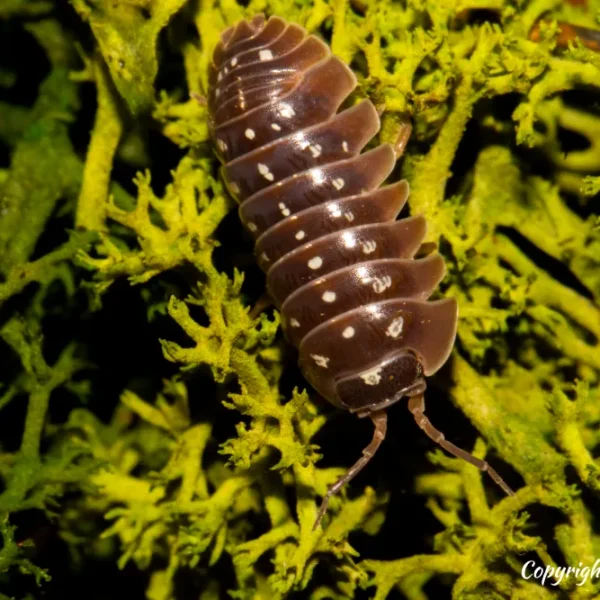
The Rubber Ducky’s common name comes from both the structure and color of the animal, not just the color alone. The cephalon — the rounded head shield at the front of the body — is strongly convex in Armadillidae
species. Viewed from the front, the Rubber Ducky’s cephalon creates a bill-and-face silhouette that closely resembles the face of a rubber bath toy duck. The vivid yellow-orange body coloration reinforces this resemblance.
When an active adult faces the viewer directly, the visual effect is unmistakable. This is why the species triggered an entirely new category of collector interest in the hobby when it first appeared widely.
Honest Note: This Is Not a Beginner Species
The Rubber Ducky is consistently described as intermediate-to-advanced across reputable hobby sources. It requires warm, stable temperatures at the higher end of the range, consistently high humidity combined with
good ventilation, deep substrate with specific calcium supplementation, and a long, patient timeline to see colony growth. Keepers accustomed to the fast, forgiving behavior of Porcellio laevis or other beginner isopods
should expect a significantly different experience.
Additionally, this is a slow breeder. A well-established colony may double in size every 6 to 12 months under ideal conditions. Weeks of no visible juvenile output is normal. The colony rewards patience and stable care
rather than frequent adjustments. Furthermore, at a premium price per animal, a failed culture from inadequate setup is a significant loss. Therefore, set up the enclosure correctly before the animals arrive.
Honest Note: Conglobation Is Normal Behavior
Cubaris sp. “Rubber Ducky” belongs to the family Armadillidae and can roll into a tight ball — conglobation — when disturbed or stressed. Unlike Porcellio species, which run when threatened, Rubber Duckies may stay in
this ball state for an extended period, particularly after arrival, handling, or enclosure disturbance. This is normal defensive behavior and is not a sign of illness in a freshly arrived or recently disturbed animal. A healthy,
settled colony will show normal activity during low-light or nighttime periods.
The Cave Origin — Why Care Requirements Are What They Are
Cubaris sp. “Rubber Ducky” is reported from limestone cave systems in Thailand. That origin explains every care requirement that distinguishes this species from the rest of this catalog.
Limestone caves maintain consistently high humidity from dripping water and saturated air. Therefore, this species needs 70 to 80% humidity rather than a simple moisture gradient. Caves also maintain stable, warm
temperatures year-round. Therefore, 72 to 80°F is the functional range rather than a wide tolerance band. Limestone provides calcium carbonate throughout the environment. Therefore, limestone supplementation
performs better than cuttlebone alone. The cave environment has abundant organic debris — bat guano, decaying plant matter, fungal material — but also deep substrate for burrowing and molting. Therefore, 6 or more
inches of substrate is the target, not the minimum.
Understanding the origin is the most efficient path to understanding the care. Every unusual requirement has a direct cave-environment explanation.
Care and Setup
Setup Framework
A proper Rubber Ducky enclosure needs high humidity maintained with good ventilation, deep organic substrate, a limestone calcium source, and consistently warm temperatures. Below, each section covers the practical details.
Temperature
Hold the culture between 72 and 80°F. This is warmer than most beginner isopod species and reflects the stable tropical cave temperatures of the origin environment. Room temperature is often too cool for optimal breeding. Therefore, a warm room, a heat mat on a thermostat, or a reptile room environment helps maintain the preferred range consistently. Avoid temperature swings — cave environments are thermally stable, and instability stresses this species.
Humidity and Ventilation
Maintain 70 to 80% relative humidity overall, with a moist retreat area taking up roughly one-third of the enclosure. This is significantly higher than most hobby isopods. However, high humidity alone is not enough — good ventilation must be maintained simultaneously. Stagnant humid air causes mold, respiratory stress, and culture failure. Therefore, use cross-ventilation rather than a sealed container. The goal is humid and fresh, not humid and stagnant.
Mist the moist third of the enclosure regularly — in drier climates, daily misting may be needed to maintain humidity levels. Keep the remaining two-thirds drier but not dry. The gradient allows the colony to self-regulate.
Substrate Depth and Composition
Use at least 6 inches of substrate — deeper is better. The deep substrate supports burrowing, molting, and brooding behavior consistent with a cave-dwelling species. A good base includes ABG substrate, coco fiber, or a blend of organic topsoil and sphagnum moss. Add rotting hardwood pieces, cork bark, and decaying leaf material throughout. Keep TC INSECTS Assorted Hardwood Leaf Litter available at all times as the primary grazing surface.
Calcium — Limestone First
Limestone is the preferred calcium source for this cave-origin species and outperforms cuttlebone alone in supporting active breeding. Provide limestone rocks or crushed limestone as the primary calcium supplement alongside a secondary source such as cuttlebone or TC Calcium Ultra Fine. Multiple calcium sources available simultaneously are better than a single source. The cave origin of this species means the animals evolved with calcium-carbonate-rich rock throughout their environment, and replicating that is essential for colony health and breeding success.
Food
Keep leaf litter and rotting white wood available at all times as the base diet. Additionally, offer protein two to three times per week — dried shrimp, fish flakes, or TC INSECTS Isopod Food all work well. Some organic vegetables high in carotenoids — carrot, sweet potato, pumpkin, sweet pepper — support color vibrancy and nutrition. Offer small pieces and remove uneaten fresh food within 24 to 48 hours. Overfeeding in a high-humidity environment creates mold and mite problems rapidly.
Pair with Springtails to manage the mold layer in the moist zone. A springtail culture is strongly recommended in any Rubber Ducky enclosure, not optional.
Breeding Notes
Females carry developing young in a marsupium and release mancae when ready. The colony is a slow-to-moderate breeder. Expect the first few months after arrival to be primarily establishment rather than visible juvenile output. Once the colony is settled, stable, and well-fed, mancae will appear — but the pace will be measured in months rather than weeks.
A colony of 20 or more adults in ideal conditions produces mancae consistently throughout the year. However, getting to that population size takes time. Therefore, avoid disturbing the enclosure frequently — minimal intervention supports breeding better than active management. Check the enclosure during low-light periods when the colony is most active.
Failed molts are the most common sign of a calcium deficiency or humidity that is too low. If you see failed molts, add limestone, increase misting frequency, and check ventilation. Some mold in a new setup is normal — add springtails rather than disturbing the culture.
Best For
- Experienced isopod keepers who can maintain consistently warm temperatures and high humidity long-term
- Planted tropical vivarium builds designed around a premium display species — dart frog tanks, crested gecko enclosures, and similar high-humidity setups
- Dedicated breeding projects where slow colony growth is planned for and managed over months
- Collectors who want the most iconic and visually recognizable isopod in the hobby
- Keepers who already keep other Cubaris species and understand the genus’s care demands
Not Best For
- First-time or beginner isopod keepers. This species requires warm temperatures, high humidity, deep substrate, limestone calcium, and patient long-term management that beginners are rarely set up for.
- Keepers expecting fast colony growth. At 6 to 12 months to double colony size, this is not a cleanup crew species in the traditional sense.
- Dry or arid enclosures. The 70 to 80% humidity requirement cannot be met in most dry-climate setups without active management.
- Keepers who cannot maintain 72 to 80°F consistently. Cool temperatures slow breeding and stress the colony.
Receiving and Acclimation
Open the package soon after delivery in a calm, warm indoor area away from drafts and direct light. Some animals may be conglobated after shipping stress — leave them undisturbed for several minutes before moving them. Move all packing material directly into the prepared enclosure, since juveniles are easy to miss when picking individuals out.
First Week Priorities
Place the animals near the moist zone under cork bark or leaf litter cover. Then leave the enclosure mostly undisturbed for the first two weeks. Do not check under every hide daily. Conglobation and hiding for several days after arrival is normal. Feed lightly — a small piece of vegetable, some leaf litter, and a protein source — and check whether food has been eaten before the next feeding rather than increasing portions. The enclosure should already be at 72 to 80°F and 70 to 80% humidity before the animals arrive.
Recommended Add-Ons
- TC Calcium Ultra Fine as a secondary calcium source alongside limestone — both available simultaneously for best results.
- TC INSECTS Assorted Hardwood Leaf Litter as the primary grazing surface and base diet.
- TC INSECTS Isopod Food for the protein rotation twice per week.
- TC INSECTS Ultra Isopod Habitat Kit for a richer starting substrate and habitat base suited to a premium species.
- Springtails — strongly recommended, not optional, for mold control in the high-humidity enclosure this species requires.
Frequently Asked Questions
Why is my Rubber Ducky rolled into a ball and not moving?
Conglobation is normal defensive behavior for Cubaris species, which belong to the family Armadillidae — the same family that includes conglobating pill bugs. The Rubber Ducky may stay rolled for an extended period after shipping, handling, or disturbance. Leave the animal undisturbed in a warm, humid environment. A healthy individual will uncurl when it feels secure, typically within minutes to hours. If an animal stays conglobated for more than a day in otherwise stable conditions and does not uncurl after a prolonged quiet period, check temperature and humidity first.
Why does limestone matter more than cuttlebone?
This species is reported from limestone cave systems in Thailand, where calcium carbonate rock is the constant background calcium source. The animals evolved in an environment saturated with limestone. Cuttlebone provides calcium carbonate but in a different format and concentration than what the cave environment delivers. Multiple keeper sources consistently report that colonies become visibly more active and breed more successfully when limestone is the primary calcium source, with cuttlebone as a supplement. For best results, provide both rather than choosing one.
Is this species good for a bioactive terrarium?
Yes, in the right enclosure. The Rubber Ducky works well as a display species in high-humidity tropical bioactive setups — dart frog vivariums, crested gecko enclosures, and similar builds that maintain 72 to 80°F and 70
to 80% humidity naturally. However, it should not be introduced into a tropical enclosure as a cleanup crew substitute for faster-breeding species. The colony grows slowly, and a high-predation enclosure will deplete the
population faster than it can recover. Use springtails for the bulk of cleanup work and the Rubber Ducky as the display component.
How is this different from other isopods in the TC INSECTS catalog?
The Rubber Ducky is in a different genus (Cubaris), a different family (Armadillidae), and a different care class from all the Porcellio and Porcellionides species in this catalog. It conglobates; they do not. It needs 72 to
80°F and 70 to 80% humidity; most Porcellio need 65 to 78°F and moderate humidity. It breeds in months; laevis breeds in weeks. It prefers limestone calcium; laevis does fine with cuttlebone. It is a cave-origin premium
display species; laevis is a cosmopolitan cleanup crew. The two groups represent different tiers and purposes in the hobby.
Why does the “sp.” appear in the scientific name?
“sp.” is shorthand for “species” and signals that the exact species has not yet been formally described in the scientific literature. The trade name “Rubber Ducky” identifies the form in the hobby, but no formal taxonomic
paper has named and described this isopod as a new species with a Latin binomial. This is common among recently introduced hobby *Cubaris* — the hobby often moves faster than the formal taxonomic literature.
Therefore, the name remains *Cubaris sp.* “Rubber Ducky” until a formal description is published.
Learn More About Cubaris
-
Wikipedia: Cubaris Brandt, 1833. The genus article confirming that Cubarisspecies have, on average, lower reproduction rates and longer lifespans than other isopod genera — a genus-wide trait that explains why the Rubber Ducky breeds slowly even under ideal conditions. Also covers the family Armadillidae context, including the strongly convex body shape that enables conglobation.
-
iNaturalist: Cubaris. Observation records for the Cubaris genus showing the concentration of described species in Southeast Asia, particularly Thailand. Useful for understanding why Thai limestone cave systems — with their stable temperatures, high humidity, and calcium-rich substrate — produce so many visually distinctive Cubarisspecies, and why recreating those conditions in captivity is the key to keeping them successfully.
-
PMC / NCBI: Water conservation in terrestrial isopods. Peer-reviewed research on how terrestrial isopods manage water loss through gill structures and behavioral moisture-seeking. Directly relevant to understanding why high-humidity maintenance is not optional for a cave-origin species like the Rubber Ducky — their gill structures are adapted to consistently humid environments and cannot compensate for prolonged dry conditions the way arid-adapted species can.




Reviews
There are no reviews yet.