

Dalmatian Isopods for Sale
Overview
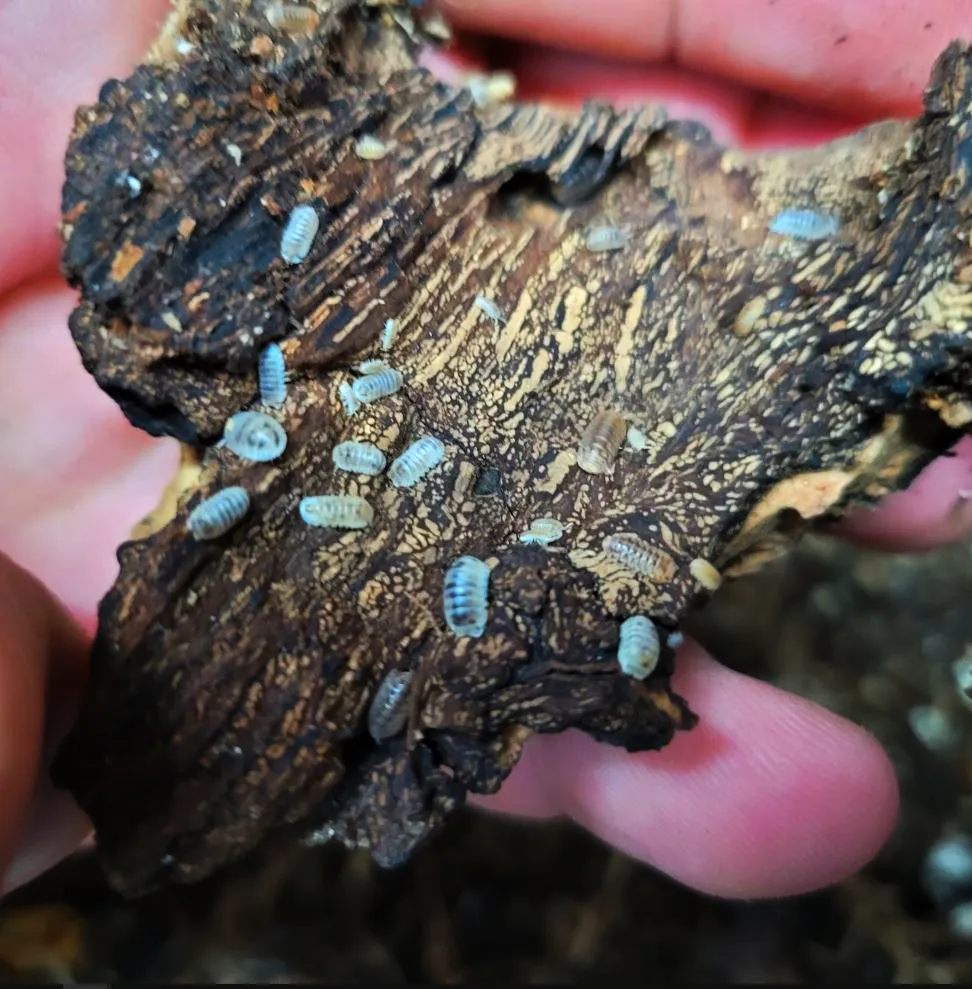
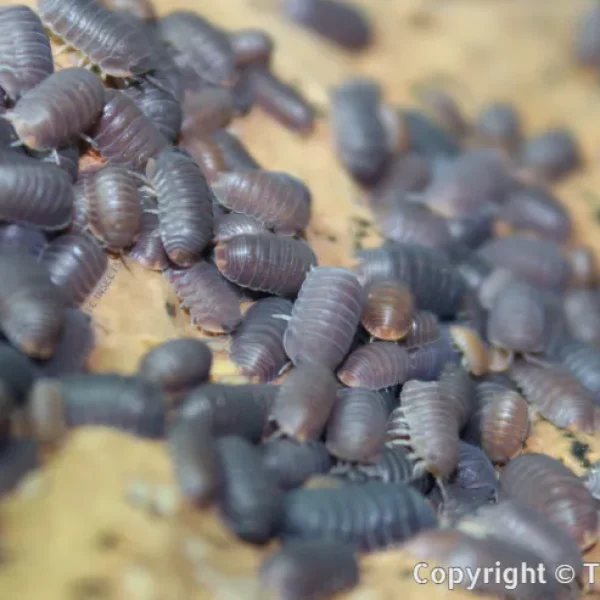
Venezillo parvus “Dalmatian” is a small ball-rolling dwarf isopod with a documented spotted pattern. Adults reach roughly 5 mm, with a pale rounded body and darker spotting that gives the hobby morph its Dalmatian name. The most distinctive feature is the conglobation behavior: when disturbed, individuals curl into a tight ball, which is the same defense response the much larger Armadillidium species are known for.
This species sits in a different lane from most catalog isopods. The visible spotted pattern at dwarf size, combined with true ball-rolling behavior, makes it appealing to collectors who already keep larger conglobating species and want a dwarf version. However, reproduction runs slow to moderate, so the colony will not build out as a working cleanup crew the way Dwarf Whites or Powder species do.
Why Keep Venezillo parvus “Dalmatian”?
Customers usually pick this species for one or more of these reasons:
- Ball-rolling behavior at dwarf size. First, true conglobation (curling into a tight ball) is uncommon among small isopods. As a result, this species offers the same defensive behavior as Armadillidium classics like Magic Potion or Pudding, but at a tenth of the body size.
- Visible spotted pattern. Next, the Dalmatian-style spotting on a pale base reads clearly even at 5 mm. Therefore, this is one of the few dwarf isopods that holds visual interest at culture-bin viewing distance.
- Documented taxonomy. Additionally, Venezillo parvus has a confirmed scientific identification, originally described as Armadillo parvus by Budde-Lund in 1885. This is reassuring for collectors who want a species with traceable history rather than a hobby-only locality designation.
- Less common in the trade. Finally, this species is harder to find than common cleanup-crew isopods. Accordingly, adding it to a collection brings variety without overlapping any other catalog species.
Care and Setup
Care matches other small humid-loving dwarf species, but disturbance sensitivity matters more than usual for this one. The ball-rolling response is normal behavior, but repeated disturbance can stress the culture and slow an already slow-growing colony further. Therefore, set up the enclosure well, then leave it mostly alone.
Temperature
Aim for 70 to 80°F, with a stable sweet spot around 72 to 78°F. Avoid direct sun, heat lamps, and sudden temperature swings. Like most small dwarf species, this one does not tolerate wide temperature shifts well.
Humidity
Aim for medium-high to high humidity with a reliable moist area. Sphagnum moss, leaf litter, and damp substrate on one side, slightly drier bark and leaf litter on the other. However, balance the moisture with light ventilation. Stagnant wet bins crash with mites and odor problems faster than properly ventilated setups do.
Substrate
Use a moisture-retaining blend like coconut fiber mixed with flake soil or decayed hardwood. Then top it with a deep layer of leaf litter and several pieces of cork bark. In addition, add calcium sources such as crushed cuttlebone, eggshell, or limestone. Calcium support matters especially for ball-rolling species because they molt and rebuild their exoskeleton just like the larger conglobating isopods.
Food
The base diet centers on decaying plant matter. Leaf litter, decaying hardwood (avoid pine and cedar), magnolia pods, and cork bark surfaces should always be available. Add small portions of vegetables like carrot, sweet potato, squash, or mushroom. For protein, use shrimp meal, fish flakes, insect frass, or nutritional yeast in very small amounts. Alternatively, a prepared balanced diet like TC INSECTS Isopod Food simplifies feeding and adds calcium support. Feed lightly. The slow colony will not clear food as fast as faster-breeding species.
Ventilation
Use gentle ventilation. Sealed bins crash with mite blooms, while heavy ventilation dries out a small species like Venezillo parvus faster than it does larger isopods. A vented lid with small slots or fine mesh strikes the right balance.
Disturbance
This species is disturbance-sensitive. The ball-rolling defensive response is normal, but if the culture stays curled up for long periods or repeatedly, the colony will not thrive. Therefore, check moisture and food weekly rather than daily, and avoid digging through the substrate or moving bark unnecessarily during the first month after setup.
Breeding Notes
Reproduction runs slow to moderate. New cultures need time to settle before noticeable population growth begins. Generally, expect several months before the colony shows clear breeding activity. Stable warmth, consistent moisture, deep leaf litter, calcium, and minimal disturbance support the best results. Females carry developing young in a brood pouch under the body, but the small size and ball-rolling habit make pregnant females hard to identify without close inspection.
Best For
- Collectors who keep larger Armadillidium species and want a dwarf ball-rolling counterpart
- Naturalistic planted terrariums where visible spotted patterning suits the build
- Keepers who already understand basic isopod husbandry and want a less common project species
- Small dedicated culture bins rather than display vivariums
- Supplemental feeder use for very small reptiles or amphibians in modest quantities
Not Best For
- First-time isopod keepers, since the slower reproduction and disturbance sensitivity are less forgiving than Dwarf Whites or Powder morphs
- Working bioactive cleanup crews, since the colony cannot keep up with cleanup demand the way faster-breeding species can
- Display vivariums where high visibility matters, since this species curls up and hides at any disturbance
- Dry reptile enclosures with no humid retreat
- Keepers who frequently dig through substrate or rearrange decor, since repeated disturbance triggers the ball-roll response and slows colony establishment
Origin and Taxonomy
Venezillo parvus is a recognized species in the family Armadillidae, the same family that contains larger ball-rolling isopods like Armadillidium. The species was originally described as Armadillo parvus by Danish invertebrate zoologist Gustav Budde-Lund in 1885 and later reclassified. The species is recorded across parts of North America and Europe, with introduced populations elsewhere through trade. However, the “Dalmatian” name refers specifically to the spotted hobby morph rather than the full wild population. Accordingly, this page treats the spotted pattern as a hobby designation while keeping the species-level taxonomy accurate.
Receiving and Acclimation
Open the package indoors as soon as possible after delivery. Then inspect the culture carefully. Because this species curls into a tight ball when disturbed, individuals may look like small dark spheres on arrival. This is normal defensive behavior, not a sign of illness or death. Wait a few minutes after lifting the cup before judging activity.
Transfer the shipping material into a prepared enclosure with moist sphagnum, leaf litter, bark, and decaying wood. Place the packing near the moist side so the colony moves in naturally. After that, leave the enclosure mostly undisturbed for the first one to two weeks. This species takes longer than most to settle into a new setup, and disturbance during the first weeks slows establishment.
Recommended Add-Ons
- TC INSECTS Isopod Habitat Kit for a ready-to-use setup with substrate, sphagnum, leaf litter, and starter feed
- TC INSECTS Assorted Hardwood Leaf Litter for the deep leaf-litter cover this species relies on for hiding
- TC INSECTS Isopod Food for a calcium-supported diet, fed in very small portions
- TC Calcium Ultra Fine for molting and exoskeleton support, important for any ball-rolling isopod
- Springtails to handle mold and biofilm, since the slow Venezillo parvus colony will not provide enough cleanup on its own
Learn More About Isopod Biology
The references below cover background information that helps keepers understand ball-rolling terrestrial isopods over the long term. Each source comes from an academic, museum, or government site rather than a competing retailer.
- World Register of Marine Species: Venezillo parvus. Scientific taxonomy reference for the accepted species name and family classification. Useful for confirming the species identification and seeing how Venezillo parvus fits within the Armadillidae family alongside the larger ball-rolling species.
- British Myriapod and Isopod Group: Venezillo parvus. Species reference describing Venezillo parvus as a small ball-rolling woodlouse. Useful for understanding why this species curls up at disturbance and how the conglobation behavior compares to larger Armadillidae species.
- University of Florida IFAS: Pillbugs and Sowbugs. Practical overview of terrestrial isopod biology, moisture needs, and behavior. Useful for understanding the general husbandry framework that applies to small ball-rolling species like Venezillo parvus.
Venezillo parvus “Dalmatian” Isopod FAQs
Do these isopods really roll into a ball?
Yes. Venezillo parvus is a true conglobating species, meaning individuals curl into a tight ball when disturbed. This is the same defensive behavior the larger Armadillidium species are known for, just at a much smaller body size. Curled individuals are not dead or unhealthy. They will uncurl and resume normal movement once they sense the area is calm.
How does this species compare to Armadillidium ball-rollers?
The behavior is the same, but the size is very different. Larger Armadillidium species reach 1.5 cm or more, while Venezillo parvus stays around 5 mm. Therefore, this species suits collectors who want ball-rolling behavior in a smaller, more compact culture. The Dalmatian pattern is also visible at dwarf size, which adds to the appeal.
Are these good for beginners?
Not really. The care itself is not difficult, but the slower reproduction and disturbance sensitivity make Venezillo parvus “Dalmatian” less forgiving than Dwarf Whites or Powder morphs. First-time isopod keepers usually do better starting with a fast-breeding, more tolerant species first.
How is this species different from Tarragona Isopods?
Both are slow-breeding dwarf isopods, but the defensive behaviors are different. Venezillo parvus curls into a tight ball (true conglobation). Isopoda sp. “Tarragona” plays dead and freezes without curling. Venezillo parvus also has confirmed taxonomy, while Tarragona is sold under an unconfirmed hobby designation. Both work as collector cultures but appeal to slightly different buyers.
How fast does the culture grow?
Slowly. Expect several months before the colony shows clear signs of population growth. Stable conditions, leaf litter, calcium, and minimal disturbance support the best results. This is not a species for keepers who want quick visible numbers.
Can I use Venezillo parvus as a feeder?
Only in small quantities. The 5 mm size works as a supplemental feeder for very small reptiles or amphibians, but the slow reproduction means the colony cannot sustain heavy feeding pressure. For primary feeder use, Dwarf Whites are a much better fit.



Reviews
There are no reviews yet.