

Black Point Isopods for Sale
Overview
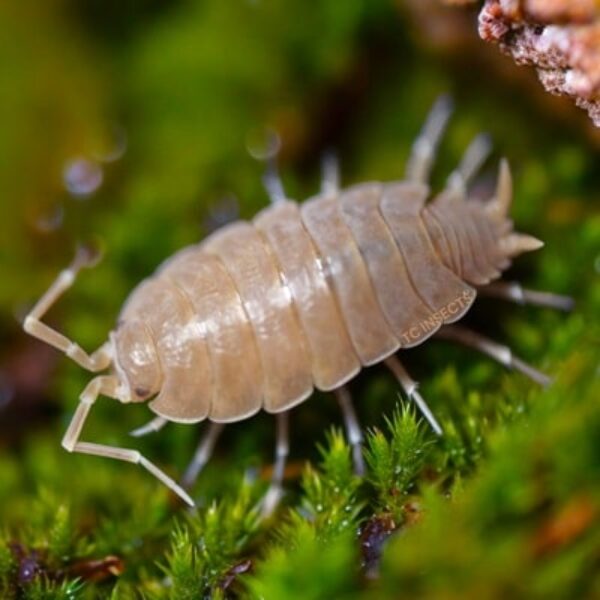
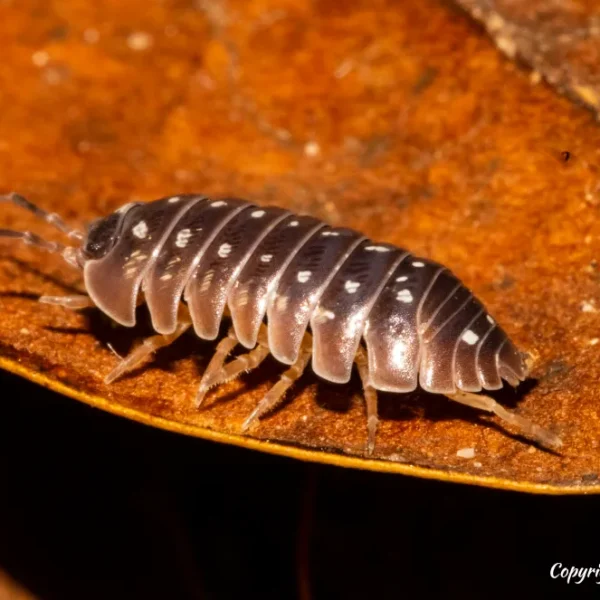
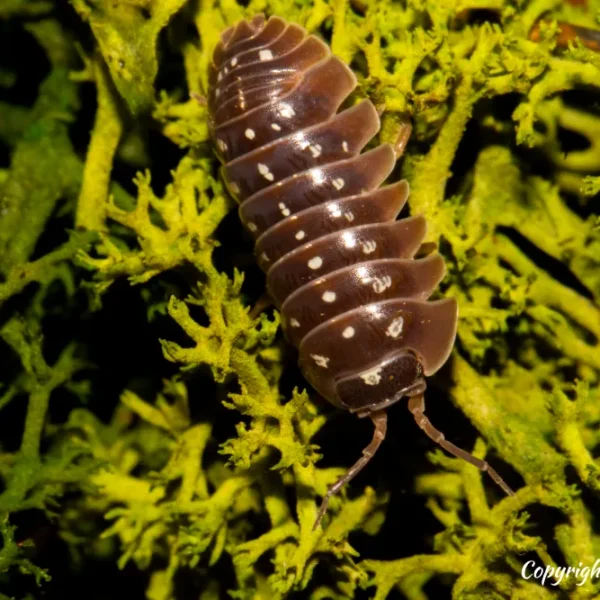
Black Point Isopods are a hobby-trade line of Venezillo parvus, a small rolling species in the broader pillbug group. Like other rollers, adults conglobate into a tight defensive ball when disturbed, and the colony tends to shelter under leaf litter and bark rather than moving openly across the surface. The compact body and muted earth tones make this a quieter line visually, more interesting to roller collectors than to keepers chasing vivid color.
Additionally, this is one of the smaller rolling isopods in the hobby. Adult size stays modest, often under 8 mm, which suits small bioactive enclosures where larger species like Armadillidium vulgare would be oversized. Plan around a steady, patient colony rather than a fast-scaling cleanup crew.
Why Keep Black Point Isopods?
- Roller behavior: The conglobation response is one of the defining traits of the group and gives this line collector value alongside Armadillidium species.
- Compact size: The small adult size lets keepers seed dart frog vivariums and other small bioactive enclosures without crowding the residents.
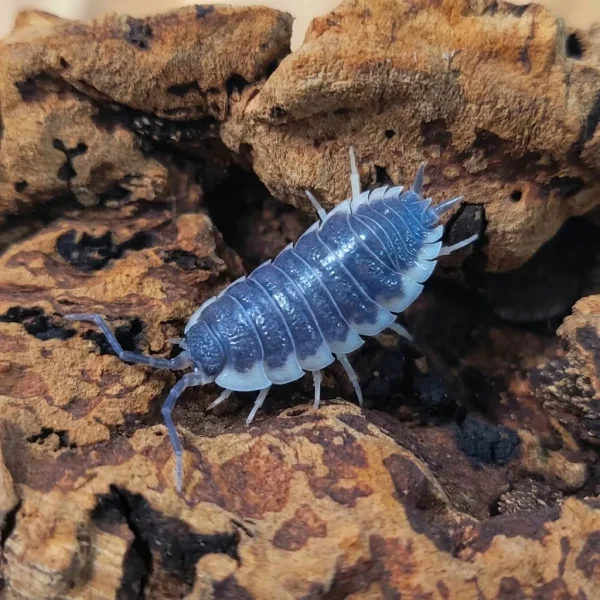
- Collector variety: Venezillo lines remain less common in the trade, which makes Black Point a useful addition to a shelf running Powder Blue and Cubaris alongside larger rollers.
- Quiet temperament: Movement is slow and deliberate, with most activity under leaf litter rather than out in the open.
- Bioactive support: They contribute modest leaf-litter processing in humid setups when conditions stay stable.
Honest Note on Size, Color, and the “Black Point” Name
Three honest points are worth flagging before purchase. First, adults stay small. This is not a species that produces large, photogenic individuals like Armadillidium maculatum. Second, color is subtle. The body is muted and earth-toned, so buyers expecting bold pattern or vivid color will likely be disappointed. Third, the “Black Point” designation is a hobby trade name. The exact wild collection record is not formally documented, and species-level material under Venezillo in the hobby trade should be treated as locality-tagged rather than a verified scientific provenance.
If you want a larger, bolder roller, Powder Orange Isopods or a larger Armadillidium line will likely fit better. Black Point makes more sense as a collector or small-enclosure pick.
Care and Setup
Care follows a humid, leaf-litter-focused framework. The colony does best with stable moisture, generous cover, and a calm setup that does not get disturbed often during establishment.
Temperature
Aim for 70 to 80°F. Most stable indoor rooms work without supplemental heat. Avoid sustained heat above the low 80s, since small rolling species tend to lose juveniles quickly under heat stress.
Humidity
Keep humidity reliably high without going waterlogged. The substrate should stay moist throughout, with a slightly drier strip near the ventilation. Fully dry conditions stall reproduction, so a humid retreat under leaf litter is essential.
Substrate
Use a humid mix of coco fiber, sphagnum moss, decomposed hardwood, and crushed leaf litter. TC INSECTS Assorted Hardwood Leaf Litter works well as both shelter and a slow food source. Roller species lean heavily on leaf-litter cover, so apply it generously rather than sparingly.
Food
Rotate TC INSECTS Isopod Food with small portions of fresh vegetables. Supplement with TC Calcium Ultra Fine, since rolling species rely on solid calcium intake to maintain their hardened exoskeletons. Remove uneaten fresh food before it molds.
Ventilation
Use modest ventilation. A small vented panel or a few mesh-covered holes generally strikes the right balance. Stale, fully sealed enclosures invite mite blooms, but heavy ventilation will dry out a humidity-loving roller too quickly.
Bioactive Use
Black Point Isopods work well in humid bioactive enclosures with small animals, including dart frog and small gecko setups. They help process leaf litter and small organic debris on a modest scale, and they pair well with Springtails for stronger microfauna coverage.
Breeding Notes
Breeding pace is moderate to slow. Once a colony establishes, expect a steady but unhurried supply of small juveniles rather than rapid population jumps. To support reproduction, keep moisture steady, offer protein and calcium consistently, and avoid disturbing the culture during the first several weeks. Juveniles are tiny and usually stay under leaf litter and bark before appearing on the surface.
Best For
- Roller-isopod collectors building a varied Armadillidium and Venezillo shelf.
- Dart frog, small gecko, and other small bioactive enclosures where a compact roller fits the scale.
- Humid setups with reliable moisture and generous leaf-litter cover.
- Keepers who want a quiet, slow-paced species rather than fast-scurrying isopods.
- Buyers comfortable with subtle color and small adult size.
Not Best For
- Buyers expecting bold pattern or vivid color, since this line is muted and earth-toned.
- Heavy cleanup duty in large reptile enclosures. Dwarf White Isopods are a stronger fit for that role.
- Feeder use, since adults stay small and roll defensively when handled.
- Dry desert setups without a reliable humid retreat.
- Keepers who want a large, photogenic display animal.
Origin and Locality Notes
The Venezillo genus has a broad distribution, with multiple species circulated in the hobby trade under various locality names. The “Black Point” designation is a hobby trade marker, and the exact wild collection record is not formally documented. As a result, this product is sold as Venezillo parvus “Black Point” rather than a confirmed locality binomial. Care guidance follows a humid-tropical default consistent with small rolling species in the genus.
Receiving and Acclimation
Cultures ship in a deli cup with moist substrate, leaf litter, and a piece of bark or cork for cover. On arrival, open the cup in a calm area and check moisture before transferring the contents directly into a prepared humid enclosure. Avoid separating animals from their shipping substrate, since that material carries microfauna and helps the colony settle in. Many rollers tuck into a defensive ball during transit and stay tucked for a short while after unpacking, which is normal. Mist lightly if the substrate looks dry, then leave the culture undisturbed for at least a week.
Recommended Add-Ons
- TC INSECTS Isopod Food for a consistent protein and calcium rotation tailored to isopod cultures.
- TC INSECTS Assorted Hardwood Leaf Litter for the generous leaf-litter cover that rolling species rely on.
- TC Calcium Ultra Fine to support the hardened exoskeleton of a rolling species.
- TC INSECTS Ultra Isopod Habitat Kit for a complete humid starter setup ready for a small roller line.
- Springtails as a microfauna partner that handles fine cleanup work alongside the isopods.
Frequently Asked Questions
Are Black Point Isopods beginner-friendly?
Generally, yes, with one caveat. The humid, leaf-litter-focused framework is straightforward, and the species does not need exotic conditions. However, first-time buyers who want fast scaling often do better starting with Powder Orange Isopods or Dwarf White Isopods before adding a smaller roller line.
Do they roll up like an Armadillidium?
Yes. Venezillo parvus conglobates into a tight defensive ball when disturbed, similar to common pillbugs. The behavior is one of the main reasons collectors keep this line, especially in a shelf running alongside larger Armadillidium species.
Can I use them in a dart frog vivarium?
Yes, the small adult size suits dart frog vivariums and other small bioactive enclosures better than larger isopod species. Pair them with Springtails for stronger microfauna coverage, since cleanup output from a small roller line alone is modest.
How fast will the culture grow?
Expect moderate to slow growth. Starter cultures often take several weeks to feel visibly active and then ramp gradually. This is not a fast-breeding line, so plan around steady, patient growth rather than rapid scaling.
What does the “Black Point” name mean?
It is a hobby trade locality designation rather than a confirmed wild collection record. The species itself is Venezillo parvus. For that reason, the page handles the locality name as a trade marker and focuses on practical captive care rather than claiming a precise wild origin.
How does this compare to larger rollers like Armadillidium?
The conglobation behavior is similar, but the scale is different. Black Point stays small and quieter visually, while many Armadillidium species grow larger and offer bolder pattern or color. Collectors often keep both for variety.
Learn More About Rolling Isopods and Venezillo
For background on rolling isopods and the broader biology of the group, the following non-commercial sources are useful starting points.
- University of Florida IFAS: Sowbugs and Pillbugs. An extension page covering general biology and habitat preferences of sowbugs and pillbugs, which helps explain why rolling species like Venezillo parvus rely so heavily on leaf litter and humid shelter.


Reviews
There are no reviews yet.