

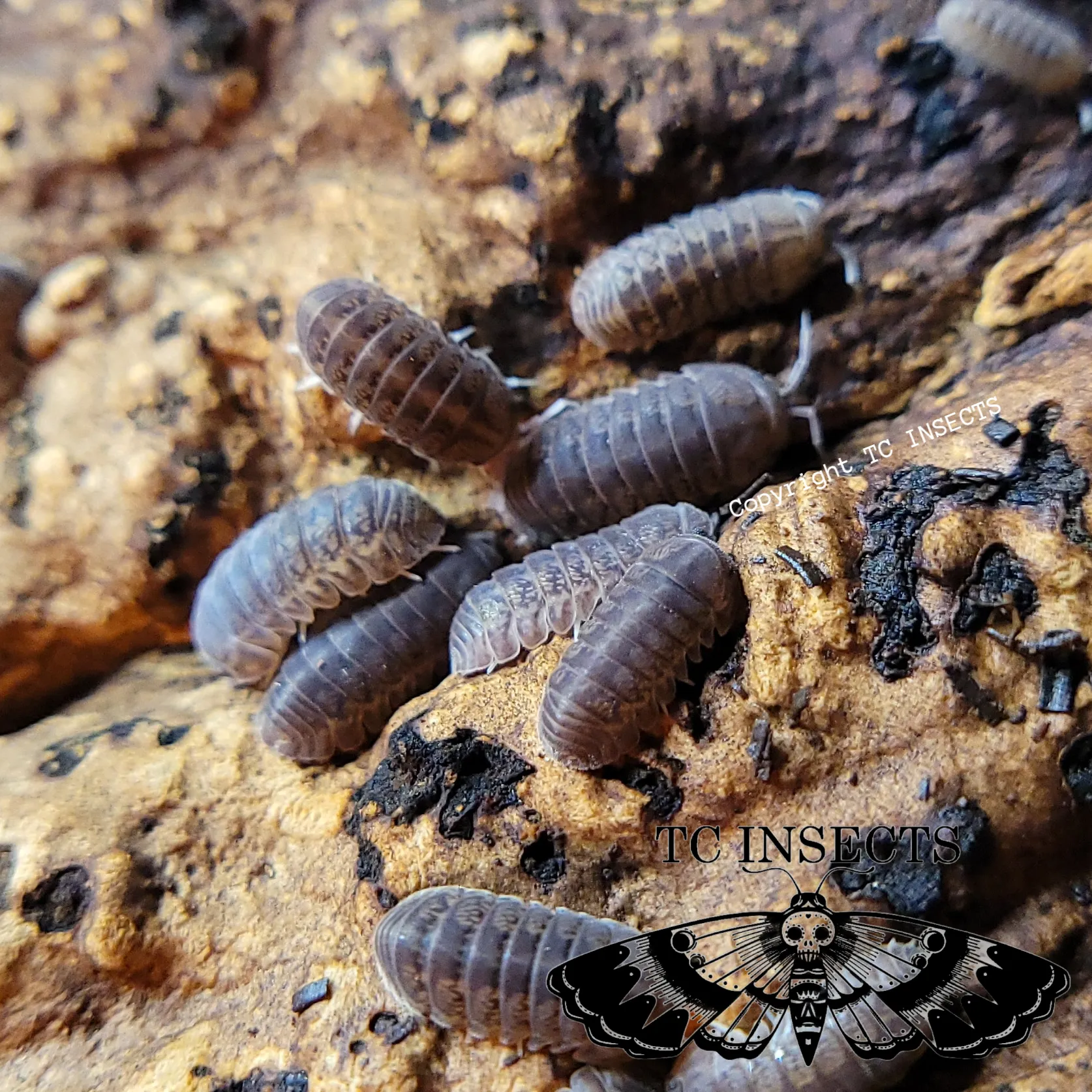


Black Bear Isopods for Sale
Overview
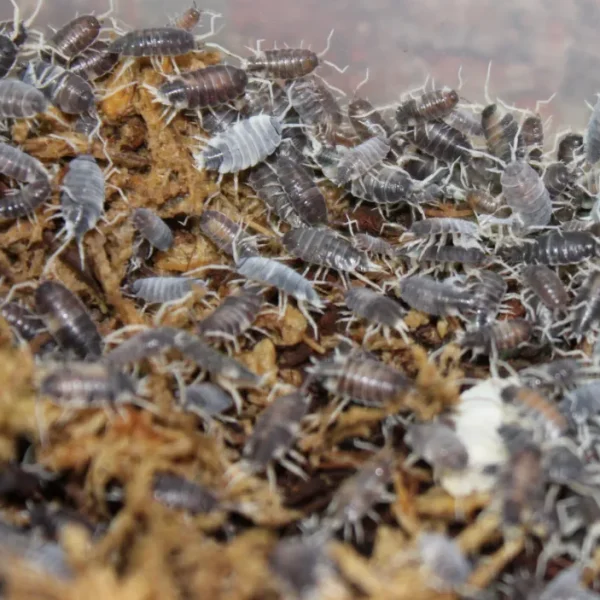
Black Bear isopods are a small, dark rolling isopod sold in the hobby as Venezillo sp. “Black Bear.” The genus Venezillo was described in 1928 and contains at least 140 species across the Neotropical region, with widespread reports in Central and South America and parts of North America. However, the “Black Bear” line has not been formally matched to one of those described species, so we list this culture at the genus level.
This species is valued for its glossy near-black tone and reasonable breeding pace. Additionally, it works as a quiet contributor to tropical bioactive setups. As a result, it suits keepers who want collector appeal without committing to an ultra-slow Cubaris-style culture.
Why Keep Black Bear Isopods?
- Strong visual contrast: First, the dark body shows clearly against light substrate, pale moss, and dry leaf litter.
- Moderate breeding pace: Additionally, settled colonies reproduce at a workable rate without overwhelming an enclosure.
- Bioactive cleanup support: Black Bear isopods can help consume leaf litter, biofilm, and small organic debris in tropical setups.
- Collector-friendly genus: Furthermore, Venezillo sp. lines are less common in the hobby than mainstream Porcellio and Porcellionides species.
- Manageable adult size: Finally, the smaller body works well in display tanks where larger isopods would crowd the visual layout.
Honest Note on Species Identification
We sell this isopod under the hobby-trade name Venezillo sp. “Black Bear.” The genus Venezillo is real and well documented, but the “Black Bear” line has not been formally matched to one of the described species in peer-reviewed literature. Therefore, we list this culture at the genus level and treat the trade name as a hobby designation rather than a confirmed species identification.
If you need a specifically named, peer-reviewed Venezillo species for academic or research purposes, this product is not the right fit. Most hobby keepers will not be affected by this distinction, but we want the framing to be honest upfront.
Honest Note on Size and Color
Black Bear isopods are small. Adults generally stay under 1 cm in hobby cultures, which means they look noticeably smaller than common cleanup species like Porcellio laevis “Dairy Cow” or Powder Orange. Buyers expecting a large, bold display isopod should plan accordingly.
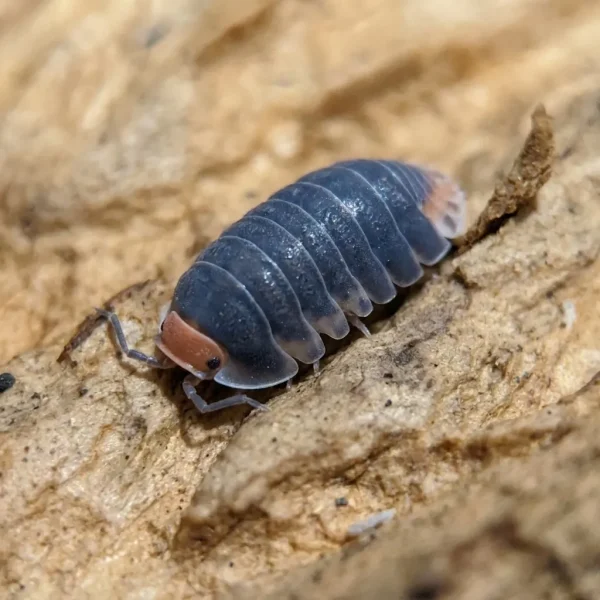
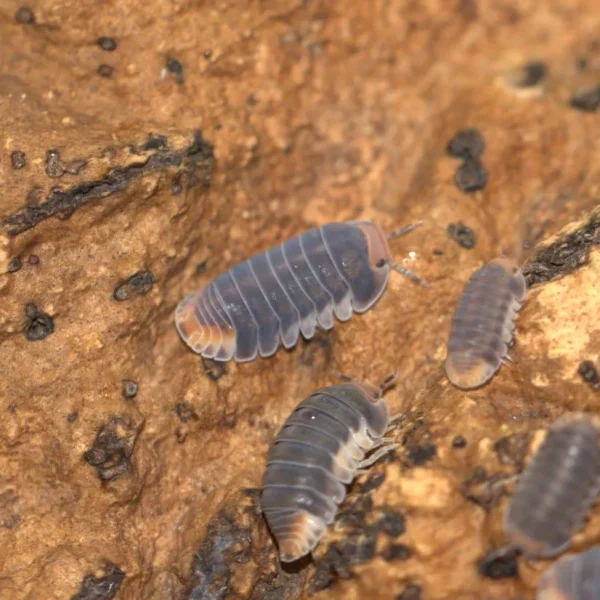
The “Black Bear” name refers to the dark body color. Specifically, the body reads near-black under most lighting, with a smooth glossy finish. Juveniles can appear lighter or grayer until they darken with age. Backgrounds matter for display: against dark substrate, these isopods blend in heavily.
Care and Setup
Black Bear isopods do well in a stable tropical setup with moderate humidity and steady airflow. The following sections cover the practical husbandry framework we recommend.
Temperature
Target 70 to 78°F across most of the year. Brief swings inside that range are fine. However, sustained heat above the low 80s stresses the colony, while cold rooms slow activity and breeding noticeably.
Humidity
Aim for moderate to moderate-high humidity overall. Keep one side moist with sphagnum moss and hydrated substrate. Then keep the other side slightly drier so the isopods can self-select their comfort zone. As a rule, this is not a swamp species, so avoid waterlogged conditions.
Substrate
Use a moisture-holding mix of soil, rotted hardwood, and organic matter at a depth of 2 to 3 inches. Add a generous layer of TC INSECTS Assorted Hardwood Leaf Litter on top, since leaf litter serves as both food and shelter for this species.
Food
Lead with leaf litter and decaying hardwood as the base diet. Then supplement with TC INSECTS Isopod Food for added protein and minerals, plus a calcium source like TC Calcium Ultra Fine. Feed lightly, since small colonies process soft foods slowly and uneaten material can mold.
Ventilation
Use cross-ventilation or controlled lid ventilation. Specifically, you want enough airflow to prevent stagnant pockets, but not so much that the moist side dries within a day. If mold blooms appear on food, increase airflow before reducing humidity.
Bioactive Use
Black Bear isopods can support tropical bioactive enclosures once the colony is established. However, we recommend running a backup culture in a dedicated bin first. Smaller dark isopods can be hard to spot in a planted enclosure, so a separate culture makes it easier to confirm the colony is still active.
Breeding Notes
Black Bear isopods reproduce at a moderate pace once settled. Females carry developing mancae in a brood pouch, and stable humidity, leaf litter, and calcium support successful broods. Generally, the colony quietly grows in the background rather than producing population spikes.
For best results, leave the colony undisturbed during the first six to eight weeks. Avoid frequent digging or substrate swaps. Add fresh leaf litter before the existing layer is fully consumed, and refresh moss as needed to keep moisture stable.
Best For
- Tropical bioactive terrariums and planted vivariums with stable humidity
- Collector shelves that want a darker rolling isopod beyond mainstream species
- Display tanks with light substrate or pale moss for visual contrast
- Keepers who want collector appeal with a manageable breeding pace
- Setups with small, gentle inhabitants that will not crush smaller isopods
Not Best For
- Feeder use, since adults are small and per-animal value is too high for that role
- Dry desert setups without a permanent humid retreat zone
- High-waste reptile enclosures that need fast, high-volume cleanup turnover
- Keepers expecting a large, bold display isopod with strong patterning
- Academic or research projects that require a confirmed peer-reviewed species name
Origin and Locality Notes
The genus Venezillo was described in 1928 by Karl Wilhelm Verhoeff. It is one of the most diverse terrestrial isopod genera in the Neotropical region, with described species across Central America, South America, parts of North America, and a few introduced ranges. The type species, Venezillo clausus, was originally collected in Caracas.
However, the “Black Bear” line sold in the hobby has not been formally tied to one of the described Venezillo species in peer-reviewed literature. Accordingly, we treat the “Black Bear” name as a hobby-trade designation. Practical captive care follows general tropical Neotropical isopod husbandry, with stable humidity, organic substrate, leaf litter, and protected hiding areas.
Receiving and Acclimation
Open your package promptly when it arrives and inspect the cup calmly before moving anything. Small dark isopods can be hard to see in shipping material, so check slowly rather than dumping the culture.
Prepare the enclosure before opening the cup. The habitat should already have moist substrate, leaf litter, bark, moss, and a calcium source. Then place the shipping material into the enclosure and let the isopods move out on their own. Finally, keep the setup quiet for the first week while the colony settles.
It is normal for new arrivals to hide for the first several days. Stable humidity and low disturbance speed up the adjustment.
Recommended Add-Ons
- TC INSECTS Isopod Habitat Kit — a complete starter setup that gives this culture proper substrate, leaf litter, moss, and feed from day one.
- TC INSECTS Assorted Hardwood Leaf Litter — the core food and cover layer for Black Bear isopods, and one that should never run out in the enclosure.
- TC INSECTS Isopod Food — supplemental protein and minerals beyond leaf litter, fed in small portions to support breeding.
- TC Calcium Ultra Fine — supports healthy molts and exoskeleton development as the colony grows.
- Springtails — pair well with Black Bear isopods in tropical bioactive setups to help manage mold on food.
Frequently Asked Questions
Are Black Bear isopods beginner-friendly?
Generally yes, with some care. They tolerate beginner setups when humidity, airflow, and leaf litter are stable. However, first-time keepers managing a heavy reptile enclosure may have better results with a higher-volume cleanup species like Dwarf White isopods.
Is “Black Bear” a confirmed species or a hobby trade name?
It is a hobby trade name. The genus Venezillo is scientifically described and includes more than 140 species, but the “Black Bear” line has not been formally matched to one of those species in peer-reviewed literature. We sell this culture at the genus level.
How fast do Black Bear isopods breed?
Moderate once established. They do not produce the population booms seen with Dairy Cow isopods or Powder Orange. However, settled colonies reproduce reliably enough to maintain themselves in a stable enclosure over time.
Can I use Black Bear isopods as a cleanup crew?
They can support cleanup in tropical bioactive setups. However, they are small, so they handle lower waste loads than larger workhorse species. For high-waste enclosures, pair them with a faster species or rely on a larger isopod like Porcellio laevis “Orange” for primary cleanup.
Are they visible in a display tank?
It depends on the background. Against light substrate, pale moss, or dry leaf litter, the dark body contrasts clearly. Against dark substrate or wet leaves, however, they blend in heavily and can be hard to spot.
What should I feed them?
Lead with hardwood leaf litter and decaying wood. Then add small amounts of vegetables, TC INSECTS Isopod Food, and calcium. Feed lightly and remove uneaten soft food before it molds.
Learn More About Venezillo and Neotropical Isopods
Because Black Bear is a hobby-trade line within a large but unevenly studied genus, the following non-competitor references help keepers understand the scientific background.
-
World Register of Marine Species: Venezillo Verhoeff, 1928. The authoritative taxonomic record for the genus, including the accepted type species and the long list of described species. Useful for buyers who want to verify the genus and understand why we list this culture at the genus level.
-
Zootaxa: Caribbean diversity of Venezillo with new species from Colombia. A peer-reviewed paper describing 11 new Venezillo species and redescribing the type species. Useful context for keepers who want to see how diverse and active the taxonomy of this genus still is.
-
PubMed Central: Terrestrial isopods, soil, and litter interactions. An open-access review of how land isopods interact with leaf litter, moisture, and substrate. Useful for keepers who want the science behind why proper hardwood leaf cover and stable moisture matter for a tropical species like this one.
Reviews
There are no reviews yet.