

Milkback Isopods for Sale
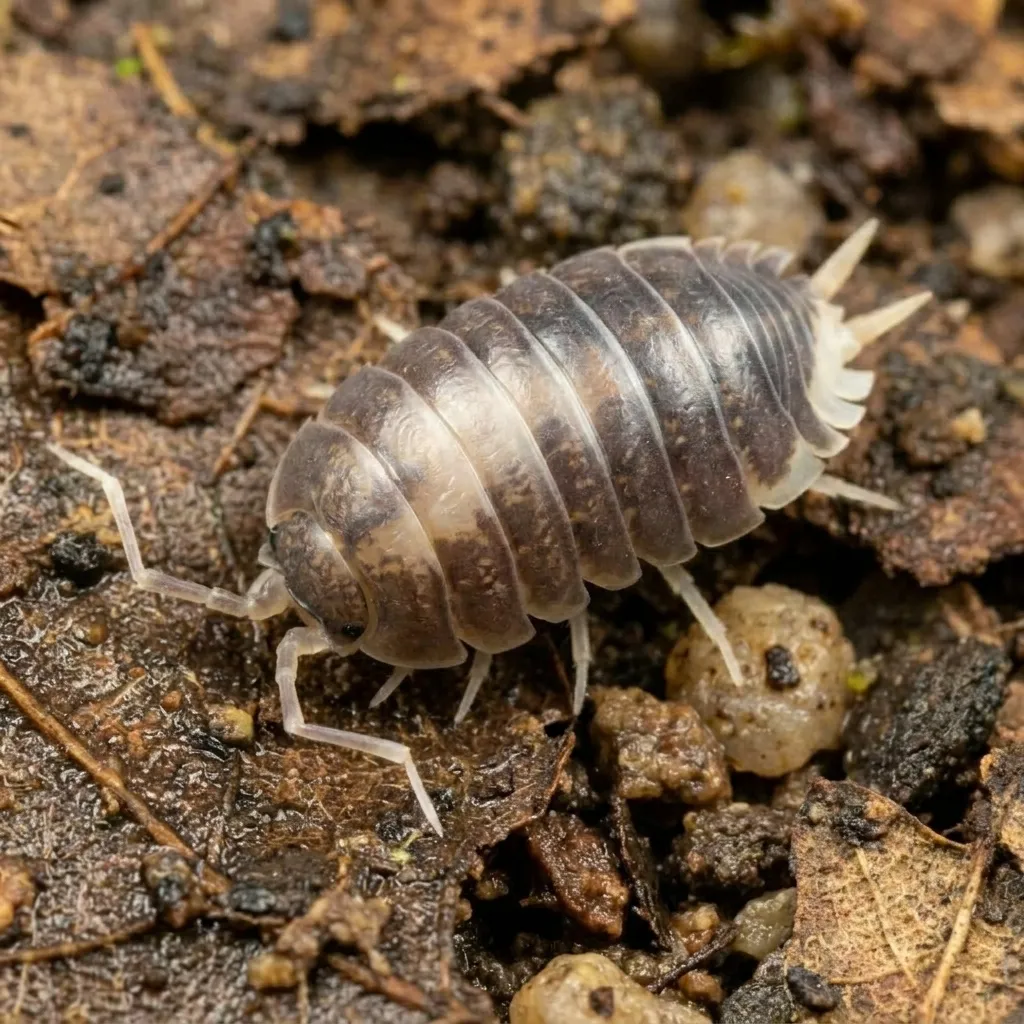
TC INSECTS ships live captive-bred Porcellio laevis “Milkback” as a mixed-size starter group for display cultures, bioactive cleanup crews, and the most affordable entry point in the TC INSECTS laevis range. This is the two-tone morph — pale cream to milky white on the dorsal surface, with darker tones on the sides and edges. Therefore, care, behavior, and husbandry are identical to every other laevis morph. The buying reason is specifically the two-tone visual effect and what it provides that no other morph offers.
Overview
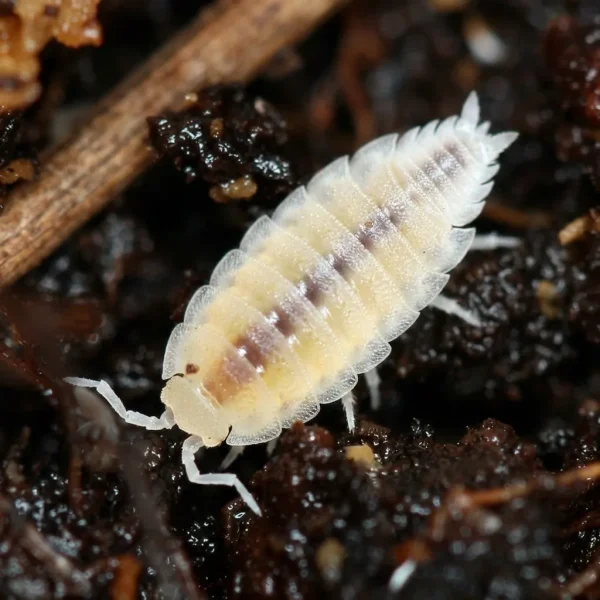
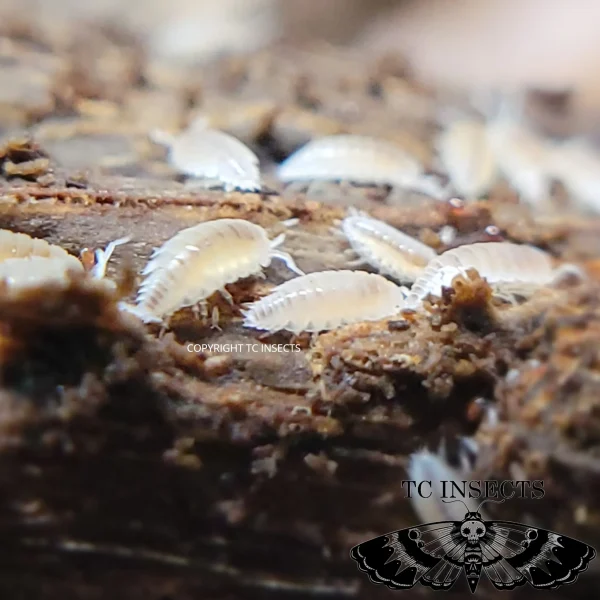
Porcellio laevis Latreille, 1804, is a cosmopolitan woodlouse known for its smooth glossy shell, fast breeding, and strong bioactive performance. The Milkback form shows pale cream to milky white pigmentation on the dorsal (back) surface while the sides and edges retain darker coloring. This partial pigmentation creates a two-tone appearance that sets Milkback apart from every other morph in the TC INSECTS laevis range.
How Milkback Compares to the Other laevis Morphs
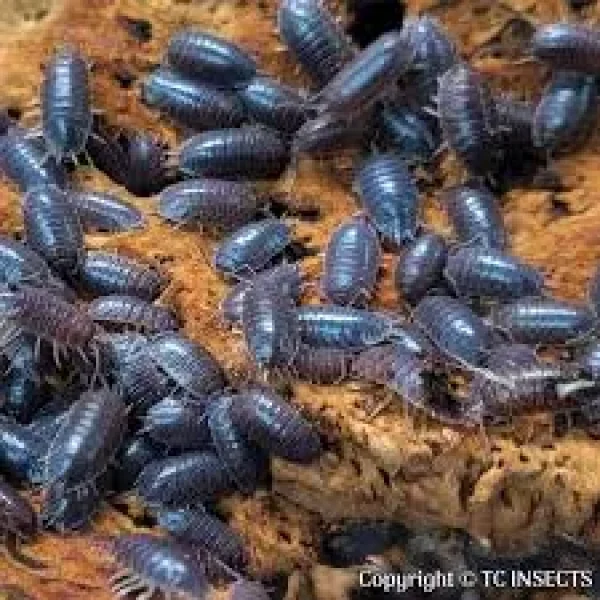
All five TC INSECTS laevis products share identical care, behavior, and breeding biology. The color differences are the only real distinctions. Dairy Cow shows piebald black-and-white spots from partial pigment absence across the whole body. Orange shows solid orange. White shows complete all-over white. Wild Type shows all-over gray-brown. Milkback alone shows a pale back against darker sides — a two-tone partial expression none of the others have.
Honest Note: Same Species as All laevis Morphs
Milkback is Porcellio laevis — the same species as all four other TC INSECTS laevis morphs. Therefore, if you already own any of the others and are adding Milkback, the keeping experience is identical. All five morphs can be kept together without harm. However, over time mixed pairings produce varied offspring rather than pure Milkback, pure Dairy Cow, or pure Wild Type. Keep morphs in separate bins if maintaining the Milkback’s two-tone coloring matters for your collection.
For full species education on P. laevis — including the protein bite risk, alternating-turns defense behavior, and the *laevis* = smooth naming story — see the Dairy Cow product page, which covers all of these in detail.
The Two-Tone Appearance
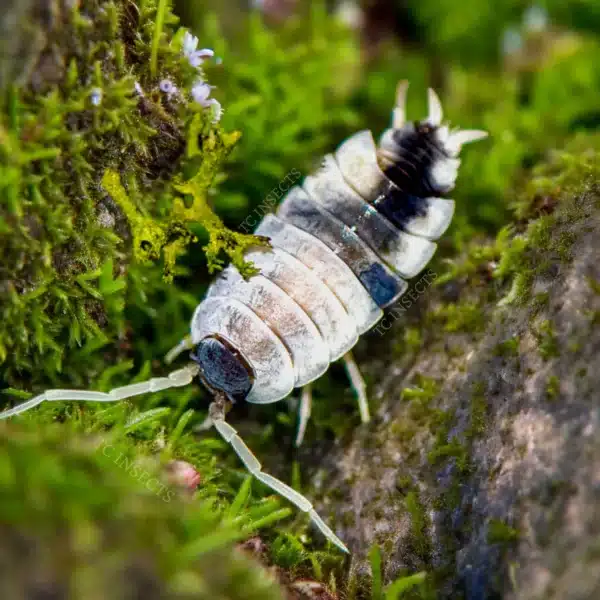
The Milkback morph’s defining feature is not just the pale color but the partial distribution of that color. The pale cream to milky white sits on the dorsal surface — the top of the shell — while the sides and body edges retain darker brown-gray tones. This creates a two-tone look with visible depth: the pale back appears slightly elevated against the darker frame of the body outline.
On the smooth, glossy *laevis* shell — which is smoother and more polished than related species like *P. scaber* — the pale cream dorsal reads almost pearlescent in direct light. Additionally, as the animal moves, the contrast between pale back and darker sides shifts with the viewing angle. This visual movement is something flat solid-color morphs cannot offer.
The Middle Ground Between Wild Type and White
Milkback sits between Wild Type and White on the color spectrum. Wild Type is the natural gray-brown baseline. White is complete all-over pigment absence. Milkback is partial — pale on top, darker on the sides. As a result, it suits display setups where all-over white reads as too stark or too clinical, but all-over gray reads as too plain. The two-tone effect has more visual interest than Wild Type without the clean-room look of pure White.
Protein Note
Porcellio laevis has high protein requirements. Feed protein two to three times per week. When protein is insufficient, the colony may nip at small soft-bodied co-inhabitants in the enclosure. For the full explanation, see the Dairy Cow product page.
Care and Setup
Setup Framework
Care for P. laevis “Milkback” is identical to all other laevis morphs: moderate humidity overall, one moist side, one slightly drier ventilated side, protein in the rotation, and leaf litter always available. Below, each section covers the key practical points.
Temperature
Hold the culture between 68 and 78°F. Room temperature works well for most home setups. Warmer conditions within the range support faster colony growth. Avoid direct sun, heat lamps aimed at the container, and cold drafts. Stable temperature is more important than targeting the high end of the range.
Humidity
Keep one side moist with sphagnum moss and the other side slightly drier with bark and leaf litter. Moderate humidity overall suits this morph. Avoid bone-dry conditions and fully waterlogged substrate. Good airflow through the enclosure prevents mold on the moist side while keeping moisture available for the colony when needed.
Substrate and Food
Use three to four inches of substrate with organic matter throughout. Keep dried hardwood leaf litter available at all times. On top of that, offer vegetables in small pieces two to three times per week, and rotate in a protein source such as TC INSECTS Isopod Food, dried shrimp, or fish flakes two to three times per week. Also keep TC Calcium Ultra Fine, cuttlebone, or crushed eggshell available at all times for molting support.
Bioactive Use
Milkback works across the same bioactive setup types as all other laevis morphs. Add TC INSECTS Assorted Hardwood Leaf Litter before introducing the colony. Then pair with Springtails for complete organic waste coverage. In display vivariums where some visual contrast is wanted without bright solid color, the Milkback two-tone provides a softer visual presence than Orange or White.
Breeding Notes
Females carry developing young in a marsupium and release mancae once ready. The colony breeds at a moderate to fast pace once settled. Furthermore, offspring from a Milkback culture will carry the two-tone coloring. Mixing with other laevis morphs in the same bin produces varied offspring over time.
As the colony grows, split into a second bin or seed into a bioactive enclosure. Offer multiple feeding spots spread across the enclosure so juveniles can access food alongside larger adults without being pushed aside.
Best For
- Display cultures where the two-tone pale-back effect is the visual goal
- Keepers who want a laevis morph between the natural gray-brown of Wild Type and the all-over white of the White morph
- Budget-conscious keepers who want the same fast-breeding laevis performance at the lowest entry price in the range
- Bioactive terrariums and planted vivariums where moderate visual contrast suits the aesthetic
- Collectors completing the full TC INSECTS laevis quintet alongside Dairy Cow, Orange, White, and Wild Type
- First-time isopod keepers who want an accessible, forgiving beginner culture
Not Best For
- Keepers who want the stark maximum-contrast all-over white of the White morph. Milkback is pale on the back only, not all-over white.
- Enclosures with very small soft-bodied animals and no consistent protein feeding. See the protein note above.
Receiving and Acclimation
Open your package soon after delivery in a calm indoor area. Move all packing material directly into the prepared enclosure rather than picking out individuals, since juveniles are easy to miss. The enclosure should already have the moist side set, leaf litter in place, and calcium available.
First Week Priorities
Place the isopods near the moist side under cover and leave the enclosure mostly undisturbed for the first week. Feed lightly at first. Offer a small amount of protein and vegetables, then watch how quickly the colony eats before increasing portions. Expect some hiding for several days after arrival — this is normal for any laevis culture after shipping.
Recommended Add-Ons
- TC INSECTS Isopod Food for the regular protein rotation this high-demand species needs.
- TC INSECTS Assorted Hardwood Leaf Litter as the primary food and cover foundation.
- TC INSECTS Isopod Habitat Kit for a complete beginner-friendly starter setup.
- TC Calcium Ultra Fine for continuous calcium access supporting fast growth and molting.
- Springtails to complete the bioactive cleanup crew pairing.
Frequently Asked Questions
What makes Milkback different from the White morph?
The key difference is where the pale color sits. The White morph shows complete all-over pigment absence — the entire body is uniformly white. Milkback shows pale cream to milky white on the dorsal (back) surface only, while the sides and edges retain darker tones. As a result, Milkback looks two-toned with visible depth, while White looks uniformly pale from all angles.
How does Milkback compare to Dairy Cow?
Dairy Cow shows piebald black-and-white spots produced by a pigment-absence gene that creates irregular patches across the whole body. Milkback shows a consistent pale back against darker sides — not spots, not piebald, but a smooth gradient between the pale dorsal and the darker lateral edges. Additionally, Dairy Cow adults are slightly smaller (18-20mm) while Milkback adults reach up to 20mm.
Is Milkback care different from the other laevis morphs?
No. Care is identical across all five TC INSECTS laevis morphs — Dairy Cow, Orange, White, Wild Type, and Milkback. All share the same moderate-humidity setup, protein demand, breeding biology, and enclosure needs. For the full species care guide, see the Dairy Cow product page.
Why is Milkback the most affordable laevis morph?
Price in the isopod hobby generally reflects a combination of breeding complexity, colony availability, and demand. Milkback is widely established as a hobby culture and does not require the same ongoing selective breeding management as some tighter color lines. As a result, it delivers the same fast-breeding *laevis* performance at the most accessible price in the range. It is the strongest entry point for a keeper who wants the *laevis* species without committing to a specific premium color line first.
Can I keep Milkback with my other laevis morphs?
Yes, without harm. All five laevis morphs are the same species and mix freely. However, over time mixed pairings produce offspring with varied coloring. If maintaining the Milkback two-tone look matters, keep this morph in its own dedicated bin rather than mixing with Dairy Cow, Orange, White, or Wild Type cultures.
Learn More About Porcellio laevis
-
British Myriapod and Isopod Group: Porcellio laevis. The BMIG species account covering the smooth dorsal surface that defines P. laevis visually — the same polished glossy surface that gives the Milkback’s pale cream back its characteristic clean appearance. Also covers the species’ size, UK distribution, and distinguishing features from similar species.
-
iNaturalist: Porcellio laevis. Global observation records from the species’ cosmopolitan range. The habitat photos show the wide variety of moist, sheltered environments this species occupies around the world — context for why the moderate-humidity care framework suits all five laevis morphs equally.
-
NC State Extension: Pillbugs and Sowbugs. Educational resource explaining how terrestrial isopods function as natural decomposers in moist, sheltered habitats. Useful context for understanding the cleanup crew role that makes P. laevis “Milkback” effective in bioactive setups alongside leaf litter and decaying organic material.


Reviews
There are no reviews yet.